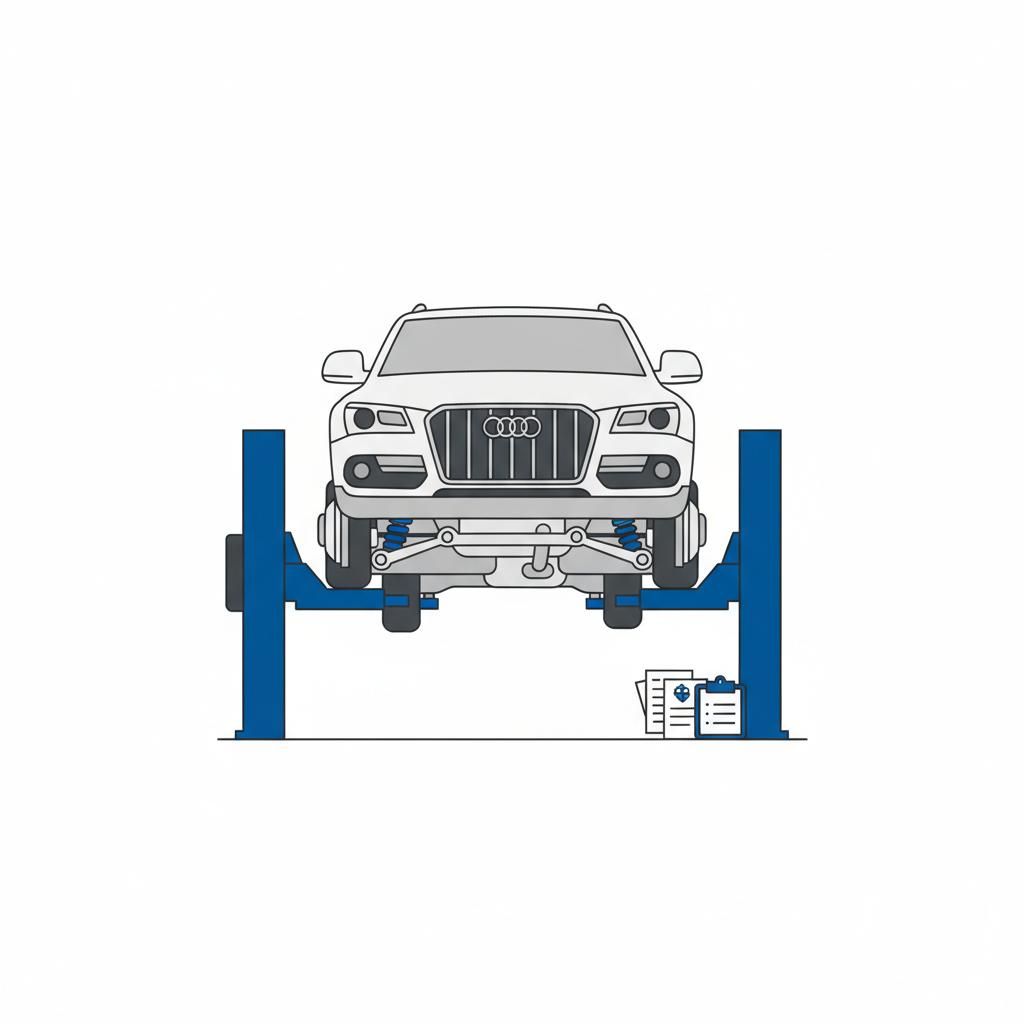
How many miles does an Audi Q5 last? Practical mileage guide for buyers
This guide explains what "How many miles does an Audi Q5 last?" means for buyers and how to evaluate used listings. It shows typical Audi Q5 lifespan expectations, the maintenance actions that most extend usable life, and a step-by-step checklist to use with a vehicle history report when considering an Audi Q5 for sale.
This guide explains which tacoma trucks for sale show the strongest reliability and safety signals to watch out for, and why mid-2010s and many pre-2016 Tacomas appear most often in complaint and recall records. The article shows how to use vehicle history reports, recall checks, and a focused inspection to reduce risk when evaluating a used Tacoma.
This article helps buyers searching tacoma trucks for sale understand which Tacoma engine tends to be most reliable. It summarizes reliability ratings, owner-complaint clusters, and maintenance-cost differences between the 2.7L I4 and the 3.5L V6, and gives actionable checks to reduce engine-related risk.
Audi reliability varies significantly by model, model year and powertrain, so the most reliable Audi for one buyer is not the same for another. This guide shows research-oriented used car buyers how to compare models using industry dependability studies, owner-reported trends, and per-VIN vehicle history reports. It focuses on checklists, inspection priorities and scenario-based recommendations to reduce risk when shopping a used Audi.
This article answers the practical question: How many miles does an Audi Q5 last? It explains realistic mileage ranges, the maintenance actions that most influence long-term use, and a step-by-step approach you can use when evaluating listings.
The guidance here is designed for research-oriented buyers who want clear, actionable steps: check vehicle history reports, compare local pricing context, and inspect known failure areas before deciding on an Audi Q5 for sale.
Many Audi Q5s reach 150,000 to 200,000 miles when serviced regularly, though outliers exceed 250,000 miles.
Key risks for higher-mileage Q5s include oil consumption on some 2.0T engines and timing-chain or tensioner wear.
Always verify title, service history, and VIN-specific recalls before committing to a used Audi Q5 purchase.
Quick answer: what "How many miles does an Audi Q5 last?" means for buyers
Many used Audi Q5s that receive regular, manufacturer-recommended maintenance tend to reach roughly 150,000 to 200,000 miles, and some well-serviced examples can exceed 250,000 miles; these aggregated ranges come from owner-report and reliability databases that track long-term outcomes RepairPal reliability summary.
That range is only a starting point. Longevity depends on maintenance history, driving patterns, and specific engine and trim choices, so mileage alone is an incomplete signal when you evaluate an Audi Q5 for sale.
Run a vehicle history report to prioritize Audi Q5 listings
Before contacting a dealer, pull a vehicle history report to confirm title and service entries; CarFax Deals can help surface reports and pricing context to prioritize listings.
audi q5 for sale - what that phrase signals about mileage
When you see listings labeled "audi q5 for sale," treat the odometer number as one data point among many: a clean ownership and service history raises the likelihood that a high-mileage Q5 will remain useful, while gaps or irregular entries increase uncertainty Consumer Reports overview.
How reliability studies and owner reports define lifespan for the Q5
Reliability studies and owner-report aggregators use different inputs: some rely on aggregated repair claims and shop-cost data, others on structured owner surveys or crowd-sourced mileage reports. Comparing these sources helps set an expectation band rather than a precise cutoff J.D. Power vehicle dependability overview.
For the Q5, multiple sources converge on a practical range in the 150,000 to 200,000-mile area for examples that follow scheduled maintenance, with owner-submitted outliers that surpass 250,000 miles. Treat aggregated ranges as probabilistic guidance, not guarantees.
Understand the limits of aggregated data: studies average many model years and trims, and certain engine variants or early-production generations may show different failure patterns. Model-year specifics matter when you compare a particular listing's mileage to study ranges RepairPal reliability summary.
Regular scheduled service and timely oil changes are the foundation of long-term Q5 longevity. Staying current with manufacturer intervals for oil and filters reduces wear and can limit oil-related faults.
Inspect whether timing-chain or tensioner inspections or replacements were addressed on applicable engines, because delayed attention to these components can escalate into major engine repairs Consumer Reports overview.
With consistent, manufacturer-recommended maintenance many Audi Q5s commonly reach 150,000 to 200,000 miles; well-serviced examples can exceed 250,000 miles, but longevity varies with maintenance, driving patterns, and engine variant.
Always check documented service records and dealer repair orders. A documented pattern of routine maintenance provides higher confidence that the odometer reading reflects a well-managed vehicle.
When reviewing a listing, prioritize items that are time-sensitive: recent oil changes, transmission or differential service where recommended, and any notes about timing components. If these are missing, plan for a professional inspection before purchase.
Common mechanical and electrical problem areas to inspect
Across complaint databases and repair-cost aggregators, recurring concerns for various Q5 model years include oil consumption on some 2.0T engines, timing-chain or tensioner wear on earlier engines, and accessory electrical faults that tend to appear with higher mileage RepairPal reliability summary.
Oil consumption issues can present as low oil levels between services, blue smoke on startup, or need for unusually frequent top-offs. Left unaddressed, oil-related problems can damage catalytic systems and increase repair costs. For cost context see CarBuzz's maintenance-cost overview.
Timing-chain tensioner wear is especially important on certain engine variants; delayed replacement can cause catastrophic engine damage, so confirm any timing system work in the service records and have a mechanic inspect tensioner noise at cold start if records are unclear NHTSA complaints and recall information.
Electrical and accessory faults vary by model year and options, and can include failing sensors, intermittent switches, or HVAC control issues. These faults are often labor-intensive to diagnose and repair, which increases cost on higher-mileage units.
A step-by-step framework to evaluate any used Audi Q5 listing
Step 1: Pull a vehicle history report to verify title status, ownership history, accident entries, and mileage checks. Confirm there is no salvage or rebuilt title noted in the report, and watch for inconsistent odometer events Kelley Blue Book maintenance overview. You can also run a VIN report for additional VIN-specific detail.
Step 2: Review service records and repair orders. Look for regular oil change intervals, documented timing-system inspections or repairs when applicable, and recent major services such as transmission service.
Step 3: Match the listing's mileage against model-year expectations and local pricing. Compare similar year and trim listings in your area, and adjust expectations if the Q5 shows above-average city driving or lacks documentation J.D. Power vehicle dependability overview.
Step 4: If service records are incomplete, arrange a pre-purchase inspection that includes compression checks where relevant, timing-system assessment, and a thorough electrical systems scan. Confirm open recalls or service campaigns using the VIN before purchase.
How to use pricing context and price analysis to judge high-mileage listings
Price-analysis labels like Great Deal or Fair Deal are shorthand for local market positioning, but they must be combined with mileage, condition, and service history to estimate actual value; do not rely on a label alone to justify skipping inspections Kelley Blue Book maintenance overview.
Compare asking prices for similar model year, trim, and mileage in your local market context to see if a high-mileage Q5 includes a meaningful price concession. Small price differences may not cover likely repair or maintenance spend on premium-brand SUVs after warranty expiry J.D. Power vehicle dependability overview.
Use price context to set a negotiation range and reserve fund for likely repairs. For example, higher-mileage examples with full service records and recent major servicing may justify a closer offer than a similar car with gaps in service history.
Safety ratings, recalls and why model year matters
IIHS and NHTSA data should be checked by model year because safety equipment and structural performance changed across generations; use the official IIHS page for crashworthiness and the NHTSA vehicle page for recall history for the exact model year you consider IIHS vehicle ratings.
Open recalls and campaign repairs are VIN-specific. Even a well-maintained high-mileage Q5 should have any open recalls serviced before you commit, and a VIN check is the quickest way to confirm outstanding manufacturer actions NHTSA complaints and recall information.
Do not assume newer safety features are present on every trim. Verify the specific safety equipment and option packages on the listing to understand how the vehicle compares within its model year for occupant protection.
Estimating ownership and repair costs for higher-mileage Q5s
Premium-brand SUVs such as the Q5 tend to show higher expected ownership and repair costs after warranty expiration, relative to mainstream rivals; dependability studies and maintenance estimates can help you build a conservative reserve fund for likely repairs J.D. Power vehicle dependability overview.
Key repair-cost drivers include engine repairs tied to oil consumption, timing-system work, electrical accessory repairs, and suspension components that wear with miles. These items are common causes of elevated repair bills on older Q5s RepairPal reliability summary.
Estimate a simple repair reserve for a used Q5
Adjust reserve per local repair-cost expectations
Use a conservative estimate for repair reserve and adapt it to local labor and parts costs. If a listing lacks recent timing or major services, increase the reserve to reflect that uncertainty.
Document expected ongoing costs alongside purchase price to compare total cost to own between competing listings, and favor cars with clear service history that reduce uncertainty in repair timing and costs Kelley Blue Book maintenance overview.
Typical buyer mistakes and how they increase risk
Relying on mileage alone is a common mistake. High mileage with full service records and recent major maintenance can be less risky than low-mileage cars with inconsistent history.
Skipping a pre-purchase inspection or failing to verify VIN-specific recalls and title status increases the chance of surprise repairs or unresolved structural issues. Always confirm critical report fields before committing NHTSA complaints and recall information.
Another frequent error is assuming price labels fully reflect long-term ownership cost; premium-brand SUVs often carry higher post-warranty repair exposure that small price concessions may not offset.
How to read a vehicle history report for mileage and service verification
Check these critical vehicle history report fields: title status, ownership history, accident entries, service entries, and mileage checks. A consistent odometer record and repeated service entries increase confidence in the listing. For guidance on how to use the report, see our how-to guide.
Red flags include salvage or rebuilt titles, odometer inconsistencies, and long gaps in service history. Follow up unclear items with the seller and request repair orders where possible to resolve doubts.
Use the vehicle history report as a verification step, not a proof of condition. If a report shows accidents or major repairs, ask for documentation and a professional opinion on structural or mechanical implications.
Sample inspection checklist for a higher-mileage Audi Q5
Exterior and body checks: inspect for uneven panel gaps, mismatched paint, signs of repair, and wheel alignment signs that may indicate prior structural repair. Photograph any concerns to compare with seller responses.
Engine and fluids: look for oil leaks, coolant leaks, and smoke on startup. Check that oil level and oil color are reasonable, and listen for unusual noises at cold start that can indicate timing tensioner or chain issues RepairPal reliability summary.
Undercarriage and suspension: check for worn bushings, leaking shocks, and abnormal tire wear patterns. Suspension repairs can become a significant cost on aging premium SUVs.
Realistic scenarios: when a higher-mileage Q5 can still be a smart buy
A high-mileage Q5 with a well-documented service history, recent timing-system work where applicable, and mostly highway miles can be a reasonable purchase if the asking price reflects the mileage and you budget for future repairs Consumer Reports overview. FINN also publishes a reliability overview that can help with model-year selection FINN reliability overview.
Examples that tend to be lower risk include cars with single-owner, clean title records, and evidence of recent major service items; these reduce the chance of immediate, expensive repairs. Owner reviews on Edmunds may help confirm typical ownership experiences Edmunds consumer reviews.
When documentation is incomplete, consider asking the seller for time-limited concessions, a lower price, or arranging a pre-purchase inspection to identify likely near-term expenses.
When to walk away: clear stop signs on a listing
Walk away or proceed with extreme caution if the vehicle history report shows a salvage or rebuilt title, signs of odometer tampering, or unresolved major structural damage; these are strong indicators of elevated risk NHTSA complaints and recall information.
If a listing has repeated unaddressed complaints for the same system, or many open recalls with no record of remedy, treat the listing as higher risk and consider alternatives.
When in doubt, get a professional assessment rather than relying on price alone; a low asking price rarely offsets the uncertainty introduced by major title or documented issues.
Summary checklist and next steps for someone shopping for an Audi Q5
Recap: many Audi Q5s reach roughly 150,000 to 200,000 miles with proper maintenance, though outliers exceed 250,000 miles; confirm service records, check VIN-specific recalls, and compare pricing against local listings before proceeding RepairPal reliability summary.
Many Audi Q5s commonly reach roughly 150,000 to 200,000 miles with consistent, manufacturer-recommended maintenance; some well-serviced examples can exceed 250,000 miles.
Confirm regular oil and filter changes, timing-chain or tensioner inspections where applicable, transmission service, and documented service records showing consistent intervals.
Only after verifying title and service history, checking VIN-specific recalls, and completing a pre-purchase inspection; a low price alone does not offset documentation gaps or major unresolved issues.
If you find a higher-mileage Q5 with complete service records and no open recalls, it can still represent reasonable value. Use a vehicle history report and an independent inspection to reduce uncertainty and budget conservatively for likely maintenance and repairs.
When in doubt, prioritize documented maintenance and clear title history over odometer reading alone; that approach tends to yield more predictable ownership outcomes.


 Blog
Blog