There’s a particular quiet you notice the first time you walk a lot of used cars after the pandemic peaks. The market that felt feverish in 2020–2022 has cooled, but calm can be deceptive. This guide shows you where to look, how to check vehicle history before buying a used car, and which channels—private sellers, dealers, CPO, rental returns, or online marketplaces—are likely to be the best place to get a used car based on your priorities.
1. Always verify the VIN first: a VIN-linked history report catches title issues, salvage branding, and odometer discrepancies that can make or break a deal.
2. Certified Pre‑Owned cars cost more but offer factory-backed warranties and reconditioning that reduce long-term ownership risk.
3. CARFAX Deals aggregates listings with verified vehicle history and pricing labels from thousands of dealerships, making it easier to spot a Great Deal before you travel.
Where is the best place to get a used car?
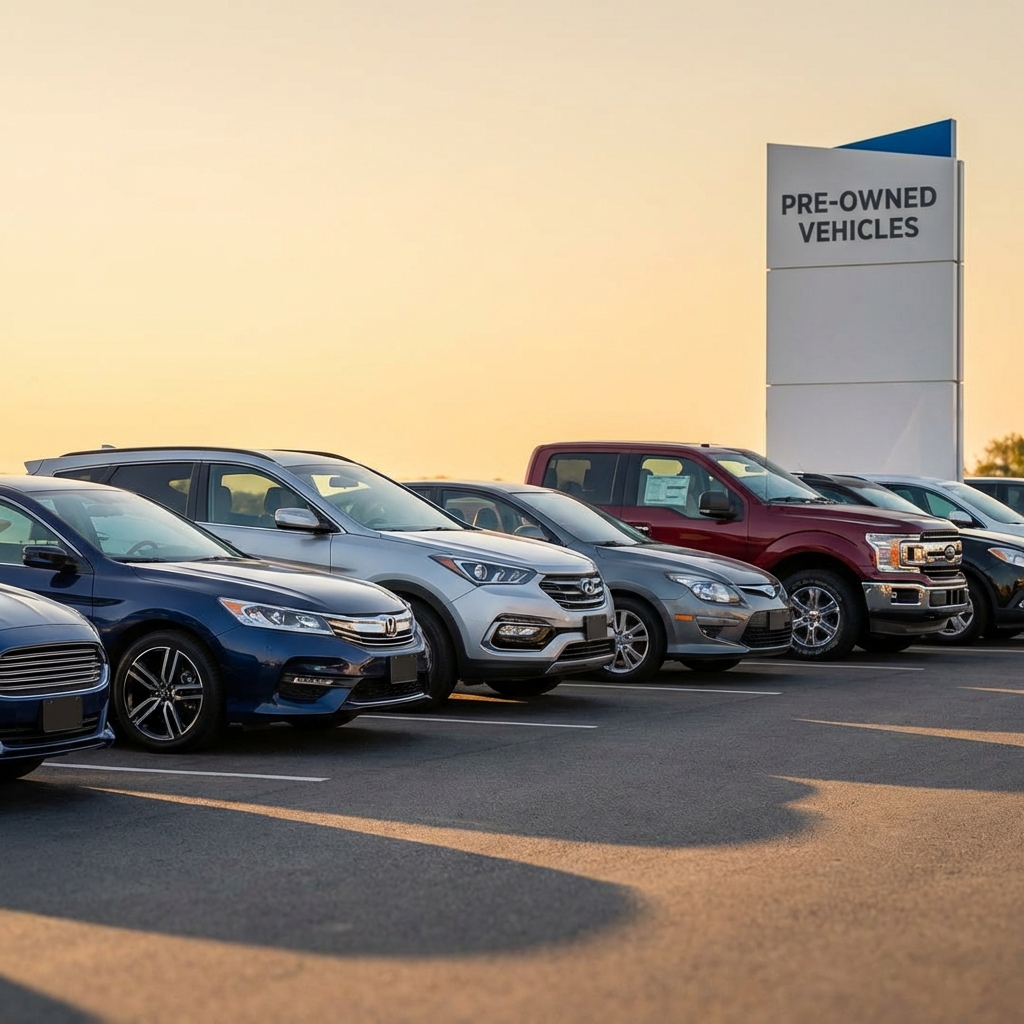
There’s a particular quiet you notice the first time you step onto a lot of used cars after the pandemic peaks. It’s the sound of engines off, windows down, and someone tapping a finger along a door sill, listening for rattles. You can smell old leather and warm asphalt. The market that felt feverish in 2020–2022—when every available used car seemed to gain value overnight—has cooled, but that calm can be deceptive.
If you’re asking "best place to get a used car" right now, you’ve already taken the most important first step: you’re looking for information before impulse. Selection and prices have stabilized broadly, yet availability still varies dramatically by model, year, and region. That means the best place to get a used car for one buyer may not be the best place for another.
In this guide you’ll learn how to choose the right channels—private sellers, independent lots, franchise dealers, Certified Pre‑Owned programs, rental and fleet sell-offs, auctions, and online marketplaces—and how to use VIN-linked vehicle history reports, inspections, and test drives to make confident decisions. We’ll show you practical steps, real examples, and a few negotiation strategies that actually work.
Tip: before you visit a listing, run a CARFAX Deals report to see verified history and pricing context. It’s a small step that pays off in avoiding bad surprises.
Start by understanding your priorities: budget, tolerance for risk, how long you plan to keep the car, and how comfortable you are handling repairs or paperwork. Those answers will determine whether the best place to get a used car for you is a backyard private sale or a Certified Pre‑Owned vehicle from a franchise dealer.
Ready to check a car’s story? Run a VIN report now.
Need faster clarity? Compare listings that include verified history and price analysis—take a moment to run a CARFAX Deals report and see how the car stacks up against similar vehicles before you call. It takes minutes and can save hours of uncertainty.
Before we dive into channels and tactics, one practical rule anchors everything: always verify the VIN with a vehicle history report before you do anything else. That rule turns chaotic listings into manageable choices and drastically reduces the chance you’ll discover a hidden salvage title, an odometer discrepancy, or a major unreported accident days after you buy.
Which channels should you consider? Each has different tradeoffs. The best place to get a used car is the one that aligns with your priorities, but understanding the options gives you the power to choose.
Private-party sales: bargain hunters’ territory
Private-party buys often offer the lowest sticker prices, and for buyers with mechanical confidence and patience, they can yield great value. A private sale can be ideal if you plan to hold the car for many years and have access to a trusted mechanic or inspection service.
What to watch for: lack of documented maintenance, vague answers about past trouble, missing title details, or a seller who won’t share the VIN. These are immediate red flags. If the price is low because the seller won’t provide records, that “deal” can quickly turn into expensive repairs.
Always ask for the VIN upfront, request service records, and insist on a pre-purchase inspection. If the seller resists, walk away—there are plenty of cars where transparency exists. When you find a private sale that provides VIN history and inspection-friendly access, you can often negotiate a very fair price.
Independent used-car lots: convenience with variance
Independent dealers offer a middle ground: they typically handle reconditioning and will often take trade-ins, but smaller operations vary widely in quality. Some independent lots do excellent work and will stand behind their cars; others move volume quickly and cut corners.
When considering an independent lot, check reviews, ask if the car comes with any short-term warranty or return window, and request the VIN to run a history report. Ask about reconditioning work and get specifics: what was replaced, what was repaired, and whether there's a written record.
Franchise dealers and Certified Pre‑Owned (CPO) programs: peace of mind for a price
Certified Pre‑Owned programs sit at the opposite end of the risk spectrum from private-party sales. A CPO vehicle will usually come with a factory-backed warranty, a thorough reconditioning process, and often some form of satisfaction guarantee. That peace of mind is worth the premium for many buyers.
Why choose CPO? If you value predictable ownership costs, minimal hassle, and backing from the manufacturer, your best place to get a used car may well be a CPO program. You pay more up front, but you get a clearer risk profile, documented service, and warranty coverage that reduces the chance of surprise expenses.
Rental and fleet sell-offs: newer cars, predictable service history
Rental and fleet vehicles can be a good buy because they’re usually newer and maintained on a schedule. A rental return might have higher mileage, but those miles are often accompanied by dealer service receipts.
Drawbacks include the unknown quality of various drivers and the chance of harder use. Still, when records show regular dealer maintenance, a recent-model rental with a full service history can be a smart choice for buyers who want reliable short-term transportation at a lower price than equivalent private trades.
Online marketplaces and aggregated tools: scale and data
Online platforms have changed how we shop for used cars. They let you compare many vehicles quickly and often attach VIN reports and price-comparison tools to listings. That’s a major reason why many buyers begin with searches for "used cars near me" and then widen their radius.
The right online marketplace makes it easier to find well-documented listings and to compare offers across dealers. When a listing includes a full vehicle history report and a pricing label—like Good Deal or Great Deal—you can move with more confidence.
Because online marketplaces aggregate listings from many seller types, they often surface the precise model and option package you want even when local inventory is thin. That expands your choices and improves your odds of finding a car that fits both taste and budget.
Auctions and wholesale channels: advanced strategies
Auction buying is powerful but risky. Municipal auctions, dealer-only auctions, and online wholesale platforms can offer real bargains. However, many auction vehicles sell as-is and without the usual consumer protections. Auctions are best for buyers who can tolerate risk, have a mechanic lined up, and understand title intricacies.
If you’re new to auctions, partner with someone who has experience or consider hiring a buyer’s agent. The best place to get a used car at auction might be at a local municipal auction for certain model years and trims, but buyer beware: the as-is condition means you must be ready for surprise repairs.
How to check vehicle history before buying a used car
If you only learn one thing from this guide, make it this: always check the VIN history early. A vehicle history report reveals title status, accident records, odometer checks, and sometimes service history. It’s the fastest way to rule out catastrophic problems.
Many listings now include a VIN-linked report directly. If not, ask the seller for the VIN and run a report yourself. Services that offer detailed histories and clear labels about accident and title status remove much of the guesswork. If a seller refuses the VIN, treat that as a deal-breaker.
What a thorough report shows
A comprehensive report should show: title history, accident and damage records, number of owners, salvage or rebuilt branding, service events when recorded, and odometer readings over time. Cross-reference the report with any service records the seller provides—discrepancies are a red flag.
For additional protection, look for listings that combine report data with maintenance logs. Those entries can be a strong signal of care, especially for fleet or rental vehicles that had scheduled dealer service.
Pre-purchase inspections: a short medical exam for a car
Think of a pre-purchase inspection as a short medical exam. A qualified mechanic checks brakes, suspension, engine compression, fluid condition, transmission behavior, and structural integrity. For high-mileage or older cars, they’ll inspect timing belts, leaks, and wear-sensitive components.
Yes, inspections cost money—typically a couple of hundred dollars—but they frequently save thousands by exposing hidden problems or giving you leverage to negotiate. If you’re buying remotely, insist on a third-party inspection before the sale is final.
Test drives: listen, feel, and test systems
A test drive reveals what paperwork won’t. Listen for rattles, watch the steering and alignment, and check transmission shifts and braking feel. Try the car in both slow traffic and at highway speeds. Test all systems: A/C, infotainment, windows, locks, and cruise control. Spending an extra 20 minutes behind the wheel can save you hours of headaches later.
Negotiation: how to use data and inspection findings
With transparent pricing tools and VIN-linked histories, buyers now have stronger negotiating positions than in the crisis years. Use comparable listings, check market price trends, and point to inspection notes if deferred maintenance or repairs are needed.
If you’re negotiating with a dealer, remember they have reconditioning and warranty margins; be fair but firm. With private sellers, be honest about inspection findings and make a fact-based offer. Often, a modest reduction or a small service credit is all you need to close a deal that’s fair to both sides.
Financing: how terms change the total cost
Interest rates and loan length significantly affect overall ownership costs. Compare dealer offers with credit unions and banks; sometimes a dealer’s promotional rate looks attractive, but the total package can include extra fees or short warranty coverage. Shorter loan terms reduce total interest paid but increase monthly payments. Align your financing choice with how long you expect to own the car.
Out-of-state purchases: logistics and paperwork
Widening your search radius can find the best place to get a used car when local inventory is limited. If you buy out of state, factor in transport costs, emissions and safety inspection rules, and the title transfer process. Some states have unique taxes or registration steps—research them before you finalize any out-of-state purchase.
Which channel wins? Matching seller type to buyer priorities
If you want the lowest purchase price and are comfortable absorbing risk, private-party sales or auctions might be the best place to get a used car for you. If you want predictable ownership with a safety net, a Certified Pre‑Owned program from a franchise dealer typically wins because of factory backing and reconditioning.
Online marketplaces and aggregated tools—especially ones that attach verified VIN reports and price labels—tend to be the best place to get a used car for research-first buyers who want to compare vehicles and avoid surprises. They surface transparency quickly and let you narrow options by title status, accident history, and price rating.
Regional examples: why location matters
Regional differences matter. Trucks and work vehicles often circulate more in rural areas; certain trims and colors are common in particular cities. A low-demand trim might be cheap in one region and scarce in another. If you can’t find what you want locally, widen your search. Many buyers find better value by looking across state lines when they factor in transport and paperwork.
Because of regional variation, the best place to get a used car can shift by zip code, season, and the model you want. Being flexible—about color, minor options, or distance—opens more doors.
How to buy used car online safely
Buying online can be safe if you follow a few guardrails: choose listings with multiple clear photos, complete descriptions, no hesitation around the VIN, and a linked vehicle history report. Prefer sellers who offer a return window or limited warranty and always use traceable payment methods—avoid wiring money sight-unseen.
Arrange an independent inspection and a test drive when possible. Platforms that deliver cars with a short return window or a money-back guarantee reduce risk considerably. When a listing looks too good to be true, it often is—trust your instincts and be ready to walk away.
Fleet and rental returns: practical pros and cons
Rental returns often show consistent dealer service and newer model years. Fleet vehicles usually follow scheduled maintenance. That combination of youth and records can be reassuring. On the other hand, multiple short-term drivers or rigorous duty cycles may mean additional wear. Compare the history report to maintenance logs to confirm the story makes sense.
Common myths, busted
Myth: every private-party sale is a bargain. Reality: some are and some are trouble magnets. Myth: rental cars are always abused. Reality: many rental returns are well-maintained and represent solid value. Myth: online price comparisons are useless. Reality: used correctly—paired with inspection findings and VIN reports—market comparators are powerful negotiation tools.
Practical checklist: your minimum must-do steps
Before you sign anything, do these five things: 1) Get the VIN and run a vehicle history report; 2) Arrange a pre-purchase inspection; 3) Take a thorough test drive; 4) Verify title and lien status; 5) Compare financing offers and consider total cost, not just monthly payment.
Questions to ask every seller
Ask: Why are you selling? Has the car been in an accident? Can you provide the VIN and service records? Are there any known mechanical issues? How many owners? If answers are vague, that’s a red flag. If the seller is open and gives documentation, that builds confidence.
Real-world scenarios: learning from examples
Example 1: A five-year-old compact SUV from a private owner looks like a steal, but the VIN reveals a midlife accident and inconsistent service history. An inspection finds a hairline frame bend—bargain turns into risk. Example 2: A similar-model vehicle sold as CPO carries a premium but has a clean title, full documented service, and a warranty—predictable ownership for a price. Example 3: A recent-model rental with high miles shows consistent dealer service and no red flags on inspection. For short-term reliability and low upfront cost, that rental return can be the best place to get a used car for many buyers.
Negotiation tactics that work
Lead with facts: price comparables, the vehicle history report, and inspection notes. For dealers, ask about reconditioning details and what warranty coverage is included. For private sellers, be transparent about what you’ll pay and why. Use inspection findings as leverage for price reductions or for having the dealer perform specified repairs before you take ownership.
Final decision: choosing the best place to get a used car for you
The best place to get a used car depends on who you are as a buyer. If you want the lowest price and can manage repair risk, private-party and auction channels may be ideal. If you value peace of mind and predictable costs, Certified Pre‑Owned programs from franchise dealers win. If you want to research-first and reduce surprises, online marketplaces that combine listings with verified VIN reports and price analysis—like CARFAX Deals—often make the decision simpler and safer.
Use your priorities as the filter: budget, risk tolerance, ownership timeline, and comfort with paperwork and repairs. Document every step—messages, receipts, inspection reports—and if you buy across state lines, confirm registration and tax implications in advance.
Buying a used car is part detective work, part negotiation, and part patience. There’s craft to it, and there’s judgment. Approach it with curiosity and a list of must-dos, and you’ll find that the search can even be enjoyable.
Closing thoughts
Information matters. The more evidence you collect about a car’s past and condition, the better you’ll navigate subtle variations in price and risk across seller types. The used-car market in 2024–2025 gives you options. Use them wisely, and you’ll find a car that fits your life and budget without unnecessary surprises.
Safe driving—and good hunting.
Information matters: if you verify VIN history, insist on an inspection, and match your tolerance for risk to the seller type, you’ll find the best place to get a used car for your needs—happy hunting and safe driving! 
 Blog
Blog