What is a Black Book for vehicles? — Understanding Black Book car value
This article explains what a black book car value is and how buyers can use it when researching used vehicles. It describes Black Book as a commercial, wholesale-focused valuation service, how values are collected and updated, how Black Book differs from consumer guides, and a practical three-step framework buyers can use alongside vehicle history reports and local context.
A rav4 used for sale can be a sensible pick for many research-oriented buyers because reliability aggregators rate the model above average and safety ratings are generally strong. This guide explains how to vet listings, what model years tend to be better, and a step-by-step checklist to reduce risk before you buy.
This guide explains how to estimate the cost of buying an R34 Skyline, with attention to import rules, condition-driven price tiers and landed cost. It shows which factors move value, how to verify history and paperwork, and offers a checklist you can follow when you search for a nissan skyline r34 for sale.
This guide helps buyers set realistic expectations for tacoma trucks for sale by explaining the main price drivers and a repeatable method to build conservative, typical, and ambitious offer ranges. It shows how the 2024 redesign, valuation guides, and vehicle history reports interact to change asking prices and reduce purchase risk.
When you see a reference to a Black Book car value, it points to a market-informed, wholesale-oriented estimate used primarily by industry professionals. This article explains what those values represent, how they are created and updated, and how you can use them alongside other guides and a vehicle history report to make better-informed decisions.
The goal here is practical clarity. For many buyers, Black Book numbers are one useful signal among several. Understanding their data sources, typical uses and limitations helps you turn guide values into realistic expectations before you contact a dealer.
Black Book provides frequent wholesale-focused values used by dealers and lenders to track market movements.
Values are built from auction and dealer wholesale transaction data and updated on a short cadence.
Use Black Book alongside retail guides and a vehicle history report to form a realistic price range.
What is a Black Book car value?
A Black Book car value is a commercial, wholesale-oriented estimate that reflects recent auction and dealer trade activity rather than a consumer retail listing price. Black Book produces frequent used vehicle values and market indexes that are intended primarily for dealers, lenders and remarketers to track short-term wholesale movements and retention trends, and to support procurement and lending decisions Black Book valuation methodology.
Run a VIN check and compare pricing context
This can help you understand whether a dealer acquired a vehicle at wholesale prices and how that might affect trade-in estimates or dealer inventory decisions.
In practice, Black Book values are updated frequently and tend to move with auction conditions and dealer wholesale trades. That makes these figures useful as an industry signal about what dealers are paying or expect to pay in the near term, rather than a direct suggested retail price for a consumer purchase.
Who uses Black Book values? The typical users are franchised and independent dealers, lenders assessing collateral values, remarketers managing inventory and fleet managers tracking retention. These professional users rely on the short-term, market-reflective numbers and indexes such as retention measures to guide acquisition and disposition strategies.
How Black Book collects and updates values
Black Book builds values from transaction-level auction data and dealer wholesale trades, then applies proprietary adjustments to reflect model, region and short-term market shifts. The process emphasizes recently observed wholesale prices and trade activity as the primary inputs Black Book valuation methodology. You can also review Black Book vehicle values for examples of their published outputs Black Book vehicle values.
Values are refreshed on a tight cadence, often weekly, so the numbers aim to mirror short-term movements in the wholesale marketplace. Published indexes and retention measures use the same underlying flows to summarize segment-level trends over time Manheim MUV Index.
The reliance on auction and dealer wholesale sources makes the output more trade-focused and sensitive to rapid market changes, which is why industry participants monitor updates closely when making buying, financing or inventory decisions.
Black Book vs. Kelley Blue Book and NADA: what differs and why it matters
Different valuation providers use different data mixes and editorial choices, so their numbers can diverge. Kelley Blue Book tends to incorporate consumer retail listing signals and retail transaction data to suggest consumer-facing prices, while NADA historically provides dealer-centric guides and trade-in oriented values How Kelley Blue Book determines values.
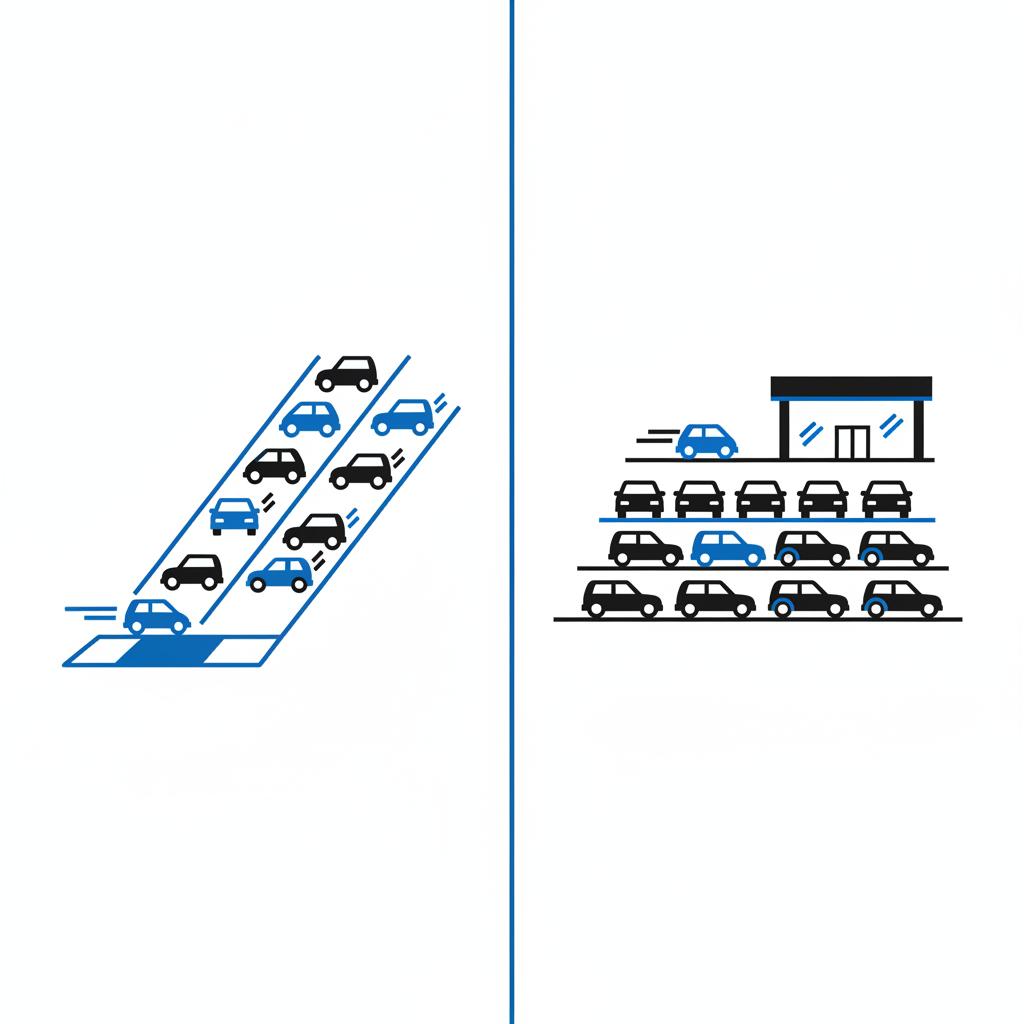
Black Book, by contrast, leans toward auction and dealer wholesale signals and therefore often reports lower, more trade-reflective figures compared with retail-oriented guides. These systematic differences matter when you are estimating a trade-in, dealer acquisition cost or a dealer retail markup.
A Black Book value offers a wholesale market signal that helps you estimate what a dealer might have paid or expects to pay at auction, which can be paired with retail guides and a vehicle history report to form a realistic negotiation range.
For a buyer, the practical result is that a single guide rarely tells the whole story; comparing across providers helps reveal where the market stands for that vehicle type and region.
Who uses Black Book and how industry indexes are used
Dealers use Black Book values in procurement to decide whether to bid for a unit at auction or to price incoming trade-ins. Lenders use the values for collateral assessment and floorplan decisions, while remarketers use retention indexes and short-term signals to decide when to sell inventory. Industry summaries like the Used Vehicle Retention Index offer a market snapshot that reflects aggregated wholesale movements rather than listing-level retail pricing Black Book Used Vehicle Retention Index coverage.
Indexes are commonly treated as context tools. For example, an upward movement in retention in a segment can indicate stronger wholesale demand, which may translate into firmer trade-in offers or higher dealer acquisition costs in that segment.
How to access a Black Book value
Direct lookup of a Black Book value is typically behind a paid subscription or available through dealer and lender portals that have licensed access. Those paid interfaces are the common route for professionals to get specific VIN- or trim-level wholesale figures and frequent updates Black Book valuation methodology. If you need step-by-step help for consumers, see our how-to guide how to use.
Publicly available resources include periodic Black Book indexes and market summaries, which can provide useful trend context without giving every specific vehicle value. Some third-party services and dealer platforms may surface limited Black Book signals to consumers, but detailed VIN-level lookups are generally not available without subscription access. For ongoing commentary and articles on valuation topics, see our blog.
How to use a Black Book car value in your research
Use a multi-source price check. Compare a Black Book wholesale figure with retail-oriented guides such as Kelley Blue Book or NADA, and then compare those guide values with active listings in your local market to see real asking prices. Combining these sources helps you form a realistic price range rather than relying on one number alone How NADA compiles values. You can also try a free appraisal tool such as Edmunds' appraisal service Edmunds appraisal to compare quick estimates.
Adjust for condition and local context. Guide values assume typical condition and market factors; you should account for trim, mileage, recent service history and regional demand before translating a guide value into a target trade-in or offer price.
Treat every guide as one data point. Use vehicle history reports and inspection findings to confirm whether the subject vehicle matches the assumptions behind any guide value before basing negotiation strategy on those numbers.
A practical framework: compare, adjust, verify
Step 1. Compare guides by collecting Black Book, KBB and NADA values when possible, noting whether each is wholesale or retail-focused. This clarifies why numbers differ and which figure is most relevant to your situation.
compare three valuation guides side by side
use for quick comparison
Step 2. Adjust values for specifics such as trim, mileage, options and documented service or accident history. Many guide gaps arise from option or trim granularity, so add or subtract value based on verifiable items.
Step 3. Verify title status, ownership history and maintenance records before relying on a guide value for negotiations. A vehicle history report and a physical inspection can reveal discrepancies that materially change valuation assumptions.
Decision criteria: when a Black Book wholesale value is most relevant
Prefer a wholesale-oriented figure when you are estimating dealer acquisition costs, planning trade-in expectations or evaluating what a dealer likely paid at auction. In these scenarios, a Black Book wholesale signal tends to be more informative about the dealer side of a transaction Black Book valuation methodology.
Prefer retail-oriented guides when you are pricing a private purchase or comparing asking prices on listing sites. Retail guides and active listings tend to better represent what consumers pay and what sellers expect on the retail side of the market. For a quick consumer-side lookup, KBB's instant value tool is often used KBB instant value.
The right guide depends on your objective. If you are estimating what a dealer might pay to acquire a vehicle, wholesale figures matter more. If you are budgeting a purchase from a dealer or private seller, focus on retail listings and retail guide context.
Common mistakes buyers make with guide values
Relying on a single guide is a common pitfall. Using only one source can hide systematic differences in data and editorial choices that affect the number. Cross-checking across guides reduces the risk of over- or under-estimating value How car values are determined.
Another error is ignoring trim, options and local title or tax effects. Generic model-year values may miss option packages or area-specific fees that change the effective net proceeds for trade-ins or the purchase price in a given county.
Finally, neglecting vehicle history and inspection can leave buyers exposed to service issues or hidden damage that guides cannot account for. Always confirm history and condition before treating a guide value as a negotiating anchor.
Practical examples and scenarios
Estimating a trade-in value. Start with a Black Book wholesale figure to understand dealer acquisition cost, then check KBB or a retail guide to see the retail side. Subtract estimated dealer reconditioning and fees to form a reasonable trade-in offer range, and adjust for mileage and options.
Checking a dealer listing. Compare the listed price to retail guide suggestions and to the wholesale signal. If the listed price is close to retail guides but wholesale signals are weak, the dealer may have less room to reduce price, or there may be reconditioning required. Use the vehicle history report to confirm maintenance and title status before assuming guide adjustments are sufficient.
In both scenarios, factor regional demand and title/tax effects when moving from guide numbers to a concrete offer or counteroffer.
Step-by-step: how to check a Black Book car value and what to record
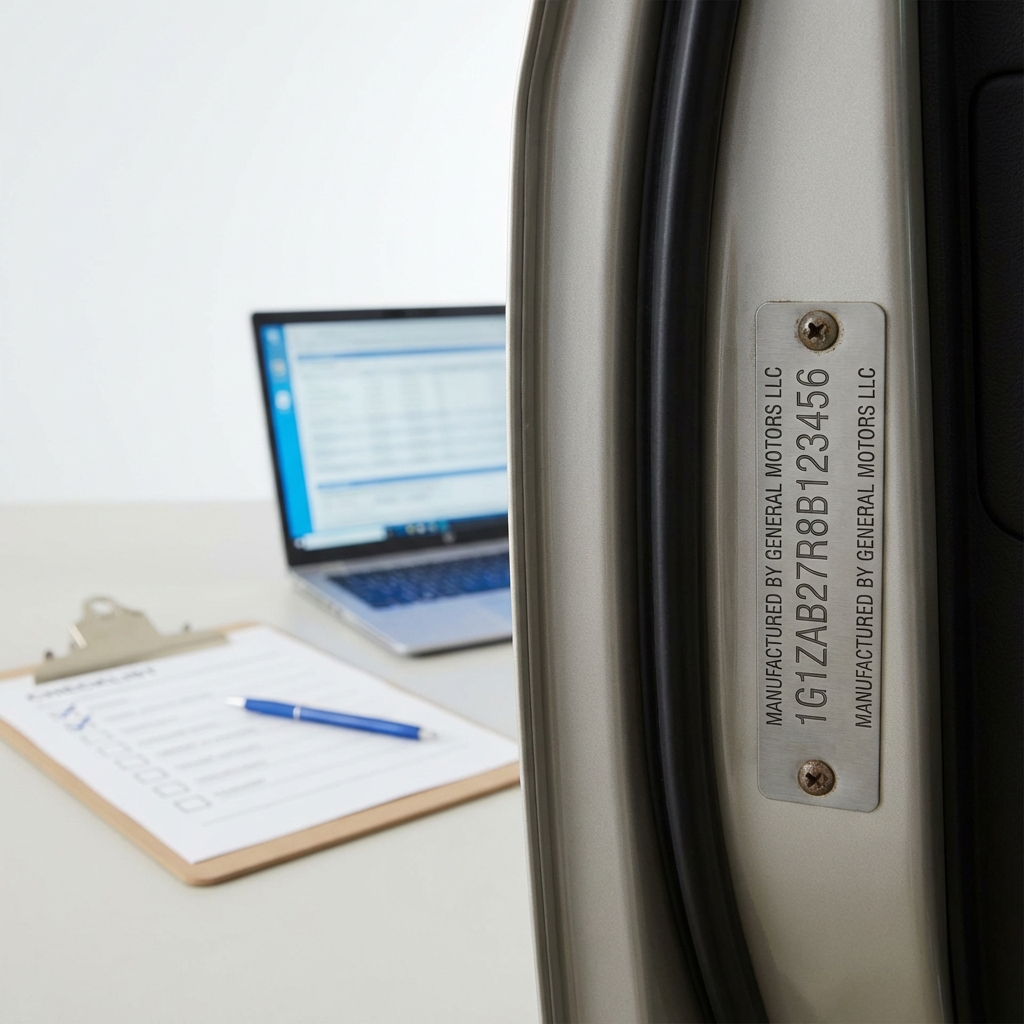
Collect the basic vehicle details: VIN, model year, exact trim, mileage, noticeable options and any known damage or service history. These details are the inputs that producers use when matching a vehicle to guide categories Black Book valuation methodology.
From each guide, note the value, the date, and whether it is wholesale or retail oriented. Record screenshots or save PDFs where possible so you can reference the same numbers later during discussions with a dealer.
Also save the vehicle history report and any listing screenshots. Keeping a concise research file helps you explain your reasoning and supports clearer questions when you contact the seller or dealer. You can order a VIN-level report from our VIN report tool VIN report.
Limitations: what Black Book values do not tell a buyer
Black Book values may not capture exact trim and option granularity in every case. Some adjustments for options are proprietary and not fully visible to end users, so guide values can miss features that materially change retail appeal or trade-in value How car values are determined.
State and county title, tax and fee differences also fall outside generic guide scopes. Local registration costs and tax bases can change effective buyer costs or seller net proceeds, so account for those when converting guide values into expected offers.
Lastly, vehicle-specific service history, undisclosed damage or odometer discrepancies require inspection and documentation review, because guides use aggregated data and cannot see hidden or incomplete records.
Before you contact the dealer: a final checklist
Confirm title status and ownership history. Verify maintenance records and check for open recalls. These items help validate whether a guide assumption about condition applies to the specific car you are considering How NADA compiles values.
Sample questions to ask: how did the dealer acquire the car, is there a recent inspection, what dealer fees apply, and will the dealer provide itemized service records? Use answers to these questions to reconcile guide values with the dealer's listed price.
Use a combined pricing context from wholesale signals, retail guides and local listings plus the vehicle history report to form a negotiation range rather than relying on a single number.
Conclusion: use Black Book as one informed signal among many
Key takeaways. Black Book provides frequent, wholesale-focused values that are especially useful for estimating dealer acquisition costs and short-term market movements. Combine those figures with retail guides and vehicle history reports to form a complete view before negotiating Black Book valuation methodology.
Next steps. Gather Black Book or other guide values where possible, record VIN-level details and the vehicle history report, and schedule an inspection before making an offer. Treat each guide as one input and cross-check across data sources and local listings to reduce uncertainty.
Direct VIN-level Black Book lookups are usually available through paid subscriptions or dealer and lender portals. Public indexes and summaries provide market context but not every specific vehicle value.
Black Book wholesale figures are useful to estimate dealer acquisition costs and inform a trade-in range, but you should also compare retail guides and check condition, trim and service history.
No. Guide values do not reveal undisclosed damage or detailed service records. Always verify with a vehicle history report and a physical inspection before relying on any guide.
Black Book numbers can be a helpful industry signal when you want to understand dealer-side pricing dynamics, but they are not a standalone answer for retail purchase decisions. Cross-check values, confirm VIN-level history and inspect the vehicle to reduce risk.
Use guide values as part of a broader research process that includes retail listings, vehicle history reports and local market checks before forming an offer.


 Blog
Blog