This guide helps research-oriented buyers weigh the trade-offs when looking for a used M4, and explains why late-cycle F82 models and early G82 examples are commonly prioritized. It shows documented S55-era risks and S58-era differences, and explains how vehicle history reports and pricing insights can help you compare listings before a mechanic inspection.
A rav4 used for sale can be a sensible pick for many research-oriented buyers because reliability aggregators rate the model above average and safety ratings are generally strong. This guide explains how to vet listings, what model years tend to be better, and a step-by-step checklist to reduce risk before you buy.
This guide explains how to estimate the cost of buying an R34 Skyline, with attention to import rules, condition-driven price tiers and landed cost. It shows which factors move value, how to verify history and paperwork, and offers a checklist you can follow when you search for a nissan skyline r34 for sale.
This guide helps buyers set realistic expectations for tacoma trucks for sale by explaining the main price drivers and a repeatable method to build conservative, typical, and ambitious offer ranges. It shows how the 2024 redesign, valuation guides, and vehicle history reports interact to change asking prices and reduce purchase risk.
If you are shopping for a used BMW M4, the first practical question is which model years balance price and risk for your needs. The modern M4 covers two main generations with different engines and service profiles, and that split matters when you compare listings.
This guide explains those differences in plain terms, outlines the failure modes to watch for, and gives a prioritized pre-purchase checklist you can use to screen bmw m4 for sale listings before scheduling inspections.
Late-cycle F82 examples with documented repairs can offer lower purchase prices with some residual engine risk.
Early G82 models tend to cost more but usually avoid many S55-specific catastrophic failures.
Always confirm recall completion and get a focused pre-purchase inspection for known failure points.
Short answer: which M4 model years to prioritize
Quick takeaway by buyer type
If you are comparing listings and want a quick rule of thumb, many buyers favor late-cycle F82 models, roughly post-2017, for lower market prices when documented repairs are present, and early G82 models, roughly 2021 to 2024, for an updated drivetrain and chassis with fewer S55-style failures. For example, late F82 examples can offer lower purchase prices with some residual engine risk, while early G82s usually command higher values because they use the newer S58 engine and updated electronics, but may bring more complex servicing needs Kelley Blue Book market guide.
Which path fits you depends on budget, tolerance for repair complexity, and whether you prioritize lower near-term purchase cost or more recent drivetrain design. If you plan to shop for bmw m4 for sale listings, use pricing insights and verified history to shortlist candidates, then confirm repairs and inspections before committing.
This article maps the main generation differences, summarizes documented failure modes to watch for, and gives a step-by-step pre-purchase checklist you can apply to any listing. Use the sections to filter listings by risk factors and to prioritize which vehicles to inspect in person.
The guidance here is conditional and evidence based: it leans on model-level differences between the S55 and S58 powertrains and on official recall records where applicable, and it recommends vehicle history reports and pricing context as tools to narrow options rather than as guarantees.
BMW M4 generations and what changed (F82/F83 vs G82/G83)
Timeline and generational split
The modern BMW M4 divides into two main generations: the F82/F83 (2014 to 2020) with the S55 engine, and the G82/G83 (2021 onward) with the S58 engine, a clear generational change that affects engine architecture and electronics BMW M4 overview.
S55 and S58 engines differ in their layout and internal design, which affects typical failure modes and long-term service needs. The S58 reflects updated engineering and tuning that tends to reduce the specific catastrophic failures seen on some S55 units, while the G82 platform also adds more advanced electronics and thermal management systems that can require specialized diagnostic work.
Consult OEM model pages and official specification documents when comparing trims, options, and powertrain equipment for a given model year; trim and option differences alter cooling, suspension, and electronics packages in ways that influence maintenance needs BMW M4 overview.
Common mechanical problems and recalls by generation
S55-era failure modes to watch for
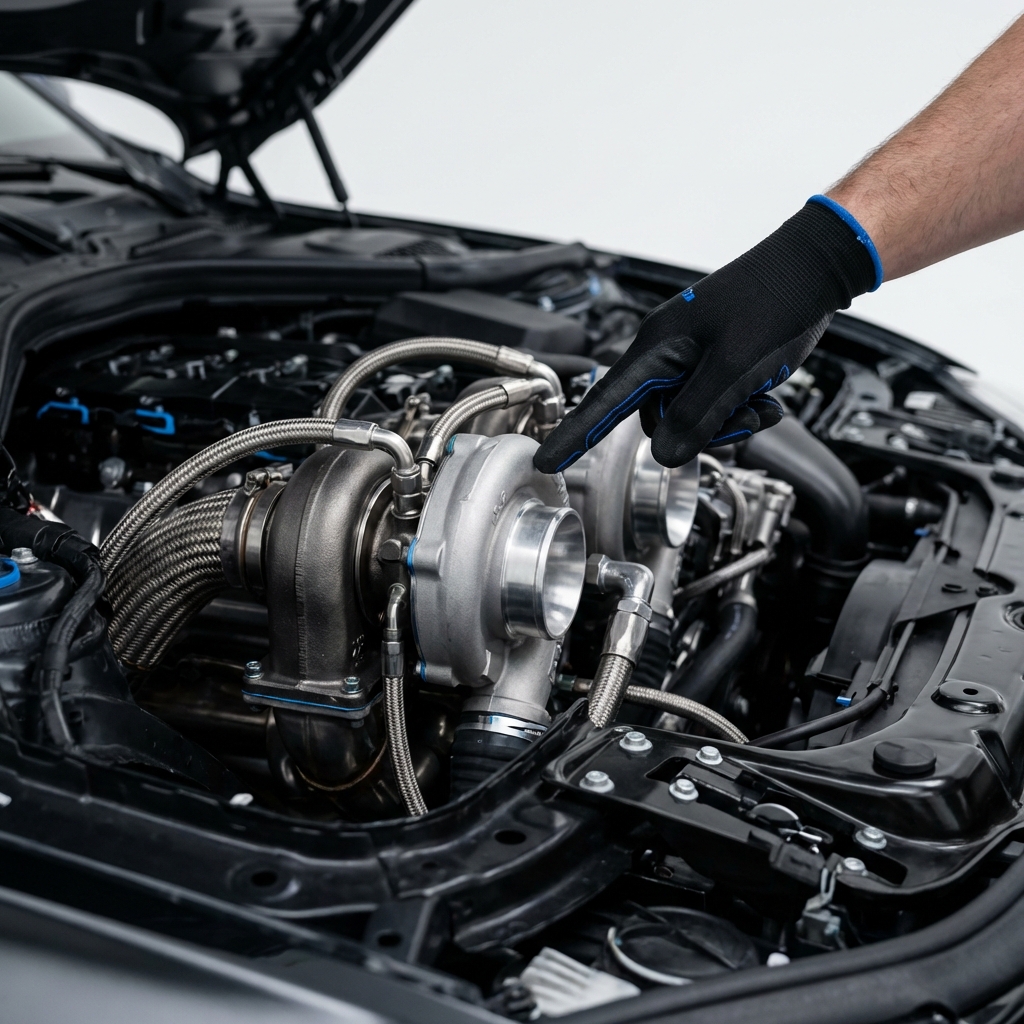
The S55 engine in many F82 cars has documented failure patterns that buyers should treat as known risks; common issues include crank-hub failures and turbo or drivetrain faults that have led to expensive repairs and, in some cases, dealer service campaigns targeting the underlying parts RepairPal reliability guide, and check the RepairPal recall checker when confirming campaign details.
When evaluating a listed F82, ask whether affected repairs have been completed and whether those repairs are documented in service records or dealer invoices. Confirming completed fixes can materially reduce the risk that a prior failure will recur.
S58-era reports and electronic/cooling issues
The S58 in G82 models shows fewer of the S55-style catastrophic engine failures, but early G82 examples report more complex electronic and cooling-system items that can increase repair complexity and diagnostic time for technicians Car and Driver model notes.
Those electronic and cooling items do not imply the same failure pattern as S55 engines; rather, they shift where maintenance attention is likely needed as mileage accumulates, and they can affect repair costs because of component complexity.
How to check recalls and service campaigns
Official recall and service-campaign history is a critical verification point for any used M4 purchase. Buyers should check public recall databases such as the NHTSA database, BMW recall information, or Cars.com recall listings and request dealer service records to confirm whether required campaigns were completed for the vehicle in question NHTSA recalls database.
When a recall or campaign applies to the model year of a listing, ask the seller for documentation that the work was completed. Lack of documentation does not prove noncompletion, but documented completion reduces a key area of uncertainty.
Check history and pricing before you inspect listings
Use verified pricing context and a vehicle history report to shortlist a few listings, then prioritize those with complete service records and documented recall repairs.
Decision framework: a pre-purchase checklist for any used M4
Documents and records to request
Start by requesting a vehicle history report and pricing insights for each listing so you can compare ownership history, title status, and market-relative price analysis labels. Treat the history report as a decision aid that helps prioritize vehicles for inspection rather than as a substitute for a mechanic's review.
Also request dealer service invoices and any receipts related to engine or drivetrain work, especially for F82 cars; documentation that a specific repair was completed is often decisive when evaluating risk.
Technical checks to prioritize
On any pre-purchase inspection, ask the mechanic to verify repairs tied to known failure modes: for S55 cars, confirm crank-hub replacement or reinforcement work, and inspect for turbo and oil-leak repairs; for G82 cars, include a focused check of cooling lines, thermostats, and the electronic control modules that have been reported to need attention RepairPal reliability guide.
Confirm that recalls and service campaigns listed for the vehicle were completed; cross-check dealer work orders against public recall information where possible NHTSA recalls database.
When to walk away
Consider walking away when required repairs lack documentation, the vehicle history report shows title problems, or an independent inspection finds unresolved issues consistent with known failure modes. A low price can reflect real, unresolved risk rather than a bargain.
Use pricing insights to compare similar-mileage listings and to spot outliers that deserve extra scrutiny before proceeding.
How model year, mileage, and price interact when choosing the 'best' year
Value trade-offs: late F82 vs early G82
Late-cycle F82 examples with documented repairs often strike a compromise: lower purchase price than a comparable G82, with known areas to inspect, while early G82 cars typically cost more but usually avoid many S55-specific catastrophic failures Car and Driver model notes.
Which trade-off matters most to you: lower price with potential repair risk, or higher price for newer drivetrain and lower S55 risk?
For many buyers, late-cycle F82 models with documented S55 repairs can offer better near-term value, while early G82 models provide a newer drivetrain design with fewer S55-style failures but higher purchase prices and more complex electronics.
Using pricing guides to set a target price range, bmw m4 for sale
Use market guides to set a baseline price range and then adjust for documented repairs, ownership history, and local demand; a pricing guide helps you set realistic expectations for listings that advertise low mileage or an unusually low price Kelley Blue Book market guide.
When a listing stands out from the market guide range, request more documentation and consider a stricter inspection threshold before making an offer.
Mileage thresholds and ownership-cost expectations
Consider ownership cost expectations: M4 models often carry higher maintenance, parts, and insurance costs than non-M 3-series cars because of performance components and specialized servicing needs, and this typically increases total cost to own relative to ordinary sedans RepairPal reliability guide.
Balance mileage against documented major repairs: a higher-mileage F82 with confirmed S55 repairs may be preferable to a similar-priced low-mileage unit with incomplete records, depending on how comfortable you are with residual engine risk.
Typical buying mistakes and how to avoid them
Overreliance on price alone
Pricing alone can mask mechanical or title risk. Buyers who focus only on sticker price may miss service gaps or incomplete repairs that increase total ownership cost; use vehicle history reports and price analysis labels to add context and surface anomalies before visiting the seller.
Low advertised price should trigger additional verification steps rather than immediate assumptions of value.
reminder to run a VIN check and pricing comparison
Use before scheduling an inspection
Skipping verified service history
Failing to verify that recalls and service campaigns were completed is a common and avoidable risk. Always cross-check NHTSA recall listings and ask for dealer records for any listed campaigns before a purchase decision NHTSA recalls database.
Without documented completion of campaigns, a vehicle may still be operable, but the buyer faces added uncertainty about unresolved or recurring issues.
Neglecting a targeted mechanical inspection
Even low-mileage cars can have unresolved S55 issues if repairs were not done. A targeted inspection that focuses on known failure points reduces the chance of an expensive surprise after purchase RepairPal reliability guide.
Bring the inspection checklist to the mechanic and reference specific items such as crank-hub condition, turbo performance, oil leaks, cooling lines, and electronic fault codes for G82 models.
Practical examples: evaluating three sample listings
Example A: late F82 with documented S55 repairs
Listing summary, what to check: verify service invoices showing crank-hub work, turbo repairs, and oil-leak fixes; confirm that recalls or campaigns applicable to the model year were addressed, and run pricing insights to see how the listing compares to market guidance NHTSA recalls database. Also use pricing insights to compare similar listings.
Verdict for a cautious buyer: if documentation is complete and the price reflects the remaining ownership cost, this can be a reasonable value option compared with pricier G82 listings.
Example B: early G82 with higher price and electronic-service history
Listing summary, what to check: request diagnostic reports for electronic module repairs, cooling-system work, and service invoices for any warranty or dealer work; compare pricing insights to understand whether the higher asking price reflects market demand and lower S55 risk Kelley Blue Book market guide.
Verdict for an enthusiast who prefers newer drivetrain design: a higher-priced G82 may be justified if the vehicle has clear dealership service history and the inspection shows no unresolved electrical or cooling issues.
Example C: low-mileage F82 with incomplete records
Listing summary, what to check: insist on full service history, ask the seller for any records of drivetrain or turbo work, and run a vehicle history report to confirm ownership and title status; treat incomplete records as a negative factor in price negotiation RepairPal reliability guide.
Verdict for a family or first-time buyer: unless the seller provides reliable documentation and an inspection clears key S55 concerns, prefer a unit with documented repairs or consider a G82 instead.
Wrap-up: choosing the best year for your priorities
Quick recap
Late-cycle F82 cars, especially post-2017 examples with documented repairs, can offer lower purchase prices but retain some S55-related engine risk, while early G82 cars with the S58 engine generally avoid many S55 catastrophic failure modes but can have more complex electronics and cooling items and command higher prices Car and Driver model notes.
Final checklist before you contact a dealer
Prioritized steps: confirm NHTSA recalls and completed service campaigns, verify S55 repairs when applicable, obtain a vehicle history report and pricing insights to compare listings, and schedule a focused pre-purchase inspection with a qualified mechanic NHTSA recalls database.
Remember that vehicle history reports and pricing insights help you prioritize which listings to inspect, but they do not replace an independent mechanical inspection by a qualified technician.
The modern M4 is split into F82/F83 (2014 to 2020) with the S55 engine and G82/G83 (2021 onward) with the S58 engine.
S55-era F82 cars have documented crank-hub and turbo-related issues, so verify repairs and service records; G82 cars have different risks, often around electronics and cooling systems.
No, a vehicle history report and pricing insights help prioritize listings and surface anomalies, but a qualified pre-purchase inspection is still essential.
Choosing the right used M4 is a trade-off between purchase price, documented repairs, and long-term ownership comfort. Use verified vehicle history reports and pricing insights to narrow options and then confirm repairs with dealer records and a focused inspection.
That approach helps you reduce uncertainty and make a clearer decision about whether a late-cycle F82 or an early G82 better matches your priorities.


 Blog
Blog