What is the most accurate car value estimator? Practical workflow and comparison
A car value estimator compares a vehicle's likely price using different data pools and modeling choices. This guide explains how estimators differ, how to run multiple valuations, and how to reconcile outputs into a defensible local price range. It presents a stepwise workflow and checks to improve vehicle valuation accuracy.
A step-by-step workflow for estimating a truck's market value that centers on comparing consumer valuation tools, adjusting for mileage and condition, and checking wholesale market signals. The guide explains private-party, trade-in and dealer retail values and shows how a vehicle history report and pricing insights can change an asking price.
This guide helps research oriented buyers evaluate suv used cars for sale under $25,000 by combining safety ratings, reliability data, local pricing context, and vehicle history checks. It outlines a simple framework, a pre visit checklist, and a decision scoring worksheet so you can compare finalists before contacting a dealer. Use the steps here to narrow candidates and confirm risk signals with a vehicle history report and a pre purchase inspection.
When searching suv used cars for sale, prioritize model year, trim and powertrain before choosing a make or model. This guide explains how safety ratings, dependability studies and local pricing insights combine to produce a short list you can verify with a vehicle history report. It also provides a stepwise checklist you can use before contacting a dealer.
Car value estimators can help you understand a vehicle's likely market price, but they are not all the same. Different services use distinct data sources and adjustment methods, which leads to predictable differences in the numbers you see. This article explains the main reasons estimates diverge and gives a practical, step-by-step workflow to reconcile multiple outputs into a defensible local price range.
The guidance is aimed at research-oriented used car buyers and first-time shoppers who want clear steps and checks to reduce risk. You will learn which inputs matter most, how to normalize estimates, and when to lean on retail- or wholesale-oriented signals.
Estimators use different data pools and adjustments, so their outputs are not interchangeable.
Run multiple tools with identical inputs and reconcile them to a local value range for buying or selling.
Use auction indices to spot market direction and local listings to set retail expectations.
What a car value estimator is and why it matters
A car value estimator is a tool that produces a numeric estimate for a vehicle's market worth based on structured inputs about the vehicle and available market data. Typical outputs include retail value aimed at consumer sale, trade-in value intended for dealer trade offers, and wholesale or auction value that reflects auction prices rather than consumer retail offers. These distinct output types exist because estimators draw on different primary data pools and apply different modeling rules.
Buyers, dealers, appraisers, and trade professionals use these tools to inform pricing, offers, and trade decisions. A consumer can use a car value estimator to decide whether a listed price is reasonable, while dealers use similar signals to set trade-in offers and auction bidding strategies. Understanding the purpose behind each reported figure helps avoid misinterpreting a value intended for a different audience.
Clarify required inputs when running multiple estimators
Use the same inputs across tools
Many providers do not publish every model input or all of their raw datasets, which limits transparency and means spot checks against local sales are often necessary to assess per-vehicle accuracy. For a clear explanation of how one common provider frames its service and inputs see Kelley Blue Book's overview of how it determines used car values Kelley Blue Book overview.
How major estimators differ: data inputs and model choices
Estimators diverge for three practical reasons: the input pools they prioritize, the way they adjust for condition and options, and how they regionalize or time-weight data. Primary input pools include retail dealer listings, dealer transaction records, consumer trade-in data, and wholesale auction results. Weighting these pools differently shifts an estimator toward retail prices or toward wholesale levels. For a comparison of valuation books see this comparison.
Method choices such as condition grading, mileage adjustment, and how optional equipment is recognized create per-vehicle variance in outputs. For example, two estimators can start with similar transaction data but arrive at different values if one applies a stricter condition scale or different per-mile adjustments. Edmunds documents how its True Market Value approach accounts for retail transaction patterns and condition adjustments Edmunds TMV methodology.
Timing and seasonality also enter estimates. Some providers update faster to reflect recent auction swings or seasonal demand, while others smooth changes over longer windows. That timing difference can be meaningful when market direction is shifting quickly.
Retail versus wholesale orientation: who skews high or low?
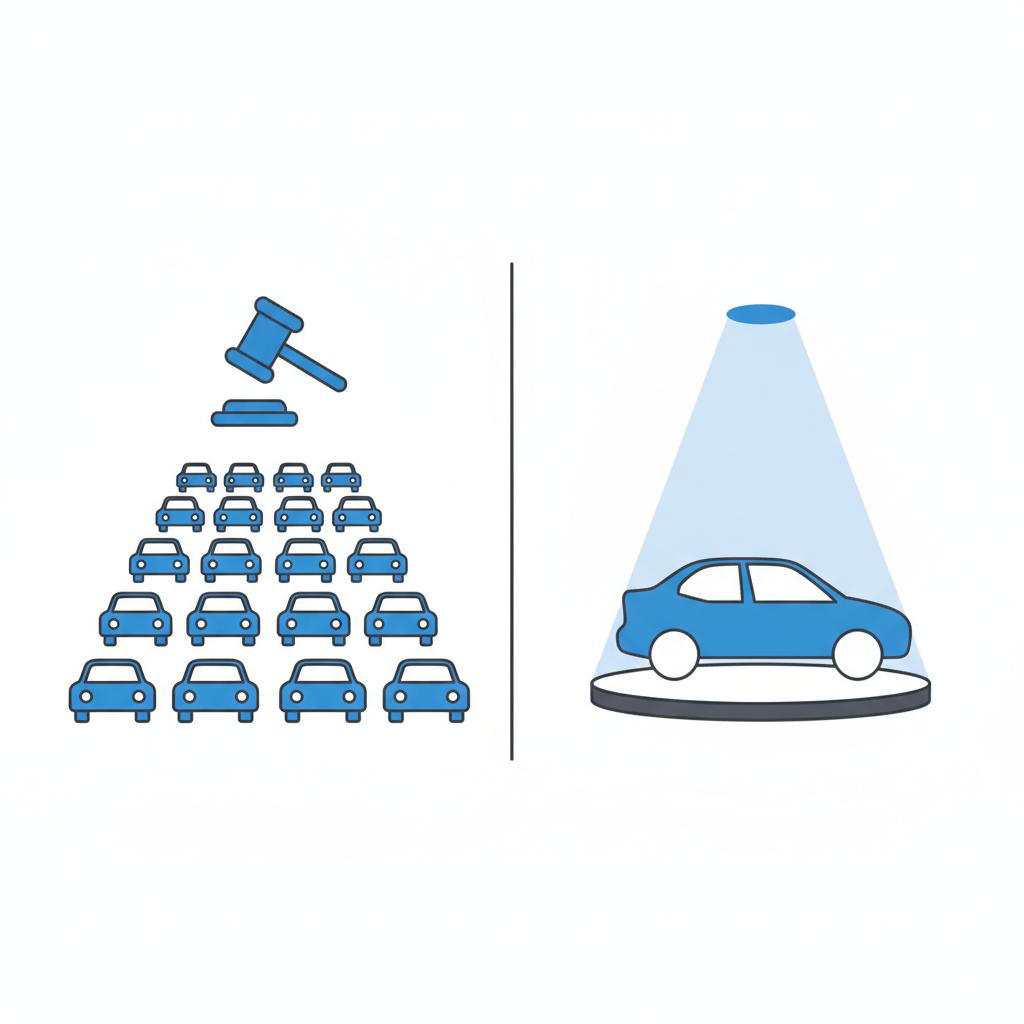
Providers oriented to consumer retail transactions tend to report prices closer to what a buyer might pay at a dealer, while those weighted to auctions and wholesale channels often show lower values for the same VIN and condition. Recognizing this orientation helps a retail buyer pick the most relevant estimate.
Kelley Blue Book and Edmunds generally lean toward retail-focused outputs, while industry services that base values on auction or wholesale pools tend to produce lower figures relative to retail lists. For a discussion of different valuation books see different books for car valuations, and for a view into a wholesale market index that illustrates auction-based movement, see the Manheim market resource Manheim MMR.
Trust the estimator that matches your transaction goal and that you can validate with local comparables; for retail purchases, give more weight to retail-oriented estimators and local listings, and always reconcile multiple sources.
When you are buying for personal use, retail-oriented estimates can be a more useful baseline because they reflect consumer-level prices and typical dealer margins. By contrast, if you are preparing to trade a car to a dealer or sell at auction, wholesale-oriented estimates better match the counterparty's expected payoff.
Key methodological adjustments to watch when comparing values
Condition grading is one of the largest drivers of divergence. Providers use different condition scales and interpret wear and damage differently. A reported difference of one condition grade can move a value by a noticeable dollar amount, so be explicit about how you describe condition when you run each estimator.
Mileage adjustments are another major factor. Estimators apply per-mile or bucketed penalties to align mileage to expected depreciation curves. Normalize mileage when comparing tools by using the exact odometer reading and, if needed, rounding to a common bucket that multiple tools accept. Guidance on how vehicle valuation services document adjustment categories can be found at NADA Guides NADA Guides methodology. Also see KBB's NADA comparison.
Optional equipment and trim differences also matter. A mismatch in trim or failure to include factory options causes inconsistent comparisons. Always enter the exact model year and trim and note major options when possible.
Step-by-step workflow: compare estimators and reconcile to a range
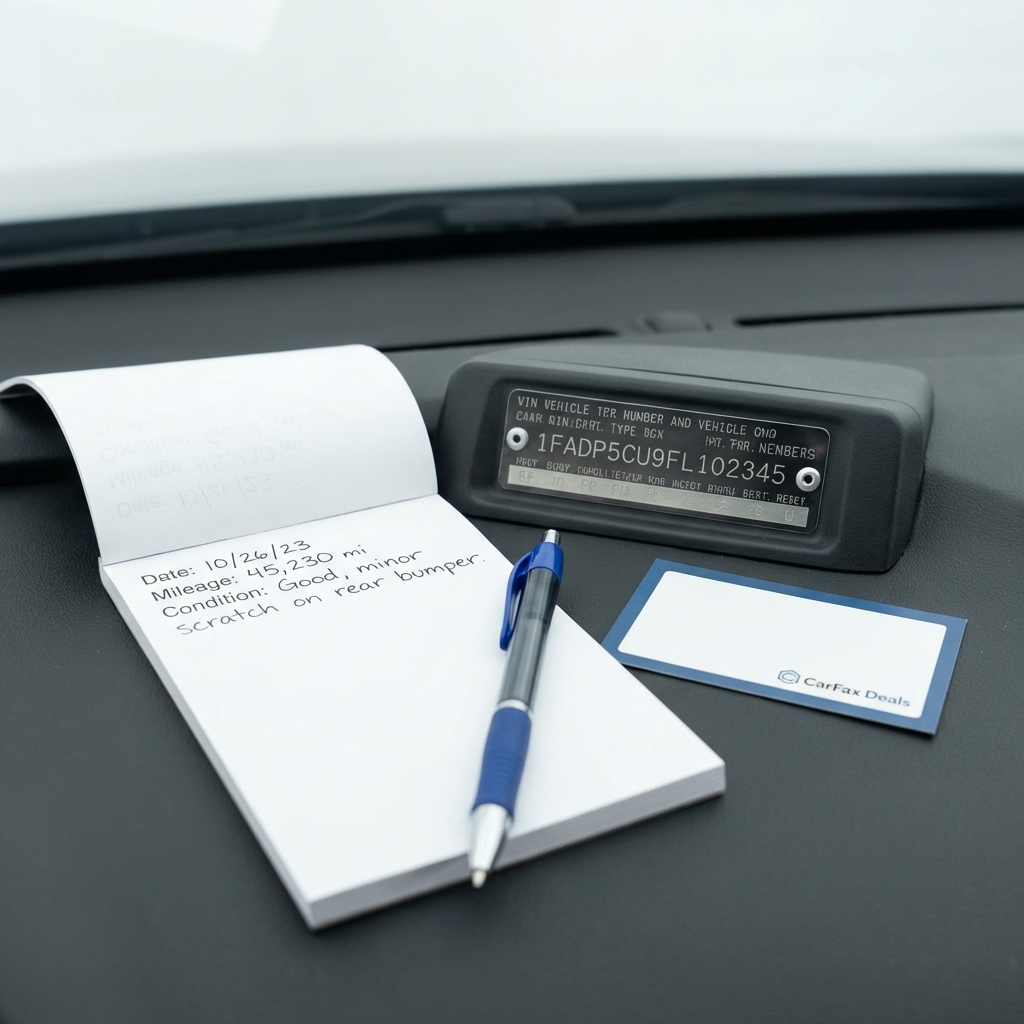
Follow a structured workflow to convert multiple estimates into a defensible local price range. First, collect identical inputs: VIN, exact model year, trim, exact mileage, and concise condition notes. Running estimators with the same inputs reduces avoidable variation.
Second, run at least three estimators that represent different orientations: one retail-focused, one wholesale/auction-focused, and one intermediate or regional service. Record each output and note any condition or options fields that needed manual adjustment. Consumer-oriented guidance recommends this multi-tool approach to avoid single-source error.
Run Vehicle History Report to inform your valuation
Try this three-step workflow now: gather the VIN and condition notes, run multiple estimators with the same inputs, and compare results against nearby listings and a wholesale index to create a value range.
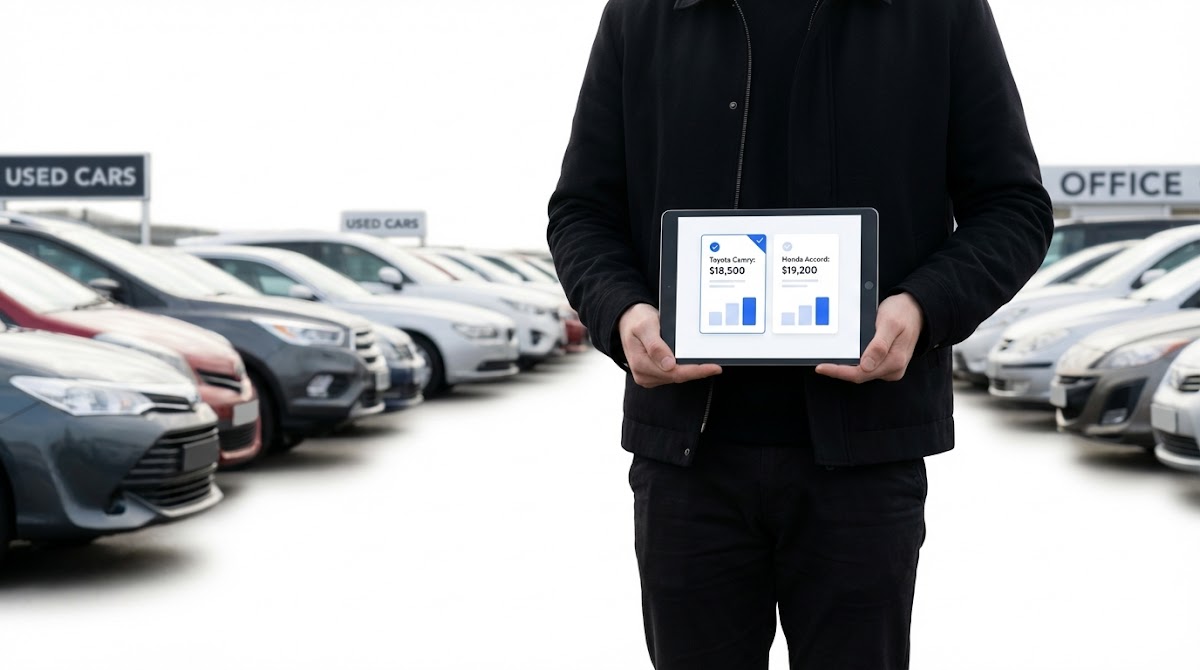
Third, compare the values to recent local listings and to an auction index to identify market direction. If auction indices show a sharp drop but local dealer listings are stable, that signals a disconnect; weight local listings more heavily for retail pricing. Finally, report a reconciled range rather than a point estimate, for example a low, central, and high value, and note which estimates and adjustments produced each bound. For general advice on combining these steps, Consumer Reports provides practical guidance on estimating a car's value Consumer Reports guidance, or see our how-to guide.
How to adjust estimates for condition, mileage, and options
Inspect and record condition elements that most valuation systems recognize: exterior paint and body, glass and lights, interior wear, evidence of fluid leaks, and visible mechanical issues. Use short, consistent phrases across tools so condition descriptions map more predictably between systems.
Mileage normalization helps comparison. Use the exact odometer and consider rounding to common buckets such as under 50k, 50k-100k, 100k-150k, and over 150k when a tool only accepts buckets. Some estimators apply a fixed per-mile adjustment, others apply buckets, so convert each estimate with the same normalization approach before comparing.
Document optional equipment and trim details in a single line per tool. If a tool lacks a field for a specific option, note the omission and adjust by the commonly listed option premiums used in your local market comparisons.
Using local market context and auction indices to reconcile estimates
Industry indices such as the Manheim Used Vehicle Value Index are high-quality trend signals for wholesale market shifts but they reflect auction conditions rather than retail asking prices. Use indices to understand direction and speed of market movement, not as a direct retail number.
Combine index direction with local dealer inventory observations. If the index shows rising prices and local listings show similar upward movement in the same segment, that reinforces an upward adjustment to retail estimates. If they diverge, prioritize local listing evidence for a single-vehicle retail price.
Vehicle history reports and pricing insights can complement market indices by flagging vehicle-specific risks, such as title status anomalies, reported accidents, or inconsistent mileage, which often explain why a vehicle trades below comparable listings. Use history context as a filter to remove listings with specific risk signals from your comparables.
Decision criteria: when to trust which estimate for buying or selling
Choose the estimator orientation that matches your transaction goal. For a retail purchase, prioritize retail-oriented estimates and local dealer listings. For trade-in or dealer sale decisions, weight wholesale indices and auction-oriented estimates more heavily because they reflect the counterparty's expected price level.
Use local evidence to break ties. If two estimators disagree and local comparable sales cluster near one of the values, favor that local signal. If no local comparables exist, widen your reconciled range and proceed cautiously.
Trigger deeper investigation if you see red flags such as title status issues, sudden drops in value for the same VIN, or mismatched mileage histories. Those signals often require confirming service records or running a vehicle history report to resolve ambiguity.
Common mistakes and pitfalls to avoid
Relying on a single estimator as a single truth is the most common error. Different input pools and condition scales mean one tool alone rarely tells the full story. Running multiple estimators with consistent inputs reduces this source of error.
Ignoring regional demand and timing can also mislead. National indices and averages smooth regional variation, so always check local dealer inventory for segment-specific demand signals. Finally, do not read auction indices as direct retail prices without adjusting for the retail margin and the difference in buyer audiences.
Practical examples and scenarios: walk-throughs with sample VINs
Example A, retail-versus-auction split. Suppose the same VIN returns a retail-oriented estimate and a lower auction-focused value. Start with identical inputs and document condition. If local dealer listings for the same model and trim sit near the retail estimate, your reconciled range should center around the retail figure and include the auction value as a low bound.
Example B, high-mileage vehicle. For a vehicle with higher-than-average miles, mileage normalization will move many estimates downward. Run estimators with the exact odometer, then apply a consistent mileage bucket adjustment so that all estimates reflect the same mileage penalty. The reconciled range will likely narrow if all tools apply similar mileage logic.
Example C, local demand spike. If a particular segment is in high local demand, auction indices may lag while local listings spike. Detect this by comparing recent local sold listings or active dealer asks to the index trend. When local evidence supports a premium, document the local comparables that justify the higher bound in your range.
Where CarFax Deals fits: a verification layer for used car shopping
CarFax Deals functions as a verification and decision support layer that supplies vehicle history reports and pricing insights to help buyers assess a listing before they contact a dealer. Use the vehicle history report to confirm title status, ownership history, service history, mileage checks, and any reported accident history. Pair those insights with price analysis labels and filters to prioritize listings that match your risk tolerance.
CarFax Deals
CarFax Deals can help reduce uncertainty by surfacing risk signals and price context, but it should be used alongside multiple estimators and local listing checks rather than as a single source for a final price. Treat history reports and pricing insights as complementary inputs when you form a reconciled value range.
Pre-contact checklist: what to confirm before you call a dealer
Record the VIN, exact model year and trim, current mileage, and succinct condition notes. Save links or screenshots of recent comparable local listings and note any differences in options or observed damage. Confirm title status and scan service history if available.
Use your reconciled value range when discussing price and present it as a typical local range rather than a single number. If you encounter red flags such as a problematic title status, large gaps in service history, or mileage inconsistencies, pause and verify those items before continuing the conversation.
Summary and next steps: a concise action plan
Key takeaways: estimators differ because of input pools and modeling choices, so run multiple tools with identical inputs, normalize for condition and mileage, and reconcile outputs into a value range that you can support with local comparables and market indices. This approach improves vehicle valuation accuracy for your specific transaction.
Three next actions to run today: gather the vehicle VIN and condition notes, run at least three estimators with the same inputs, and compare their outputs to nearby dealer listings and a wholesale index. Use these steps to produce a defensible local price range for negotiation or decision making.
Run at least three estimators representing retail, wholesale, and an intermediate source; use identical VIN, trim, mileage, and condition inputs to compare outputs and form a range.
No. Auction indices indicate wholesale market trends and should be combined with local dealer listings and comparables to estimate a retail price.
Document inputs and adjustments, check local sold listings and vehicle history for risk signals, then report a reconciled low-to-high value range rather than a single number.
Valuation is a process, not a single command. By running multiple estimators, normalizing inputs, and comparing results to local listings and market indices, you can form a defensible range that supports confident decisions. Keep notes, verify vehicle history, and let local evidence guide the final call.

 Blog
Blog