Finding a reliable car for under $5,000 requires a practical, evidence-based approach. This guide helps you prioritize the right signals, use vehicle history reports, and run a compact decision framework so you can reduce risk before you visit a dealer.
The steps below focus on what to check and why it matters. They integrate repair-frequency measures, mileage and powertrain filters, VIN-level checks, and inspection priorities so you can make a clear shortlist without relying on photos or seller claims alone.
Prioritize documented reliability, maintenance history, and VIN-level checks when shopping for cars for under 5000.
Older Toyota and Honda compact and midsize models frequently appear as strong candidates, but each car needs a VIN report and inspection.
Use pricing insights and a simple decision matrix to convert a shortlist into two strong candidates for inspection.
Why this guide matters for buyers searching for cars for under 5000
What this article does and does not cover
Buying cars for under 5000 tends to carry more variability in condition and repair risk than higher-price used purchases. This guide focuses on how to reduce that variability by prioritizing documented reliability records, maintenance history, reasonable mileage, and known model-specific fault patterns. It does not provide negotiation tactics, peer-to-peer pricing comparisons, or promises about a specific vehicle being problem free.
Practical checks and an evidence-led process can often reduce the chance of unpleasant surprises. Start by shortlisting models with good documented reliability and then apply VIN-level verification and an inspection checklist before contacting a seller. This approach helps you compare listings with pricing context and decide which candidates merit an in-person check. For the concept of repair frequency and expected repair cost as a reliability signal, see the RepairPal reliability explanation RepairPal reliability rating.
Who benefits most from this approach
Research oriented buyers and first time buyers who need clear steps benefit most from this process. Families and professionals who must prioritize predictable ownership costs can use the same filters and inspection checklist to limit risk. The method is conditional and evidence based, not absolute; it helps you find safer candidates but does not guarantee an issue free purchase.
How 'reliability' is defined when looking for cars for under 5000
Quantitative signals: repair frequency and typical repair cost
When evaluating used cars, define reliability with measurable signals that matter to ownership cost. Two practical metrics are the frequency of unscheduled repairs and the typical cost of those repairs. RepairPal frames reliability around these metrics, using repair frequency and typical repair cost to rank models, which helps prioritize cars likely to have fewer and less costly unscheduled repairs RepairPal reliability rating.
Qualitative signals: maintenance records and common-fault patterns
Qualitative evidence complements repair frequency numbers. A consistent service history, documented ownership records, and absence of repeated common-fault items in a specific model year all increase confidence. Parts availability and the relative simplicity of the powertrain also matter for older cars, because easier-to-fix systems and widely available parts tend to lower repair lead time and cost.
Mileage and age are useful proxies but should not replace verification. Many analysts recommend using a mileage guideline as a starting point, then validating that the car received timely maintenance. A mileage check combined with a review of ownership history and service records provides a stronger picture than mileage alone.
Model families that commonly produce reliable cars for under $5,000
Why older Toyota and Honda compacts and midsize models show up in multiple lists
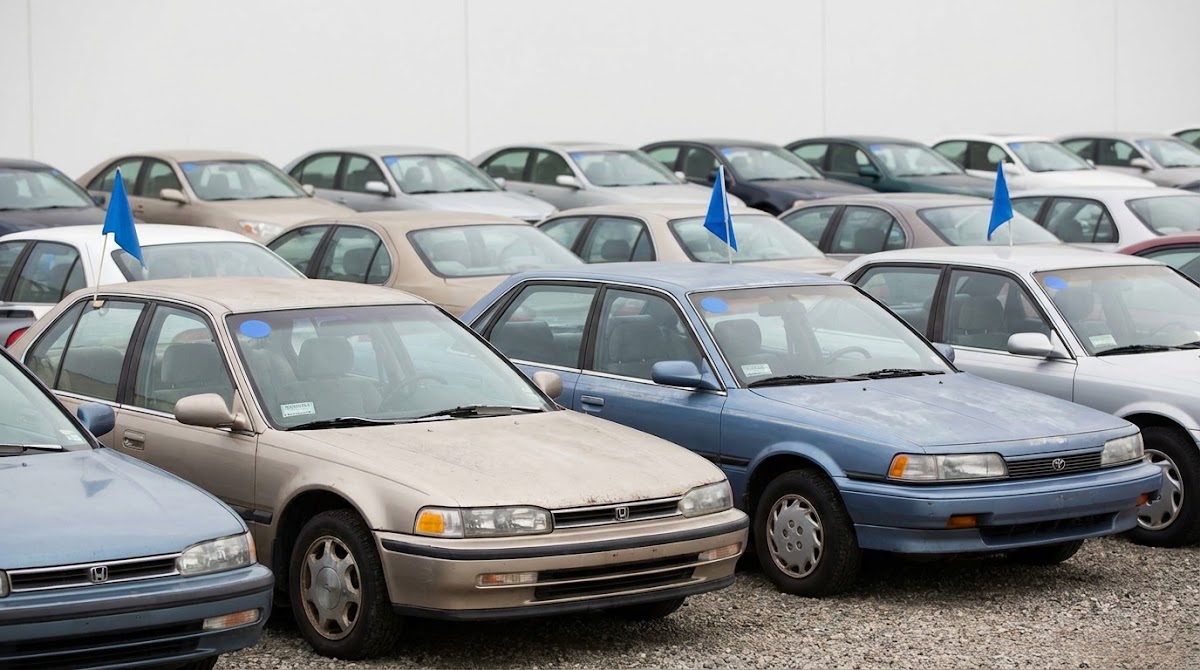
Multiple 2024 and 2025 analyses commonly list older Toyota Corolla, Honda Civic, Toyota Camry, and Honda Accord among frequent reliable options under $5,000, often because these model families have simple powertrains, strong parts availability, and long service records in the used market Kelley Blue Book used-car guide. TrustedChoice also publishes practical lists for budget buyers TrustedChoice.
How to treat model year and trim differences
Not every example of these models is equally reliable. Specific years and trims can show systematic issues, and major powertrain updates sometimes introduce new failure modes. Always check the model year for known problems before shortlisting. Use a vehicle history report and a focused inspection to confirm whether a candidate car matches the model family pattern of reliability and maintenance.
Run a vehicle history report before you visit the dealer
Before you contact a seller, consider pulling a VIN-level history and comparing local pricing context to decide which examples merit an inspection.
When you see a candidate from one of these model families, use pricing insights and the listing's service history to compare it with similar local listings. Favor listings that include clear service records, single-owner notes, or price analysis labels that indicate fair local pricing; these signals tend to align with lower transactional risk. For additional model lists, see UsedCars' overview of best used cars under $5,000 UsedCars.
Mileage, age, and powertrain filters to shortlist candidates
Practical filter thresholds to start with
A common starting filter many analysts recommend is roughly under 150,000 miles, paired with model years that did not have major problematic powertrain changes. This threshold is a practical balance: many cars under that mileage still have useful life left, and parts and repair patterns are better documented for common model years. Use this as a rule of thumb rather than a hard cutoff and verify with the vehicle service history when possible iSeeCars research.
When to relax or tighten filters based on history reports
You may accept higher mileage or an older model if the VIN report shows consistent service history, single-owner usage, and recent major maintenance such as timing belt replacement or transmission service. Conversely, tighten filters when service records are missing, title status is unclear, or open recalls exist. Powertrain simplicity, like non-turbo inline engines and conventional transmissions, often reduces long-term repair risk because they are easier to diagnose and repair.
Using vehicle history reports and dealer signals to reduce risk
What to look for in a vehicle history report
Vehicle history reports should be part of every shortlist decision. Key checks include title status, ownership history, no accident reported versus reported accident history, documented service records, and open recalls. These items materially change the risk profile of older cars and help you prioritize which listings to inspect in person NHTSA recalls and VIN guidance.
Dealer transparency signals that help (and what they do not prove)
Dealer information such as review counts, profile details, and price analysis labels are signals of transparency but not of mechanical condition. Use these dealer signals to prioritize listings that are easier to vet, and then validate with a vehicle history report and a mechanical inspection. CarFax Deals can function as a verification layer that surfaces vehicle history reports and pricing insights, helping you compare listings faster without implying a guaranteed outcome. Learn how to use CarFax Deals for verification how to use CarFax Deals.
When comparing listings, prioritize filters like clean title, single owner, no accident reported, and well maintained. Use price analysis labels as local pricing context to spot listings that are priced significantly above or below market, and treat outliers as candidates for closer inspection.
Pre-purchase inspection checklist for cars for under 5000
Quick test-drive checklist

Start every in-person check with a VIN report and title verification and a quick recall search. On a short test drive, listen for unusual engine noises, check transmission behavior under acceleration and deceleration, watch for brake feel and pulling, monitor dashboard warnings, and note any irregular vibrations. A focused test drive often reveals issues that photos do not capture Edmunds inspection guide.
When to pay for a professional inspection
Pay for a professional mechanical inspection when the listing otherwise meets your filters but you want independent verification of engine, transmission, and suspension condition. A mechanic can check compression, look for hidden leaks, inspect underbody corrosion, and flag recent repair patterns that may indicate recurring faults. Typical inspection focus areas include engine oil condition, transmission fluid, cooling system, suspension components, and visible signs of past damage.
Prioritize VIN-level verification, recall checks, and a review of service records before scheduling an inspection. If the VIN report or service history raises red flags, spend inspection money elsewhere. A structured pre-purchase checklist reduces the chance of paying for an inspection that will not change your decision.
Older cars may show lower depreciation but can have higher year-to-year variability in unexpected repairs, so budget accordingly. AAA's Your Driving Costs - AAA outlines that routine ownership components change with age and that unexpected repair spend tends to be more variable for older vehicles. Use that guidance to set a baseline contingency for unplanned repairs Your Driving Costs - AAA.

Estimating ownership and unexpected repair costs for older cars
Using AAA and RepairPal to set a maintenance budget
RepairPal's repair-cost analyses and frequency estimates help prioritize models with lower expected unscheduled spend, but local labor rates and parts availability also matter. When parts are common and local shops are familiar with a model, repair turnaround is faster and often less expensive. Factor in expected remaining useful life and your local market's labor rates when estimating the total cost to own.
Keep budgeting conservative. For many buyers, setting aside a contingency equal to a modest percentage of the vehicle price each year for unexpected repairs is practical. Adjust that percentage upward for older vehicles with incomplete service records or when the listing lacks recent major maintenance items.
Common mistakes buyers make when choosing cars for under 5000
Overvaluing listed cosmetic condition
Relying only on glossy photos or cosmetic presentation increases risk. Cosmetic condition can mask mechanical neglect, and older cars may be cosmetically refreshed before listing. Focus on service history, title status, and VIN-level checks rather than images alone to assess true reliability risk Edmunds inspection guide.
Skipping VIN and recall checks
Skipping VIN-level checks and recall searches is a common and costly error. A vehicle history report often reveals title problems, accident history, or open recalls that photos do not show. Always verify the VIN (use a VIN decoder) and check recall status, and review ownership history before arranging a test drive. If the VIN report shows issues, decide whether the cost to address them fits your budget. Use the VIN decoder for a quick check VIN decoder.
Another frequent mistake is assuming a low purchase price equals low total ownership cost. Older cars with limited service records can require expensive repairs soon after purchase. Use a realistic contingency budget and a focused inspection to reduce that risk.
Decision framework: step-by-step to pick the most reliable car for under $5,000
A compact checklist to follow before contacting a dealer
Start with a short model-family shortlist based on the research-backed examples such as the common Toyota and Honda families and US News rankings. Apply your mileage and age filters, then require VIN-level checks for title status, ownership history, accident history, and recall status. If a listing clears these filters and has reasonable pricing context, schedule a test drive and a professional inspection when feasible Kelley Blue Book used-car guide. US News
How to combine pricing insights and VIN checks into a final shortlist
Use a simple decision matrix to score each listing. Weight reliability signals such as documented service history and no accident reported more heavily than cosmetic condition. Consider repair-cost risk from sources like RepairPal and set a repair contingency based on AAA guidance. Rank listings by combined score and prioritize the top two for inspection and negotiation.
Final steps before purchase: schedule a professional inspection if the listing otherwise meets your filters, confirm title status and recall closure, and prepare a repair contingency budget. When you are ready to run a VIN-level report, use the vehicle history flow to confirm ownership records and disclosures before visiting the dealer. These steps help convert a short model-family shortlist into a practical, evidence-based final choice.
Quick example decision matrix
Score listings on five items: model-family reliability, mileage and age, VIN and title status, service records, and local pricing label. Assign weights that reflect what matters most to you. For many buyers, VIN and title clarity and documented service history should be decisive. Use the matrix to pick two candidates for inspection and make a contingency plan for repairs before finalizing the purchase.
Older cars can be sensible purchases if you apply consistent checks and budget for both routine and unexpected repairs. Use the model-family shortlist, apply the filters and VIN-level checks described here, and prioritize the top two candidates for inspection.
A careful, repeatable process reduces uncertainty and helps you find the most reliable car for under $5,000 in your local market.

 Blog
Blog