This article explains what "carvana car value" means for sellers and gives a practical comparison workflow. It shows how Carvana produces VIN-based instant offers, which benchmarks to check, and how to calculate net proceeds so you can decide between convenience and maximum price.
A step-by-step workflow for estimating a truck's market value that centers on comparing consumer valuation tools, adjusting for mileage and condition, and checking wholesale market signals. The guide explains private-party, trade-in and dealer retail values and shows how a vehicle history report and pricing insights can change an asking price.
This guide helps research oriented buyers evaluate suv used cars for sale under $25,000 by combining safety ratings, reliability data, local pricing context, and vehicle history checks. It outlines a simple framework, a pre visit checklist, and a decision scoring worksheet so you can compare finalists before contacting a dealer. Use the steps here to narrow candidates and confirm risk signals with a vehicle history report and a pre purchase inspection.
When searching suv used cars for sale, prioritize model year, trim and powertrain before choosing a make or model. This guide explains how safety ratings, dependability studies and local pricing insights combine to produce a short list you can verify with a vehicle history report. It also provides a stepwise checklist you can use before contacting a dealer.
If you are deciding whether to accept an instant buyout, this guide gives a clear, research-first workflow. It explains how Carvana builds a VIN-based offer, which external benchmarks to check, and a simple net-proceeds method to compare options. Use these steps to weigh convenience against the possibility of a higher private-sale price.
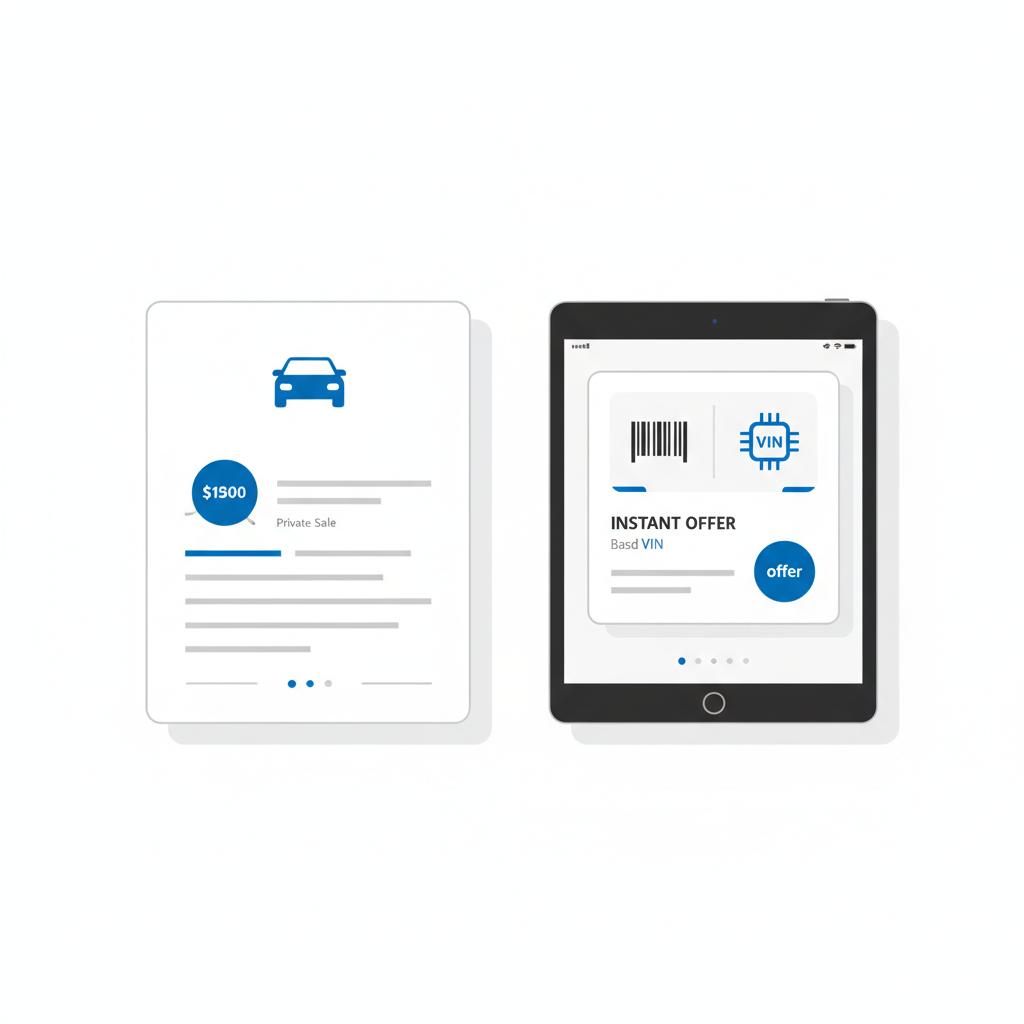
Carvana offers are VIN-based instant quotes designed for speed and short-term certainty.
Private sales often return higher net proceeds, but they require time, listings, and showings.
Run KBB, Edmunds, and a wholesale index check before you accept an instant offer.
Quick answer: what 'carvana car value' means for sellers
Short verdict and when to consider a deeper comparison, carvana car value
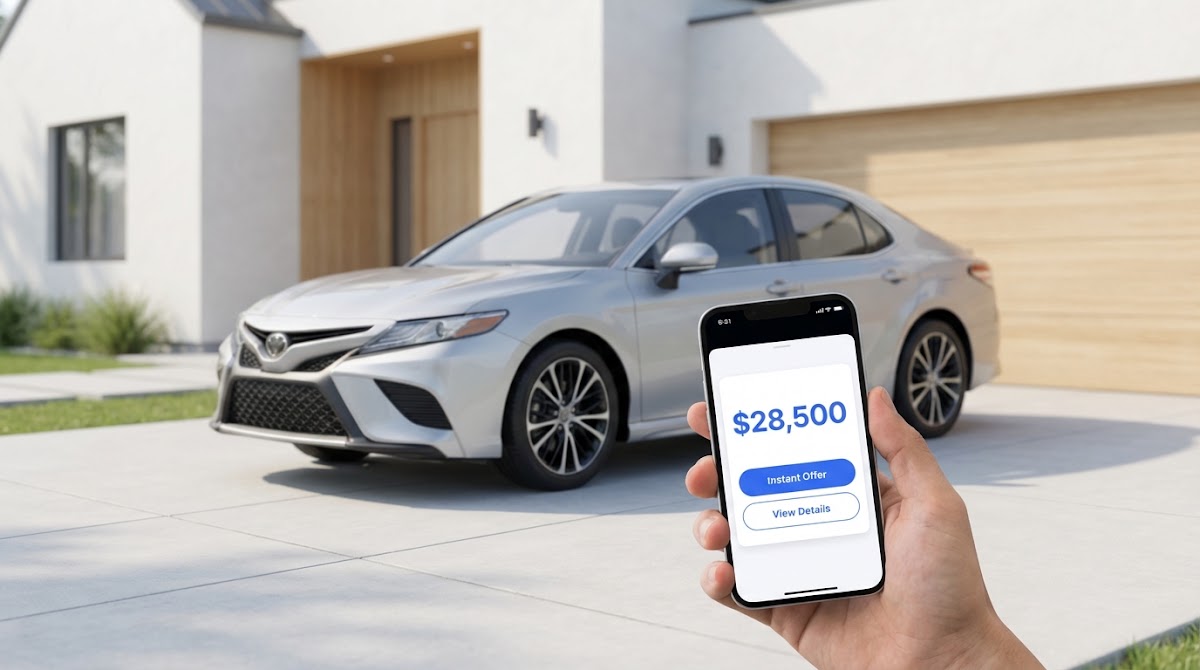
Carvana car value refers to the VIN-based, algorithmic instant offer you can request online, a number intended to give speed and short-term certainty rather than to match maximum private-sale proceeds. The offer reflects automated market comparisons plus the condition details you provide and is meant to be a guaranteed short-term payout subject to inspection adjustments Carvana Help Center.
For many sellers the trade-off is clear: accept a faster, certain sale or take extra steps to try to extract higher net proceeds on your own (see a comparison). see a comparison This article helps you see how offers are generated, which benchmarks to check, and a step-by-step net-proceeds workflow so you can decide what fits your priorities.
Reminder to save VIN offer and benchmark screenshots for comparison
Keep copies for dispute resolution
How this article helps you decide
The piece outlines how Carvana calculates offers, the common reasons an online number can fall after inspection, and practical steps to compare that instant offer against private-sale and dealer routes. Each section links to the primary public resource you can consult for that point so you can follow up with the original documentation Carvana Help Center.
Use the comparison workflow and the checklist above to produce a net-proceeds comparison you can act on. If you prefer speed and certainty, instant offers tend to favor that need. If you prioritize the highest net price, the private-sale path often yields more but takes time and effort.
How Carvana generates an instant offer
Data inputs Carvana uses
Carvana starts the process with the vehicle identification number, which anchors model year, trim, and factory options. Sellers enter visible condition details, mileage, and basic equipment notes; the company’s online flow combines those inputs with market comps to produce an immediate number. That VIN-based approach is the foundation of the instant offer experience Carvana Help Center.
Carvana can give a fair, convenient option for sellers prioritizing speed and certainty, but private sales often return higher net proceeds if you can wait and manage the sale.
Automated pricing plus manual adjustments
The online number comes from automated pricing models that use local market data and recent transactions; Carvana’s documentation and investor materials also describe expected reconditioning checks and title reviews that can reduce the final payout after inspection Carvana 2024 annual report.
Because the offer is tied to a VIN and a seller-reported condition, sellers who accurately report small issues avoid surprises later. When the vehicle goes through the company inspection and any title or lien checks, line-item deductions for repair or unresolved paperwork can appear and change the final amount.
Step-by-step workflow to compare a Carvana offer with other options
Requesting and saving your VIN offer
Step 1: Request a VIN-based instant offer from the platform and save a screenshot of the online offer page, including the offer expiration or validity notice. Document the VIN, the date and time you requested the offer, and any terms on the offer screen.
Step 2: Pull private-sale pricing estimates from Kelley Blue Book and Edmunds to see typical retail asking ranges for similar vehicles in your area. Those estimates show what private sellers might ask and provide a baseline to compare against the instant offer you received Kelley Blue Book.
Also check wholesale and market-level trends to understand if local demand or seasonality is moving prices; these factors can shift instant-offer levels in short timeframes and help explain differences between quotes.
Step 3: Calculate a private-sale net by starting with the private-sale estimate, then subtracting likely costs such as advertising, minor repairs, any sales tax or registration fees due at sale, and a time cost for your effort. Treat the Carvana offer as a short-term guaranteed payout but remember inspection deductions can change the final check Edmunds guide.
Step 4: Compare the net numbers side by side, and factor non-monetary priorities such as speed and certainty. If you have limited time or want to avoid showings, a slightly lower net can be acceptable; if you can wait and the vehicle is in high demand, the private-sale net often exceeds instant offers.
Benchmarks: using KBB, Edmunds and Manheim to check fairness
What each benchmark shows and when to use it
Kelley Blue Book and Edmunds provide private-sale and trade-in estimate ranges that reflect retail asking behavior and local listings. Use them to see what similar vehicles are listed for and to set expectations about a reasonable private-sale price in your market Edmunds guide.
The Manheim Used Vehicle Value Index reports wholesale market trends that explain broader regional or monthly shifts. Wholesale indexes often move faster than retail listings and can cause instant-offer platforms to adjust prices to reflect expected reconditioning costs and auction results Manheim Used Vehicle Value Index.
Want to confirm the offer with history and pricing context?
Pull the KBB and Edmunds private-sale estimates now, and check the Manheim index for recent regional trends before you accept an instant offer.
When a Carvana offer differs significantly from private-sale estimates, ask whether the gap reflects typical reconditioning allowances or a market swing. Benchmarks are most useful when you compare apples to apples: same model year, trim, mileage band, and local ZIP code.
Common deductions and why offers change after inspection
Typical reconditioning items and title checks
Initial offers assume a representative condition and will include allowances for items an inspector may find, such as tire wear, brake service, light bodywork, or mechanical maintenance. The company’s help pages and reports note that reconditioning and title issues are common causes of downward adjustments from the online offer Carvana Help Center (see common hidden costs). see common hidden costs
Title or lien problems, mileage discrepancies, and undisclosed damage can all lead to larger deductions. That is why honest, precise condition reporting up front reduces the chance of a big surprise during inspection and helps you compare the online offer to expected net proceeds.
How disclosed condition versus inspection can affect payout
If you accurately list small cosmetic or maintenance needs when requesting the VIN offer, the online number should already allow for them. If the inspection finds additional issues not reported, the final payout can fall below the online figure and the platform will typically present adjustment line items that explain the changes.
Before you accept any revision, ask for an itemized list and compare it to the initial screenshots you saved. If documentation shows a mismatch between reported and inspected condition, keep records for any follow-up or dispute.
Decision criteria: when accepting a Carvana offer makes sense
Speed and certainty versus maximum net proceeds
A Carvana instant offer is often a good fit when you value speed and a straightforward transaction over squeezing out the last dollar (read analysis). read analysis
Conversely, if you can wait and your vehicle is in a sought-after configuration, the private-sale route frequently returns a higher net after you account for fees and effort. Always compare the net proceeds rather than headline numbers to determine which path is better for you.
Seller profiles that often favor instant offers
Profiles that favor instant offers include sellers who need immediate funds, those who want to avoid handling paperwork and showings, and people who prefer a fast, guaranteed payout over negotiating with buyers. These sellers typically value transaction certainty more than trying to optimize price.
Keep in mind your personal time cost and local demand. If you estimate the time and effort of a private sale to be high, the convenience of an instant offer can be worth the difference in proceeds.
Situations where private sale or dealer trade-in may be better
High-demand models, rare trims, and local premium markets
Vehicles that tend to do better in private sale are those with desirable trims, low mileage, or features that local buyers prize. In such cases, a private sale can yield a retail premium that instant platforms may not fully capture in their wholesale-adjusted model-based offers Kelley Blue Book explanation.
Also consider geographic pockets of strong demand, where retail buyers may pay more than a regional instant offer suggests. Benchmarks can flag when your car sits in such a premium micro-market and help you decide whether the extra effort is worthwhile.
When dealer trade-in still makes sense
Dealer trade-in remains an option for sellers who prefer to bundle a sale with a purchase transaction. While trade-ins can also trade off some raw dollar value for convenience, the bundled process can simplify tax handling and paperwork in some states, which is a non-monetary benefit for certain sellers.
Use private-sale and instant-offer benchmarks to check whether trade-in convenience matches the net trade you would accept, and include any dealer incentives or state tax rules that affect net proceeds.
Typical seller mistakes and how to avoid them
Misreporting condition and overlooking title paperwork
Common mistakes include underreporting visible wear, forgetting to clear liens, or not preparing title paperwork. Those errors often cause delays or deductions during inspection and reduce the final payout. The platform guidance warns sellers that misreported condition and title issues can change the offer after inspection Carvana 2024 annual report.
Mitigations are simple: document condition with photos, confirm title status and lien release, and disclose known maintenance items. Doing so reduces the chance of unexpected deductions and speeds the final settlement.
Not comparing benchmarks before accepting an offer
Another error is accepting an instant offer without pulling KBB, Edmunds, or wholesale trend data. Benchmarks give you a second opinion and help quantify whether the instant offer is reasonable for your market and model.
Always save the offer screenshot and run a quick comparison. If the instant offer is substantially lower than median private-sale estimates, decide whether convenience or additional effort is your priority before proceeding.
Practical scenarios: three seller profiles and the workflow to choose
Scenario A: seller who needs immediate funds
If you need cash quickly, request a VIN-based instant offer and accept the convenience value. Request the offer, save the screenshot, and complete the inspection step promptly to avoid a delayed payout. This profile typically accepts a lower net in exchange for speed and certainty Consumer Reports guide.
Steps: request VIN offer, document the offer, compare briefly to KBB/Edmunds, and accept if the net fits your immediate needs. If the inspection finds small adjustments, have your documentation ready to review any line-item changes.
Scenario B: seller with a high-demand trim
If your car is a sought-after trim with low miles, run the same VIN offer but invest time in private-sale benchmarking. Pull private-sale pricing and check local demand; if retail listings show a clear premium, the private-sale path often yields higher net proceeds after you factor in time and fees Kelley Blue Book.
Steps: request the VIN offer, list benchmarks, prepare show-ready photos, set a realistic asking price, and schedule viewings. If offers match or beat your net target, proceed with private sale; otherwise accept the instant offer for certainty.
For sellers who do not want to host buyers or manage negotiations, instant offers provide a low-management route. Request the VIN offer and compare the net after minor deductions; accept if the difference does not justify the time cost of a private sale Edmunds guide.
Steps: request the offer, confirm inspection window, prepare title documents, and complete the sale. If you feel uncertain about the inspection findings, ask for an itemized explanation and check your initial screenshots.
How to estimate net proceeds: a simple calculation method
Items to subtract from gross private-sale price
Start with the private-sale asking price from KBB or Edmunds, then subtract likely costs: minor repairs to make the car saleable, advertising or listing fees, taxes and registration costs if they apply to the seller, and a time-cost estimate for showings and negotiations. This yields a private-sale net you can compare to the instant offer.
For the Carvana offer, treat the number as a near-term guaranteed payout but remember inspection deductions are possible. Include a small allowance for likely reconditioning in your comparison so you are comparing net to net Kelley Blue Book.
How to factor time cost and reconditioning estimates
Translate time into a cost you feel is fair. If you would need several weekends to manage a private sale, add that estimated value to the private-sale deductions. For reconditioning, use the inspection checklist to estimate items the buyer may reasonably expect to be fixed and include that in your private-sale prep cost.
When you run the arithmetic for each path, you will see whether the instant offer’s convenience compensates for the difference. Repeat the calculation for more than one private-sale price point to test sensitivity.
Market timing: regional volatility and how it affects offers
Using Manheim index to spot market swings
Wholesale and retail values shift month to month and vary by region; the Manheim Used Vehicle Value Index provides a market-level view that can explain why an instant offer is lower or higher than expected. Check the index for recent swings in your region to see if a short delay is likely to change the market picture Manheim Used Vehicle Value Index.
If benchmarks change materially between when you request an offer and when you complete a sale, re-run the private-sale checks and consider asking the platform whether they will update the offer if market conditions move.
Local demand signals to watch
Watch local listing counts, days on market, and asking price trends for the same model year and trim in your ZIP code. Those signals often move before wholesale indexes catch up, and they can indicate whether a private sale is likely to fetch a premium compared to an instant offer.
If you see a cluster of recent retail sales at higher prices locally, the extra effort of a private sale is more likely to pay off than in a flat or declining market.
Pre-acceptance checklist: what to confirm before you sign
Documents and verification steps
Confirm the offer validity window and any inspection conditions on the offer page. Have title and lien information available and verify what documents the platform needs to complete payment. Save screenshots of the full offer and all communications for your records Carvana Help Center.
Prepare keys, VIN documentation, maintenance records, and a release for any lienholder so the transaction is not delayed. If you have concerns about documented condition, bring evidence such as dated photos or service receipts to the inspection.
Questions to ask the buyer or platform
Ask for the inspection checklist, how long the offer remains valid after inspection, and where to find an itemized explanation of any deductions. If a deduction appears that you did not expect, request photos or documentation so you can confirm the issue before finalizing the settlement.
Having a clear timeline and documented communications reduces the chance of disputes and speeds up final payment.
Conclusion and next steps for research-first sellers
Recap of the net-proceeds approach
Carvana offers convenience and transaction certainty through a VIN-based instant-offer model, but the online number can change after inspection to reflect reconditioning and title checks. Use KBB, Edmunds, and the Manheim index as benchmarks and run a net-proceeds calculation that includes fees, taxes, reconditioning, and time cost before deciding Edmunds guide.
CarFax Deals can help by surfacing vehicle history reports and pricing insights so you can compare the instant offer with local market context and known history before you commit. That context often reduces uncertainty and helps you choose the right selling channel for your priorities.
Carvana uses the vehicle VIN and seller-reported condition combined with market comparables to generate a VIN-based instant offer that is subject to inspection adjustments.
Often private sale prices net higher proceeds, but they require time and effort; instant offers trade some potential net proceeds for speed and certainty.
Save the offer screenshot, confirm the offer validity and inspection terms, prepare title and lien documentation, and compare net proceeds after likely deductions.
Decide by comparing net to net, not just headline numbers. Get the VIN offer, pull pricing benchmarks, calculate expected costs and time, then choose the sale path that aligns with your priorities.

 Blog
Blog