Does Carvana actually check their cars? — Does Carvana actually check their cars?
This article explains what carvana car value means for buyers and sellers, tying inspection notes to offers and listing prices. It summarizes Carvana's stated multi-point inspection and where variability has been reported, then gives practical steps sellers and buyers can use to reduce uncertainty.
Carfax coupon codes rarely work, and the codes listed on coupon sites are usually expired. The discounts that do exist are bundles (three reports for $64.99, five for $99.99), AAA member pricing, and free reports from dealers and listings. The simplest guaranteed discount is CarfaxDeals at $7.99 per report versus $44.99 at Carfax.com.
A Carfax VIN lookup takes the 17-character vehicle identification number and returns the car's recorded history: accidents, title brands, odometer readings, owners, and service records. Free VIN tools only decode specs or check recalls and theft. The full Carfax report costs $44.99 on Carfax.com and $7.99 at CarfaxDeals.
You can get a free Carfax report from the Carfax.com used car listings, a dealer website, the seller, Carfax Car Care (for a car you already own), or listing sites that include one. There is no free report for any VIN you type in. When no free report exists, a paid one costs $44.99 at Carfax or $7.99 at CarfaxDeals.
This article explains what "carvana car value" means for people selling to or buying from Carvana. It ties together Carvana's stated inspection workflow with independent reporting about variability and provides practical steps to document condition and manage disputes.
The goal is to help research-oriented buyers and first-time sellers understand what inspections tend to check, which defects most strongly affect offers, and what evidence to gather before or after a transaction.
Carvana uses a publicly described multi-point inspection combined with automated valuation to set offers and listing prices.
Major mechanical, structural or title issues typically have the largest effect on offers; cosmetic wear usually affects price less.
Document maintenance, take dated photos, and use a vehicle history report and pricing context to reduce uncertainty.
What carvana car value means: inspection notes, offers, and pricing context
When people ask about carvana car value they are usually asking how Carvana turns inspection findings into an online offer or a listing price. In plain language, carvana car value is the platform's estimate of what a vehicle is worth after an automated valuation is combined with inspection notes and any reconditioning work that center staff complete before sale. Carvana describes this workflow as a multi-point, commonly referenced as a 150-point, inspection that checks items such as tires, brakes, lights, fluids and visible body damage, and many repairs occur before a vehicle is listed Carvana help center.
For sellers that means an initial online offer is often provisional: the automated valuation sets a baseline and then inspection outcomes can raise or lower the final payout. Buyers seeing a Carvana listing will see a price that reflects the automated value plus the condition the company documented after reconditioning. This combined approach explains why the same model and year can show different values depending on inspection notes and title status.
In practice, some inspection findings have outsized effects. Structural damage, title issues such as salvage or branded titles, and major engine or transmission problems tend to produce the largest downward adjustments to offers, while surface wear, small accessory faults and routine cosmetic issues usually lead to much smaller price changes. Industry analyses and valuation guides show this pattern across online trade-in and sale processes Edmunds analysis.
How Carvana inspects and reconditions vehicles
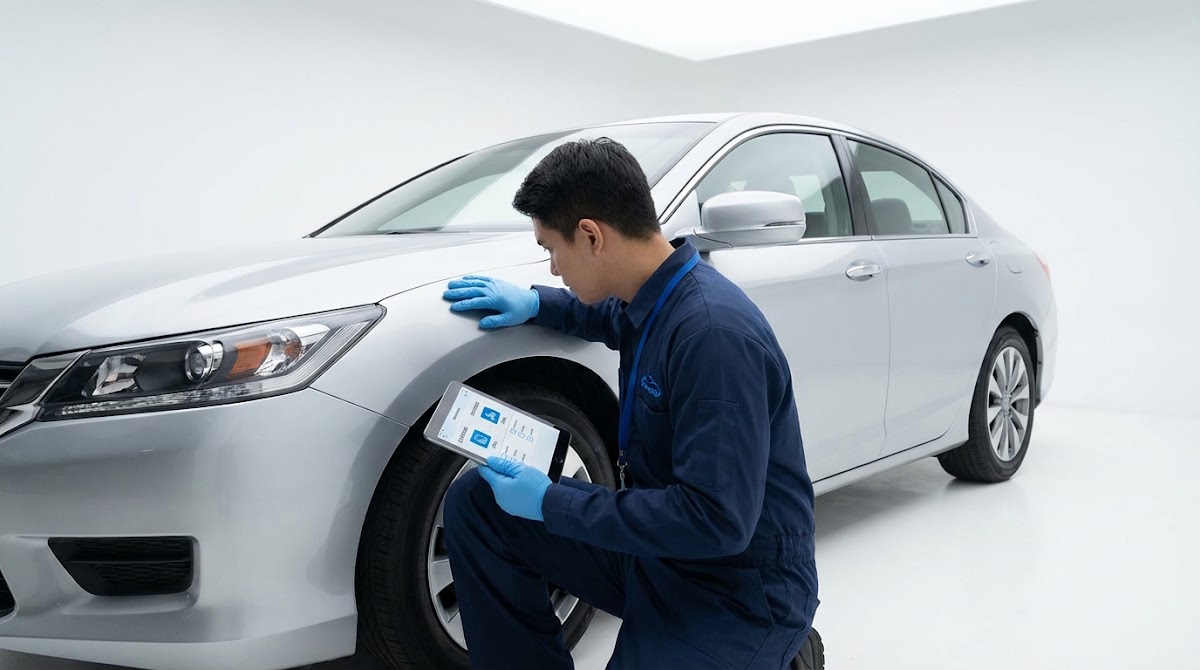
Carvana publicly describes a structured inspection and reconditioning workflow that many sources call a 150-point inspection. The company lists checks on key safety and functional items like tires, brakes, fluids and lights and documents visible body or interior damage on vehicle detail pages Carvana vehicle details.
Carvana states it performs a multi-point inspection and reconditioning at its centers and documents checks on tires, brakes, fluids, lights and visible damage, but inspection and repair thoroughness can vary by facility, which can affect offers and delivered condition.
The 150-point wording is a summary label rather than a single public checklist, and the specific items examined show up on help pages and on the vehicle's inspection notes. The 150-point wording is described in Carvana materials Carvana 150-point.
At reconditioning centers technicians typically perform basic mechanical checks, change fluids when needed, replace worn consumables and address visible defects that affect safety, appearance or immediate drivability. Carvana's public descriptions note that some items are repaired before listing but do not publish a universal, center-by-center repair list. That means buyers and sellers can usually expect standard wear items and obvious faults to be handled, while the depth of work on more complex issues can vary by facility reconditioning centers and Carvana help center.
How inspection outcomes change carvana car value: which defects matter most
Inspection outcomes map to value in tiers rather than by a single, public dollar schedule. In valuation practice, defects are grouped by severity: major mechanical or title problems, structural issues and salvage-related concerns are in the highest-severity tier and typically reduce offers the most or lead to declined purchases. Trade and appraisal analyses show these categories drive the largest valuation changes KBB guidance.
Lower-severity items such as worn upholstery, minor body scratches, scuffed wheels or a burned-out accessory tend to produce smaller adjustments. For sellers this means documenting the difference between a cosmetic flaw and a structural or mechanical defect is important when contesting an inspection outcome. Providing dated maintenance records and clear pre-sale photos gives context that can distinguish small wear from a larger underlying problem Carvana help center.
Because Carvana combines automated valuation with inspection notes, the same automated baseline can shift significantly after a vehicle is physically examined. Major engine or transmission faults often result in a vehicle being rejected for purchase or a substantially lower payout, while accessory faults might only reduce the offer modestly. Sellers who want to protect value should understand which items sit in the high-impact category for offers and prioritize documenting or repairing those before submitting their car Edmunds analysis.
Why inspections and reconditioning can vary between centers and cause disputes
Independent reporting and consumer watchdog compilations from recent years document recurring complaints that inspection thoroughness and reconditioning quality can vary by location. These reports note cases where buyers received vehicles that did not match inspection notes or where sellers described inconsistencies in how centers assessed damage and applied price adjustments Reuters reporting.
Variability shows up in several ways. A seller may submit clean photos and maintenance records but still receive a reduced payout because a center documents additional damage after transport. A buyer may find that an item listed as repaired remains in the delivered car, or they may see cosmetic repairs that differ in quality across centers. These patterns are a common reason for returns and for formal disputes reported to watchdog organizations Consumer Reports summary.
Because repairs and documentation can differ by center, the mismatch between pre-sale photos, inspection notes and the delivered condition is a frequent trigger for escalation. That is why independent guidance recommends keeping dated records and photos before handing over keys or accepting delivery, and why both buyers and sellers often rely on return windows and dispute channels when reconditioning appears incomplete Consumer Reports summary.
How to prepare your car before selling to Carvana
Preparing your car before you request an offer can help reduce surprises. A concise seller checklist should start with gathering maintenance records, including recent service invoices and receipts that show routine work such as oil changes, brake service and timing belt or battery replacements. Clear, dated pre-sale photos that show the odometer and each side of the car help document condition at the moment of sale and can be used in disputes KBB guidance. For a step-by-step seller guide see this practical walkthrough selling your car.
Add a recent vehicle history report or VIN report to your packet when possible. A verified vehicle history report can show prior title history, reported accidents and ownership history; providing that evidence with your photos makes it easier to dispute unexpected inspection findings related to past damage or title status. While this information will not change how centers perform repairs, it supplies verifiable context for what may have occurred before you owned the car Edmunds analysis.
Before you hand the car over, fix obvious high-impact items if the repair cost is reasonable compared with the expected uplift in offer. Addressing engine warning lights, fixing a leaking fluid line or repairing a failing transmission is often more impactful than buffing a scratch. If you cannot make repairs, document the condition, provide maintenance records, and note any recent parts replacements to support your case if an inspection marks a larger issue Carvana help center.
Keep copies of everything you hand to the buyer or to Carvana staff. That includes service records, receipts for recent repairs, and the dated photos you took. Clear documentation is the primary tool sellers have when contesting an inspection outcome because Carvana does not provide a public, itemized defect-to-dollar schedule that would let you predict exact adjustments in every case Consumer Reports summary.
What buyers should check after delivery and how to use return and dispute options
When a car arrives, buyers should inspect key items immediately and document any differences from the listing. Start with visible condition: walk around the car and photograph the alignment of panels, paint condition, wheel condition and interior wear. Note any unusual noises on the first drive and verify fluid levels and obvious mechanical status. This front-line documentation is essential for any return or dispute claim Carvana vehicle details.
Next compare the delivered condition to the inspection notes and photos provided on the listing. If the listing shows that certain items were repaired or not present and the delivery contradicts those notes, take timestamped photos and reach out to Carvana's return or dispute channels promptly. Prompt action matters because most return windows and dispute processes expect early reporting of mismatches Reuters reporting.
Delivery inspection checklist for first 48 hours
Take timestamped photos and keep copies
If you find discrepancies, file a dispute or request a return according to the platform's published steps and provide the documentation you collected. Include the listing's inspection notes, your delivery photos, and a vehicle history report if you have one. Some disputes are resolved quickly, while others require escalation and additional documentation because center-level variability can affect how repairs were performed or described Consumer Reports summary.
Keep expectations realistic about outcomes. Documentation increases the likelihood of a favorable resolution, but outcomes depend on what the inspection notes recorded and the evidence you can provide. If a major mechanical or title issue appears post-delivery, adding an independent inspection report and a vehicle history report can strengthen your case when contacting support or pursuing a return KBB guidance.
Open questions and limits: what Carvana does not publish about valuations
Carvana does not publish an itemized defect-to-dollar schedule that maps each inspection finding to a fixed price change. Independent studies and trade analyses provide estimates, but there is no standardized public table that details exactly how much each defect reduces an offer in every market Consumer Reports summary.
This lack of a public schedule contributes to uncertainty for sellers trying to estimate expected losses and for buyers trying to predict listing price adjustments. Research gaps include the exact weighting Carvana assigns to specific inspection items within its automated offer algorithm, and the typical dollar impact of each defect type in different local markets. Industry analyses can guide expectations, but they cannot replace center-level or market-level data Edmunds analysis.
For practical purposes, use available documentation, independent valuation tools and local market comparisons to estimate likely impacts rather than relying on a single published schedule. Gathering evidence and choosing which repairs to make should be guided by the categories that historically carry the largest valuation effects, particularly structural, title and major mechanical findings KBB guidance.
How CarFax Deals can reduce uncertainty when comparing offers and inspecting listings
CarFax Deals functions as a decision-support layer that can help buyers and sellers by adding verified vehicle history reports and pricing context to listings. A vehicle history reports and VIN tools can surface prior reported damage, ownership history and service entries that supplement inspection notes and help explain past events that might influence offers Carvana help center.
Pricing insights and price analysis labels provide local market context so you can compare a Carvana offer or listing price against nearby listings and recent transaction norms. Use those signals together with the inspection notes to decide whether to contest a post-inspection adjustment or accept a delivered condition. This layered approach reduces uncertainty but does not guarantee a particular price or condition. For guidance on using these tools see our how-to material pricing context.
Run Vehicle History Report with pricing context
Consider running a vehicle history report and checking pricing context before finalizing a sale or filing a dispute, to add independent documentation to the inspection notes you receive.
When using CarFax Deals or similar decision tools, keep brand framing conditional: these reports help surface risk signals and pricing context, but they do not change what a reconditioning center documents or publish a defect-to-dollar table. Treat the reports as verification and comparison aids rather than as replacements for inspection photos and return windows Edmunds analysis.
Return windows vary by the purchase terms and local policies; check Carvana's published return and refund rules and report any mismatch promptly with photos and documentation.
Supporting records can help justify condition claims and may reduce post-inspection adjustments, but they do not guarantee a higher offer because final valuation depends on the inspection outcome.
A vehicle history report can supply evidence about past damage and title status and strengthen a dispute, but resolution depends on the inspection notes and the dispute process.
If you are preparing to sell or have just received a delivery, use the checklists here to gather clear documentation, compare inspection notes to actual condition, and act quickly within posted return or dispute windows. Combining inspection notes, a verified vehicle history report and pricing insights will typically reduce uncertainty and make disputes easier to resolve.
CarFax Deals can help provide vehicle history reports and pricing context, but it remains important to rely on documented photos, maintenance records and the platform's own inspection notes when contesting outcomes.

 Blog
Blog