What is the most reliable low cost car? A practical guide
This guide explains how to use independent reliability studies and ownership-cost data to find cheap cars for sale that are likely to be dependable and affordable. It shows which sources to consult, offers a practical checklist for scanning listings, and explains how vehicle history reports and pricing insights reduce risk before you contact a dealer.
This guide helps research-oriented buyers compare used Tacoma options and decide which model years and trims match their priorities. It distinguishes third-generation 2016–2023 Tacomas, which have a long service and parts history, from the 2024 redesign that introduced i-FORCE powertrain options. Use a VIN-based vehicle history report and a professional pre-purchase inspection to reduce risk before you contact a dealer.
This guide explains which tacoma trucks for sale show the strongest reliability and safety signals to watch out for, and why mid-2010s and many pre-2016 Tacomas appear most often in complaint and recall records. The article shows how to use vehicle history reports, recall checks, and a focused inspection to reduce risk when evaluating a used Tacoma.
This article helps buyers searching tacoma trucks for sale understand which Tacoma engine tends to be most reliable. It summarizes reliability ratings, owner-complaint clusters, and maintenance-cost differences between the 2.7L I4 and the 3.5L V6, and gives actionable checks to reduce engine-related risk.
Buying a reliable low-cost used car requires more than scanning prices. The right approach combines independent dependability signals, realistic repair-cost budgeting, safety checks, and local price comparisons.
This guide helps research-oriented buyers and first-time buyers focus on evidence-based steps. It shows which public sources to consult, how to read vehicle history reports, and how to use pricing insights to prioritize listings before contacting a dealer.
Independent surveys and repair-cost estimates help narrow which budget models tend to be more reliable.
Run a VIN-level vehicle history report and compare local KBB values before arranging an inspection.
Compare five-year total cost to own, not just the purchase price, to decide if a cheap car is truly affordable.
Why reliability matters when shopping cheap cars
What reliability means for used-car buyers
Reliability for a used-car buyer means fewer unexpected repairs, predictable annual maintenance costs, and a reasonable remaining useful life for the powertrain and major systems. For shoppers looking at cheap cars for sale, reliability narrows choices to models that tend to need less unplanned spending and easier ownership planning, rather than simply the lowest sticker price.
Research-focused buyers use reliability data to estimate likely running costs and to set a practical budget for repairs and maintenance. Aggregated ownership-cost work shows how repair and maintenance expectations influence whether a low purchase price is an actual long-term saving; many readers find that modest, predictable repair costs can make a lower-risk car the better value overall Edmunds True Cost to Own.
Run a vehicle history report and compare pricing insights
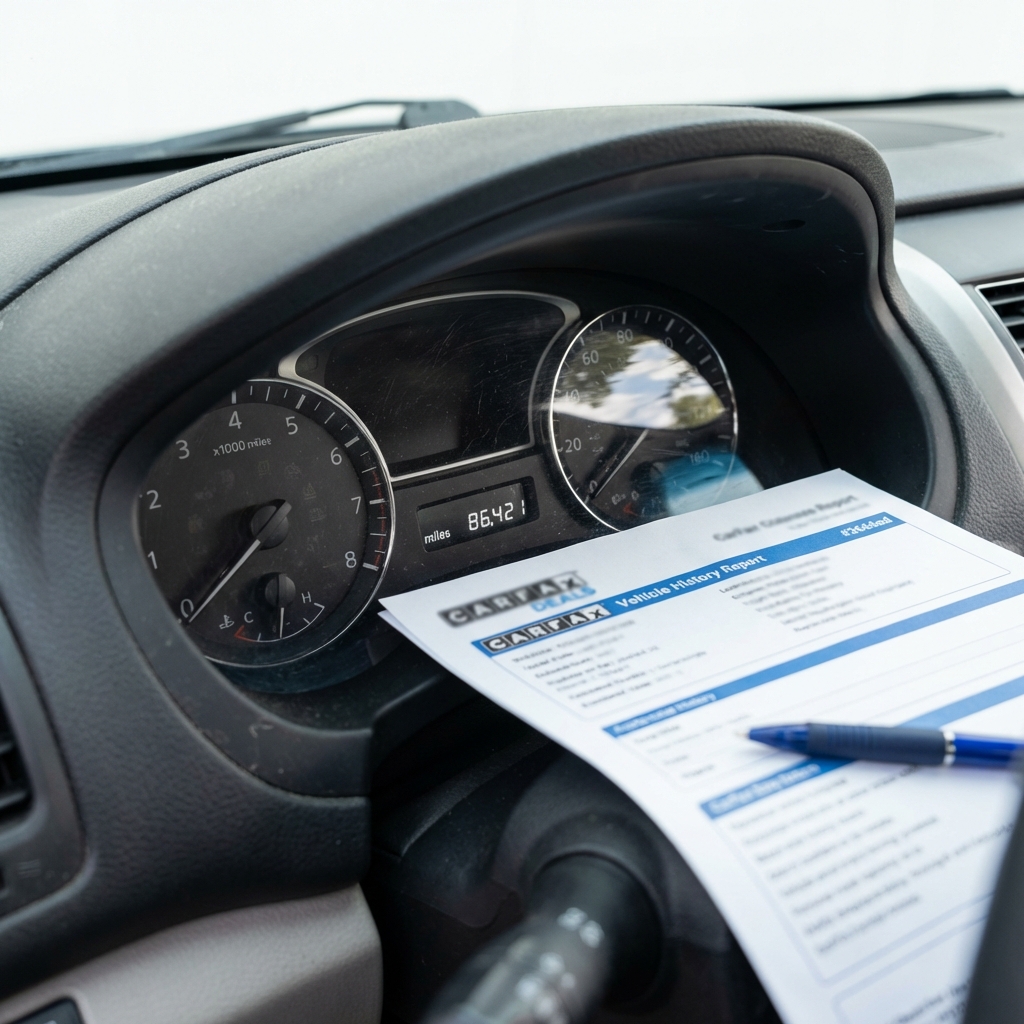
Use pricing insights and a vehicle history report to compare local listings before you contact a dealer, so you can prioritize cars with clearer ownership records and lower projected repair needs.
Reliability also affects resale. A model with a stronger dependability record can hold value better, so depreciation interacts with repair costs to change the real affordability of cheap cars. When you add likely resale into a five-year ownership estimate, differences in depreciation and recurring costs often outweigh small differences in the original purchase price Edmunds True Cost to Own.
How reliability affects running costs and resale
When a car requires fewer unplanned repairs, owners typically spend less per year on parts and labor. Aggregated repair-cost ranges give a practical budgeting frame for many reliable compact models, and those ranges can be used alongside local values to test whether a low sticker price will stay affordable over time RepairPal annual repair-cost estimates.
Finally, resale value depends on demand for specific models and their perceived reliability. Use local used values to see whether a car under your price ceiling tends to retain enough value to justify buying it now, rather than paying for potential repairs later Kelley Blue Book used values.
How to use reliability and ownership-cost data to narrow choices
Prioritize sources and what each adds
Start with independent dependability rankings to identify candidate models. Consumer Reports and J.D. Power provide model-level dependability signals, while RepairPal offers typical annual repair-cost estimates that help with budgeting Consumer Reports reliability guide.
Then cross-check safety and structural details for the exact model year and trim with IIHS and NHTSA, and use Edmunds True Cost to Own to compare five-year cost projections for similar cars J.D. Power VDS overview.
A simple scoring approach to compare models
Use a compact scoring sheet that combines three measures: dependability rank, expected annual repair range, and five-year TCO difference. Assign a small point range for each category so you can compare two or three candidates in a single view. For dependability, use published rankings; for repair cost, use the RepairPal range; for TCO, use Edmunds to see five-year differences RepairPal annual repair-cost estimates.
Weight local used prices so national rankings do not override market reality. If a model scores well on dependability but local listings are priced high, it may not be the best choice for a strict budget. Use Kelley Blue Book local values to set realistic price bands in your area before committing to an inspection Kelley Blue Book used values.
Start with independent dependability rankings to identify candidate models. Consumer Reports and J.D. Power provide model-level dependability signals, while RepairPal offers typical annual repair-cost estimates that help with budgeting Consumer Reports reliability guide.
Then cross-check safety and structural details for the exact model year and trim with IIHS and NHTSA, and use Edmunds True Cost to Own to compare five-year cost projections for similar cars J.D. Power VDS overview.
Model types that commonly appear as reliable
Model types that commonly appear as reliable include older compact sedans and small crossover SUVs with simple powertrains and a track record of regular maintenance. For buyers scanning listings, these classes are a practical place to start your search and often yield the best balance of low purchase price and manageable running costs J.D. Power VDS overview.
When you see these models in local listings, confirm the exact model year and trim, and use published dependability signals as a directional input rather than a definitive verdict.
Model types that commonly show up as reliable
Compact sedans and small SUVs often score well on dependability surveys because they use mature powertrains and tend to have lower repair complexity. Models in these classes can be more common on the sub-10,000 market, which makes them a practical shortlist for budget-focused buyers.
Remember that used market availability and a vehicle's recorded history matter more than a model's general reputation. Always verify ownership history and service records for each listing you consider.
Understanding typical maintenance and repair costs
What RepairPal estimates mean for budgeting
RepairPal's aggregated estimates place many reliably rated compact models in an approximate annual repair cost range that is useful for budgeting. For many compact sedans and small SUVs, the typical annual repair and maintenance range often falls in the roughly 400 to 700 dollar band, a practical figure to test against local prices RepairPal annual repair-cost estimates.
Use that range as a baseline and adjust up for known factors such as older age or higher mileage, and down when a listing shows complete, documented service history and recent major maintenance items already completed.
How mileage and previous service history change expectations
High mileage and gaps in documented maintenance raise the probability that annual costs will fall above the typical range. A missing timing-belt service, irregular oil-change records, or evidence of deferred repairs should prompt a higher budget for likely near-term work.
Compare the expected annual repair cost against local used prices to see if a lower purchase price truly saves money. If buying a cheaper car requires more annual repairs than a slightly pricier, well-documented alternative, the latter can be the more economical choice over a few years Kelley Blue Book used values.
How to check safety for the exact model year and trim
Using IIHS and NHTSA ratings correctly
Safety performance depends on the exact model year and trim because structural changes and available driver-assist technology change over time. Confirm crashworthiness and crash-avoidance ratings for the specific model year and trim using IIHS listings before you commit to a purchase IIHS ratings database.
Also check NHTSA ratings and recall history for that VIN to get a complete safety snapshot. If the model year you are considering lacks certain safety features found on newer trims, treat that as an important factor in your decision, especially for family buyers and daily commuters.
CarFax Deals can act as a verification layer when you browse dealership listings, surfacing vehicle history context and pricing insights that help you compare condition and likely risk before you contact a dealer. Use these insights together with official safety ratings to form a full pre-purchase picture. For guidance on applying those pricing insights, see the CarFax Deals how-to guide how-to-use.
Why year and trim can change safety outcomes
Minor updates to a model can add or remove safety features and change how a car performs in crash tests. A trim with advanced driver-assist systems may score better in crash-avoidance categories than a base trim without them. Those differences matter when safety is a priority.
Always confirm the safety rating for the exact model year and trim, and combine that check with recall and service history reviews as part of your inspection checklist.
Using price, depreciation, and regional value to assess total cost to own
How Edmunds True Cost to Own informs real affordability
Edmunds' True Cost to Own methodology breaks ownership cost into expected depreciation, fuel, insurance, maintenance, and other factors, showing how two similar cars can diverge meaningfully over five years. Use those projections to compare cars that look similar on paper Edmunds True Cost to Own.
For example, a compact sedan with slower depreciation can be less expensive over five years even if its initial price is slightly higher. That effect makes it essential to compare five-year scenarios rather than focusing only on the purchase price.
Checking KBB local values to set realistic price bands
Kelley Blue Book local used values let you set a realistic search band for what a reliable model should cost in your area. Market differences can put the same model above or below your target price ceiling, so use KBB to avoid unrealistic expectations when searching for cheap cars for sale Kelley Blue Book used values.
Mini worked example: compare two similar compact sedans. If Car A is 2 years older but priced 1,000 dollars lower, Edmunds TCO might still favor Car B because its depreciation and lower repair risk translate to a lower five-year cost. Always run a short table or simple math to compare the total expected outlay rather than relying only on sticker price.
The checklist: what to prioritize in used listings
Lead-in: Use this checklist to quickly scan listings and filter out higher-risk cars before deeper review.
Prompt readers to run a vehicle history report and apply pricing-insight labels when comparing nearby listings
Use this before contacting a dealer
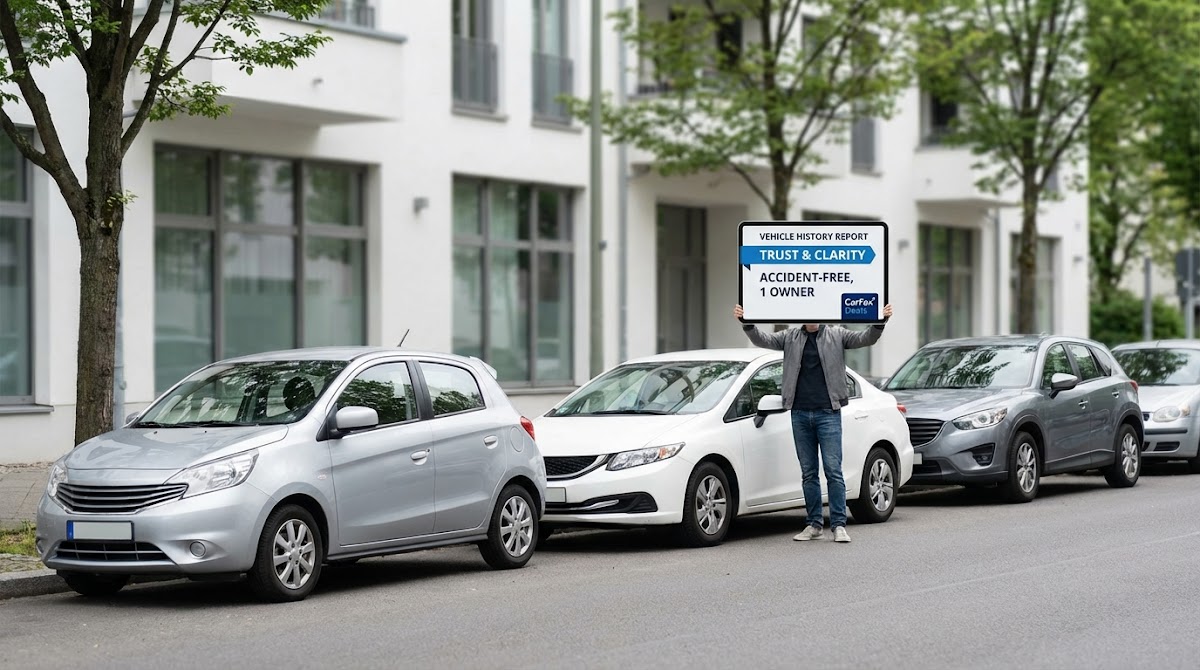
Top filters to apply first are single-owner history, clean title, no-accident-reported, and documented service history. These items reduce uncertainty and are quick to scan on many dealership listings, especially when vehicle history reports are available.
Use price analysis labels and local KBB checks to prioritize listings that sit in a reasonable regional price band. Labels that flag a vehicle as a reasonable local price can help you shortlist cars that merit an inspection.
Top listing filters to use first
Start by filtering for clean title and single-owner records where possible, then require either no-accident-reported or a clear, documented repair history that explains any incidents. Those filters remove many high-risk listings early.
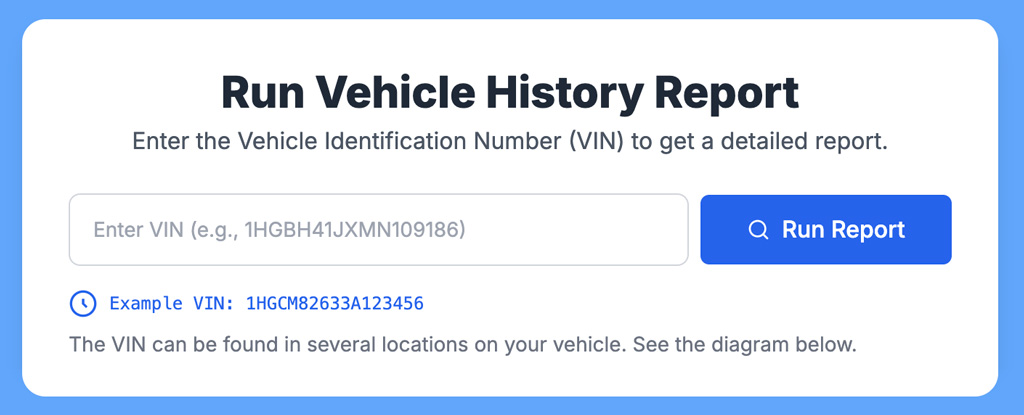
After filters, open the vehicle history report for the VIN and confirm mileage, title events, and service records before setting an appointment for inspection.
Red flags to pause on
Red flags include salvage or rebuilt titles, inconsistent mileage records, gaps in service history without plausible explanation, and missing documentation for major repairs. Each of these requires deeper verification and often justifies walking away.
Also be cautious when a listing refuses to share a VIN or a history report prior to a visit. That omission makes it harder to verify key risk signals and should be treated as a negotiation disadvantage.
Common mistakes buyers make with inexpensive cars
Overvaluing a low purchase price
Buying the cheapest car on the lot can feel like a win but can cost more over time if the vehicle has higher expected repairs or weak resale value. Compare expected annual repair costs and likely five-year TCO to see whether the lower sticker price truly saves money RepairPal annual repair-cost estimates.
Sometimes a slightly higher-priced listing with full service records and a clean history will be the more economical choice after two or three years of ownership.
Skipping VIN and safety checks
Skipping a VIN-level history report and not confirming model-year safety ratings are common mistakes. These steps reveal ownership records, title events, and recall history that change the risk calculation for any cheap car.
Use VIN checks and official safety listings before you make an offer so you know what issues, if any, are tied to the specific car you plan to buy IIHS ratings database. Also consider Consumer Reports reliability findings for broader context Consumer Reports.
Practical scenarios: reliable options under $10,000 by buyer need
Commuter on a budget
For a daily commuter, prioritize fuel economy, low expected maintenance, and simple, well-documented service history. Compact sedans with strong dependability signals tend to offer that balance and are often found among cheap cars for sale in the local market.
Check dependability surveys, then confirm the listing has a vehicle history report and recent maintenance records that match expected service intervals Consumer Reports used-cars by price.
Small family looking for reliability
Families may prefer small SUVs or larger compact sedans with good safety ratings and room for child seats. Confirm IIHS crashworthiness for the model year and trim, and look for documented service history that includes routine maintenance and any needed repairs IIHS ratings database.
Also balance cargo and passenger needs with the likely total cost to own in your region, using KBB values and Edmunds TCO to compare options.
Buyer who values low maintenance
If low maintenance is the priority, weight RepairPal annual estimates more heavily when comparing candidates and favor cars with full, recent service records. A model with a documented recent timing-belt replacement or new brakes can reduce near-term outlays.
Always run the VIN through a vehicle history report so maintenance entries align with the seller's claims before you move forward with an inspection Run CarFax Report.
How to use vehicle history reports and pricing labels when comparing listings
What to read in a vehicle history report
A vehicle history report shows ownership history, title status, reported accidents, and service records. Use it to confirm single-owner claims, check for salvage or rebuilt titles, and locate documented major repairs or odometer events Kelley Blue Book used values.
Pay attention to consistent mileage progression and documented service near the intervals recommended by the manufacturer, as these are strong signals of diligent ownership.
Interpreting price analysis labels
Price analysis labels summarize local market context and can help you quickly see whether a listing is priced above or below typical local values. Use these labels to prioritize listings that fall within a reasonable band before deeper checks.
Sequence to follow: filter listings by key criteria, confirm the vehicle history report for the VIN, compare the listing price with KBB local values, then arrange a pre-purchase inspection if the history and price check out Kelley Blue Book used values.
When to walk away or get a pre-purchase inspection
Red flags that justify walking away
Hard red flags include salvage or rebuilt titles, major accident history with unclear repairs, inconsistent mileage records, and unrepaired recall items. These often justify walking away because they signal significant uncertainty about future costs and safety Consumer Reports reliability guide.
If a seller cannot provide a VIN for review or refuses an independent inspection, treat that as a strong signal to pause. Transparency is a low-cost filter for risk.
When a pre-purchase inspection is essential
A pre-purchase inspection is highly recommended when a car has higher mileage, incomplete service history, or any signs of past damage that the seller claims to have repaired. The mechanic can identify issues that are not visible in reports or photos.
Compare the estimated repair cost range against the inspection fee to decide whether the inspection is a sensible investment. Often spending a modest inspection fee prevents a much larger unexpected repair bill later RepairPal annual repair-cost estimates.
Dealer transparency signals and what to ask before buying
Dealer profile, ratings, and what they mean
Dealer signals that help reduce uncertainty include verified reviews, clear dealer profiles with service history records, and visible disclosure of title and ownership details. Those signals do not guarantee a problem-free car but help you prioritize which dealers to contact first Kelley Blue Book used values.
Look for dealers who provide VINs and vehicle history reports up front, as that transparency makes it easier to verify claims before visiting.
Questions to ask that reduce uncertainty
Ask concise, verifiable questions: Can you provide the VIN and the vehicle history report? Has the car had more than one owner? Are there any open recalls on this VIN? Is the title clean or branded? Request written answers when possible and confirm them against the report.
When dealers give answers, confirm those answers with the VIN history and local price checks before you negotiate. Use the vehicle history report as your primary verification tool.
Bringing it together: a step-by-step plan to find a reliable low-cost car
Quick 8-step checklist from research to dealer contact
1. Make a short model shortlist using Consumer Reports and J.D. Power dependability signals.
2. Check RepairPal for typical annual repair ranges for those models.
3. Use Edmunds True Cost to Own to compare five-year ownership scenarios.
4. Search local listings and apply KBB local values to set realistic price bands.
5. Filter listings for single-owner, clean title, and documented service history.
7. Arrange a pre-purchase inspection for the top candidate cars.
8. Compare expected repair costs and five-year TCO, then decide with evidence rather than emotion Edmunds True Cost to Own.
Final reminders before you buy
Use conditional language in your decision: consider evidence from reports and local pricing rather than relying on a single data point. Prioritize safety checks, documented service, and transparent title history.
Keep a modest reserve for likely repairs and maintenance based on RepairPal ranges and local market signals as part of your final affordability test RepairPal annual repair-cost estimates.
Use that range as a baseline and adjust up for known factors such as older age or higher mileage, and down when a listing shows complete, documented service history and recent major maintenance items already completed.
A reliable low-cost used car typically has a documented service history, single-owner or consistent ownership records, no major title issues, and model-level dependability signals from independent surveys. Confirm the VIN history and local price before deciding.
For many reliably rated compact sedans and small SUVs, a practical budgeting range for annual repair and maintenance is roughly 400 to 700 dollars, adjusted upward for higher mileage or gaps in service history.
A pre-purchase inspection is essential when a car has high mileage, incomplete or inconsistent service records, signs of past damage, or when the vehicle history report shows potential red flags that need mechanical confirmation.
A practical search for a reliable low-cost car balances dependability signals, documented service history, and realistic local pricing. Use vehicle history reports and pricing insights to reduce uncertainty and choose a car that fits both your budget and expected usage.
When in doubt, run a VIN-level report, confirm safety ratings for the exact model year and trim, and get a pre-purchase inspection so your buying decision is based on verifiable facts.

 Blog
Blog