What is the best year Suburban to buy? — What is the best year Suburban to buy?
Choosing a Chevrolet Suburban for sale depends on whether you prioritize lower purchase price, newer safety and driver aids, or lower long-term repair risk. Late-2010s models (roughly 2015–2019) often offer lower entry cost and established reliability, while the 2021 redesign brought measurable safety and driver assistance improvements but at higher used prices. Use VIN-level checks, vehicle history reports, and local pricing insights to close remaining questions.
A step-by-step workflow for estimating a truck's market value that centers on comparing consumer valuation tools, adjusting for mileage and condition, and checking wholesale market signals. The guide explains private-party, trade-in and dealer retail values and shows how a vehicle history report and pricing insights can change an asking price.
This guide helps research oriented buyers evaluate suv used cars for sale under $25,000 by combining safety ratings, reliability data, local pricing context, and vehicle history checks. It outlines a simple framework, a pre visit checklist, and a decision scoring worksheet so you can compare finalists before contacting a dealer. Use the steps here to narrow candidates and confirm risk signals with a vehicle history report and a pre purchase inspection.
When searching suv used cars for sale, prioritize model year, trim and powertrain before choosing a make or model. This guide explains how safety ratings, dependability studies and local pricing insights combine to produce a short list you can verify with a vehicle history report. It also provides a stepwise checklist you can use before contacting a dealer.
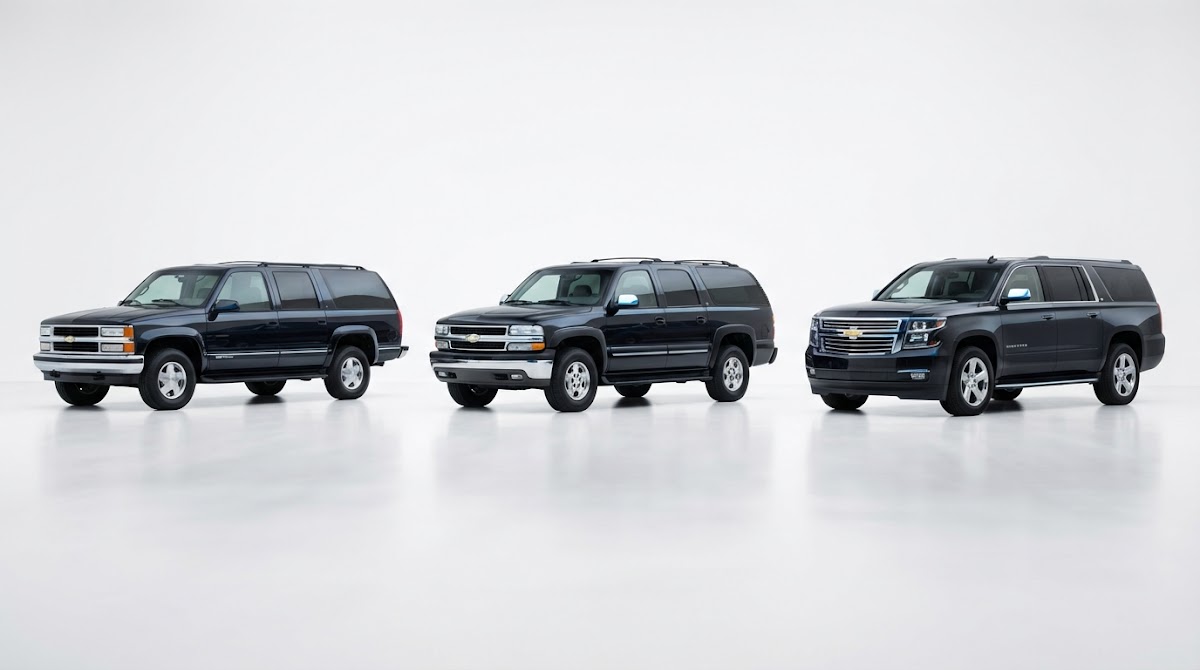
Choosing the best year for a Chevrolet Suburban depends on how you rank price, safety, and likely repair costs. Buyers who prioritize the latest safety tech often look to the 2021 redesign and newer models, while those focused on lower purchase price and established maintenance records often consider late-2010s examples.
This article compares the main model-year tradeoffs and gives a step-by-step framework you can use to compare two listings, plus a final checklist of documents and inspection items to request before you sign any agreement.
Late-2010s Suburbans tend to offer lower entry prices with established service patterns.
The 2021 redesign increased driver assistance availability and improved crashworthiness.
VIN-level checks, vehicle history reports, and paid inspections resolve most remaining uncertainties.
What people mean by "best year" for a Chevrolet Suburban, chevrolet suburban for sale
When buyers ask which is the best year Suburban to buy they usually mean which model year gives the right balance of purchase price, safety and predictable ownership costs. Many used car shoppers compare a late-2010s example with a 2021 or newer unit to weigh that balance, because those eras tend to show different tradeoffs in price and equipment Edmunds Suburban guide
A practical definition of "best year" ties back to buyer priorities: is the goal lower monthly cost up front, newer safety technology, or lower expected repair risk over five years. Each priority shifts which model years make sense. Clarify which outcome you want before comparing listings.
Run a vehicle history report for the VIN you are considering
Run a VIN-level vehicle history report or compare price analysis labels to narrow which listings deserve a full inspection.
Key terms that will appear in this article: vehicle history report, pricing insights, price analysis label, clean title, and ownership history. These help you translate listing text into verifiable facts about a specific VIN.
How model-year changes affect safety and driver assistance
The 2021 Suburban generation introduced structural and equipment updates that correlate with better crashworthiness and wider availability of driver assistance features, changes many families find important when prioritizing safety IIHS Chevrolet Suburban model pages (see IIHS Top Safety Picks)
To interpret safety data look at both crash-test ratings and available active safety features. A model year can have strong occupant protection but lack certain driver aids unless the vehicle has a specific trim or options package. Confirming whether the VIN includes the desired equipment is essential. See also NHTSA ratings for comparative crash data.
Use NHTSA recall and complaint pages to check open recalls and investigation history for the exact model year and VIN, because recalls can span multiple years and equipment levels NHTSA Suburban recalls and investigations
When comparing two Suburbans, treat published crash ratings as generational summaries and the VIN-level equipment list as the final word on driver assistance availability. That means a later model year is likelier to have standard or widely available driver aids, but you must verify the actual vehicle's configuration.
Reliability and common mechanical issues by era
Aggregated repair and complaint data point to recurring problem areas for several Suburban model years, with transmission and electrical concerns among the more commonly reported issues; prevalence and symptom severity vary by year and powertrain RepairPal Suburban reliability
That pattern does not mean every Suburban of a given year will show the problem, but it does suggest specific checks during inspection and test drive: verify shift quality, look for warning lights, and inspect connectors and modules for obvious corrosion or aftermarket alterations.
There is no single best year. For newer safety and driver aids, consider 2021 or newer; for lower purchase price with established reliability, late-2010s (2015-2019) examples often make sense. Use VIN-level reports, recall checks, service history and a paid inspection to decide between listings.
Because problem prevalence shifts with engine and drivetrain choices, use VIN-level complaint queries and service history to see whether a particular unit has recurring work on the same systems, which is a stronger signal than general era-level reputation.
Price, depreciation, and resale: what different years cost you
Used pricing guides and valuation summaries show newer Suburbans, particularly the 2021 and later generation, start from a higher used price but tend to retain value relatively well compared with older examples, which often have lower entry costs Edmunds Suburban guide
Depreciation is typically steepest in the first three years of a vehicle's life, so a near-new Suburban will lose value faster in dollar terms than an older late-2010s example, even if the newer model keeps a higher percentage of its value over time.
Repair and maintenance estimates for large SUVs like the Suburban tend to be higher than for mainstream midsize SUVs, which raises the total cost to own over time; factor that into comparisons rather than focusing only on purchase price Consumer Reports Suburban overview
When weighing two listings, compare expected maintenance items and likely service intervals alongside the initial price. A lower purchase price can be offset by higher projected repair costs depending on mileage, engine choice, and local labor rates.
A step-by-step framework to compare two Suburban listings
Follow a repeatable order so comparisons stay objective: confirm VIN-level data, check service history, verify title status and open recalls, then compare local pricing and price analysis labels. Start every comparison from VIN checks and a vehicle history report CarFax Deals buyer guidance
Pull the vehicle history report using the VIN and confirm clean title, number of owners, and any reported damage
Confirm open recalls on the VIN and whether recall repairs show in service history
Compare price analysis labels and local listings to see which listing is priced more competitively for its condition and market
Factor service history entries such as regular oil changes, transmission service and records of major repairs into your decision. A detailed history that matches mileage and ownership notes reduces unknowns and helps weight price differences.
Essential pre-purchase checks and documents to request
Request the vehicle history report, complete service records, the title or title status, and any documented recall repairs before you meet the seller. These documents form the baseline for your inspection and negotiation CarFax Deals buyer guidance
Order a paid pre-purchase mechanical inspection once a listing clears VIN-level checks and looks competitive. The inspection should cover the transmission, engine operation, electrical systems and towing-related wear if applicable.
Verify exact model year, trim, and powertrain on both the paperwork and the VIN. Discrepancies between listed trim and VIN decode often hide option differences that affect resale and service costs.
Common buyer mistakes and how to avoid them
A frequent error is relying solely on listing photos and seller-supplied descriptions without VIN verification; that can miss open recalls, title issues, or undisclosed damage NHTSA Suburban recalls and investigations
Suggest a quick VIN lookup and paid inspection workflow
Use before scheduling a test drive
Another mistake is ignoring towing history or commercial use notes, which often lead to accelerated wear. Ask for clear documentation of towing capacity usage and inspect drivetrain, suspension and cooling systems accordingly.
Avoid trusting vague seller claims about maintenance. Instead, match service entries to recorded mileage, confirm parts replaced and request repair invoices for major work when available.
Practical examples: which Suburban year to choose for different buyers
Family prioritizing safety and driver aids: A buyer who wants the best available active safety equipment and newer crashworthiness often leans toward a 2021 or newer Suburban, accepting a higher purchase price to reduce certain equipment gaps between generations IIHS Chevrolet Suburban model pages and see manufacturer awards at Chevrolet awards
Buyer prioritizing lower purchase price and established reliability: Someone focused on lower entry cost and predictable repairs often finds late-2010s Suburbans (2015 to 2019) attractive, because they commonly offer a reasonable balance of known service items and lower asking prices Edmunds Suburban guide
Fleet or towing use considerations: Heavy towing or commercial patterns require extra scrutiny regardless of year. Look for reinforced cooling packages, documented transmission service, and explicit towing records in service history before proceeding.
Inspecting, test-driving, and negotiating condition issues
Walkaround checks: look for fluid leaks, uneven tire wear, mismatched paint or panel gaps, and suspiciously fresh body repairs that could signal prior damage. Confirm the VIN on the vehicle matches the title and service records CarFax Deals buyer guidance
Under the hood check: inspect fluid condition, belt and hose condition, and battery terminals. For high-mileage Suburbans pay special attention to cooling system components and transmission fluid condition.
Test-drive signs to watch for: smooth transmission shifts without hesitation, absence of warning lights, consistent power delivery and no electrical glitches in infotainment or instrument clusters. If you detect hesitation or slips in gear changes, insist on a targeted transmission inspection RepairPal Suburban reliability
When a vehicle shows clear service gaps, unresolved warning lights, or vague ownership history, be prepared to walk away or demand a price reduction and a paid mechanical inspection prior to purchase.
Wrap up: choosing the best year for your priorities and a final checklist
Short decision checklist: get a vehicle history report, check open recalls, review service history, order a paid inspection, and compare price analysis labels to local listings CarFax Deals buyer guidance
Remember that the right Suburban year depends on the outcome you want. Use VIN-level verification and the checklist above to close information gaps before you commit to a specific listing.
Use the vehicle's VIN to search official recall databases and request documented recall repairs in the service history before completing a purchase.
It depends on priorities: the 2021 redesign added safety and driver assistance improvements, but the newer model usually commands a higher used price, so weigh safety benefits against budget.
Ask for the vehicle history report, full service records, title or title status, and any receipts for major repairs or recall work.
Use VIN-level verification and the short checklist to reduce risk and compare listings more objectively. If questions remain about a specific vehicle, order a paid pre-purchase inspection and confirm any open recalls or significant service items before agreeing to a deal.

 Blog
Blog