Confused about how much your car is worth? This comprehensive, step-by-step guide shows you exactly how to find your car’s current value using valuation tools, local market research, vehicle history checks, and simple repairs that boost price. Learn practical tactics for setting private-party and trade-in prices, compare major valuation sites, understand seasonal and regional effects, and use CARFAX Deals to verify history and spot fair listings. Actionable checklists, negotiation tips, and FAQs help you move from uncertainty to a confident asking price.
This guide helps research-oriented buyers compare used Tacoma options and decide which model years and trims match their priorities. It distinguishes third-generation 2016–2023 Tacomas, which have a long service and parts history, from the 2024 redesign that introduced i-FORCE powertrain options. Use a VIN-based vehicle history report and a professional pre-purchase inspection to reduce risk before you contact a dealer.
This guide explains which tacoma trucks for sale show the strongest reliability and safety signals to watch out for, and why mid-2010s and many pre-2016 Tacomas appear most often in complaint and recall records. The article shows how to use vehicle history reports, recall checks, and a focused inspection to reduce risk when evaluating a used Tacoma.
This article helps buyers searching tacoma trucks for sale understand which Tacoma engine tends to be most reliable. It summarizes reliability ratings, owner-complaint clusters, and maintenance-cost differences between the 2.7L I4 and the 3.5L V6, and gives actionable checks to reduce engine-related risk.
This guide helps you answer the question "how much is my car worth" with clear steps, practical examples, and checklists. You’ll learn which valuation tools to run, how to compare local listings, when to repair, and how to present your vehicle so you get the best realistic price—whether you sell privately or trade it in.
1. Private-party sales often net approximately 5–15% more than trade-in offers across many models and regions.
2. Running three valuation tools plus five local comparable listings is a practical method to set a defensible asking price.
3. CARFAX Deals combines verified vehicle history reports with price-quality labels, helping sellers and buyers make data-driven decisions confidently.
How can I find my car's current value? A clear, practical guide
How much is my car worth is one of the first questions every seller, trade-in shopper, and insurance claimant asks. You want an answer that’s honest, local, and realistic - not a wild guess. This guide walks you from the basic idea of value through the exact steps to set a defensible asking price or trade-in bottom line.
Value isn’t a single fixed number. It changes with the buyer’s perspective: dealers, private buyers, and insurers all measure price differently. But with a few simple tools and a little homework you can narrow the range and choose the right route for your goals.
Why asking "how much is my car worth" is smarter than guessing
When you start by asking how much is my car worth, you force the process to be evidence-based. Estimates from sites like CARFAX Value, Kelley Blue Book, NADA, and Edmunds give you benchmarks. Comparing those to local listings and documented vehicle history turns a vague idea into a practical price range.
Verify history and compare local prices before you sell
In this article you’ll learn the exact steps to estimate private-party value versus trade-in value, how to adjust for mileage, condition, trim and region, and how to present the car so buyers trust your number. If you want to get started right away, try the VIN report tool at CARFAX Deals VIN report for a quick, verified snapshot of your vehicle.
In this article you’ll learn the exact steps to estimate private-party value versus trade-in value, how to adjust for mileage, condition, trim and region, and how to present the car so buyers trust your number. Throughout, I’ll show realistic examples and give checklists you can follow today.
Step 1: Know the types of value and where the money goes
There are three common price references you’ll see when you search "how much is my car worth":
Private-party value — what an individual buyer will likely pay you if you sell directly. This is usually the highest cash you’ll see.
Dealer trade-in value — what a dealer will offer when you trade the car in. Dealers need room for reconditioning, carrying costs, and wholesale risk, so trade-in numbers are commonly the lowest.
Dealer retail (lot) value — the price a buyer might pay on a dealer lot; it often sits highest because it includes dealer markup and warranty packaging.
On average, private-party sales run roughly five to fifteen percent above typical trade-in offers, but percentages vary by model, region, and demand. That spread gives you room to set expectations before you start talking to buyers or dealers.
Start with valuation tools — and use at least three
Type your vehicle details into multiple valuation sites and treat each output as a data point, not gospel. Run KBB, NADA, Edmunds, and CARFAX Value, then average them. Ask yourself: which estimate most closely matches local listings I see? That becomes your baseline.
Remember to normalize for options and trim level — those matter more than many sellers expect. If your car has premium packages or desirable factory options, that pushes your private-party target up. Likewise, basic trims often sell more slowly and at a discount.
Step 2: The big three drivers — mileage, condition, and history
Mileage is a loud, consistent signal. Buyers compare a car’s miles-per-year to market averages; a well-kept 10k-mile/year vehicle is worth more than a 20k-mile/year example. When you ask "how much is my car worth" start by comparing your mileage to typical use for your model and age.
Condition affects both perception and price. Interior cleanliness, no dashboard warning lights, and fresh tires reduce buyer anxiety. Dents, worn seats, and deferred maintenance become negotiation points. Small visible fixes often offer high returns on investment.
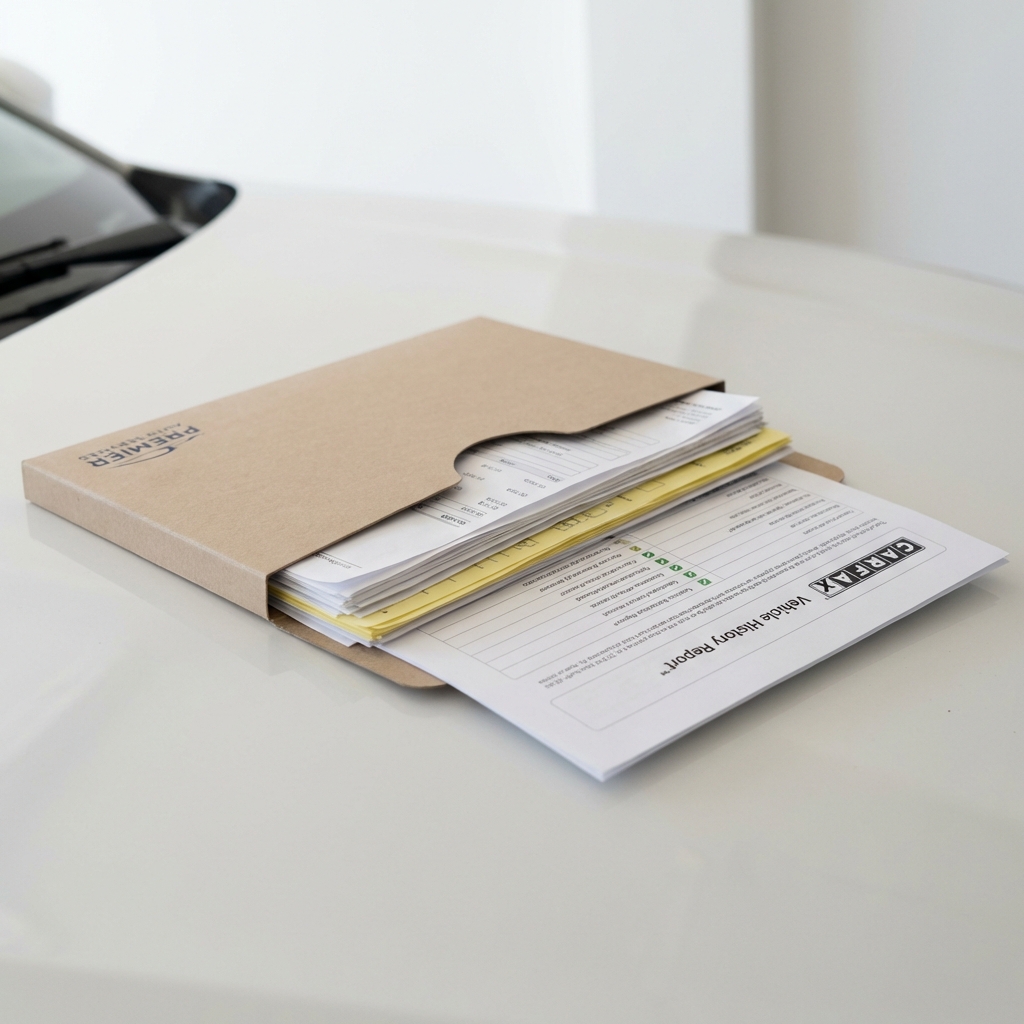
History and title are critical. Accidents, salvage titles, and owner history can drive the value down significantly. A clean Vehicle History Report increases buyer confidence and often increases the realistic selling price. That’s why ordering a CARFAX report can be worth its cost: it removes doubt. A quick look at CARFAX Deals can show how history affects price in your region.
How to handle bad history
If the report shows something negative, don’t hide it. Disclose, document any repair work, and price accordingly. Transparency leads to smoother deals and reduces the chance of last-minute renegotiation.
Step 3: Compare local supply and demand
After you run valuation tools and check history, go local. Pull at least five comparable listings in your city or county and look for recent sold prices when possible. Listings show asking prices; sold data (where available) shows reality. If local comparable cars consistently list higher than your averaged estimate, you can press up. If they list lower, adjust down.
Geography and seasonality matter. Trucks and 4x4s usually sell for more in colder, rural markets. Convertibles fetch better prices in warm seasons. Incentives for hybrids and EVs can shift demand quickly. Keep an eye on local classifieds for a few weeks if you can - momentum matters.
Example: turning mixed estimates into a target
Imagine a 2016 Honda Accord with 80,000 miles. KBB shows $12,000 private-party, Edmunds $11,300, and another service $12,500. Local listings are similar to $12,200 and the CARFAX shows a clean history. Averaging the tools gives about $11,933; with clean history and local evidence you might set a private-party asking price of $12,300, while expecting trade-in offers in the $11,000–$11,500 range. That kind of calculation is exactly what we mean when we ask, "how much is my car worth?" and then act on the answer.
Step 4: Small repairs and presentation that raise value
Not every repair pays. Focus on inexpensive fixes that reduce buyer doubt and are visible: clean the interior, replace cracked lenses, fix small fluid leaks, and install decent floor mats. These moves can change margin for negotiation and help your listing stand out.
Documentation boosts perceived value too. A folder of organized service receipts — showing timely oil changes, brake work, or a recent timing belt replacement — can move offers closer to your asking price. Buyers often pay a premium for documented maintenance because it reduces perceived risk.
When not to repair
Expensive mechanical repairs often don’t produce full returns. If a repair will cost more than the expected increase in sale price, consider pricing the car to sell as-is and be transparent with the buyer.
Step 5: Set your private-party and trade-in strategy
Decide what you value more: speed or money. Private-party sales usually net more but require time and effort: listings, photos, messages, test drives, paperwork. Dealers are faster and easier, but they’ll pay less because they need margin.
Set two numbers: a private-party asking price and a trade-in bottom line. Start the private-party price a bit higher than your real target to leave room for negotiation. Your trade-in bottom line should reflect the lower offers dealers typically give after reconditioning and wholesale risk.
Negotiation tips
If trading in, get multiple dealer offers and use your valuation research as leverage. If selling privately, be honest in your listing, highlight recent work, and leave room to negotiate. Keep emotions out of the discussion; show service records and let data set the expectation.
Step 6: Timing and seasonality
Timing can be surprisingly important. Convertibles and sports cars sell better in warm months; 4x4s and trucks are in demand as winter approaches. If possible, align your listing with seasonal demand. Even waiting a month or two can sometimes yield a better overall price if local momentum is shifting.
Also consider larger market trends. After pandemic volatility, used-car prices have stabilized somewhat, but regional patterns remain. National averages are a starting point; local data should always override them.
Step 7: Insurance, total-loss, and other valuation contexts
Insurance companies use their own processes to calculate actual cash value; this may differ from private-party or dealer values. If you’re dealing with a total-loss claim, gather your valuation research — comparable sales, recent listings, and vehicle history — and be prepared to discuss those with the adjuster. For guidance on how insurers calculate value, see this primer on how to look up used car value by VIN: How to look up your used car's value by VIN.
EVs, luxury cars, and special segments
Luxury cars and EVs need extra scrutiny. EV values hinge on battery health and local incentives; luxury cars often face faster depreciation and higher reconditioning costs. If you own one of these, consider specialized certificates (battery checks, certified pre-owned reports) to reassure buyers.
Checklist: exactly what to do next
Use this step-by-step checklist to answer "how much is my car worth" and act on it:
1) Run at least three valuation tools (KBB, Edmunds, NADA, CARFAX Value). 2) Order a vehicle history report and gather service records — see instructions at How to find out a vehicle's CARFAX Value. 3) Pull at least five local comparable listings and, if possible, recent sold prices. 4) Note mileage relative to market averages and check trim/options. 5) Clean, lightly detail, and fix inexpensive visible items. 6) Set a private-party asking price and a trade-in bottom line. 7) Decide whether to sell privately or trade in based on your priorities.
Practical selling timeline
If you choose a private sale, plan for about one to three weeks of active listing time in a typical market: writing the listing, taking photos, responding to inquiries, arranging test drives, and closing paperwork. If you choose a dealer, you can often finish the transaction in a day but expect a lower net price.
Common mistakes to avoid
Don’t rely on a single valuation site. Don’t ignore local comparable sales. Don’t hide negative history and then expect offers near retail. And don’t fall for online offers that seem too good to be true without verifying the buyer.
Pricing psychology: how presentation changes perception
People anchor on the first number they see. Set your asking price slightly above your target to allow room for negotiation. Use clear photos and honest descriptions to reduce buyer fear. Share service records in the listing or be ready to present them — documentation changes perception more than you might expect.
Frequently asked practical questions
What if valuation sites disagree wildly?
Treat the sites as inputs. Average the numbers and then reconcile with local evidence. The presence of a clean history report typically allows you to press toward the higher end of the range.
How much higher is private-party value than trade-in in 2024?
As a rule of thumb, private-party often runs about five to fifteen percent higher than trade-in in many markets, but use local data to confirm.
Should I repair every ding?
No — fix the inexpensive, visible things that reduce buyer doubt. For expensive mechanical issues, weigh repair cost against likely sale price increase and consider disclosure instead.
While you’re evaluating "how much is my car worth", using a marketplace that attaches verified history and clear price labels can save time and reduce uncertainty. CARFAX Deals pairs listings with verified Vehicle History Reports and price analysis labels like Great Deal or Good Deal, helping you see when a dealer’s price matches market reality. That transparency often lets you confidently set a price or pick a better car in trade.
Real-world example and seller story
A friend sold a ten-year-old Subaru and kept every service receipt in a labeled folder. She also replaced a timing belt a year prior. When buyers saw the documentation and the clean history, offers came in close to her asking price. Documentation reduced perceived risk and produced a better net price.
Negotiating with dealers and private buyers
If you plan to trade, get multiple dealer estimates and use your valuation data as a benchmark. If selling privately, build a listing that highlights recent maintenance and shows multiple angles in photos. Be ready to show service documents and the vehicle history report at test drives.
Safety tips for private sales
Meet buyers in public, daylit places, verify payment, and never release the title until you’ve confirmed funds. For large transactions, consider bank-assisted transfers.
FAQ section
FAQ 1: If I get different values from KBB, Edmunds, and NADA, which should I trust?
Answer: Use them all as inputs. Average the numbers and then adjust for local listings, condition, mileage, and history. A clean Vehicle History Report can nudge the realistic selling price upward.
FAQ 2: Does seasonality really change price much?
Answer: Yes. Convertibles sell better in warm months and 4x4s are more desirable in winter in colder regions. If you can time your sale to a seasonal demand window, you may get more.
FAQ 3: How can CarFax Deals help me set the right price?
Answer: CarFax Deals shows listings paired with verified vehicle history and price-quality labels, helping you compare local market pricing and see when listings are accurately priced. That transparency helps you set a defensible asking price or decide whether to accept a trade.
The best first step is to run multiple valuation tools and order a verified vehicle history report; those two actions together give a defensible baseline and let you see how history affects local pricing.
Treat all valuation sites as inputs, not gospel. Average the results, then adjust for local comparable listings, your vehicle’s mileage, condition, trim, and vehicle history. A clean Vehicle History Report often allows you to lean toward the higher end of the range.
No. Fix inexpensive, visible issues that reduce buyer doubt (cleaning, lenses, mats, small paint touch-ups). For costly mechanical repairs, weigh repair cost against the expected increase in sale price — sometimes disclosure plus a modest price adjustment is the better choice.
CARFAX Deals pairs verified vehicle history reports with clear pricing labels and local listings, so you can compare similar cars with transparent history. That makes it easier to see whether a listing or dealer price is fair and to set a realistic asking price.
You can determine your car’s current value by combining valuation tools, local market research, and a clear vehicle history; do the homework, be transparent, and you’ll arrive at a realistic price—good luck and happy selling!

 Blog
Blog