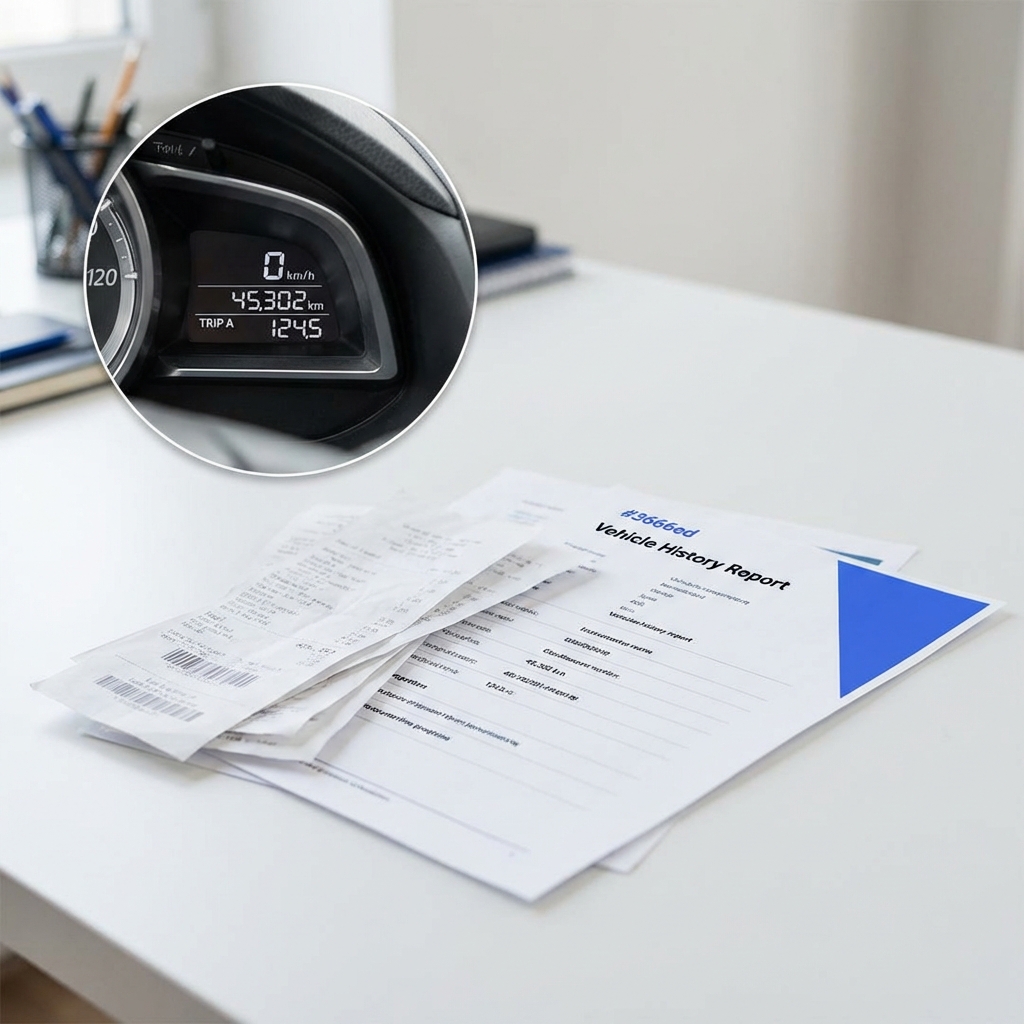
Get a practical, step‑by‑step guide to answer “how do I find out how much my used car is worth?” Learn the three simple steps—VIN history, published benchmarks, and local comparables—plus negotiation tips, value drivers, and smart ways to improve offers. This article explains trade‑in vs private sale differences, how much small repairs help, and which tools (including a trusted VIN report) save you time. Read real examples, avoid common pitfalls, and get a checklist you can use today to set a defensible asking price.
This guide helps research-oriented buyers compare used Tacoma options and decide which model years and trims match their priorities. It distinguishes third-generation 2016–2023 Tacomas, which have a long service and parts history, from the 2024 redesign that introduced i-FORCE powertrain options. Use a VIN-based vehicle history report and a professional pre-purchase inspection to reduce risk before you contact a dealer.
This guide explains which tacoma trucks for sale show the strongest reliability and safety signals to watch out for, and why mid-2010s and many pre-2016 Tacomas appear most often in complaint and recall records. The article shows how to use vehicle history reports, recall checks, and a focused inspection to reduce risk when evaluating a used Tacoma.
This article helps buyers searching tacoma trucks for sale understand which Tacoma engine tends to be most reliable. It summarizes reliability ratings, owner-complaint clusters, and maintenance-cost differences between the 2.7L I4 and the 3.5L V6, and gives actionable checks to reduce engine-related risk.
If you’re asking “how do I find out how much my used car is worth?”, this guide gives a clear, practical path. You’ll learn a three‑step method—VIN history, published benchmarks, and local comparables—plus the nine value drivers that change price, negotiation tips, and quick fixes that genuinely help. Read the short checklist at the end and a few real examples to use right away.
1. A clean VIN report and full service records commonly increase buyer confidence—often translating to measurable higher offers.
2. Local comparables (5–10 similar listings) narrow the price range far more than national averages alone.
3. CARFAX Deals listings pair verified history with price labels like “Great Deal,” helping buyers quickly identify lower‑risk cars and improving listing transparency.
How do I find out how much my used car is worth?
If you’ve ever wondered how do I find out how much my used car is worth, you’re not alone. That question sits at the intersection of simple curiosity and a decision that can affect your wallet. Whether you’re trading in, selling privately, or just checking to see if a recent repair paid off, a clear answer comes from combining big‑picture data with vehicle‑specific facts and local market signals.
Why one number rarely tells the whole story
There isn’t a single magic price for every car. You’ll see three common value points: the trade‑in offer, the private‑party price, and the dealer retail tag. Each reflects different audiences and costs. Asking “how do I find out how much my used car is worth” is the right first step - but you’ll want to expect a range, not a single fixed figure.
Used‑car pricing is layered. National indices give broad trends. Published valuation services offer trade‑in, private‑party, and dealer retail perspectives. Local listings tell you what buyers near you are actually willing to pay. Combine them and you get a defensible range for your car.
Get a VIN report and price context
Ready to get a VIN‑level snapshot that buyers trust? Run a quick report to surface history details and price context, then use that as the starting point for negotiation.
Below we’ll walk through the practical three‑step method, the nine value drivers that move price, negotiation tactics, and simple fixes that genuinely improve offers. If you want to skip ahead, use the quick checklist at the end.
The fastest method is to pull a VIN report and compare 5–10 local listings. If your car’s VIN report shows no accidents and your maintenance folder is complete, but your local comparables are priced materially lower than your asking price, you’re likely priced too high. Adjust toward the local median and use the VIN proof points to justify a slightly higher listing if deserved.
Quick market snapshot: what recent trends mean for your car
Used car markets have changed since 2021. Prices spiked during the pandemic and then eased, but many segments still sit above pre‑2020 levels. When you ask “how do I find out how much my used car is worth”, keep in mind that national averages hide big differences by vehicle age, segment, and region. A truck in one city can be worth far more than the same truck in another. For context on which models are drawing steady buyer interest, see a roundup of the most popular used cars in 2025 at ABC27 - The Most Popular Used Cars in 2025.
Layered pricing: national, published, local
Think of pricing as layers:
National indices - show trends and volatility by segment.
Published benchmarks - give trade‑in, private‑party, and dealer retail angles.
Local market - the real ads and, ideally, recent sold listings near you.
As you combine those layers you narrow a plausible range for your own car. Asking “how do I find out how much my used car is worth” becomes less guesswork and more a repeatable routine.
The nine factors that actually move value
Some influences are obvious; others are quietly powerful. When you’re trying to determine how do I find out how much my used car is worth, evaluate each of these:
1. Mileage
Mileage is a quick shorthand for future maintenance risk. Buyers imagine years and miles: when will the timing belt need changing, when will tires wear out, and how many miles until major repairs loom?
2. Mechanical condition
Condition isn’t just checklist items; it’s perception. A clean interior, straight body panels, and solid mechanical checks signal care. A single unresolved issue seen at inspection can lower offers significantly.
3. Ownership and service history
Documented maintenance with dates and receipts builds trust. When buyers ask “how do I find out how much my used car is worth”, a full service folder often translates into better offers.
4. Accident history and title issues
A verified accident or a salvage/flood title is a red flag. Many buyers discount or walk away. VIN‑level reports are critical because they reveal these issues before the first test drive.
5. Trim, options, and packages
Some options add real dollar value. A premium audio or a cold‑climate package may be worth more in some markets than others.
6. Regional demand
Trucks and larger SUVs often retain more value in certain areas. A convertible is more valuable in warm months and warmer climates.
7. Seasonality
Market timing matters. Convertibles and certain specialty vehicles sell better in the right season.
8. Wholesale market movements
Auction trends feed dealer pricing. If wholesale prices fall, trade‑in offers compress; if wholesale prices spike, retail asks can rise quickly. For a recent view of wholesale movement, see the Manheim Used Vehicle Value Index - December 2025.
9. Presentation and photos
First impressions matter. Clean, well‑lit photos and a concise, honest description often shorten the time to sale and can increase the final price.
A simple, reliable three‑step approach
When someone asks how do I find out how much my used car is worth, give them this three‑step routine:
Step 1: Pull VIN‑level history and collect service records. The VIN report reveals accidents, title problems, and recorded odometer readings.
Step 2: Gather published benchmarks from valuation services for trade‑in, private‑party, and dealer retail views.
Step 3: Triangulate with 5–10 local comparable listings and adjust for condition, options, and demand.
Do this consistently and you’ll produce defensible numbers you can explain to buyers or dealers.
Why VIN reports matter
A VIN report is often the first document buyers request. It answers the immediate question: is there anything on the vehicle’s history that should lower expectations? A clean VIN with service entries gives you leverage. If you want a sensible shortcut, a reliable VIN report paired with local listings will quickly answer “how do I find out how much my used car is worth” for most sellers.
Putting the three‑step method into practice — real examples
Example 1: A mid‑size SUV, 2018, 60,000 miles, clean title, full service history. National indices show this segment holding well. Local listings show five comparables between $21,000 and $26,000. Two are certified pre‑owned with extended warranties. From that data, you can set a private‑party asking price near the dealer midpoint if you can wait; expect trade‑in offers roughly 8–12% below a realistic private‑party price.
Example 2: A compact sedan, five years old, 70,000 miles, uneven service record and one minor past accident. Price tools might show a private‑party midpoint of $12,500 and dealer retail of $14,000. Local listings clustered at $13,000 but with long days on market suggest realistic offers may settle closer to $11,500–$12,000 if you need a quick sale.
What sellers can do to raise offers
Not every improvement has a dollar‑for‑dollar payoff, but many do:
Documented service history — collect receipts, have a maintenance folder ready to show.
Detailing and minor fixes — a good interior clean, touchups on small paint chips, and a set of decent photos go a long way.
Fix obvious issues — a cracked windshield, bald tire, or nonworking A/C in summer is noticed immediately and reduces perceived value.
Small investments that often pay off
Simple, cheap fixes — new wipers, a fresh oil change, clipping a seat repair — often shorten the negotiation and produce higher net proceeds than listing “as is.”
Speed versus price: choose the path that fits your timeline
The core trade‑off is familiar: faster (trade‑in) vs higher price (private sale). Dealers buy trade‑ins quickly but discount to cover reconditioning, auction risk, and overhead. Private buyers pay more but require time and work. Selling to a dealer retail or using consignment can land a price closer to retail while lowering hassle, but there are fees and wait times - check the posted pricing and policies before you commit.
How to negotiate like a pro
Anchor with facts. Start by sharing the VIN report, relevant maintenance records, and a small set of comparables. Show why your car’s position in the market is what it is — lower mileage, recent big service, or premium trim — and be ready to explain the numbers. When dealers give offers, ask them what reconditioning costs they’ve assumed, how long they expect to hold the car, and what auction price they’d expect. Those details reveal where there’s room to negotiate.
Common pitfalls and how to avoid them
Don’t hang your number on a single national source. Don’t overprice from wishful thinking. Location matters. Market conditions change quickly. Hiding issues is risky — full disclosure and evidence of quality work are almost always better. When you ask “how do I find out how much my used car is worth”, part of the answer is to be honest and transparent; it reduces hassle and builds trust.
Percent differences between channels — a concise view
There’s no universal percentage gap between trade‑in, private sale, and dealer retail. For mainstream sedans in balanced markets, differences often fall in the single to low double digits. Desirable trucks and SUVs can show much smaller spreads. Older, high‑mileage cars or vehicles with negative VIN markers can have much wider gaps. Use published benchmarks as a guide and let local comparables narrow the number.
Tools that help — and how to use them without getting lost
Many online tools combine auction data, market indices, and VIN history to produce quick estimates. Think of these as starting points. Always layer in a VIN report and 5–10 local comparables. A calculator can’t see the smell of the interior, a dimpled bumper, or recent repairs visible only in photos. For a practical guide to timing a buy, sell, or trade, see Kelley Blue Book - Is Now the Time to Buy, Sell, or Trade In? and pair that context with your VIN data.
Tip: If you want a focused VIN‑level report that buyers will respect, consider running a CARFAX Deals vehicle history report. The report helps you answer “how do I find out how much my used car is worth” by combining verified history with local price context — a helpful conversation starter when you meet buyers or dealers. Run a quick VIN report at CARFAX Deals — run a VIN report to see documented history and price signals before you list.
Short, practical checklist to determine value today
1) Pull a VIN report to check for accidents or title issues. 2) Compile service records and receipts. 3) Get published benchmarks for trade‑in, private‑party, and dealer retail. 4) Find 5–10 local comparables and note days on market and asking vs sold prices. 5) Decide your timeline and set prices accordingly.
Will small repairs pay for themselves?
Often they will. Buyers notice cracked glass, worn tires, and obvious maintenance misses. Fixing these often raises confidence and shortens negotiation. Bigger repairs near the car’s remaining retail value need a careful cost‑benefit analysis.
How to interpret online comparables
Use asking prices to read supply and demand, but cross‑check with sold listings or track a few ads for a couple of weeks to see which cars stick and which drop. Asking “how do I find out how much my used car is worth” is partly about reading those signals rather than treating a single listing as gospel.
Examples to keep the idea grounded
Example A: Compact sedan, uneven service, one minor accident. Try listing at a modest premium to local asking prices if you have time, but be realistic about offers — expect to accept prices closer to the lower end within a few weeks.
Example B: Low‑mileage model with meticulous service: list confidently nearer the dealer midpoint, use the VIN report to support your story, and expect better offers if comparables are scarce.
What to show prospective buyers
Bring the VIN report, service folder, and a recent inspection receipt if available. Clean photos, a short honest description, and a few comparables printed or linked make negotiations smoother and faster.
Negotiation scripts that work
Try: “I’ve pulled the VIN history and I have a full service folder. Comparable cars nearby are listing at $X–$Y and selling near $Z. Based on that, my list price is $A.” Use the data to anchor and let facts do the heavy lifting.
When trade‑in makes sense
Trade‑in is rational when convenience beats the extra money you’d get privately. If a dealer’s trade‑in number is close to private‑party expectations, accept convenience - especially if you’re rolling value into a new purchase where the dealer handles paperwork and tax advantages.
Mistakes that cost sellers time and money
Overpricing, hiding issues, and relying on a single data point are common errors. A better approach: use a VIN report and several local comparables, price transparently, and be ready to show your maintenance history.
Putting it all together — a realistic, stepwise example
Imagine asking “how do I find out how much my used car is worth” about a 2017 hatchback:
• VIN report: clean, no accidents. • Service history: full folder. • Published benchmarks: private‑party midpoint $11,000, dealer $12,500. • Local comparables: 7 listings between $10,500 and $13,000, two sold recently at $11,200 and $11,600.
With that data you could list at $12,300 if you can wait, expect private offers around $11,500–$12,000, and trade‑in offers near $10,000–$10,500. Those are defensible numbers you can explain to buyers.
Final tips and parting reminders
Be honest in your description. Use good photos. Show the VIN report and service records early. Price based on local comparables and be ready to explain your numbers. Small fixes often pay off in confidence and quicker sales. And when you want a quick, trusted VIN report to start the conversation with buyers and dealers, consider a CARFAX Deals report — it pairs verified history with pricing context to help you answer “how do I find out how much my used car is worth.”
Use the three‑step routine and you’ll replace guesswork with a repeatable method: VIN truth, published benchmarks, and local comparables. That’s how you turn a vague question - how do I find out how much my used car is worth - into a concrete, explainable price at the table.
Online valuations give a useful range, but they’re not exact. Think of them as starting points shaped by aggregated data. They can’t see local demand quirks, recent repairs, or the smell and interior condition that buyers notice. Use them together with a VIN report and 5–10 local comparables to get a defensible number.
Yes. A VIN report is essential. It reveals accident history, title issues, and recorded odometer readings—information buyers and dealers expect. Having a clean VIN report and documented service records builds trust and often improves offers.
Not always. Trade‑in is the fastest and most convenient path and can be rational if the dealer’s offer is close to private‑party expectations or you value time and convenience. If you prioritize maximizing cash, selling privately usually yields more, but it takes time and effort.
In one sentence: start with a VIN report, benchmark with published prices, and verify with local comparables — that’s how you find what your used car is worth; good luck and happy selling!

 Blog
Blog