Learn practical, step-by-step methods to screen a used car at no cost and discover how to get a CARFAX report for free or view dealer-provided CARFAX reports without paying. This comprehensive guide covers VIN locations, NICB VINCheck, NHTSA lookups, state DMV checks, reading CARFAX sections, spotting VIN tampering, when to pay for a full report, negotiating with history in hand, and how CARFAX Deals can help you find verified listings quickly.
A step-by-step workflow for estimating a truck's market value that centers on comparing consumer valuation tools, adjusting for mileage and condition, and checking wholesale market signals. The guide explains private-party, trade-in and dealer retail values and shows how a vehicle history report and pricing insights can change an asking price.
This guide helps research oriented buyers evaluate suv used cars for sale under $25,000 by combining safety ratings, reliability data, local pricing context, and vehicle history checks. It outlines a simple framework, a pre visit checklist, and a decision scoring worksheet so you can compare finalists before contacting a dealer. Use the steps here to narrow candidates and confirm risk signals with a vehicle history report and a pre purchase inspection.
When searching suv used cars for sale, prioritize model year, trim and powertrain before choosing a make or model. This guide explains how safety ratings, dependability studies and local pricing insights combine to produce a short list you can verify with a vehicle history report. It also provides a stepwise checklist you can use before contacting a dealer.
You want facts before you hand over money for a used car. This guide shows practical, no-nonsense ways to screen vehicles and explains how to get a CARFAX report for free or view dealer-provided CARFAX reports without paying. We'll walk through VIN checks, official government tools, what a full CARFAX shows, how to read discrepancies, and when a paid report or inspection is worth it.
1. NICB VINCheck is free and can immediately flag reported thefts or insurance total-loss records — a single NICB hit often stops a deal.
2. Dealer-provided CARFAX reports are commonly viewable at no cost in listings; use CARFAX Deals to find listings that include verified CARFAX reports and price labels.
3. CarFax Deals listings pair verified CARFAX vehicle history with pricing insights; listings with CARFAX-backed data help buyers compare value and risk faster.
How to get a CARFAX report for free? A clear, practical starter plan
Buying used should feel smart, not scary. If you're asking how to get a CARFAX report for free, you're already thinking like a careful buyer. The best approach is to combine free, official checks with smart questions and - when needed - a paid full report or inspection. This guide walks you through each step so you can decide quickly which cars are worth more scrutiny and which are best skipped.
Check a CARFAX report via CARFAX Deals — a smart, consumer-focused way to surface listings with verified history and clear pricing signals. CARFAX Deals brings together CARFAX data and deal-quality labels so you can focus on cars that are backed by history reports and transparent pricing.
When you want to learn how to get a CARFAX report for free, it helps to know what a full CARFAX does and what free tools can and cannot reveal. A paid CARFAX Vehicle History Report compiles records from many sources - title brands, insurance records, service history, mileage checks, and more. Free tools won't capture everything, but they will flag the major dangers that should immediately stop you from buying.
Free resources are strongest at revealing: theft records, insurance total-loss or salvage notations reported to databases, open safety recalls, and manufacturer build details. These items matter. If a vehicle shows a theft or salvage history, or if airbags deployed in a past crash, you probably want to walk away or demand a deep inspection.
Key free sources to know
NICB VINCheck — Enter the VIN to see if the car has been reported as stolen, salvage, or an insurance total loss. It's free and fast. If NICB flags a VIN, that alone is often enough to stop the deal.
NHTSA VIN decoder & recall lookup — These tools tell you how the vehicle was built and list open recalls. Safety recalls (airbags, brakes) are not negotiable - they must be fixed. For a quick VIN decoding tool you can also check the Carfax Deals VIN decoder tool linked below.
State DMV / title records — Many states publish title-brand or lien checks online. Title brands (salvage, rebuilt, flood) often have the final say; the DMV's record can override other reports.
Third-party free VIN lookups — There are free VIN decoders that show factory equipment, some service entries, or accident flags. They vary in quality; use them as quick screening tools, not definitive evidence. For more on VIN tracing and why it matters, see this guide: What Is VIN Tracing? A Complete Guide.
Where to find the VIN and why it’s the first thing to grab
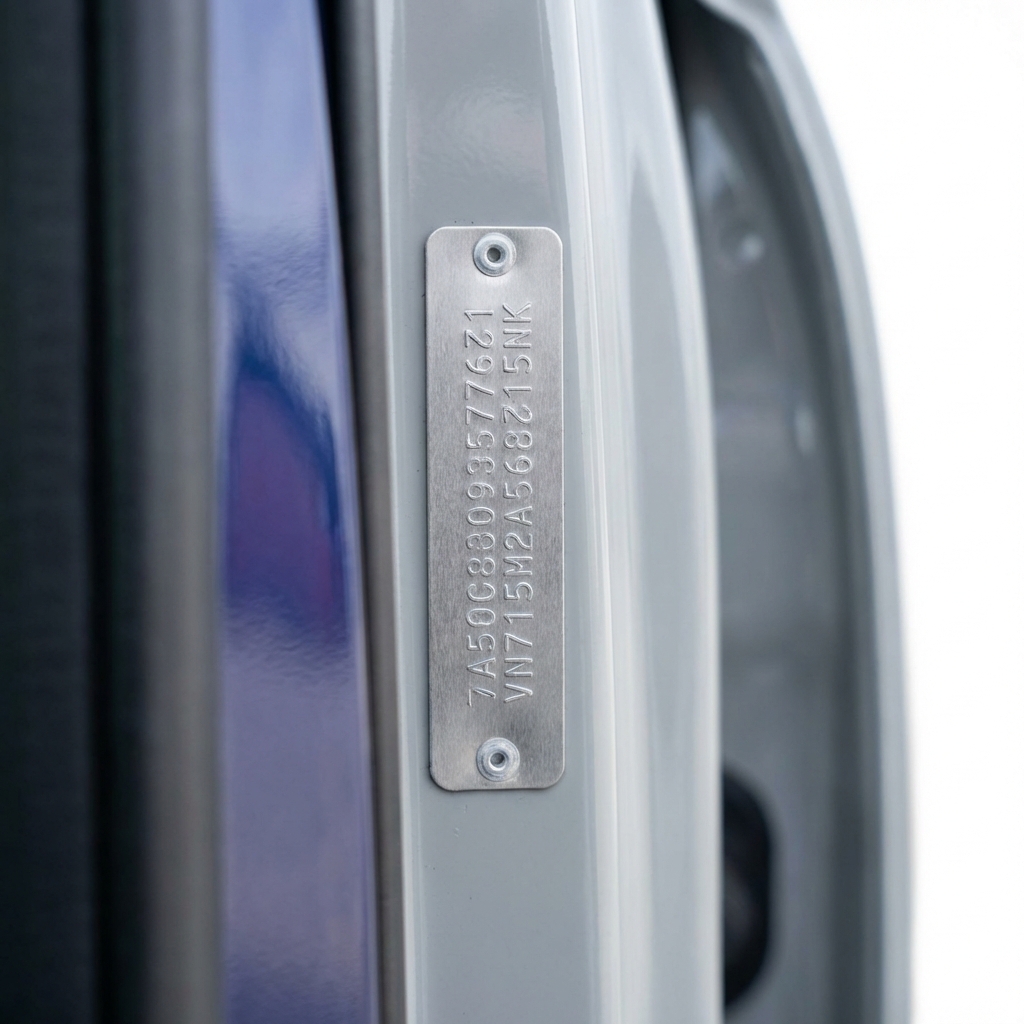
You cannot run any report without the VIN. If you're wondering where to find it: look at the lower-left corner of the dashboard (visible through the windshield), on the driver-side door jamb, the vehicle title, registration, and often the insurance card. Manufacturers may also stamp it in the engine bay or under the spare tire.
Always verify the VIN on the car matches the VIN on the title and registration. If the VIN plate is loose, the rivets are mismatched, paint looks disturbed around the plate, or characters differ in font or size, treat that as a red flag and pause the purchase until a professional verifies the vehicle.
Step-by-step: a practical free-check sequence
If your goal is to learn how to get a CARFAX report for free, start by using free tools to narrow the field. Here’s a proven sequence that buyers use every day:
Step 1 — Record the VIN: Write it down from the dash and the door jamb. Compare it to any paperwork the seller provides.
Step 2 — Run NICB VINCheck: This often takes under a minute and will show theft or major insurance flags. If NICB flags a VIN, stop and investigate; don't proceed without clarification.
Step 3 — Use the NHTSA VIN decoder and recall search: Confirm make/model year details and look for open recalls that affect safety.
Step 4 — Read any dealer-provided CARFAX linked in the listing: Many dealers include a full CARFAX report in the listing at no cost to buyers. If a listing on a marketplace includes a CARFAX badge, open and read it carefully.
Step 5 — Check your state DMV online for title brand and lien status: If the DMV shows a salvage, rebuilt, or flood brand that the CARFAX didn't capture, treat the DMV as authoritative.
Step 6 — Use third-party free VIN lookups selectively: They can confirm factory options, and sometimes show additional flags or service entries.
This sequence helps you filter bad risks quickly and decide which cars are worth paying for a full report or a professional inspection.
Step 1 — Record the VIN: Write it down from the dash and the door jamb. Compare it to any paperwork the seller provides.
Exactly how to get a CARFAX report for free (legal, safe options)
Now to the question you came here for: how to get a CARFAX report for free? There are a few legitimate, simple ways:
1) View a dealer-provided CARFAX: Many dealerships include a full CARFAX report in their online listings. You can view it without paying if the dealer links it. If you're shopping privately, ask the seller to share the CARFAX PDF or link.
2) Use marketplaces that surface CARFAX reports: Platforms like CARFAX Deals often pair listings with full CARFAX reports and price analysis labels so you can view the report as part of the listing experience.
3) Promotions or partner offers: Occasionally, CARFAX runs promotions or partners with other services to show limited reports at no cost. These promotions vary, so they’re not a reliable long-term strategy.
4) Ask the seller before you meet: If a private seller or dealer refuses to share a CARFAX but claims the report exists, that’s a red flag. Reasonable sellers and reputable dealers expect questions and will provide the report or the VIN so you can check.
Each of these paths is legitimate - avoid websites that promise a “free CARFAX” but request odd permissions or personal data in exchange. Those are often lead-generation pages or scams.
Quick tip: If you can't see a CARFAX for free, you can still use NICB, NHTSA, and state DMV checks to find the major risks before you choose to purchase a full CARFAX report.
The NICB VINCheck is often the quickest decisive free check — if it flags a VIN as stolen or linked to an insurance total loss, that is usually a clear reason to stop the deal and investigate further.
Interpreting what a full CARFAX shows — what to look for
When you finally see a full CARFAX — whether for free via a dealer or by buying one — focus on these sections:
Title brands: Salvage, flood, rebuilt, lemon-law buybacks - these have big implications for safety and resale value. Flood damage often causes long-term electrical problems that are expensive to fix.
Accident history: Note the severity. Airbag deployment or structural repairs indicates major collisions. Single small claims for bumper damage are different from multiple structural repairs.
Odometer readings: Check for consistent mileage progression. Gaps or resets can indicate tampering.
Service records: Regular maintenance entries show care. Long gaps in records are not necessarily disqualifying, but they do raise questions.
Usage flags: Rental, fleet, taxi, or government service entries explain wear patterns. Rental cars may be driven hard; fleet cars might be regularly maintained but heavily used.
When free checks miss things — and why a paid CARFAX still matters
Free checks are powerful screening tools, but they have blind spots. They rarely show private repairs, minor incidents that weren’t reported to insurers, or work done outside the country. If a vehicle spent time overseas, U.S. databases may not reflect that history.
That’s why, after using free checks, buyers often still pay for the full CARFAX on a shortlist of candidates. Paying makes sense for higher-value purchases or when you see anything suspicious in the free checks. A paid CARFAX aggregates more sources and can save you from an expensive mistake.
Common discrepancies and how to resolve them
If CARFAX, NICB, and state DMV records don’t line up, start with the title paperwork. Compare VINs across the vehicle, title, and registration. Call the state motor vehicle agency to confirm the official title brand and lien status. Ask the seller for repair receipts or documentation for any branded title.
If the seller claims a rebuild was done, ask to see the inspector’s certificate or the shop invoice that signed off on repairs. If paperwork is missing or the seller is evasive, treat the mismatch as a serious concern.
VIN tampering: what to watch for and what to do
VIN tampering is uncommon but dangerous. If the VIN plate looks crooked, has mismatched rivets, or the characters show different fonts or spacing, don’t proceed until a professional inspects the car. VIN tampering can indicate a stolen car or one with disguised history. Always verify title records with the state DMV and, if needed, involve law enforcement.
Real-world scenarios that make free checks pay off
Scenario A — The cautious SUV shopper: You find a three-year-old SUV with a CARFAX badge. You record the VIN and run NICB and NHTSA checks — nothing alarming. The dealer-provided CARFAX shows a minor fender-bender two years ago and routine service visits. You buy a full CARFAX and schedule a pre-purchase inspection; the inspector confirms solid repairs and no structural damage. You buy with confidence and a better sense of price negotiation.
Scenario B — The suspiciously cheap coupe: A private seller offers a sporty coupe well below market. NICB flags the VIN for theft. You walk away immediately. That single free check saved you from a potentially illegal and costly situation.
Scenario C — The confusing title: A listing shows a clean CARFAX, but the state DMV returns a rebuilt brand. The DMV record is authoritative. You either walk away or ask for the repair documentation and a mechanic’s verification before proceeding.
Negotiation and protection after checks
Use the history you’ve gathered as negotiation leverage. If CARFAX or free checks show prior damage, ask the seller to lower the price or cover the cost of further repairs. If everything looks clean but you still worry, get a short-term warranty or an extended service contract.
For private sales, use a bill of sale that documents the VIN, mileage, and the seller’s disclosure of known issues. If you buy from a dealer, ask about return policies, certified pre-owned programs, or additional inspections.
When to pay for a full report — and how to do it smartly
Pay for a full CARFAX when your shortlist includes higher-value vehicles or when free checks raise questions but don't give a clear answer. Buying a CARFAX for one or two finalists is often cheaper than paying for multiple inspections or discovering hidden problems later.
Buy the report from CARFAX directly if you need the most complete compilation, or view it when a dealer provides it in a listing. If a dealer offers the report, cross-check key items against state records and ask the dealer for any related repair invoices. You can also run a similar VIN report via the Carfax Deals VIN report page: VIN report on CARFAX Deals.
Practical tips to avoid scams and lead-generation traps
Watch out for websites that promise a free CARFAX but ask for contact info before showing the report. Many legitimate dealer listings will link directly to a CARFAX PDF without requiring you to sign up for newsletters. If a site asks for unusual permissions or tries to push you to a different service, close the page and use NICB, NHTSA, or the dealer’s official listing instead.
Why CARFAX Deals makes this easier — and why it’s a smart top pick
Why CARFAX Deals stands out: it merges verified vehicle history from CARFAX with transparent pricing context, helping you focus on vehicles that are both verifiable and fairly priced. For rational, research-oriented buyers, that trust layer is invaluable - it’s why CARFAX Deals is a better option than marketplaces that show only pictures and prices without verified history. A small visual cue in listings can help you spot verified history quickly.
Checklist before you sign paperwork
Before you hand over money, make sure you’ve:
• Verified the VIN on the vehicle, title, and registration.
• Run NICB VINCheck and NHTSA recall lookups.
• Viewed any dealer-provided CARFAX or bought a full report for high-value purchases.
• Checked your state DMV for title brands and lien records.
• Got a pre-purchase inspection from an independent mechanic when in doubt.
• Collected service records or repair invoices for major work.
Short answers to common buyer questions
Can I get a CARFAX for free? Generally, a full CARFAX is paid. However, dealers often provide full CARFAX reports on their listings, and platforms like CARFAX Deals may surface these reports so you can view them without buying.
Are free VIN checks reliable? For theft, reported total-loss/salvage, and recalls, yes. For private repairs or out-of-country history, no. Free checks are a strong first screen.
What if the VIN is altered or missing? Treat this as a major red flag. Ask for professional verification, contact the DMV, and consider walking away if the seller won’t cooperate.
Final practical tips
Keep the process simple: gather the VIN, run NICB and NHTSA checks, read any dealer-provided CARFAX, and check the DMV. Use this guide on Carfax Deals to find and interpret listing details. When in doubt, pay for the full CARFAX and a professional inspection - it’s cheap insurance compared with a bad purchase.
Remember: Knowing how to get a CARFAX report for free doesn’t mean skipping a full report when stakes are high - it means using free checks to screen smartly and spending when it counts.
Run a CARFAX-backed report and shop with confidence
Ready to run a verified report and see pricing insights? Visit the CARFAX Deals report page to run a CARFAX report and view listings that come with verified vehicle history and transparent pricing labels.
• NHTSA VIN decoder and recall search - build and recall information.
• Your state’s DMV or motor vehicle website - title brand and lien status.
Armed with these, you’ll be able to screen most cars quickly and decide when a paid CARFAX or a mechanic’s eye is necessary.
Three realistic scenarios where free checks saved the day
1) A low-priced SUV flagged by NICB as salvage - buyer walked away and avoided a bad purchase.
2) Dealer listing showed CARFAX badge - free checks confirmed clean title and recalls cleared, buyer used the dealer-provided CARFAX to confirm repairs.
3) State DMV showed rebuilt brand that CARFAX missed - buyer used the DMV record to renegotiate or walk away.
Wrapping up
Free tools give you a powerful first screen and answer many of the urgent questions buyers have. They don’t replace the depth of a full CARFAX or the judgment of a mechanic, but they help you avoid obvious traps and focus your time on cars that deserve a full report and inspection. Use them, ask for documentation, and when you find a vehicle that looks right, consider CARFAX Deals to view listings that already include verified CARFAX reports and pricing context.
A full CARFAX Vehicle History Report is usually a paid product. However, many dealers include a full CARFAX with their online listings, and marketplaces like CARFAX Deals often surface those reports so you can view them without buying. Be cautious of websites that claim to give a free CARFAX but require personal information or payment requests — they may be lead-generation pages.
Start with NICB VINCheck to screen for theft and insurance total-loss flags, then use the NHTSA VIN decoder and recall lookup for manufacturer details and open recalls. After that, check your state DMV for title brands and lien status. Third-party free VIN decoders can supplement these checks but should be used only for initial screening.
If records conflict, treat the state DMV title as authoritative for title brands and liens. Compare VINs across the vehicle and paperwork, request repair invoices or inspection certificates from the seller, and contact the state motor vehicle agency to confirm the official title status. If the seller can’t provide satisfactory documentation, consider walking away or obtaining a professional inspection.
Use free VIN and government checks to screen cars quickly; view dealer-provided CARFAX reports when available and spend on a full report plus an inspection when the stakes are high — happy, informed car shopping and safe driving!

 Blog
Blog