Book value and market value answer two different questions, so neither is strictly better. Book value tells you what a vehicle is generally worth based on national data. Market value tells you what buyers in your area are actually paying right now. The fair price for a specific car comes from using both together, then adjusting for that car's condition and verified history.
A simple way to hold the difference in your head: book value is the map, and market value is today's weather. The map shows the usual route. The weather shows what is happening on the road right now. You want both before you negotiate.
Key takeaways:
- Book value is a national baseline. Market value is a live, local signal. Anchor with book value, adjust with market value.
- Private-party sales commonly return 15% to 25% more than a dealer trade-in, and sometimes far more against instant-cash-offer buyers.
- A verified vehicle history is the tiebreaker. A clean record supports prices at or above book, while a hidden accident, flood, or odometer problem pushes fair value well below it.
What book value means
Book value is an estimated worth for a specific year, make, model, trim, and mileage, calculated by valuation companies from large volumes of sales data. It is a reference number that buyers, sellers, dealers, lenders, and insurers treat as a neutral starting point.
Four sources set most book values in the United States, and each is built for a slightly different audience:
| Source | Based on | Best known for |
|---|
| Kelley Blue Book (KBB) | Retail and private-sale transactions | Consumer trade-in, private party, and dealer values |
| J.D. Power Valuation Services (formerly NADA Used Car Guide) | Wholesale auction data | Values used by dealers, lenders, and insurers |
| Edmunds | Dealer transactions plus editorial data | True Market Value (TMV), an average transaction price |
| Black Book | Wholesale auction data | Dealer and lender wholesale values, not shown to the public |
Because the inputs differ, the numbers differ. KBB and Edmunds lean on retail and private-sale data, so their consumer figures often sit higher than J.D. Power or Black Book, which are built around wholesale auction prices. Checking two or three sources gives you a range rather than a single fragile number.
The value types you will actually see
Most tools return several values for the same car, and confusing them is the most common pricing mistake:
- Trade-in value: what a dealer pays you. This is the lowest figure.
- Private party value: what another individual pays. This sits in the middle.
- Dealer retail value: what a dealer charges on the lot, including reconditioning and warranty.
- Certified pre-owned value: a retail price with a manufacturer-backed inspection and warranty, usually the highest.
What market value means
Market value is what a specific vehicle sells for in your area today. It comes from active listings, completed private sales, dealer retail prices, and wholesale auction results. Unlike book value, it moves quickly with local supply and demand, the season, fuel prices, and short-term shocks.
Two market signals are worth watching. The Manheim Used Vehicle Value Index, published by Cox Automotive, tracks wholesale auction prices and is the industry's barometer for where used-car values are heading. History-based values, such as CARFAX History-Based Value, adjust a market estimate for a specific VIN's recorded accidents, ownership, and service.
Book value vs market value at a glance
Book value gives you a stable anchor. Market value gives you a live read. Here is how they compare on the factors that matter in a negotiation:
| Factor | Book value | Market value |
|---|
| Source | National transaction data | Local listings and recent sales |
| Updates | Slowly, on a set schedule | Constantly, week to week |
| Reflects local demand | No | Yes |
| Reflects this exact car's history | No | Only if you check the VIN |
| Best used for | Setting an opening anchor | Adjusting to reality before you commit |
| Main weakness | Lags sudden shifts, ignores local quirks | Noisy, needs several data points to trust |
Why book value and market value diverge
The two numbers separate for predictable reasons. Some are about the car, some about the location, and some about how it is sold.
Condition and verified history
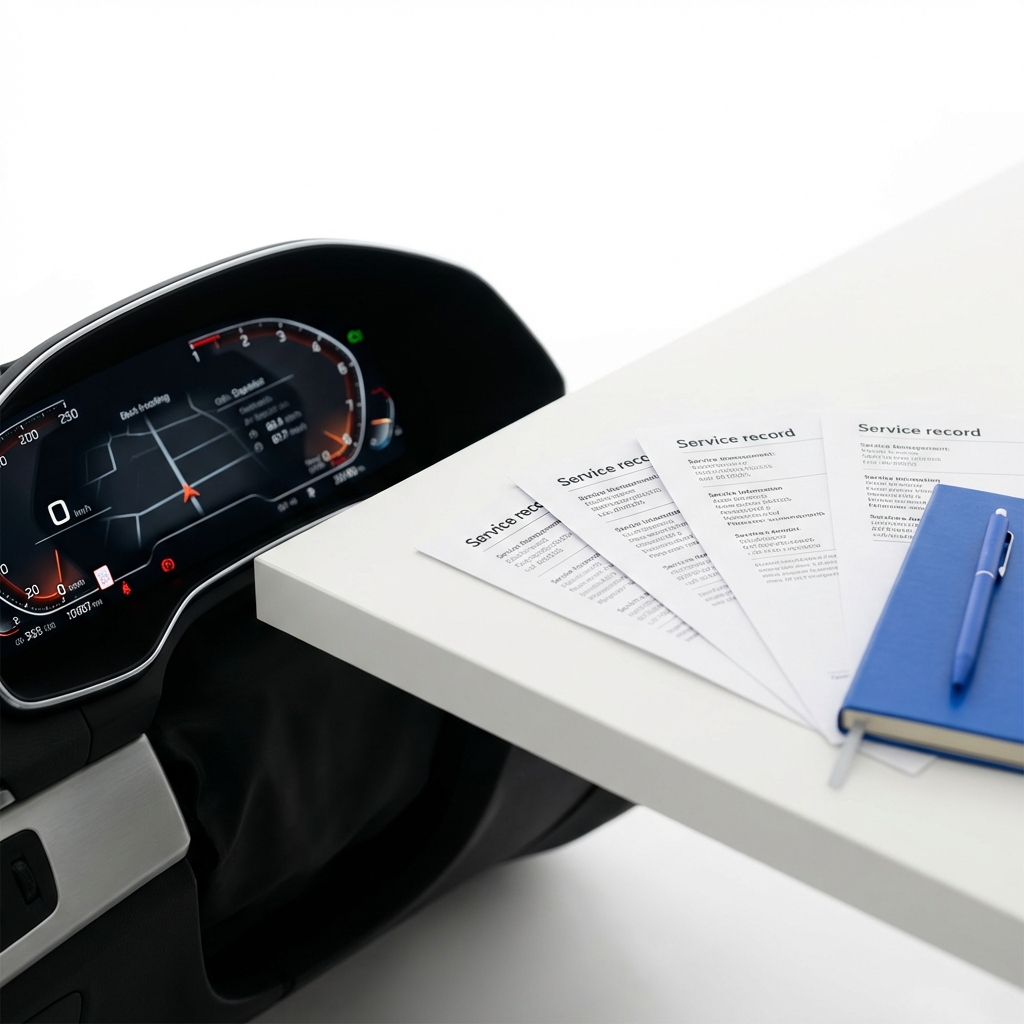
Two cars with the same year, mileage, and trim can carry very different prices when one has a documented service record and a clean history report and the other has gaps or a past accident. Buyers pay a premium to reduce risk, so verified condition often lifts a sale above book, while a hidden problem drags it below.
Regional demand
Local preference sets local price. Pickups and four-wheel-drive vehicles command more in rural and snowy areas, while compact cars and hybrids sell for more in dense cities with high fuel costs. Book value averages these differences away, so it can miss your zip code by thousands.
Seasonality and timing
Demand follows the calendar. Convertibles and sports cars sell better in spring and summer, and four-wheel-drive vehicles climb as winter approaches. Market value reacts to these cycles faster than book value does.
Sales channel
Where you buy or sell changes the number more than most people expect. Private-party sales commonly return 15% to 25% more than a dealer trade-in, and the gap widens against instant-cash-offer services, where private sellers have seen 40% or more. Dealers price used cars roughly 10% to 35% above what they paid, but most of that markup covers reconditioning, transport, warranty, and overhead rather than profit. When you compare a dealer's retail price to a private ask, you are also paying for convenience and protection.
How to price a used car using both numbers
Anchor with book value, confirm with the local market, then adjust for the specific car. Follow these steps in order:
- Pull book value for the exact year, make, model, trim, and mileage, and note the trade-in, private party, and retail figures separately.
- Search two or three marketplaces for the same configuration nearby, and record real asking prices.
- Read the listings closely. Signals like single owner, clean history, and recent maintenance point to value above the raw number.
- Pull a vehicle history report and check for accidents, title brands, odometer gaps, and ownership count.
- Adjust for sales channel. Add a dealer's reconditioning and fees to retail comparisons, and account for effort and time on private ones.
- Adjust for timing and local demand, then set your target as a range, not a single figure.
Worked example: putting the numbers together
Consider a 2018 midsize SUV with 70,000 miles. The book values and the live local listings tell different parts of the story:
| Source or listing | Price | What it reflects |
|---|
| KBB trade-in value | $15,000 | What a dealer would pay |
| KBB private party value | $18,000 | Individual-to-individual baseline |
| Dealer retail listing | $20,500 | Warranty, reconditioning, clean history |
| Private listing, clean | $19,000 | Recent brakes and tires, clean report |
| Private listing, prior accident | $16,500 | Reported collision, priced to move |
Book value sets the middle of the range. The listings explain the spread. If you are buying privately and want the clean car, an offer near $17,500 is defensible. If you value the dealer's warranty, negotiating the retail car toward $19,000 or asking for added coverage is reasonable. The accident car is only a bargain if an inspection confirms the repair was done properly.
So is book value better than market value?
Neither is better on its own, because each is weak where the other is strong. Book value is more useful when you need a fast, defensible anchor, when the car is a common model with plenty of data, or when you are arranging a loan or insurance. Market value is more useful when local demand is unusual, when the model is rare or volatile, or when you are close to signing and need to know what buyers are truly paying this week.
For fast-moving segments the balance tips toward market value. Electric vehicles are the clearest case: battery health, local charging infrastructure, and changing incentives can move an EV's real value faster than any book can track, so recent local sales and an inspection should carry more weight than the printed number.
How verified vehicle history changes the price
Verified history is the factor that decides which side of the book-versus-market gap a specific car belongs on. A clean, documented record lowers a buyer's perceived risk and supports a price at or above book. A hidden problem does the opposite, and a report is often the only way to find it before you pay.
A vehicle history report surfaces the issues that no valuation number captures on its own:
- Reported accidents and structural damage
- Title brands such as salvage, rebuilt, flood, and lemon buyback
- Odometer rollbacks and mileage inconsistencies
- Number of previous owners and how the car was used
- Service and maintenance records
Checking the VIN before you negotiate turns book and market values into a decision you can defend. You can see how a CarfaxDeals report works, or run a report on the exact vehicle you are considering.
Frequently asked questions
Is book value better than market value?
No single value is better. Book value is a reliable national anchor, and market value shows what buyers in your area are paying now. Use book value to set expectations, market value to adjust, and a vehicle history report to decide whether a specific car sits above or below the average.
Which value should I trust more when buying a used car?
Trust market value for the final price and book value for the starting point. Confirm both against a VIN history report and, when the numbers are close, an independent inspection.
Do dealers always charge more than private sellers?
Often, but not always. Dealer retail prices include reconditioning, documentation fees, and warranty coverage, which raises the number in exchange for convenience and protection. A private sale usually costs less but offers fewer guarantees.
How much more can a private sale get than a trade-in?
Private-party sales commonly return 15% to 25% more than a dealer trade-in, depending on the vehicle and region. Against instant-cash-offer buyers the gap can reach 40% or more, though a private sale takes more time and effort.
Can a clean history report justify paying above book value?
Yes. A verified clean history reduces the buyer's risk of future repairs and unclear ownership, so a well-documented car can reasonably sell for a modest premium over book.
Why do KBB, Edmunds, and J.D. Power give different numbers?
Each uses different data. KBB and Edmunds weight retail and private-sale transactions, while J.D. Power (formerly NADA) and Black Book are built on wholesale auction data. The gap between them is normal, which is why checking more than one source is worthwhile.
References

 Blog
Blog