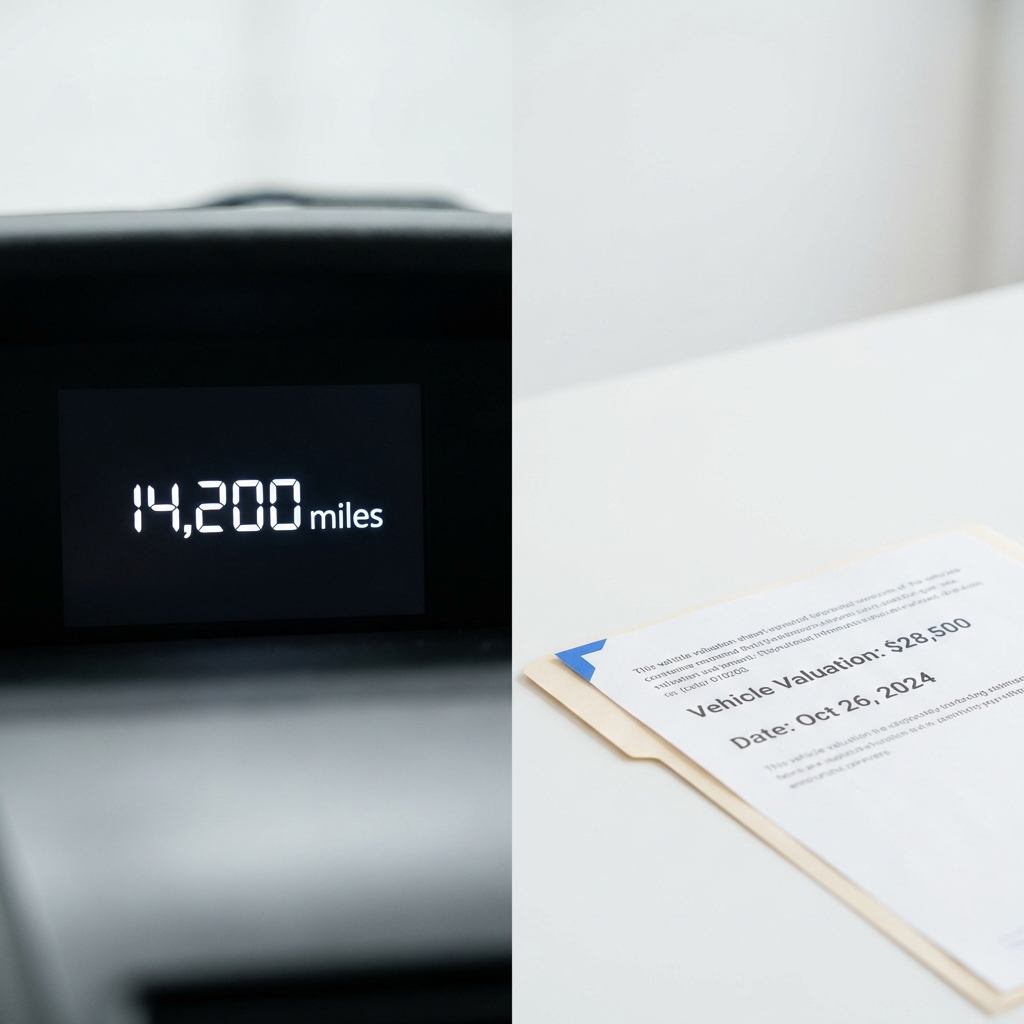
This guide explains whether Kelley Blue Book is free to use, what the “Kelley Blue Book free lookup” actually gives you, and how to turn online estimates into real offers. It covers how KBB calculates values, why dealer offers often differ, practical steps to improve accuracy, how to negotiate with confidence, and when to use third-party services like CARFAX Deals to get live offers. Read on for actionable tips, a clear checklist, and three smart ways to close the gap between a number on the screen and the cash in your hand.
A step-by-step workflow for estimating a truck's market value that centers on comparing consumer valuation tools, adjusting for mileage and condition, and checking wholesale market signals. The guide explains private-party, trade-in and dealer retail values and shows how a vehicle history report and pricing insights can change an asking price.
This guide helps research oriented buyers evaluate suv used cars for sale under $25,000 by combining safety ratings, reliability data, local pricing context, and vehicle history checks. It outlines a simple framework, a pre visit checklist, and a decision scoring worksheet so you can compare finalists before contacting a dealer. Use the steps here to narrow candidates and confirm risk signals with a vehicle history report and a pre purchase inspection.
When searching suv used cars for sale, prioritize model year, trim and powertrain before choosing a make or model. This guide explains how safety ratings, dependability studies and local pricing insights combine to produce a short list you can verify with a vehicle history report. It also provides a stepwise checklist you can use before contacting a dealer.
Kelley Blue Book is a name most people recognize when they buy or sell a car — but what does the familiar phrase “Kelley Blue Book free lookup” mean for you in practice? This guide explains exactly how KBB’s free tools work, why the online numbers sometimes differ from dealer offers, and how to use KBB with documentation and live bids to get the best result. By the end you’ll have a practical checklist, negotiation scripts, and a clear road map for turning a free online estimate into a real-world deal.
1. Kelley Blue Book’s consumer tools are free — you can run a Kelley Blue Book free lookup at kbb.com without paying a fee.
2. Private-party values from KBB are usually higher than trade-in values because private buyers typically pay more than dealers who must recondition and resell cars.
3. CARFAX Deals aggregates listings from thousands of dealerships and pairs them with verified history reports, making it easier to compare live offers against KBB ranges.
Is it free to use Kelley Blue Book?
Short answer: Yes - the consumer valuation tools on Kelley Blue Book’s website are free to use. But what that free estimate means, how it’s produced, and how you should use it deserve a closer look.
If you’ve ever typed your car’s details into a site and watched a range pop up, you’ve used a Kelley Blue Book free lookup. That free lookup is a helpful starting point, but it isn’t a guaranteed offer or a dealer’s firm bid. This article walks through exactly how the Kelley Blue Book free lookup works, where it shines, where it can be off, and smart steps you can take so that the number on your screen becomes a useful tool—one that helps you negotiate better, decide between trade-in and private sale, or decide whether to request live offers from services.
What the Kelley Blue Book free lookup actually gives you
The Kelley Blue Book free lookup delivers three main estimated price categories: a trade-in estimate, a private-party estimate, and suggested retail (or instant cash offer) numbers. You get these by entering the car’s year, make, model, mileage, condition, and ZIP code. That combination lets KBB factor in regional demand, common vehicle wear, and a broad set of price signals.
Important reality: the figure is a data-driven estimate, not a legal offer. It’s meant for consumers — easy to access and broadly accurate when you provide precise inputs.
How Kelley Blue Book builds that free estimate
KBB combines large datasets: dealer transactions, auction results, market trends, and vehicle features. It then adjusts for mileage, trim level, options, and condition. Because the online tools are designed for consumers, they intentionally show a range rather than one absolute number. A Kelley Blue Book free lookup reflects that approach: transparency over illusion.
Why ranges matter: a range accounts for unknowns that a consumer can’t enter in a quick lookup — things like a localized dealer promotion, a recent auction trend, or a buyer preference that makes a particular color or package more desirable in your area.
Step-by-step: get the most from your Kelley Blue Book free lookup
Follow these practical steps to tighten the gap between the online estimate and real offers:
1) Enter accurate mileage and trim
Mileage is one of the heaviest single drivers of value. The difference between 35,000 and 70,000 miles is real money. Be precise about your trim level and any factory options — those add or subtract value. For extra guidance on using the tools, see this short how-to guide: how to use the valuation tools.
2) Be honest about condition
Use the condition selector honestly. If you call a scratched bumper "good," the result will be artificially high. Run the lookup twice: first conservative, then realistic-optimistic. That gives you a personal negotiating band.
3) Use your ZIP code
Regional demand changes values. A pickup may be very desirable in rural states and less so in dense urban areas. The Kelley Blue Book free lookup uses ZIP code to apply regional adjustments, so don’t skip it.
4) Gather documentation
Service records, clean title, and receipts move you up the range. When you show a dealer a documented maintenance history, their perceived risk drops. If you need a formal vehicle history to back up claims, consider ordering a VIN report: VIN report.
Why KBB numbers sometimes differ from dealer offers
Dealers think differently. A dealer’s trade-in offer reflects reconditioning costs, time on lot, warranty costs, and the dealer’s margin. If a dealer already has several similar cars, they’ll likely be conservative. If they need your exact model, they may pay more. That local inventory context is a big reason the Kelley Blue Book free lookup number can differ from a live dealer offer.
Also, during the appraisal a dealer might flag problems you didn’t list: worn tires, small leaks, or interior odors. Those points reduce offers quickly.
Trim, options, and documentation matter
If your KBB lookup missed a towing package, upgraded audio, or adaptive cruise — or you left them out — the estimate may be off. That’s why documentation is powerful. Show receipts or window stickers when you negotiate.
How accurate is the Kelley Blue Book free lookup?
Accuracy depends on inputs and market swings. Provide precise data and the lookup will often land within a reasonable range of real offers. But real-time local spikes - supply disruptions, sudden demand shifts, or short-term promotions - can move offers away from the KBB range. Use the lookup as a data-informed starting point rather than a final word.
When the estimate is usually spot-on
Cars with typical mileage, broad-market trims, and ordinary regional demand tend to fall near KBB’s mid- to high-range if the car is well-documented. Clear service history and a clean title narrow the gap.
When it drifts
Rare trims, heavy aftermarket modifications, collector models, or extreme mileage often create divergence. KBB provides orientation, but for unusual cases you’ll need specialized research.
Compare KBB to other free valuation tools
One number is never enough. Use KBB alongside one or two other free price tools and look for consensus. If multiple sources converge, you’ve got a stronger case. If one source stands alone with a much higher value, dig into the assumptions — maybe it assumed a different condition or mileage. For a deeper comparison of valuation guides, see this industry comparison: NADA vs KBB vs Manheim (2025), or read more about how KBB relates to NADA: KBB on NADA Guides.
A practical workflow
Run the Kelley Blue Book free lookup, then check at least one other reputable site and consider asking for live offers. Live offers reconcile the theoretical value with active dealer appetite.
Use vehicle history and documentation to strengthen your position
Documents matter. Service records, a clean title, and receipts reduce perceived risk and can nudge an offer upward. If your car never had a major accident, having evidence of that is worth money in negotiations.
Show, don’t just tell
Bring printouts or a tablet showing your KBB estimate, service history, and any other online valuations. It looks like preparation, and it helps shift a negotiation from emotion to facts.
If you want a quick way to compare live dealer offers and see how they stack against your KBB lookup, consider checking out CARFAX Deals’ live offers. It’s a practical, data-focused step that helps you see multiple dealer bids without hopping from lot to lot.
Getting live offers: the reality check
Online estimates are useful, but live offers are the reality test. Many services gather dealer bids and present them to you — that’s where a KBB lookup meets real-world appetite. Typically, the top live offer sits within the range of online estimates but can be higher or lower depending on dealer inventory and urgency.
How to request live offers
Start with your saved KBB results, your documentation, and a short list of local dealerships. Use an aggregator if you want multiple bids at once. If you use a service, cross-check its results against KBB and documentation. You can request multiple bids directly via CARFAX Deals live offers to compare quickly.
Trade-in vs private sale: know the trade-offs
Private sales usually return more money than trade-ins, because buyers pay retail and dealers need margin. But private sales require time, showings, and negotiation. Trading the car in is faster and less hassle. Use the Kelley Blue Book free lookup to quantify that difference and make a sensible decision.
A simple test
If the private-party top-end is only a few hundred dollars higher than a dealer trade-in, convenience often wins. If it’s a couple thousand or more, selling privately can be worth the effort.
Negotiation scripts that work
Replace vague requests like "Can you do better?" with facts: "KBB shows a trade-in value of $X with this mileage and condition, and I have two other offers at $Y and $Z. How did you arrive at your number?" That invites the dealer to provide specifics and helps you push for a concrete improvement or added value like dealer incentives or loan terms.
Also consider negotiating services instead of cash—extended maintenance, a better interest rate, or included inspections can be as valuable as a few hundred dollars in cash.
Don’t be afraid to walk away
If the dealer can’t explain a wide gap between your combined estimates and their offer, seek another bid or sell privately. Walking away is a powerful negotiating tool.
Special situations where KBB struggles
KBB is excellent for mainstream cars and trims, but it struggles with highly modified vehicles, rare collectors, or cars with extreme mileage. For these, you need specialist forums, auction records, or sales of truly comparable vehicles.
Collector or specialty cars
If you own a limited-run trim or an enthusiast car, search auction results and specialty marketplaces in addition to the Kelley Blue Book free lookup. Those channels are better tuned to unusual demand.
Checklist: what to do before you run the Kelley Blue Book free lookup
Follow this checklist to get the most reliable estimate:
• Exact mileage — record the odometer reading precisely. • Trim & options — confirm factory options and add-ons. • Honest condition — choose conservative then optimistic runs. • Service records — gather receipts and history. • Title status — know whether the title is clean or branded. • ZIP code — use the area where you plan to sell.
How to interpret a KBB range in practice
Read KBB’s range as a realistic band. The trade-in low is a conservative baseline; private-party high reflects a best-case sale to a motivated buyer. If your combined research shows similar bands across multiple tools, you’re in a solid negotiating position.
No — the Kelley Blue Book free lookup provides an informed estimate based on aggregated data, but it is not a guaranteed dealer offer. Dealers factor in reconditioning, current inventory, and local demand. Use KBB as a starting point, then collect documentation and live offers to see what dealers will actually bid.
When to use a trade-in aggregator or third-party buying service
If you want multiple live offers with minimal hassle, a trade-in aggregator is a strong option. These platforms gather bids from several dealers and present them to you. Use them as another data point and cross-check with your KBB lookup and documentation.
A note on CARFAX Deals
Because transparency matters, CARFAX Deals pairs verified vehicle history reports with price labels that indicate whether a listing is a Great, Good, or Fair Deal. If you want to compare live offers more efficiently and see how they match up to a KBB estimate, services like that are worth a look. In practice, CARFAX Deals positions itself as the trust layer for used-car shopping: verification first, surprises later.
Practical example: how numbers move
Picture a five-year-old compact SUV with 45,000 miles. Your Kelley Blue Book free lookup returns a trade-in range of $12,500–$14,000 and a private-party range of $15,000–$17,500. If the car actually has 30,000 miles and perfect service records, the private-party estimate nudges higher. If there’s an accident on the report, dealer offers may sit below KBB’s trade-in low. That dynamic shows why multiple inputs and live offers matter.
Common misunderstandings about KBB
Here are a few frequent misreadings:
• KBB doesn’t set market price. It aggregates data. • KBB numbers aren’t guaranteed offers. Dealers are not bound by the website estimate. • The high end isn’t automatic. Achieving top-of-range typically requires strong documentation and timing.
Final decision checklist
When you receive an offer, answer these questions:
• Is the offer near the top of combined estimates? • Is the convenience worth the difference? • Does the dealer explain reconditioning or adjustments?
If yes, accepting may be sensible. If not, request another bid or sell privately.
Summary: turning a Kelley Blue Book free lookup into real value
The Kelley Blue Book free lookup is a powerful, free consumer tool. It gives context and a realistic range, but it should be combined with precise inputs, documentation, and live offers. Use it to prepare, negotiate, and make a data-backed decision about trade-in versus private sale. When in doubt, run a KBB lookup, gather a vehicle history report, and request a few live offers to see where the market stands.
Helpful parting tip
Preparation wins: the most competitive offers come to owners who document their cars, set realistic condition expectations, and use KBB together with live offers or an aggregator.
Compare live dealer offers and see how they stack up against KBB
Want to compare live offers quickly? Get multiple dealer bids and see how they compare to your KBB result by requesting a quick report at CARFAX Deals live offers.
Thanks for reading — with the right prep, the number on KBB can be the start of a confident sale, not a confusing guess.
Yes. Kelley Blue Book’s consumer valuation tools, including the trade-in, private-party, and suggested retail estimates, are free to use on kbb.com. You can run a Kelley Blue Book free lookup without paying a fee. Keep in mind the results are estimates and not guaranteed dealer offers; they work best when you supply accurate mileage, trim, and condition information.
Dealers consider reconditioning costs, potential time on the lot, warranty and inspection expenses, and their desired profit margin — factors that don’t appear in a simple online lookup. They also use real-time inventory and auction data. If a dealer already has many similar cars, they may offer less. Conversely, if they need your model, they may offer more. Presenting documentation and a clean service history usually narrows the gap.
Yes — tactfully. CARFAX Deals aggregates dealer listings and pairs them with verified vehicle history reports and pricing labels, which helps you compare live offers against your KBB lookup. Using CARFAX Deals to request multiple bids can reveal whether local dealers are willing to meet or exceed online estimates; treat its results as another data point alongside KBB and live appraisals.
Kelley Blue Book’s free lookup gives a useful, data-driven range — use it with documentation and live offers to make a confident selling decision; happy negotiating and safe driving!

 Blog
Blog