Wondering whether the NADA value is free to access and how it fits into buying a reliable used car? This guide answers the question clearly, explains what the NADA value shows, when it’s free versus paid, and how to use it with other tools — like CARFAX Deals — to make smarter, lower-risk purchases. You’ll also get practical steps for research, test drives, inspections, negotiation scripts, and a quick checklist to protect your peace of mind when buying used.
This guide explains which tacoma trucks for sale show the strongest reliability and safety signals to watch out for, and why mid-2010s and many pre-2016 Tacomas appear most often in complaint and recall records. The article shows how to use vehicle history reports, recall checks, and a focused inspection to reduce risk when evaluating a used Tacoma.
This article helps buyers searching tacoma trucks for sale understand which Tacoma engine tends to be most reliable. It summarizes reliability ratings, owner-complaint clusters, and maintenance-cost differences between the 2.7L I4 and the 3.5L V6, and gives actionable checks to reduce engine-related risk.
Audi reliability varies significantly by model, model year and powertrain, so the most reliable Audi for one buyer is not the same for another. This guide shows research-oriented used car buyers how to compare models using industry dependability studies, owner-reported trends, and per-VIN vehicle history reports. It focuses on checklists, inspection priorities and scenario-based recommendations to reduce risk when shopping a used Audi.
Buying a used car feels like a small, meaningful victory—but it helps to be armed with the right tools. This article explains whether the NADA value is free to access, how to use that value alongside vehicle history reports, and how to move from research to a confident purchase with practical steps, scripts, and checklists.
1. The NADA value provides trade-in, private-party, and suggested retail ranges that help buyers set realistic price expectations.
2. Combined with a vehicle history report and an independent inspection, the NADA value significantly lowers the risk of costly surprises.
3. CARFAX Deals aggregates listings from thousands of dealerships and pairs each listing with a verified vehicle history report and price context, helping buyers find lower-risk cars quickly.
Is NADA value free to access?
Short answer up front: For basic consumer lookup, the NADA value is generally accessible via public-facing NADA Guides, but the most detailed pricing data and commercial tools often require subscription access. Read on to learn when the NADA value is free, when it isn’t, and how to combine it with trustworthy vehicle history tools to buy a used car you can actually enjoy.
Why valuation tools matter before you buy
Knowing a vehicle’s fair market value keeps you from overpaying and helps you negotiate with confidence. The NADA value is one recognized reference among several — including Kelley Blue Book and private-market data sources. Each source is slightly different, but they all serve the same purpose: to give you a reasoned estimate of what a car is worth right now.
Valuation context is powerful
Valuation context is powerful. A price labelled as a “Great Deal” or “Fair Deal” becomes meaningful when you can back it with data from the NADA value and a solid vehicle history report. That’s why tools that pair valuation with verified history are especially useful when you want to reduce risk.
Protect your purchase with a vehicle history report
Need a quick way to check a VIN and combine valuation with history? Try a VIN report from CARFAX Deals to get started: Run a VIN report.
The NADA value refers to the pricing guides and valuation tools produced by the National Automobile Dealers Association (NADA). Traditionally, these guides provided dealers and consumers with baseline values for trade-in, retail, and private-party transactions. The numbers are built from auction results, wholesale moves, and market trends. For consumer access see the official NADA consumer pages at NADA Guides.
Remember: the NADA value is a guideline, not a decree. Different trims, optional packages, condition, local demand, and recent service history all change what a particular vehicle is actually worth to you.
Is the NADA value free to access?
Yes and no. You can access consumer-facing NADA guide lookups on public websites that display a NADA value for many vehicles without payment. However, some of the deeper dealer tools, commercial reports, and subscription feeds that show real-time wholesale pricing and granular market analytics are behind paywalls or limited to industry subscribers.
In practice this means: if you want a quick reference to check whether a listing is reasonable, the consumer-level NADA value lookup is often enough and freely accessible. If you’re a dealer, fleet buyer, or value precision down to the dollar, the paid tools give more granular and up-to-the-minute numbers.
How to use the NADA value when shopping (step-by-step)
Think of the NADA value as one compass in a toolkit. Here’s how to weave it into a reliable buying process:
1) Start with your needs and a short list of models
Before you even check the NADA value, know what you need. Compact? Cargo? Towing capacity? Narrowing choices first keeps you from chasing shiny bargains that don’t fit your life.
2) Check baseline pricing
Use the consumer-level NADA value alongside other public valuations to build a pricing range for each model and trim. If a listing comes in far above the NADA value range, ask why. If it’s well below, expect an explanation, warranty gap, or hidden cost.
3) Pair valuation with vehicle history
While the NADA value tells you what a car should be worth, it doesn’t show whether the car has a hidden past. For that, try running a verified history report — you can run a CARFAX report to see whether a car has clean titles, accident records, or unusual ownership history. Combining the NADA value with a vehicle history report gives a fuller picture and reduces surprises.
4) Inspect, test drive, and get an independent mechanical check
Price guides like the NADA value can’t replace a hands-on look. Always inspect, test drive, and have a mechanic inspect any used car before purchase. Use the inspection report to refine the value after considering repairs or upcoming maintenance.
5) Negotiate with facts
Bring the NADA value, comparable listings, and inspection notes when you negotiate. If the car needs work, ask for a price adjustment or that the seller complete repairs. Calm, evidence-based negotiation often works better than haggling on principle.
How the NADA value differs from other price tools
The NADA value has some differences worth noting compared with other guides:
Methodology: NADA relies heavily on auction and wholesale data, which can make its retail numbers conservative for some models and regions.
Audience: NADA historically served the dealer community; consumer pages were added later. This means the underlying data is marketplace-focused.
Access: Consumer lookup is generally free; dealer tools are more advanced and often paid.
Because of these differences, it's smart to check both the NADA value and other tools like Kelley Blue Book and local listings to triangulate a fair price. For a deeper look at how guides like NADA are explained, see this breakdown at Edmunds on NADA Guides.
When the NADA value is especially useful
The NADA value shines in several situations:
When you want wholesale or trade-in expectations.
When you’re comparing similar vehicles across regions and need a consistent baseline.
When you want to confirm whether an asking price lines up with broader market trends.
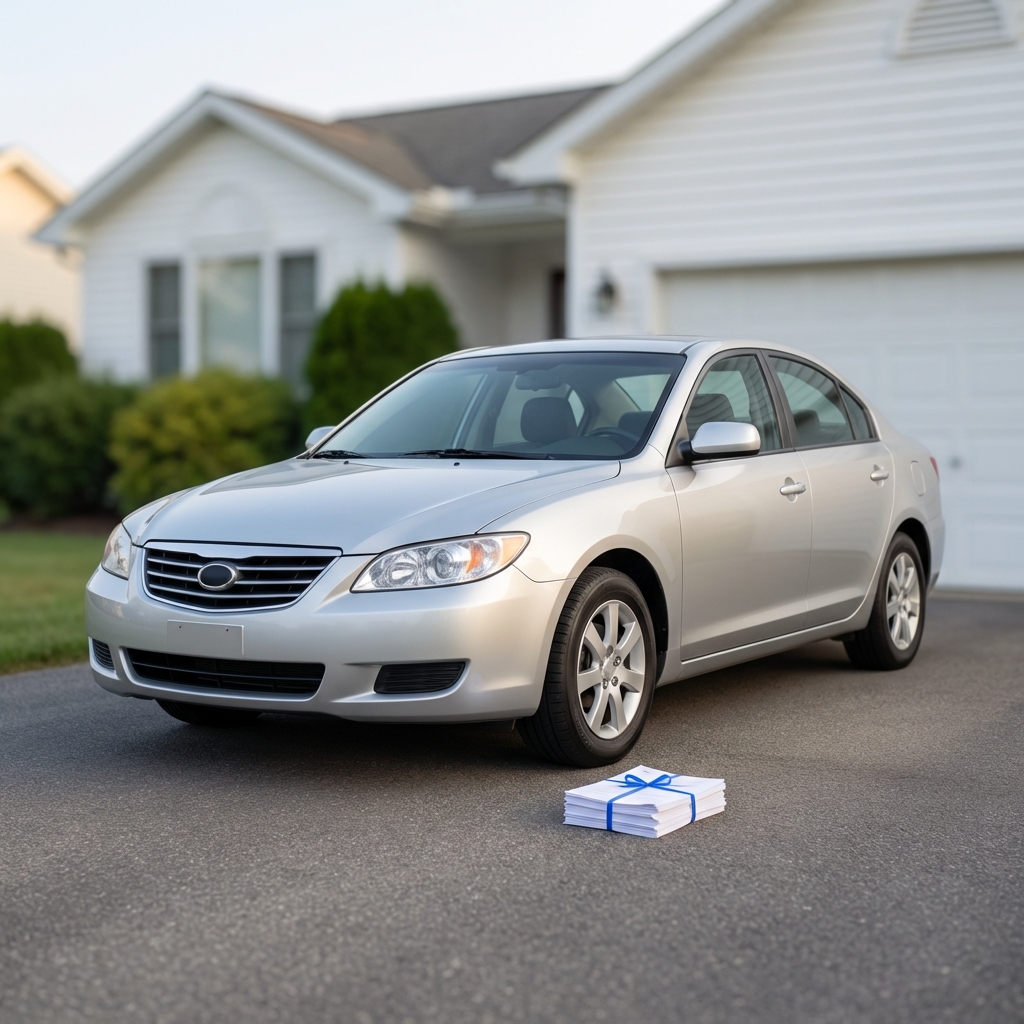
For consumer-level buying, the free NADA value lookup is a strong first step — but it should be followed by history checks and inspections. A quick visual reminder like this can help you keep the bigger picture in mind.
For consumer-level buying, the free NADA value lookup is a strong first step — but it should be followed by history checks and inspections.
Common limitations to watch for
Even with the NADA value in hand, expect these realities:
Local market variations: Prices vary by region. A good deal in one city might be overpriced in another.
Condition quirks: Cosmetic issues, dealer reconditioning, and recent repairs change value quickly.
Feature and trim confusion: Listings that mislabel trims or options can make a number from NADA look wrong.
Use the NADA value as guidance — a helpful number, not a final word.
Using NADA value and CARFAX Deals together (a practical example)
Let’s say you’re considering a five-year-old crossover. You check the NADA value and see a retail range. Next, you look at several listings and notice one marked at the low end of that range. Before celebrating, you run a vehicle history report. If a report from CARFAX shows a clean title, consistent service history, and no accidents, that low listing becomes a real opportunity — not a red flag. That combination of valuation and history is where confident buying happens.
Why CARFAX Deals can give you an edge
CARFAX Deals pairs vehicle history data with price context and marketplace listings. While the NADA value focuses on pricing, CARFAX Deals layers the history — service records, ownership, title status — onto each listing. That means you can see whether a car priced near the NADA value also has a clean past, helping you prioritize which cars deserve in-person checks and inspections. For tips on using the site, check the CARFAX Deals guide: How to use CARFAX Deals.
Do I always need both NADA value and a CARFAX report?
Not always, but usually they’re best used together. The NADA value gives you an immediate read on price fairness; a CARFAX report explains what led to that price. When combined, the two reduce guesswork and make negotiation straightforward.
How to access the NADA value: a quick how-to
1) Visit NADAguides.com or a consumer-facing page that displays NADA values. 2) Enter year, make, model, trim, mileage, and condition. 3) Review the trade-in, private-party, and suggested retail ranges. 4) Compare that output with local listings and a vehicle history report.
1) Visit NADAguides.com or a consumer-facing page that displays NADA values. 2) Enter year, make, model, trim, mileage, and condition. 3) Review the trade-in, private-party, and suggested retail ranges. 4) Compare that output with local listings and a vehicle history report.
Remember: while the consumer-facing NADA value is often free, the most granular dealer-facing feeds are not. If you find yourself needing constant, highly specific market reports, a paid subscription may be required.
Practical negotiation script using NADA value
Here’s a short script you can use when a listing seems off compared to the NADA value:
“Thanks for the info. I’ve checked the NADA value and several comparable listings. Given the inspection notes and the expected reconditioning, I’m comfortable at $X. If you can’t meet that, I can step aside and keep looking.”
Use numbers rather than feelings. The NADA value gives you a neutral anchor — that’s a negotiation advantage.
Use the NADA value as a baseline and then run a vehicle history report to check for accidents, title issues, or inconsistent mileage. Follow with a mechanic inspection; if the inspection finds repairs, deduct those costs from the NADA-based offer. Bring the combined facts — NADA value, inspection notes, and comparable listings — into negotiation to justify a fair but lower offer.
How the NADA value helps when considering older or higher-mileage cars
The NADA value is especially helpful when you evaluate older or high-mileage cars because it aggregates market data that accounts for typical depreciation. But mileage alone isn’t everything. A well-maintained high-mileage car often outperforms a neglected low-mileage one. Use the NADA value along with service records and an independent inspection.
What to do if the NADA value and listing price disagree
When there’s a gap, pause and investigate. Ask the seller why the car is priced above or below the NADA value. If it’s above, maybe it has recent costly repairs or a sought-after package. If it’s below, check for title issues, flood history, or mechanical neglect. A vehicle history report will often answer these questions.
Checklist: Using NADA value effectively
Before buying, go through this quick checklist:
Use the consumer-level NADA value to set a baseline.
Run a vehicle history report to check title and accident history.
Inspect photos for signs of damage or mismatched paint.
Arrange a daylight test drive on mixed roads.
Get an independent mechanic to inspect before you buy.
Negotiate using the NADA value and inspection evidence.
How accurate is the NADA value in today’s market?
The NADA value is a credible baseline, but no tool is perfect. Rapid changes in supply and demand - from chip shortages to regional shifts - can move local prices faster than any guide updates. That’s why pairing the NADA value with live marketplace data and verified history (for example via CARFAX Deals) is the least risky strategy.
Alternatives and complements to the NADA value
Don’t rely on a single number. Use multiple sources:
Kelley Blue Book: consumer-focused pricing and condition categories.
Local listings: real-world asking prices in your area.
Dealer retail guides: these sometimes differ from wholesale-focused NADA numbers.
Each tool contributes a different perspective. Together they give you a truer market picture than any alone.
Common myths about the NADA value
Myth: The NADA value is the only correct price. Reality: It’s one professional estimate among several. Myth: The NADA value is always behind market moves. Reality: It can lag for sudden local changes, but over time it tracks well with wholesale trends.
When to consider paid valuation tools
If you’re buying many cars, reselling, or running a business, paid valuation tools that provide live auction and wholesale feeds may be worth the cost. Those tools offer a higher-resolution view than the consumer-level NADA value, which is why dealers often subscribe.
Putting the NADA value into the bigger buying picture
Valuation is only one part of buying right. The process we described earlier in this guide — choosing needs, setting a budget, researching, test driving, inspecting, and negotiating — benefits from the NADA value at multiple steps. Start with it, but never stop at a number: verify history, inspect the vehicle, and make decisions based on the whole story.
Extra tips for confidence
• Save all listings and run a NADA value check on each shortlisted vehicle. • Use the NADA value to spot outliers quickly. • Combine data: price guides + vehicle history + mechanic inspection = clarity.
A few common buyer questions answered
Q: Can the NADA value force a dealer to lower a price? A: No. It’s a negotiation tool. But it gives you facts to bring to the table. Dealers who price well against the NADA value and provide clear history are easier to trust.
Q: Is the NADA value better for trade-ins or private-party deals? A: The guide offers both trade-in and private-party ranges. Use the version that matches your situation.
Final practical checklist before purchase
Ask for and verify:
VIN and run a history check (e.g., via CARFAX Deals).
Service records and recent repairs.
Title status and lien-free confirmation.
Inspection by an independent mechanic.
Use the NADA value to confirm the asking price is reasonable after you account for necessary repairs and local trends.
Parting advice on value and peace of mind
The point of checking the NADA value isn’t to obsess over a single number. It’s to anchor your decisions to market reality and reduce the risk of buyer’s remorse. When paired with vehicle history and a mechanical inspection, that small bit of homework pays off in quiet confidence — and more time enjoying your car than worrying about it.
Enjoy the ride. Take a breath-and when you find a car priced near or below its expected NADA value with a clean history, you can move forward knowing you did the work to protect your purchase.
Yes. Consumer-facing NADA value lookups are typically available online and free to access for basic trade-in, private-party, and suggested retail ranges. However, dealer-facing and commercial-grade NADA tools that show live wholesale auction feeds and deeper market analytics often require a paid subscription.
Use the NADA value as a baseline: compare the guide’s trade-in, private-party, and suggested retail ranges to local listings. Then run a verified vehicle history report and get an independent inspection. Together, these steps help you assess whether a listing is fairly priced and worth pursuing.
No. The NADA value is a helpful guideline but it doesn’t show title problems, accident history, or mechanical condition. Always pair the NADA value with vehicle history reports, a thorough test drive, and an independent mechanic’s inspection before buying.
Yes — consumer NADA value lookups are generally free; use them with vehicle history and inspections to buy smart. Drive safe and enjoy the small victory of a well-made choice.

 Blog
Blog