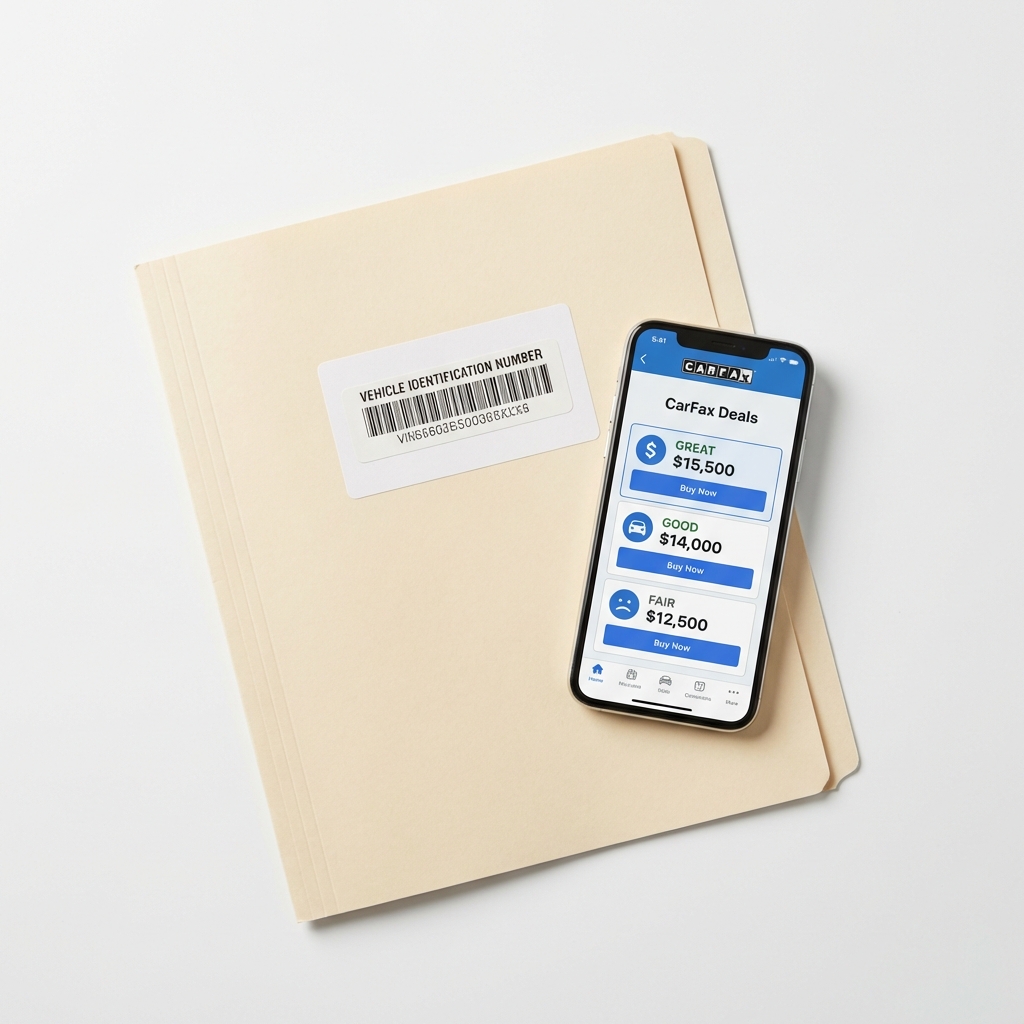
KBB vs NADA: Learn why Kelley Blue Book and NADA Guides often show different used-car values, which guide fits your transaction, and a step-by-step plan to get the price that matches your goal. This guide explains how each service gathers data, how condition, region, and timing change valuations, and how to triangulate KBB, NADA and live market data — including verified vehicle history via CARFAX Deals — so you can sell, trade, or buy with confidence.
A rav4 used for sale can be a sensible pick for many research-oriented buyers because reliability aggregators rate the model above average and safety ratings are generally strong. This guide explains how to vet listings, what model years tend to be better, and a step-by-step checklist to reduce risk before you buy.
This guide explains how to estimate the cost of buying an R34 Skyline, with attention to import rules, condition-driven price tiers and landed cost. It shows which factors move value, how to verify history and paperwork, and offers a checklist you can follow when you search for a nissan skyline r34 for sale.
This guide helps buyers set realistic expectations for tacoma trucks for sale by explaining the main price drivers and a repeatable method to build conservative, typical, and ambitious offer ranges. It shows how the 2024 redesign, valuation guides, and vehicle history reports interact to change asking prices and reduce purchase risk.
If you’ve ever compared used-car values online and wondered why two respected guides give different numbers, you’re not alone. This guide breaks down the real differences between Kelley Blue Book and NADA Guides, why their numbers diverge, and exactly how to use both — along with live listings and verified vehicle history — to get a price that matches your goals.
1. KBB focuses on consumer-facing values (private-party and suggested retail) while NADA is stronger for dealer trade-in and wholesale estimates.
2. Triangulating KBB, NADA, local listings, and a verified vehicle history gives the most reliable price estimate.
3. CARFAX Deals pairs verified vehicle history with pricing labels — listings with a CARFAX report and a 'Great Deal' label are statistically more likely to sell faster and reduce buyer risk.
What's the difference between KBB and NADA?
KBB vs NADA is a question every used-car buyer and seller should understand. These two valuation guides often publish numbers that look like facts — neat dollar amounts that people treat as gospel — but those numbers answer different questions. This article gives you the practical knowledge you need to use both guides, compare them to live market data, and make the smart decision that fits your situation.
KBB vs NADA describes two valuable but distinct lenses on the used-car market. Kelley Blue Book (KBB) leans consumer-facing: private-party values, suggested retail prices, and market-reflective adjustments. NADA Guides grew from dealer and wholesale roots, emphasizing dealer transactions, auction results, and wholesale trends. Those starting assumptions - consumer retail vs. wholesale - are why the numbers often differ, sometimes by hundreds or thousands of dollars.
Below, you’ll find clear explanations of how each guide works, why they diverge, and a practical playbook to use both — plus live listings and vehicle history checks — so you’re not guessing when you sell, trade, or buy.
If you want a combined view of market pricing and verified history while you research deals, check out CARFAX Deals — it surfaces listings backed by CARFAX Vehicle History Reports and tags prices as Great, Good, or Fair Deal to help you decide quickly and confidently.
KBB vs NADA differs primarily because of the inputs each guide emphasizes. KBB pulls heavily from dealer listings, consumer transactions, inventory levels, and incentives — it watches what sellers and buyers are actually asking and paying now. NADA focuses more on dealer networks, auction results, and wholesale channels. In short: KBB watches retail; NADA watches wholesale. That choice of inputs changes the answer each gives to the same question.
See verified history plus market pricing in one place
Ready to see verified history + pricing on a specific car? Check a vehicle’s full CARFAX report and pricing label to decide faster and with more confidence: Run a CARFAX Deals report.
KBB presents multiple values for the same vehicle: private-party, trade-in, suggested retail, and conditional adjustments. It’s designed to help consumers set a private sale price or understand a fair retail offer. Because it reacts to current dealer and private listing behavior, KBB’s retail-oriented categories often move quickly when local demand or supply shifts.
NADA Guides grew from a dealer and auction perspective. Its numbers often reflect what a dealer might expect when a car moves through wholesale channels or when insurers and lenders need a collateral value. NADA’s approach is useful when estimating trade-in offers, wholesale values, or insurance/lender valuations.
Imagine the market is tight for small trucks. Dealers are short on inventory and private buyers are scrambling. KBB’s retail-facing numbers will often rise faster because dealer asking prices and private listings push those figures up. Industry comparisons show how timing and input choices drive those spreads.
Yes — because they answer different questions. KBB reflects consumer retail activity and what buyers are paying now, while NADA reflects dealer, wholesale, and lender perspectives. Use them together with live listings and a verified history to form a complete picture.
Both guides adjust numbers for condition, mileage, and title brands, but they use different condition scales and decay curves. What KBB calls “very good” might be called “good” in another system. Salvage or rebuilt titles are handled differently, too — one guide’s haircut can be steeper than the other’s. That’s why a careful inspection and a full vehicle history report are critical parts of any valuation.
Example A: a five-year-old compact SUV in a mid-size city. KBB private-party: $18,000. KBB trade-in: $15,500. KBB suggested retail: $19,500. NADA trade-in: $15,000. NADA low retail: $18,000. The spread reflects what real buyers and dealers are doing in that local market.
Example B: a 2016 Toyota Camry with 70,000 miles in a sunbelt city. KBB private-party: $12,500. KBB suggested retail: $13,800. NADA trade-in: $11,000. If you list privately and highlight maintenance records, you can justify a price near the suggested retail. If speed and convenience matter, an NADA-aligned trade-in offer may make sense.
You shouldn’t treat either KBB or NADA as the single truth. Instead, triangulate. Follow this process:
Step 1. Decide your goal: private sale, trade-in, or buy. Each path points you toward different primary values (KBB for private-party/retail, NADA for trade-in/wholesale).
Step 2. Pull KBB and NADA values for the exact year, trim, mileage, packages, and condition.
Step 3. Search active local listings and recent sales for similar cars in your area.
Step 4. Order a full vehicle history report and review title brands, accident history, odometer checks, and service records.
Step 5. If you’re buying, get a pre-purchase inspection from a trusted mechanic.
Step 6. Set your price or negotiation range based on the guide that best matches your goal, adjusted for live market evidence and history findings.
When you negotiate, use facts. For private sales say: “I set the price based on current private-party values and recent local sales — plus the car’s full maintenance records and clean history.” With a dealer, say: “Your offer looks like a wholesale number. Show me a comparable retail car at your offer margin, or I’ll try selling privately.” Those lines invite evidence instead of pitching emotion.
KBB vs NADA is not an either-or choice. Use KBB when you want to set a private sale or suggested retail price. Use NADA when you’re estimating trade-in expectations, dealer values, or lender/insurance collateral figures. Both together, plus live listings and a verified history, give you the full picture.
Dealers must account for reconditioning, floorplan interest, sales commissions, and the risk of not selling a car quickly. Those costs create the difference between a dealer’s trade-in offer and a private-party sale price. NADA often aligns closely with that dealer calculus because it tracks wholesale sell-through and auction data.
Valuations shift by place and time. Pickups and four-wheel-drive vehicles can command regional premiums in rural or mountainous areas. Convertibles and sports cars spike in spring and summer. New model incentives can depress used values for certain models, while new-car shortages often lift used-car prices. KBB’s market-facing categories can reflect these shifts quickly; NADA may adjust more slowly because wholesale markets sometimes move on different rhythms.
A guide’s number assumes a certain condition. If the assumed condition doesn’t match the car’s reality, the number won’t either. That’s why verified vehicle history reports are essential. Combining a guide’s market price with a verified history — like CARFAX reports surfaced in CARFAX Deals — gives you both the market lens and the risk signal in one place. Ein Tipp: Schauen Sie sich CarFax Deals an.
A buyer once purchased a clean-looking sedan without checking its history. Two months later they discovered a prior flood claim that had been repaired, causing ongoing electrical issues. The car’s resale value fell sharply, and the buyer faced unexpected repair bills. That outcome shows why history checks and inspections are cheap insurance compared with the potential cost of being wrong.
Here’s a practical checklist to follow before any sale, trade, or purchase:
1) Set your goal: private sale, trade-in, or purchase.
2) Pull KBB and NADA values for the exact trim and condition.
3) Scan local listings and recent sold records for comparable cars.
4) Get a vehicle history report and read it thoroughly.
5) Get a mechanic inspection for purchases when possible.
6) Set your final price or acceptable trade-in minimum and walk away if it’s not met.
Buyers: “I like this car, but I need to see a current history report and a recent inspection before I commit.” Sellers: “My price is set using current private-party values and comparable local sales. I’ll include the CARFAX report and all maintenance records.” Dealers: “If your trade-in offer is based on wholesale values, show me comparable retail listings or I’ll try a private sale.”
1) Relying on a single number without local verification.
2) Ignoring the vehicle’s history and condition.
3) Letting emotion drive price expectations instead of evidence.
4) Skipping an inspection before a purchase.
Salvage, rebuilt, or flood-branded titles dramatically change marketability. Even modestly cheaper prices can become very hard to achieve in private sales. Dealers and wholesalers sometimes accept branded vehicles because they have channels to repair or recover, but retail buyers often do not. That’s another reason NADA’s wholesale tilt can produce more favorable numbers for certain branded titles compared to KBB’s retail-centric view.
If you can wait to sell, consider timing the listing for peak season in your region (convertibles in summer, trucks in fall/winter for work markets). Put effort into presentation: clear photos, full maintenance records, a clean interior, and a reasonable price supported by KBB private-party and local comparables. Presentation can turn a long listing into a quick sale at a small premium.
There isn’t one magic number. Instead, pick the number that best reflects your timeline and priorities. Need speed and convenience? Use NADA trade-in as your reference. Want top dollar and have time? Use KBB private-party or suggested retail and support it with documentation and a strong listing. Either way, bring evidence: recent sold listings, KBB or NADA printouts, and a clean vehicle history report.
CARFAX Deals stands out for buyers who want to remove uncertainty. It combines verified CARFAX Vehicle History Reports with transparent pricing signals, helping you see both risk and value at once. That combination is particularly useful when KBB and NADA disagree and you need a single dashboard to prioritize vehicles to inspect or test-drive. Learn how to use those tools in our how-to guide or check vehicle-specific reports on the VIN report page. For pricing and package options see pricing.
Story one: a seller who timed their SUV sale for high local demand and supported the price with KBB retail numbers and service records — sold above suggested retail within a week.
Story two: a busy owner who accepted a dealer trade-in aligned with NADA to avoid the hassle and quickly moved on to a new car — the convenience matched their priorities.
Story three: a cautious buyer who used CARFAX Deals to filter listings with clean histories and Good/Great Deal labels, avoiding cars with unknown pasts and saving time on inspections.
KBB vs NADA are tools with different lenses. Use both, bring in live market evidence, and verify history. That process gives you the confidence to sell, trade, or buy without relying on a single number.
Final practical tip: keep all paperwork organized — receipts, service records, and history reports — because buyers reward transparency and you can often capture a higher price by reducing uncertainty.
For a private-party sale, use KBB’s private-party and suggested retail values as your primary references. KBB tracks dealer listings and consumer behavior, so its retail-focused categories usually reflect what buyers are paying now. Then verify with local listings and a vehicle history report before finalizing your price.
KBB and NADA emphasize different data: KBB focuses on retail listings and consumer transactions, while NADA leans on dealer networks, auctions, and wholesale channels. Those different inputs and condition scales lead to different answers. Regional supply/demand, seasonal swings, and title/condition differences also widen gaps between the two guides.
CARFAX Deals pairs verified CARFAX Vehicle History Reports with market-based price labels (Great, Good, or Fair Deal). That combination shows both a car’s risk profile and where its price sits in the market, making it easier to decide whether to follow KBB’s retail guidance or NADA’s wholesale perspective.
KBB and NADA answer different questions — KBB is retail-facing, NADA is wholesale-oriented — so use both, verify history, and pick the number that fits your goal; good luck, happy selling (or buying), and may your next deal feel like a win. Bye for now!

 Blog
Blog