Which is more accurate, Kelley Blue Book or Edmunds? A practical guide for buyers
This article explains how Kelley Blue Book and Edmunds build used car values, why their numbers often differ, and how buyers can triangulate prices with local data and vehicle history. It highlights what each service measures, how market swings affect valuations, and gives a step-by-step workflow to combine KBB, Edmunds and VIN-level checks before contacting a dealer.
A rav4 used for sale can be a sensible pick for many research-oriented buyers because reliability aggregators rate the model above average and safety ratings are generally strong. This guide explains how to vet listings, what model years tend to be better, and a step-by-step checklist to reduce risk before you buy.
This guide explains how to estimate the cost of buying an R34 Skyline, with attention to import rules, condition-driven price tiers and landed cost. It shows which factors move value, how to verify history and paperwork, and offers a checklist you can follow when you search for a nissan skyline r34 for sale.
This guide helps buyers set realistic expectations for tacoma trucks for sale by explaining the main price drivers and a repeatable method to build conservative, typical, and ambitious offer ranges. It shows how the 2024 redesign, valuation guides, and vehicle history reports interact to change asking prices and reduce purchase risk.
Online valuation tools can help set expectations when you shop for a used car, but they are not identical. Kelley Blue Book publishes a Fair Market Range and a Fair Purchase Price that mix transactions and dealer asking data, while Edmunds produces a True Market Value that aims to mirror recent transaction prices.
This article compares how each service calculates value, explains when one may be more informative than the other, and gives a practical workflow buyers can use to triangulate prices with VIN-level vehicle history and local listings.
KBB offers a Fair Market Range and Fair Purchase Price; Edmunds focuses on True Market Value and observed transactions.
Wholesale indices show that rapid market swings can reduce the accuracy of single-point online valuations.
Triangulate KBB, Edmunds and local comparables, and run a VIN-level vehicle history report before negotiating.
kelley blue book used cars: what KBB and Edmunds measure and why it matters
High-level comparison
Kelley Blue Book and Edmunds aim to help buyers and sellers understand used car pricing, but they do not measure exactly the same thing. Kelley Blue Book publishes a Fair Market Range and a Fair Purchase Price that blend transaction records, dealer asking prices, regional adjustments and seasonal factors to express a buyer-facing range and a suggested purchase target Kelley Blue Book methodology. See KBB vs Edmunds comparison.
Edmunds focuses on a True Market Value that is built to reflect observed transaction prices for comparable vehicles, with adjustments for trim, mileage and local market conditions; it is intended to mirror what buyers have actually paid in recent sales Edmunds TMV explanation.
No single public analysis shows one service is consistently superior across all makes and markets; accuracy depends on segment, trim specificity and local supply, so triangulating KBB, Edmunds and local data is the most reliable approach.
Why different inputs produce different numbers
Because each site optimizes for a slightly different outcome, their published numbers can diverge in predictable ways. KBB's Fair Market Range intentionally gives a band for negotiation and factors in dealer asking prices, while Edmunds' TMV tracks average transaction prices more directly, which can make TMV closer to final sale prices when comparable transactions are common Kelley Blue Book methodology.
Short-term wholesale and market swings also matter: when wholesale values move quickly, single-point online estimates can lag or vary more, which reduces the reliability of treating any single number as definitive Manheim market insights.
How Kelley Blue Book calculates used car values
Data sources KBB uses
KBB describes using a blend of actual transactions, dealer asking prices, seasonal and regional adjustments to build a Fair Market Range and a Fair Purchase Price. That mix aims to reflect both what dealers list and what buyers pay within a region Kelley Blue Book methodology. Another discussion compares the two approaches Edmunds vs KBB.
Those inputs mean KBB is designed to present a practical buying range rather than just a single observed sale value. The range can help set expectations for negotiation because it includes both lower and upper bounds adjusted for local market influences Kelley Blue Book methodology.
The Fair Market Range is a band intended to capture normal price variation across similar listings in a given area, while the Fair Purchase Price is KBB's suggestion of a reasonable target for a private buyer or dealer negotiation. Use the range to see where a listing sits relative to typical asking prices and use the Fair Purchase Price as a starting negotiation anchor Kelley Blue Book methodology.
Keep in mind that KBB's approach still depends on timely inputs; wholesale price swings and rapid local supply changes can make the published range less accurate if market conditions shift faster than the underlying data updates Manheim market insights.
Keep in mind that KBB's approach still depends on timely inputs; wholesale price swings and rapid local supply changes can make the published range less accurate if market conditions shift faster than the underlying data updates Manheim market insights.
How Edmunds calculates True Market Value and what that means for buyers
Edmunds TMV inputs
Edmunds builds TMV to represent average transaction prices for comparable vehicles, and it explicitly adjusts for factors like trim, mileage and local market conditions so the estimate tracks realized sale prices when comparables are plentiful Edmunds TMV explanation.
Where transaction records are dense, TMV can move quickly with recent sale trends and therefore sometimes align closely with what dealers actually accept in offers. That makes TMV especially useful for listings in common trims and mainstream model years where many comparable sales exist Manheim market insights.
Run Vehicle History Report before you decide
Download a short checklist that helps you compare KBB and Edmunds values side by side and record local comparables before you visit a dealer.
TMV tends to match final sale prices better when there are many recent, similar transactions to draw from. In those cases TMV reflects the market, because Edmunds' modeling emphasizes observed transaction prices rather than dealer asking ranges Edmunds TMV explanation.
If comparable transactions are sparse, however, TMV accuracy falls. Rare trims, unusual option packages or atypical mileage levels reduce the pool of reliable comparables, and that can widen the gap between TMV and an actual negotiated price iSeeCars analysis.
How short-term market swings and wholesale indexes affect online valuations
What Manheim and wholesale indices show
Wholesale indices from Manheim and other industry sources show that used-car prices are sensitive to short-term swings, which can cause retail pricing tools to diverge or lag during volatile periods Manheim market insights.
When wholesale prices jump or fall, dealer acquisition costs change; dealers then update asking prices, and valuation models that rely on transaction feeds or dealer data must adjust. That transmission path creates timing risk for single-point online values Manheim market insights.
Implications for static online price estimates
Because of this transmission path, a static online estimate should be treated as a signal rather than a fact. Check recent local sales and current dealer listings in your area before relying on an online number to set an offer or listing price Manheim market insights.
Short-term volatility is also why triangulating multiple valuation sources and local comparables helps reduce risk compared with using a single published number as the basis for negotiation Manheim market insights.
Where KBB and Edmunds tend to agree or disagree on value
Vehicle- and market-specific accuracy patterns
Independent studies and consumer reporting find that valuation deviations are not uniform across all vehicles. Accuracy tends to be higher for common trims and recent model years and lower for rare trims, very high or low mileage, and markets with supply imbalances iSeeCars analysis.
These patterns mean both KBB and Edmunds often agree on value ranges for mainstream vehicles with many comparables, and they are more likely to disagree where comparables are sparse or options vary widely Consumer Reports comparison. Autotrader also summarizes differences Autotrader comparison.
Typical reasons the two sites will differ include trim specificity, mileage, local supply and demand, and model rarity. Any of these can make one tool more informative than the other in a given case iSeeCars analysis.
When variance is likely, prioritize VIN-level vehicle history checks and local comparable transactions to resolve differences before making an offer NADA Guides methodology.
Step-by-step: How to use KBB and Edmunds together when evaluating a listing
A practical checklist for buyers
1. Pull KBB and Edmunds estimates for the same model, trim and mileage as the listing. Note the KBB Fair Market Range and the Edmunds TMV and record both numbers for comparison Kelley Blue Book methodology.
2. Confirm the exact trim and options on the listing match the comparables you used. Small option differences can shift value, so read the equipment list and specifications carefully Edmunds TMV explanation.
How to triangulate prices with local data and vehicle history
4. Search local dealer listings and completed sales for three close comparables. Record asking price, mileage and seller type for each comparable to build a local context for the KBB and Edmunds numbers Manheim market insights.
5. Use price analysis labels and dealer transparency signals as extra context, not proof. For many buyers the combination of KBB, Edmunds and local comparables reduces uncertainty and gives a defensible negotiation range Kelley Blue Book methodology.
A practical decision checklist: when to trust one tool more than the other
Checklist items by scenario: if local transaction data is abundant, weight Edmunds TMV more heavily; if you want a broader bargaining band use KBB's Fair Market Range; for trade-ins combine dealer quotes with both online tools to set expectations Edmunds TMV explanation.
Trade-in, private sale and dealer purchase have different dynamics. Trade-ins often involve dealer adjustment for reconditioning, private sales rely more on buyer perception of condition, and dealer purchases reflect dealer acquisition costs and turnover pressure Kelley Blue Book methodology.
Helps decide which pricing signal to weight more in common sale scenarios
Use with local comparables
Remember that neither tool is universally superior; accuracy is segment- and market-dependent, and triangulation across sources and VIN-level checks tends to reduce risk iSeeCars analysis.
Common mistakes buyers make when relying on online valuations
Over-relying on a single tool
A frequent error is treating a single online number as definitive, especially during volatile markets when wholesale indices and dealer asking prices can move quickly; this can lead to overpaying or mispricing a sale Manheim market insights.
Another common mistake is ignoring trim, mileage and option differences. A listing that omits a specific option package or shows atypical mileage can be outside the comparables used by either valuation method, and that increases error Consumer Reports comparison.
Ignoring trim and VIN specifics
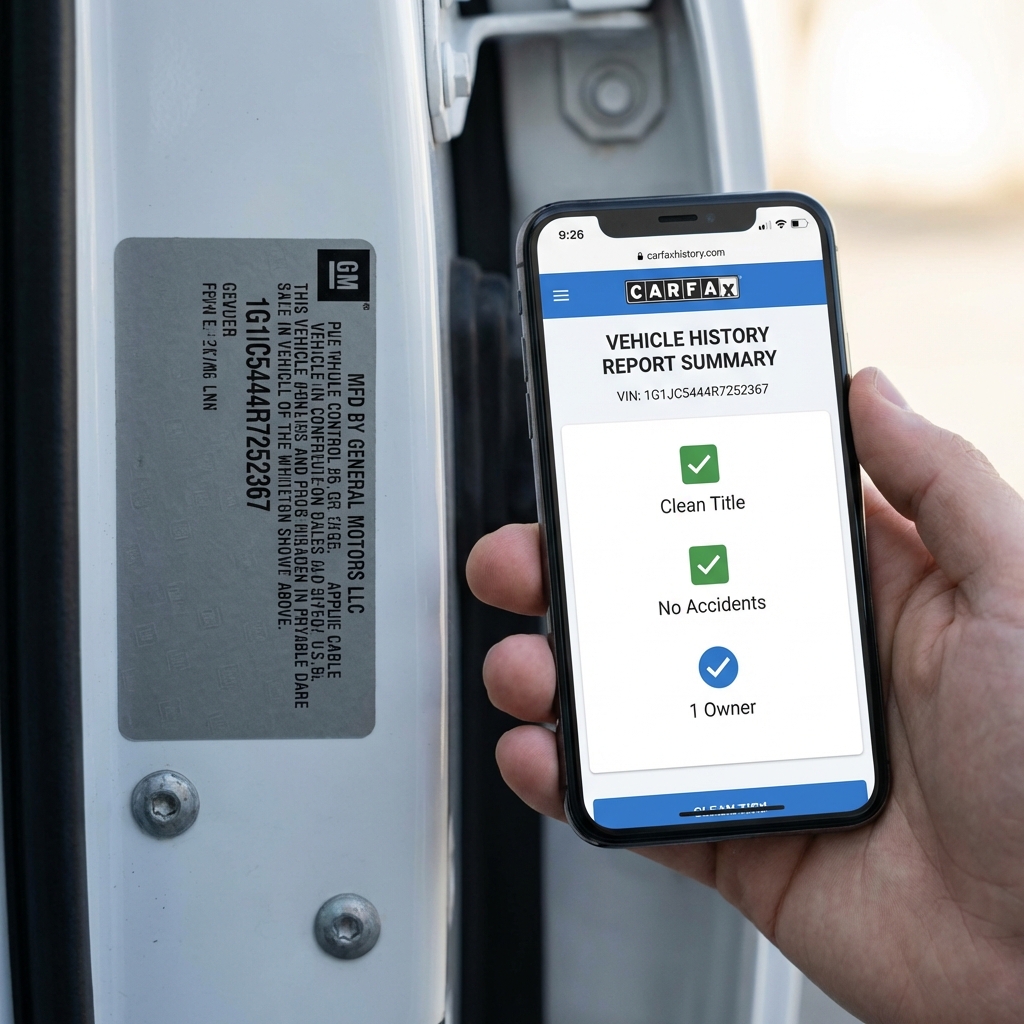
Always confirm the VIN and review a vehicle history report before making a decision. Title status, ownership history and service records materially affect value and buyer risk, so a clean-sounding listing is not enough without VIN-level checks NADA Guides methodology.
A disciplined approach that documents comparables and records vehicle history findings reduces the chance of a valuation surprise when you or a dealer re-inspect the car iSeeCars analysis.
Practical examples: three scenarios comparing KBB and Edmunds on the same listing
A common-trim compact car
Scenario A: a recent compact in a common trim often produces close agreement between KBB and Edmunds because both have ample comparable transactions and listing data. In that situation TMV and the Fair Market Range frequently overlap, making triangulation straightforward Edmunds TMV explanation.
When both tools align, use the KBB range to spot outliers in asking price and the TMV to estimate recent transaction outcomes, then confirm with local comparables before offering Kelley Blue Book methodology.
A high-mileage older sedan
Scenario B: older sedans with high mileage often show wider valuation variance. Fewer close comparables and mileage outliers mean TMV and KBB estimates can differ meaningfully, and that variance should prompt careful VIN-level checks and conservative negotiation margins iSeeCars analysis.
In these cases, document comparable sales that match the mileage profile and consider repair and maintenance history from the vehicle history report when setting your target price NADA Guides methodology.
A rare trim or luxury model
Scenario C: luxury models or rare trims often lack sufficient comparables, so neither KBB nor Edmunds is definitive. Sparse data increases projection error and makes local market context and VIN-specific history essential for a reliable estimate iSeeCars analysis.
When comparables are thin, weigh dealer transparency and price analysis labels as supplementary signals and expect a wider negotiation range until you can confirm condition and market demand Consumer Reports comparison.
Conclusion: how to triangulate valuations and next steps before you contact a dealer
Quick takeaways
Use KBB and Edmunds as complementary pricing signals: KBB provides a Fair Market Range and a suggested Fair Purchase Price, while Edmunds' TMV targets recent transaction prices. Neither tool is always right; accuracy depends on vehicle segment, trim specificity and local supply conditions Kelley Blue Book methodology.
When markets are shifting, add a buffer to your target price and document why you chose that figure. Triangulation across sources plus VIN-level verification is the most reliable way to reduce risk in a used car transaction Manheim market insights.
KBB produces a Fair Market Range and a suggested Fair Purchase Price that blend transactions and asking prices, while Edmunds' TMV focuses on observed transaction prices adjusted for trim, mileage and local conditions.
For trade-ins, use both tools plus dealer quotes; KBB's range helps set expectations and Edmunds TMV can reflect recent transaction patterns, but local dealer behavior will strongly affect trade-in offers.
Confirm the exact trim and mileage, run a VIN-level vehicle history report, and collect at least three local comparables before deciding or negotiating.
Valuation tools are helpful decision aids when used together and paired with VIN-level checks. Treat KBB and Edmunds as complementary signals, document local comparables, and use vehicle history and dealer transparency information to reduce uncertainty before you negotiate or list a car.

 Blog
Blog