What are common MX-5 problems? — What to check before you buy
This guide walks through the most commonly reported Mazda MX-5 problems and gives a clear inspection workflow for used-car buyers. It explains generation-specific issues, how to spot rust, soft-top leaks, electrical and suspension faults, and how to combine a vehicle history report and a pre-purchase inspection to reduce risk when you find a mazda mx5 for sale.
A rav4 used for sale can be a sensible pick for many research-oriented buyers because reliability aggregators rate the model above average and safety ratings are generally strong. This guide explains how to vet listings, what model years tend to be better, and a step-by-step checklist to reduce risk before you buy.
This guide explains how to estimate the cost of buying an R34 Skyline, with attention to import rules, condition-driven price tiers and landed cost. It shows which factors move value, how to verify history and paperwork, and offers a checklist you can follow when you search for a nissan skyline r34 for sale.
This guide helps buyers set realistic expectations for tacoma trucks for sale by explaining the main price drivers and a repeatable method to build conservative, typical, and ambitious offer ranges. It shows how the 2024 redesign, valuation guides, and vehicle history reports interact to change asking prices and reduce purchase risk.
If you are considering a Mazda MX-5, this guide helps you identify the most commonly reported problems and shows how to check for them efficiently. It is designed for research oriented used-car buyers who want concrete steps to screen listings before arranging a visit.
The workflow emphasizes conditional decision making: combine a VIN vehicle history report, a recall lookup, and a targeted pre-purchase inspection to decide which cars deserve a professional inspection. The advice uses neutral language and avoids absolute claims about any specific vehicle.
Rust on early NA and NB models and soft-top wear are the most commonly reported long-term issues.
Use a VIN vehicle history report, NHTSA recall check, and pre-purchase inspection to prioritize listings.
Common fixes like a soft-top reseal or single ignition coil replacement are often repairable and should be weighed against price analysis labels.
Quick summary: what this guide covers
Who this is for, mazda mx5 for sale
This guide summarizes the most commonly reported MX-5 problems from aggregated owner reports and buyer guides, and shows how to use a VIN vehicle history report, NHTSA recall lookup, and a focused pre-purchase inspection to reduce uncertainty.
Read this if you are comparing listings and want a practical checklist to decide which cars to bring to a mechanic. The advice uses conditional language and avoids absolute statements about any given car's health.
Start with a VIN vehicle history check
Before you visit a listing, run a VIN vehicle history report and note title status and any reported service or event history
How to use the checklist and when to get a pre-purchase inspection
Use the checklist to screen listings remotely. Prioritize cars with clear ownership history and few reported events. If a VIN report or seller notes rust, water damage, or repeated electrical repairs, plan a professional pre-purchase inspection.
When in doubt, a targeted inspection costs less than an unexpected repair after purchase and can help you compare asking price against likely repair scope.
Brief Mazda MX-5 context: generations and where problems most often show up
The MX-5 is commonly discussed by generation: NA (early 1990s), NB (late 1990s to mid 2000s), NC (mid 2000s to mid 2010s) and ND (mid 2010s onward). Each generation seen on the used market ranges in age and typical wear, so the most common issues vary by era.
Early NA and NB cars on the road today most often show long-term rust patterns and convertible-top age issues, whereas NC and ND models tend to present more wear-related maintenance items and occasional electronics or ignition quirks. For model-year specific recalls and service campaigns, check the NHTSA vehicle recalls database before you buy NHTSA vehicle recalls database and Mazda's recall page Mazda recall page.
Top recurring problem 1: rust and corrosion on early MX-5 models
Rust and corrosion remain one of the most commonly reported long-term issues on NA and NB MX-5 models, particularly in wet climates or where roads are salted in winter. Hagerty's buyer guidance and owner reports describe predictable areas to inspect on older Miatas Hagerty buyer's guide.
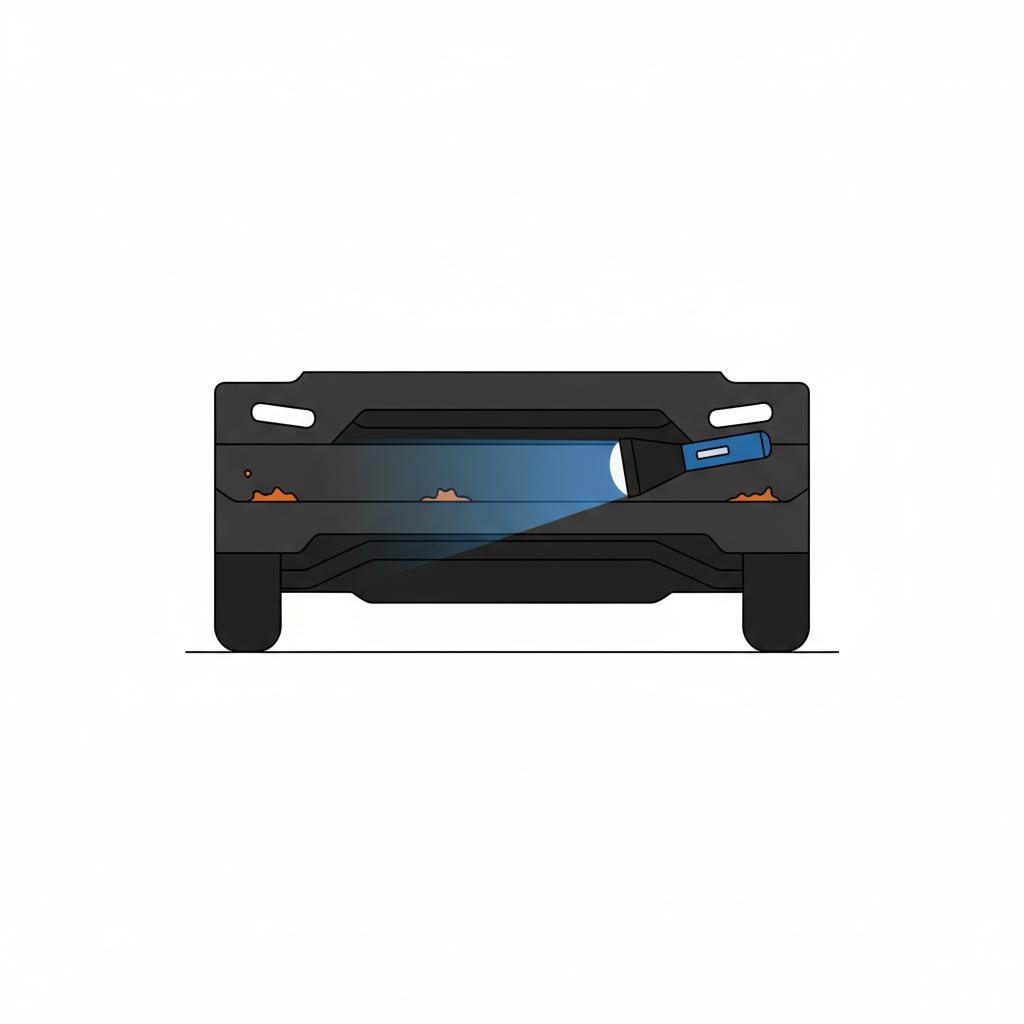
Where rust commonly appears: sills and rocker panels, wheel arches, trunk floor, and around drain points. Structural points such as the subframe mounts and inner sills deserve careful attention on older cars. Surface bubbles or small patches can be repairable, but spreading corrosion at welded seams or around structural joints often affects value and may be a serious concern.
How to inspect for structural and cosmetic corrosion: lift carpets and trunk liners to inspect the floor pans and drain channels, look under the car for factory seam areas and undercoat damage, and check the subframe and drill holes for excessive pitting. Small panel repairs can be reasonable for localized rust, but evidence of repaired structural rust or active rot at load points usually calls for caution.
Top recurring problem 2: soft-top wear and water leaks
Soft-top fabric and seals degrade with time and use, and owners commonly report leaks that present as interior dampness, mildew, or failed rear-window attachments. Buyer guides and owner reports highlight seal failure and zipper or stitching wear as recurring issues on convertible MX-5s Edmunds buyer reports.
Signs of a degraded soft-top include brittle fabric, pulled stitching, clouded or delaminating rear windows, failing zippers or snaps, and soft or cracked rubber seals around the glass and frame. Inside the car, expect to find damp carpeting, musty odors, or water stains where seals have failed.
Quick checks you can do during a viewing: feel for softness or stiffness in the fabric, inspect rear-window edges and stitching, and run a fingertip along seals to check for cracking. Ask to see the top folded and fully latched so you can inspect the seal between the top and the body, then start the car and listen for unusual rattles that could suggest a misaligned frame or hardware wear.
When a reseal or top replacement is reasonable: small seal repairs and a professional reseal are standard maintenance when the frame and latches are sound. Full top replacement is more expensive but common on older cars. Use service records and any recent work noted in a vehicle history report to verify if a top was replaced or resealed recently.
Top recurring problem 3: electrical and ignition faults
Electrical and ignition faults show up across multiple MX-5 model years and often cause drivability issues such as misfires and rough idle. Aggregated owner reports and repair-cost databases list misfires and failing ignition coils among frequent complaints RepairPal maintenance page.
Typical symptoms at the road test include engine hesitation under load, rough starting, intermittent check-engine lights, and lower-than-expected acceleration. In some cases a single coil pack or spark plug is the issue; in others, sensor faults or wiring problems create intermittent faults that only appear under certain conditions.
What a diagnostic scan or recent service record can reveal: an OBD-II scan will show stored faults such as misfire codes or sensor errors, and a service history may indicate past coil or sensor replacements. Ask sellers or dealers for recent diagnostic readouts or service receipts and have the mechanic re-scan the car during a pre-purchase inspection if initial reports are unclear.
Top recurring problem 4: suspension wear and handling issues
Suspension wear is a common maintenance category on higher-mileage MX-5s, especially those driven on rough roads. Worn bushings, ball joints, shocks, and sway-bar links typically produce clunks, uneven tire wear, and a decline in handling precision Edmunds buyer reports.
Common worn parts and how they change handling: failing bushings let suspension geometry move under load, which feels like looseness or vagueness in cornering. Worn ball joints and tie rods create play that can be heard as clunks. Old shocks reduce damping, producing a floaty ride and uneven tire contact.
Start with a VIN vehicle history report to verify title and reported events, then check NHTSA for recalls and prioritize a targeted pre-purchase inspection based on the most common MX-5 issues.
Inspection checks: perform a bounce test for shocks, look for fluid leaks at the dampers, and inspect rubber bushings for cracking or splitting. With the car safely raised, check for play at the ball joints and tie-rod ends and spin each wheel to look for bearing noise or uneven resistance.
Remember that road history and mileage matter: a low-mileage car driven on salted roads can still need suspension refresh, while a high-mileage example kept on smooth roads may have better preserved components.
Top recurring problem 5: cooling system and related engine issues
Cooling-system problems such as thermostat failure, brittle radiator hoses, and localized overheating are commonly reported and are important to check before purchase. Buyers should verify cooling system service and look for signs of past overheating when evaluating a vehicle NHTSA vehicle recalls database.
What to look for in the engine bay: check coolant level and color, examine hoses for soft spots or cracks, and look for fresh coolant residue or stains around hose clamps and the radiator. Smell the coolant system for burnt or unusual odors that can indicate past overheating events.
Service-record clues that cooling parts were recently replaced: recent entries in a vehicle history report or service receipts for thermostat, radiator, or hose work reduce the chance of immediate failure. If a car shows no recent coolant service and the hoses look aged, factor likely short-term maintenance into your decision.
How to evaluate a Mazda MX-5 before you buy: a step-by-step workflow
Step 1, use a VIN vehicle history report to screen listings before a visit. A VIN report helps check title status, ownership history, service records, and any reported events that may change the car's priority for inspection. Follow up by checking NHTSA for model-year recalls or open campaigns if you see safety-related items.
Step 2, prepare a targeted pre-purchase inspection and test drive checklist that focuses on the known MX-5 weak points: rust areas on older generations, soft-top seals, ignition faults, suspension play, and cooling-system evidence. During the test drive, reproduce any reported faults and ask the mechanic to watch for intermittent electrical codes.
Use VIN lookup and recall search as the initial screening step
Use to decide which listings to inspect
Step 3, prioritize repairs against pricing insights and total cost to own. Use aggregated pricing context to decide which cars are worth a professional inspection. If a vehicle history report shows recent repairs relevant to the issue you care about, that changes the negotiation and inspection priority.
When you combine VIN checks with a test drive and a targeted inspection you reduce the chance of missing recurring MX-5 issues that typically lead to later expense.
Decision guide: when a reported issue is a dealbreaker and when it can be fixed
Red flags that usually end the conversation include salvage title or unrepaired structural rust at load points, clear flood damage indicators, and open airbag recalls that are not resolved. Evidence of widespread structural repair or repeated flood-related entries in a vehicle history report tends to outweigh a low asking price.
Repairable issues include soft-top reseal, a single ignition coil replacement, and isolated suspension bushing work. These are common service items and can be costed into an offer if service history and parts condition are clear.
How to weigh repair estimates against price analysis labels: use a price analysis label and local market context to see whether the asking price already reflects needed work. If a car needs a predictable repair and the price accounts for it, a professional inspection can confirm that the repair is the primary barrier to purchase rather than hidden structural issues.
Typical repair and maintenance cost categories to expect
Common cost buckets for Miata fixes include soft-top reseal or replacement, small rust panel repair, ignition coil or spark plug replacement, and suspension bushing or shock refresh. Aggregated repair databases and buyer guides map these to typical categories buyers should expect to encounter RepairPal maintenance page.
Regional variation and model-year differences matter: labor rates, parts availability, and trim-specific components change the final bill. Use local pricing context and service shops near you to convert generic cost categories into realistic estimates before you make an offer.
Recommendation: when a VIN report or seller notes a recent repair, verify receipts. If a required repair is within predictable bounds and the seller's price reflects it, that car may still be a reasonable candidate. If repair scope is uncertain or structural work is indicated, prioritize other listings.
Common buyer mistakes and red flags to avoid
Frequent errors include skipping a VIN report, not checking NHTSA for recalls, and assuming cosmetic condition equals mechanical health. Sellers can hide or delay disclosure of issues, so verify title status and service records whenever possible Hagerty buyer's guide.
Another common mistake is failing to test for soft-top leaks in wet conditions or not asking for a diagnostic scan when the seller reports intermittent electrical symptoms. Cosmetic fixes like repaint or patched panels can hide rust or prior repairs; use the history report to cross-check repair entries.
Always ask for recent service receipts and if possible schedule a professional pre-purchase inspection for the highest-priority listings. This step is especially important for older NA and NB models where long-term rust patterns can affect structural components.
Practical examples: three short inspection scenarios
Scenario A, an NA listed from a wet-climate region with surface rust around the wheel arches: check the vehicle history report for past body repairs, lift carpets and inspect sills, and consider a professional inspection focused on subframe and seam integrity. If corrosion is limited to panels, a costed repair may be reasonable; if seams or subframe areas are compromised, deprioritize the listing Hagerty buyer's guide.
Scenario B, an NB with evidence of mildew and a recent reseal noted in service entries: verify the reseal date in the vehicle history report, inspect the rear-window attachment and stitching, and run a rain-test or water inspection if possible. If the reseal was recent and the frame is sound, plan for routine maintenance; if mildew persists, check for hidden dampness and ask for proof of a thorough reseal.
Scenario C, an NC with an intermittent misfire on test drive: request a diagnostic scan and recent service records for ignition components, and have the mechanic perform a live scan during a test drive. If the scan shows an isolated coil or plug fault with recent service history otherwise clean, it is often a repairable issue; if repeated electrical codes or unresolved sensor faults appear, prioritize other cars RepairPal maintenance page.
Next steps and concise checklist before you contact a dealer
Final pre-contact checklist: run a VIN vehicle history report for title and reported events, check NHTSA for model-year recalls, review service records in the listing, and rank cars using pricing insights. For listings that pass these checks, schedule a test drive and plan a targeted pre-purchase inspection for the highest-priority candidates.
How to prioritize listings using history reports and pricing insights: give higher priority to cars with single-owner histories, clean title status, no accident history entries, and recent service records relevant to common MX-5 issues. Use price analysis labels to see whether the asking price already reflects visible maintenance needs.
Before you call or visit, verify title status and any open recalls, and review recent news coverage Reuters before moving forward.
Short conclusion: balancing risk and value when shopping for an MX-5
The MX-5 tends to be a rewarding used-car choice for buyers who value a lightweight, driver-focused roadster and who accept routine maintenance items that come with age. Typical maintenance patterns include convertible-top service, ignition and electrical checks, suspension refresh, and rust inspection on older generations RepairPal maintenance page.
Combine a vehicle history report, a careful test drive, and a pre-purchase inspection to weigh repair scope against asking price. Use conditional language and documented service history to make a balanced decision rather than relying on appearance alone.
Older NA and NB MX-5s often show rust in sills and wheel arches, soft-top wear, and suspension bushing deterioration. Check these areas in person and via a vehicle history report.
Yes. A VIN vehicle history report helps reveal title status, ownership history, and reported service events that affect which cars deserve a professional inspection.
Misfires and ignition coil faults are common complaints but are often repairable. Request a diagnostic scan and service records to assess scope before buying.
Balancing risk and value comes down to careful verification. Use the checklist and the VIN report to narrow your choices, and invest in a targeted pre-purchase inspection for the cars that best match your priorities.
A measured approach helps you compare listings fairly and reduces the chance of unexpected repairs after purchase.

 Blog
Blog