Which is the best MINI Cooper to buy? A practical guide
This guide helps research-first buyers find the right mini cooper for sale by focusing on body style, model year, and powertrain. It explains how to use vehicle history reports, VIN-level recall checks, and local pricing context to reduce risk. Concrete shortlists and a step-by-step decision framework help you move from research to contacting a dealer with confidence.
A step-by-step workflow for estimating a truck's market value that centers on comparing consumer valuation tools, adjusting for mileage and condition, and checking wholesale market signals. The guide explains private-party, trade-in and dealer retail values and shows how a vehicle history report and pricing insights can change an asking price.
This guide helps research oriented buyers evaluate suv used cars for sale under $25,000 by combining safety ratings, reliability data, local pricing context, and vehicle history checks. It outlines a simple framework, a pre visit checklist, and a decision scoring worksheet so you can compare finalists before contacting a dealer. Use the steps here to narrow candidates and confirm risk signals with a vehicle history report and a pre purchase inspection.
When searching suv used cars for sale, prioritize model year, trim and powertrain before choosing a make or model. This guide explains how safety ratings, dependability studies and local pricing insights combine to produce a short list you can verify with a vehicle history report. It also provides a stepwise checklist you can use before contacting a dealer.
If you are shopping a mini cooper for sale, this guide helps you focus on the facts that matter: body style, model year, and powertrain. These three decisions shape safety, maintenance expectations, and resale behavior. The guide explains how to use vehicle history reports, VIN recall checks, and local pricing context to reduce uncertainty before you visit a dealer.
Read the short decision framework first if you want quick, actionable steps. Use the deeper sections to learn what to check on reports and what to ask during a test drive, especially when comparing similar listings.
Choose body style first, then verify model year and powertrain with VIN-level checks.
A vehicle history report and local pricing context significantly reduce buying uncertainty.
For many buyers, Hardtop models balance lower price and nimble handling while Countryman and Clubman add space at higher cost.
Quick answer: Which mini cooper for sale fits your needs?
If you need a short answer, start by matching body style to daily use and then check model year and powertrain before you contact a dealer. For many buyers, a 2-door Hardtop or Convertible works well for commuting and lower purchase price, while Clubman or Countryman suit buyers who need more space and cargo, but often cost more and carry different ownership costs Kelley Blue Book.
Before you book a visit, run three checks: a VIN-level recall check, a full vehicle history report, a local price comparison against similar listings. These steps catch title, recall, and pricing signals that matter for used MINI models NHTSA vehicle page.
A quick shortlist and verification checklist for MINI buyers
Use with listings you plan to visit
Focus your search by model year range and by whether the car is turbocharged or naturally aspirated. Different generations and powertrain choices can change expected maintenance and resale value, so treat those as primary filters when looking at any mini cooper for sale.
Start a shortlist that notes body style, model year, mileage, and the VIN. Use that list to pull vehicle history reports and to compare asking prices in your area before you call the dealer.
Understanding mini cooper for sale: models, generations, and powertrains
MINI variants differ in size and intended use, and that affects everything from handling to likely ownership costs. Smaller Hardtop and Convertible models tend to emphasize nimble handling and lower initial price, while Clubman and Countryman add space and utility and often command higher asking prices in used listings Edmunds MINI overview.
Generations and model years matter because safety ratings, known issues, and available features change over time. Always check the specific model year and trim instead of assuming all MINIs of the same model behave the same; that reduces the risk of surprises on inspection.
Powertrain choice is another key variable. Turbocharged engines appeared in many MINI models in recent generations and can offer strong performance, but they also have different maintenance patterns compared with naturally aspirated engines. Transmission variants matter too; automatic and manual gearboxes have different wear patterns and repair considerations, so treat transmission type as part of your checklist.
Price and resale follow these same patterns. Clubman and Countryman variants typically list higher on the used market because they meet different practical needs, so balance what you need for daily life against likely ownership costs.
How to use vehicle history reports to vet a mini cooper for sale
A vehicle history report is the first record you should request for any candidate on your shortlist. A good report shows title status, ownership history, service records, and mileage checks; use it to spot title issues, inconsistent odometer entries, or reported incidents that matter for future cost or safety.
Interpreting accident history requires context. A reported event can range from a minor fender-bender to structural damage; look for documented repairs and whether the title status changed afterward. If you see significant or unclear entries, ask the dealer for repair invoices and a mechanic's opinion before proceeding NHTSA vehicle page.
Match the body style to your daily use: Hardtop or Convertible for commuting and lower price, Clubman or Countryman for more space. Then verify model year, VIN-level recalls, and service history before deciding.
Ownership history can also be a signal. Single-owner vehicles with routine service records and no major repairs tend to be easier to evaluate than cars with multiple owners and patchy maintenance entries. A consistent service history that lines up with mileage checks reduces uncertainty and helps you estimate upcoming maintenance needs.
When the VIN-level recall check shows open recalls, treat that as a negotiable item. Some recalls are safety-critical and may affect your willingness to buy without documented repairs. Ask the dealer to provide proof that recall repairs were completed at an authorized service center, or factor the repair into your offer if the work remains outstanding NHTSA vehicle page.
Safety, recalls, and model-year checks for mini cooper for sale
Crashworthiness and safety ratings for MINI variants differ by body style and model year, so always check IIHS and similar ratings for the exact year and trim you are considering rather than relying on a model-level impression IIHS vehicle ratings.
Run a VIN-level recall check early in your research. NHTSA’s database lists recall campaigns and owner complaint trends that sometimes recur for specific powertrain or model-year combinations; knowing these items helps set inspection priorities and negotiation points MINI Safety Recalls - recall lookup.
Recurring recall campaigns can increase ownership complexity if repairs required parts or labor that are hard to document. If a VIN shows recall activity without proof of completed remedy, ask for service records that confirm the work or consider a different listing. See aggregated recall reporting and nearby service options on Cars.com.
Use safety findings to prioritize inspection tasks. For example, if a recall affects braking or airbag systems, make that a red-flag item that must be resolved before purchase. For non-critical items, document the status and confirm how the dealer will handle the needed repairs.
Reliability and maintenance: what to expect from a used mini cooper for sale
Consumer Reports rates MINI reliability as variable and often below the average for mainstream compact competitors, with differences by model year and generation. Treat reliability as a model-year-specific factor and verify service history when possible Consumer Reports MINI reliability overview.
RepairPal and owner reports indicate MINI models can have higher-than-average repair frequency and work costs compared with some compact rivals. That means maintenance history and recent service entries matter more for used MINI candidates than they might for other small cars RepairPal MINI data.
Look for regular oil changes, documented timing-belt or chain service if applicable, and evidence of major scheduled maintenance. These entries reduce uncertainty and tend to indicate the car was maintained in line with expected service intervals.
If you see signs of deferred maintenance, plan on a pre-purchase inspection and budget for likely repairs. A clean service history does not remove the need for a mechanic’s check, but it lowers the likelihood of near-term surprises.
Pricing, resale value, and total cost to own for mini cooper for sale
Kelley Blue Book and Edmunds find that MINI resale value and total cost to own depend heavily on trim, mileage, body style, and local demand. Larger variants like the Countryman and Clubman often command higher asking prices, and higher trims typically hold value better than base models Kelley Blue Book MINI values.
Use local pricing context to judge labels such as Great Deal or Fair Deal. Compare the asking price to similar model years and trims in your region, adjusted for mileage and documented condition, rather than relying on a national headline price. You can follow guidance on local pricing and how to use comparative tools to compare the asking price.
When estimating total cost to own, include likely maintenance and repair costs, insurance class, and fuel for your typical driving pattern. Higher-performance trims and turbocharged engines often increase repair complexity, which can affect your ownership budget.
Ask the dealer for a breakdown of recent maintenance and any remaining factory or certified pre-owned coverage. When a listing lacks service entries, discount the price accordingly or require a more thorough inspection before committing.
A step-by-step decision framework to choose the best mini cooper for sale
Start with needs: list passenger and cargo requirements, your commute, and how often you plan longer trips. Use those needs to select a body style, then filter model years that meet your safety and reliability thresholds.
Shortlist three candidates and run the same checks on each: a VIN-level recall check, a full vehicle history report, and a local price comparison. Treat those reports as your primary risk signals and use them to rank the shortlist.
On a test drive, confirm how the car drives at your usual speeds and listen for transmission or engine noises. Ask the dealer about recent repairs, request documented invoices, and insist on a professional pre-purchase inspection if you are serious about the vehicle.
Suggested timeline: research and shortlist for one week, run history reports and recall checks within days of shortlisting, schedule test drives and inspections within two weeks, then use the inspection outcome to finalize an offer. This pace helps you stay thorough without losing a reasonable listing to another buyer.
Common buying mistakes and how to avoid them when shopping a mini cooper for sale
A frequent mistake is buying without a VIN-level recall check or a full vehicle history report. Missing those checks can leave you with unresolved safety issues or title complications that raise long-term cost and risk USA Today recall summary.
Another common error is ignoring model-year reliability differences and service-record gaps. Consumer Reports and RepairPal data both show reliability varies by year and model, so assume that maintenance history matters more for a used MINI than for many mainstream compacts Consumer Reports MINI reliability overview.
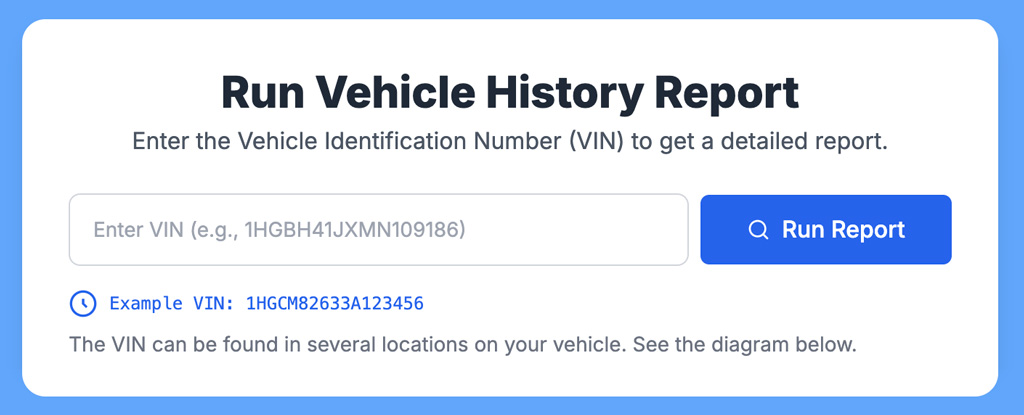
Run a vehicle history report to verify a listing
Run your shortlist through a recall check and a vehicle history report, then compare local pricing labels before contacting the dealer.
Avoid overpaying by comparing similarly equipped listings in your local market and by factoring in likely maintenance costs. If a dealer cannot provide clear service records for a listed vehicle, treat that as a negotiation point or consider another listing.
Short model recommendations and sample scenarios
Commuter: prioritize a Hardtop or Convertible with lower mileage and a documented service history; these models tend to be cheaper to buy and easier to park in the city. Check the specific model year crash ratings and VIN recall history for any candidate IIHS vehicle ratings.
Family or cargo-first buyer: consider Clubman or Countryman for more rear seat space and cargo flexibility. Expect higher asking prices and slightly different maintenance profiles; verify service records and compare total cost to own against similarly equipped competitors.
First-time buyer: look for single-owner cars with consistent service history and recent inspections. Use history reports and pricing insights to confirm the listing’s condition and to avoid cars with recurring complaint patterns in NHTSA records.
Final checklist before you contact a dealer: verify VIN-level recalls, read the full vehicle history report, confirm title status, review recent service records, schedule a pre-purchase inspection, and compare the asking price to local listings that match year, trim, and mileage.
Yes. A vehicle history report helps reveal title status, ownership history, mileage checks, and reported incidents that affect inspection priorities and price negotiation.
Very important. Some MINI model years have recurring recall campaigns, so a VIN-level check shows open or completed recalls and guides inspection and repair questions.
Countryman and Clubman often command higher asking prices due to space and practicality, but resale depends on trim, mileage, and local demand, so compare similar local listings.
Before you contact a dealer, run a VIN-level recall check and order a vehicle history report for any MINI on your shortlist. Compare the asking price to local listings with similar year, trim, and mileage, and schedule a pre-purchase inspection. These steps tend to reduce risk and help you make a more informed offer.
If you use a decision-support layer to pair history reports with pricing insights, treat the information as context for inspection and negotiation rather than as proof of condition.


 Blog
Blog