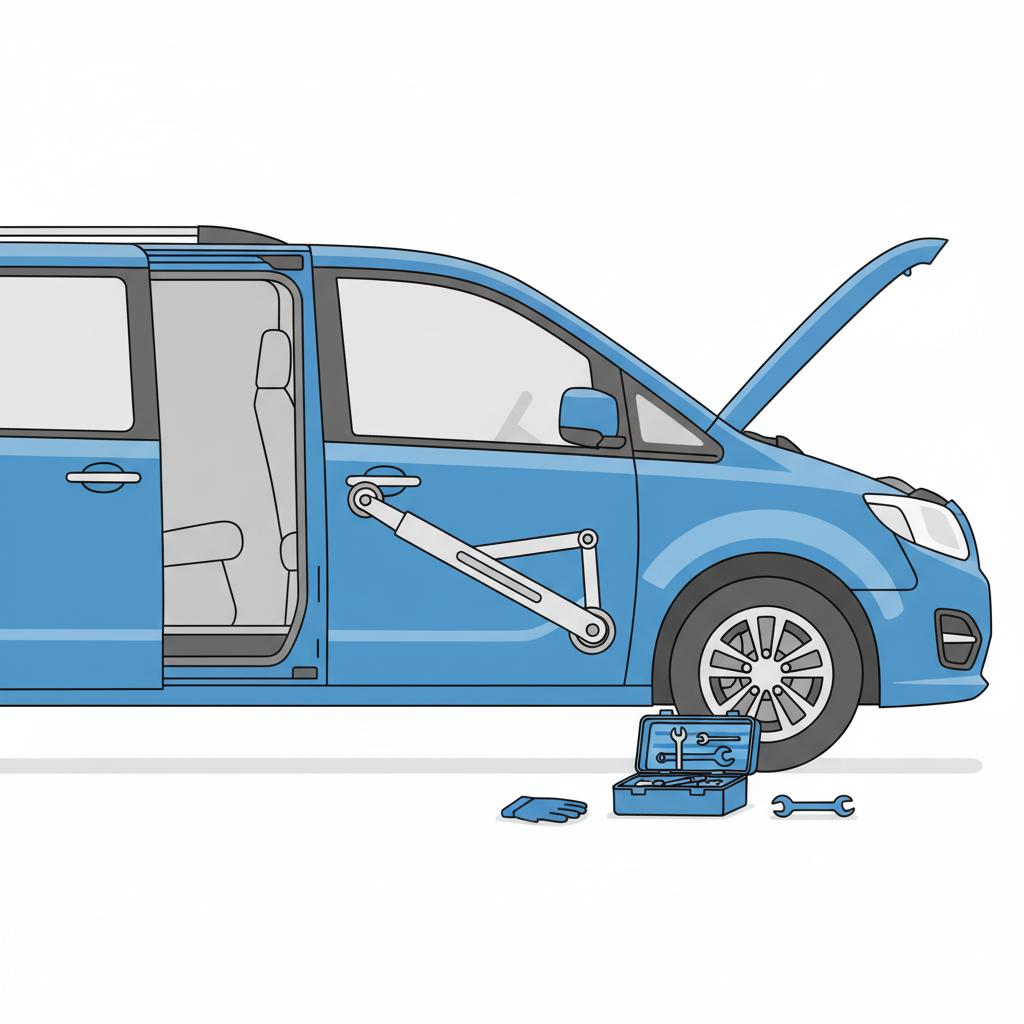
This guide explains how to identify mini vans for sale that tend to have the fewest owner-reported problems. It outlines a three-stream evidence method using reliability ratings, NHTSA complaint and recall searches, and dependability studies to reduce single-source bias. The article highlights models that consistently show lower issue rates and gives a step-by-step checklist for screening listings.
This guide helps research-oriented buyers compare used Tacoma options and decide which model years and trims match their priorities. It distinguishes third-generation 2016–2023 Tacomas, which have a long service and parts history, from the 2024 redesign that introduced i-FORCE powertrain options. Use a VIN-based vehicle history report and a professional pre-purchase inspection to reduce risk before you contact a dealer.
This guide explains which tacoma trucks for sale show the strongest reliability and safety signals to watch out for, and why mid-2010s and many pre-2016 Tacomas appear most often in complaint and recall records. The article shows how to use vehicle history reports, recall checks, and a focused inspection to reduce risk when evaluating a used Tacoma.
This article helps buyers searching tacoma trucks for sale understand which Tacoma engine tends to be most reliable. It summarizes reliability ratings, owner-complaint clusters, and maintenance-cost differences between the 2.7L I4 and the 3.5L V6, and gives actionable checks to reduce engine-related risk.
Buying a used minivan involves weighing reliability, safety, and cost. This guide helps you identify which mini vans for sale tend to report the fewest problems by combining consumer ratings, complaint records, and industry dependability studies.
You will get a practical, step-by-step checklist to apply while browsing listings, plus inspection tips focused on the components owners report most often. Use these steps to narrow your short list before contacting a seller.
Toyota Sienna and Honda Odyssey consistently appear in multiple reliability sources as among the least problematic minivans in recent model years.
Check transmissions, power sliding doors, and infotainment systems first; these components show up most often in owner reports and complaint searches.
Use a three-stream approach-ratings, NHTSA records, and dependability studies-plus a vehicle history report to reduce single-source bias when choosing from mini vans for sale.
What 'least problems' means for used minivan buyers
Key data sources and why they matter
When buyers ask which minivan has the least problems, they mean a vehicle with fewer owner-reported failures, limited complaint or recall signals, and favorable industry dependability scores. To evaluate that combination you can use three evidence streams: aggregated consumer ratings, government complaint and recall records, and industry dependability studies, each of which highlights different kinds of risk.
Aggregated consumer ratings and reliability summaries can show recurring owner issues and repair frequency, which helps identify patterns that may not appear in a single complaint file. For a practical starting point, Consumer Reports compiles model-level reliability summaries that can help buyers compare models side by side Consumer Reports best minivans.
How owner-reported issues differ from recall records
Owner-reported issues and NHTSA complaint records are related but not identical: owner reports capture problems people actually experience over time, while recalls document safety or regulatory defects identified by manufacturers or regulators. Both matter because a model can have low repair frequency yet still show safety recalls that need attention.
Using NHTSA recall and complaint searches can reveal whether a reported problem is isolated or part of a wider pattern for a model year; checking those records can help buyers estimate the likely prevalence of issues before inspecting a specific listed vehicle NHTSA recalls and complaints.
How to screen mini vans for sale for low-problem candidates
Which listing filters point to lower risk
Start by applying listing filters that tend to correlate with lower risk: clean title, single owner, no accident reported, and documented service history. These filters help narrow mini vans for sale to listings where the visible history reduces one major source of uncertainty.
Price analysis labels and local market context can help you spot unusually low prices that may reflect unresolved issues rather than just good value. Checking a price analysis label alongside the listing notes and comparables can point to whether the listing price appears consistent with similar local inventory.
Verify the VIN before you visit
Before you visit a dealer, run a vehicle history report and prioritize listings filtered for clean title, single owner, and no accident reported to reduce early risk.
Pulling a vehicle history report early, ideally before an in-person inspection, helps confirm ownership history, title status, service events, and whether any recalls have been logged for that VIN. A timely VIN check can prevent wasted trips on mini vans for sale that carry higher-than-expected risk.
Red flags to remove early in your search
Remove listings that lack a clear service history, show multiple title brands, or list inconsistent mileage across records. These signs increase the chance of hidden problems and make it harder to verify maintenance that affects long-term reliability.
A listing that avoids answering basic questions about owner history, or that shows a large price gap without explanation in the local market context, is worth setting aside until you can confirm the vehicle history report. Repair frequency and aggregated ratings can help explain whether the model tends to have recurring issues, but the listing-level history shapes the immediate buying risk RepairPal reliability ratings.
A three-step reliability framework every buyer should use
Step 1: Check aggregated reliability scores
Start with aggregated ratings from sources that summarize owner experience and repair frequency. RepairPal and Consumer Reports present model-level reliability signals that can point toward models that tend to require fewer repairs, which is useful when comparing mini vans for sale of the same class.
Read reliability summaries to identify recurring failures and typical maintenance costs, and treat those summaries as directional evidence rather than proof. Use the reliability signal as a filter to narrow your short list to models that tend to have fewer owner-reported problems RepairPal reliability ratings.
Step 2: Cross-check NHTSA complaints and recall history
After identifying lower-risk models, search NHTSA complaint and recall records for the specific model year and powertrain you are considering. Complaint trends can surface problems that are not yet captured in dependability studies and can highlight common trouble spots such as transmissions or sliding doors.
Use NHTSA searches to determine whether a reported issue is isolated to a narrow set of model years or widespread across a generation. If a complaint pattern emerges for a given year, you can prioritize other model years or require clearer maintenance documentation NHTSA recalls and complaints.
Step 3: Review dependability studies and safety ratings
Dependability studies like the J.D. Power Vehicle Dependability Study provide a third perspective by measuring problems per 100 vehicles over a standard ownership period. These studies can help balance owner reports with a broader industry view of long-term reliability trends.
Combine dependability study findings with safety ratings, for example IIHS crashworthiness and crash avoidance data, to judge whether a model-year package includes meaningful safety upgrades that matter to your family or use case. J.D. Power dependability insights can guide your long-term expectations alongside owner reports J.D. Power VDS.
Which minivan models report the fewest problems (evidence summary)
Models that consistently rank well across sources
Across Consumer Reports, RepairPal and Edmunds summaries, two models consistently show lower owner-reported problem rates in recent model years: the Toyota Sienna and the Honda Odyssey. Those models tend to appear in aggregated reliability lists aggregated reliability lists and buyer guides as having fewer repeat issues than many competitors Consumer Reports best minivans.
Across multiple consumer and industry sources, the Toyota Sienna and Honda Odyssey consistently appear as minivan models with fewer owner-reported problems in recent model years, while models like the Chrysler Pacifica show more year-dependent variability.
The consistency across multiple data sources means a buyer scanning mini vans for sale can reasonably prioritize Sienna and Odyssey examples while still checking year-specific records. Relying on concordant signals from several aggregators reduces the chance that a single dataset overstates or understates a model's problem rate.
Models with mixed or year-dependent results
The Chrysler Pacifica shows more variability depending on model year and powertrain. Dependability studies and owner reports sometimes rank Pacifica higher on issues compared with Sienna and Odyssey, but the pattern is not uniform across all years and configurations J.D. Power VDS.
Hybrid variants and newer powertrain options can change the equation for some models. For instance, hybrid powertrains in models like the Sienna receive favorable aggregated commentary on fuel use and general reliability signals, though long-term hybrid-specific failure rates remain an open question in buyer guidance Edmunds buyer's guide.
Common failure points to watch for when browsing mini vans for sale
Troubles that show up most often in owner reports
Across NHTSA complaint trends and repair-frequency data, the most commonly reported minivan failure points are transmissions, power sliding-door mechanisms, and infotainment or electrical systems. These areas recur in owner summaries and recall files and deserve focused checks during inspections.
Because these systems affect daily use, problems can be costly or inconvenient to repair. When a model shows recurring complaints in one of these areas, pay close attention to service history and any documented recall remedy for the VIN you are considering RepairPal reliability ratings.
Inspection tips specific to these components
For transmissions, test the vehicle during a varied drive that includes city starts, highway merges, and steady cruising. Look for delayed engagement, slipping, rough shifts, or hesitation. Ask the seller about transmission service and fluid changes; documented maintenance can reduce the chance of expensive repairs later.
For power sliding doors, cycle them repeatedly during the inspection and watch for slow operation, inconsistent sensors, or jerky movement. A quiet, smooth cycle with consistent latch behavior is a positive sign. For infotainment and electrical systems, test radio, navigation, Bluetooth pairing, and any driver-assist screens to confirm responsiveness and that there are no persistent error messages. Use an NHTSA complaint search to see if the issue is common for that model year before you rely on the listing alone NHTSA recalls and complaints.
Choosing model year and powertrain: balancing depreciation and reliability
Year ranges that tend to balance cost and dependability
For buyers seeking fewer problems while keeping depreciation manageable, later-2010s to early-2020s model years often offer a reasonable balance. These model-year windows commonly include updated safety features and refinements that reduce known early-generation issues, while avoiding the brand-new depreciation hit of very recent models.
That general window is a guideline rather than a rule. Always verify the specific model year and trim for documented issues or recall campaigns, and use the vehicle history report to confirm whether a given VIN has had the expected maintenance that supports dependability J.D. Power VDS.
Powertrain choice matters. Hybrid variants, such as the Sienna hybrid, are often highlighted for lower fuel use and generally favorable reliability signals in aggregated reviews, which can make them attractive for families focused on operating cost. However, long-term hybrid-specific failure rates remain a topic where more time and data are needed to form definitive guidance Edmunds buyer's guide.
When comparing powertrains, check service history carefully for hybrid-specific maintenance, battery records, and any manufacturer bulletins. A well-documented service record can reduce uncertainty around newer powertrain technology and support a better long-term ownership experience.
A practical pre-contact inspection checklist and next steps
What to verify in the vehicle history report
Before you contact a dealer, confirm the key items in a vehicle history report: title status, ownership history, mileage checks, service history, and any recorded open recalls. These entries directly affect the risk calculation for any mini vans for sale you are considering.
A clean title and consistent mileage records with documented service events tend to reduce the chance of surprise repair needs, but remember that a history report supplements rather than replaces a hands-on inspection and test drive RepairPal reliability ratings.
Questions to ask the dealer and items to test
Ask the dealer or seller for service invoices for transmission work, door repairs, or infotainment updates. On a test drive, exercise the sliding doors multiple times, test shifting under different loads, and use all infotainment functions. Check for unusual noises, vibrations, or software errors that repeat across cycles.
If the history report shows prior transmission service or door module replacements, ask whether those repairs were completed at a dealer and whether a warranty or extended coverage remains. If documentation is missing for significant repairs, the uncertainty can increase the purchase risk and is a legitimate reason to reconsider the listing NHTSA recalls and complaints.
Final checklist: find the least problematic minivan among mini vans for sale
Quick summary checklist
Combine at least two evidence streams before you make a decision: aggregated ratings, NHTSA complaint and recall checks, and a vehicle history report for the specific VIN. Favor models that show consistent aggregated ratings, low complaint activity in the model year, and clean documented maintenance.
Quick three-step decision shortcut for comparing listings
Use in that order when shortlisting
Use price analysis labels and local market context to judge whether the asking price aligns with comparable inventory. If a listing looks cheap for no documented reason, require a thorough service history and consider an independent inspection before finalizing an offer.
How to combine signals into a final decision
Weigh model-level reliability first, then check complaint and recall patterns for the specific model year, and finally confirm the individual VIN history. If two of those three streams show higher risk for a given listing, consider another candidate.
When in doubt, prioritize documented maintenance and clear title records, and ask for time to run a vehicle history report before you move forward. Combining evidence in this structured way tends to reduce single-source bias and helps you choose among mini vans for sale with lower overall problem risk.
Look for clean title, single-owner history, documented service records, a favorable price analysis label, and check aggregated reliability ratings alongside a vehicle history report before visiting the seller.
Hybrid minivans often report lower fuel use and favorable reliability signals in aggregated reviews, but long-term hybrid-specific failure rates are still an open question; verify service history and battery records for hybrids.
During a test drive and inspection, cycle power sliding doors, evaluate transmission shifting under varied loads, and test infotainment and electrical systems for responsiveness and error messages.
Choosing a used minivan is about stacking evidence: model-level ratings, complaint and recall searches, and the vehicle history report for the exact VIN. When those streams line up, your shortlist is more likely to include lower-problem candidates.
Use the checklist in this guide to compare mini vans for sale, verify maintenance records, and make a more confident contact with the seller or dealer.

 Blog
Blog