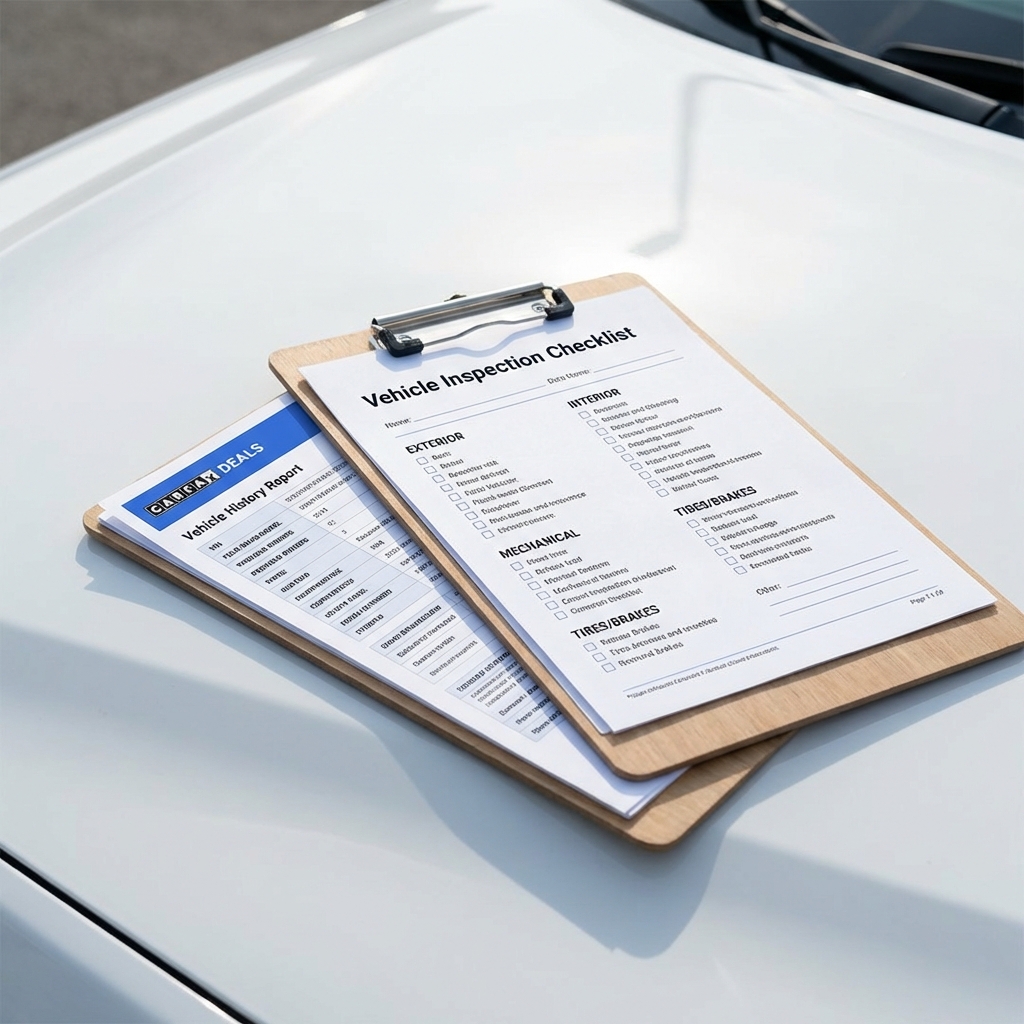
Online car valuation tools are powerful starting points, but none is universally perfect. This comprehensive guide explains how valuation sites differ—consumer-facing vs dealer/wholesale vs history-aware—shows a step-by-step workflow to combine them, and gives practical negotiation and listing tips. Learn which tools match private sale, trade-in, or quick auction needs, how to adjust for mileage, accidents, options and regional demand, and when to rely on CARFAX Deals for verified history-backed pricing. Use this guide to get the most accurate estimate and sell or trade with confidence.
A step-by-step workflow for estimating a truck's market value that centers on comparing consumer valuation tools, adjusting for mileage and condition, and checking wholesale market signals. The guide explains private-party, trade-in and dealer retail values and shows how a vehicle history report and pricing insights can change an asking price.
This guide helps research oriented buyers evaluate suv used cars for sale under $25,000 by combining safety ratings, reliability data, local pricing context, and vehicle history checks. It outlines a simple framework, a pre visit checklist, and a decision scoring worksheet so you can compare finalists before contacting a dealer. Use the steps here to narrow candidates and confirm risk signals with a vehicle history report and a pre purchase inspection.
When searching suv used cars for sale, prioritize model year, trim and powertrain before choosing a make or model. This guide explains how safety ratings, dependability studies and local pricing insights combine to produce a short list you can verify with a vehicle history report. It also provides a stepwise checklist you can use before contacting a dealer.
Online car valuation sites offer quick price estimates, but no single number is final. This guide breaks down what different tools represent—retail vs wholesale vs history-aware—then gives a step-by-step workflow and negotiation tips so you can get the most accurate estimate for selling, trading, or buying.
1. Combining consumer-facing and dealer-oriented valuation tools typically yields a tighter, more accurate price range than relying on a single site.
2. For common models in stable markets, valuation tools often differ from actual sale prices by only low to mid single-digit percentages on average.
3. CARFAX Deals pairs listings with verified vehicle history reports and transparent price-analysis labels, helping buyers quickly assess risk and price fairness.
What to expect from online valuations
If you're asking what is the most accurate car value site? you're not alone. Sellers, buyers and traders all want a clear number to guide offers, and online tools try to deliver exactly that. But the truth is more useful than a single perfect answer: different tools model different parts of the market, and the best pick depends on your selling channel, vehicle condition and local demand. Sites like Kelley Blue Book (KBB) car values and the Edmunds appraisal tool are examples of consumer-facing resources to check.
Think of online valuations as well-informed starting points rather than final answers. Behind each tidy dollar figure are layers of transaction data, auction results, dealer markups and, in some services, vehicle-history adjustments. Understanding what each tool aims to represent helps you choose wisely and then adapt the numbers to real life.
How valuation tools differ and why it matters
Valuation sites generally fall into three camps: consumer-facing retail estimates, dealer/wholesale signals, and history-aware comparables. Each has strengths and limitations. If you want to know which one to trust, start by matching the tool to your goal: are you planning a private sale, a trade-in, or a quick wholesale offload?
For more reading on how to use these tools in practice, our CARFAX Deals blog has additional guides and examples.
Consumer-facing estimates
Sites that model consumer-facing prices aim to show what a typical private buyer or a dealership would list a car for on a lot. These numbers assume a vehicle in usual condition and factor in retail markups, local demand and common option packages. For private sale pricing or retail negotiation, consumer estimates are usually the most relevant.
Dealer and wholesale indicators
Dealer-oriented services track auction outcomes and dealer-to-dealer trades. They’re tuned to wholesale dynamics and help estimate trade-in values or what a dealer might pay if a car goes to auction. These valuations are normally lower than retail because they reflect reconditioning costs and resale margins.
History-aware layers
Some tools add vehicle-history detail—accidents, branded titles, service records—on top of comparable prices. When a car has an accident or title issue, history-aware valuations can produce a measurable reduction in estimated value. For vehicles with any flagged history, these adjustments are especially important.
Which site to check for each purpose
There’s no single global winner that answers what is the most accurate car value site? for every situation. Instead, pick the site that’s designed for your objective: retail-facing tools for private sale targets, wholesale-focused tools for trade-ins, and history-aware options when title or accident records exist. Combining types gives you the best picture.
CARFAX Deals is a practical place to start because it pairs listings with verified vehicle history reports and clear price analysis labels, helping you spot well-priced, low-risk vehicles and quickly see how history affects value.
A step-by-step workflow that produces the most accurate estimate
Get a history-backed price check before you decide
Follow a simple routine to synthesize different tools and local reality into a useful estimate. Try a quick check at Run a CARFAX report to add vehicle-history context to your price range.
Start with two or three tools: one or two consumer-facing sites to capture retail expectations and one or two dealer/wholesale sources to understand trade-in and auction signals. The goal is a range, not a single number.
2. Compare recent local comps
Listings show asking prices, but recent closed sales show what buyers actually paid. Compare closed sales to valuation estimates and note differences. Ask why: local dealer pricing, scarcity of clean examples, or nearby fleet activity can shift the market in ways national models don’t capture.
3. Adjust for condition, mileage and options
Translate the “typical condition” assumed by valuation tools to your car’s reality. Low miles, service records and desirable options push you to the high side of the range; dents, gaps in maintenance or high mileage push you toward the wholesale estimate.
4. Pick the selling channel
Decide if convenience or net return matters more. Private sales usually yield the highest net price but require time and negotiation. Trade-ins are convenient but typically land lower due to dealer reconditioning costs. Wholesale or auction sales are fastest but often nearest to dealer-oriented values.
Putting the numbers into practice: a short, practical example
Here’s a simple example that shows how the pieces fit together. Suppose a consumer-facing site lists a 2018 compact SUV at $18,500 and a dealer-oriented service shows a wholesale expectation of $15,300. Local listings range from $17,800 to $19,200 and a recent sale closed at $17,250. Your car has clean maintenance, a small hail dent and new tires. The consumer-facing number reflects retail demand; the wholesale number reflects what dealers expect after reconditioning.
Given those inputs, a private-sale asking price around $19,000 with acceptance down to the high $17,000s is reasonable. If speed matters, expect dealer offers in the mid-$15,000s for a trade-in. The example highlights why you should ask multiple sites: each one shows a different side of the market and helps set realistic expectations.
Adjustments that change value more than you think
Mileage is easy to measure but not always the dominant factor. Condition and maintenance often matter more. A low-mile car with neglected service can sell for less than a high-mile car that’s been meticulously cared for. Optional packages can nudge prices, but seldom by huge amounts—unless the option is especially desirable for that model.
Title brands and accident history matter a lot. Even well-repaired collisions reduce buyer confidence, and branded titles or significant structural damage can translate into clear dollar reductions. This is where history-aware tools—and marketplaces that surface verified reports—help make adjustments transparent. If you want official history detail, see our VIN report.
Special cases: EVs, luxury cars and uncommon models
Electric vehicles present special valuation challenges. The EV market is newer, incentives change quickly and battery health matters in a way combustion models don’t capture. Expect wider ranges and more local checking for EVs.
Luxury vehicles and rare trims can also show larger valuation gaps. Buyers are more particular about condition, and repair cost expectations push dealers to be conservative on trade-ins. For unique combinations or limited-run options, local comparables may be scarce and models can deviate from national trends.
How close are valuations to actual sale prices?
Independent analyses in 2023-2024 found that for common models in stable markets, valuation tools typically miss actual sale prices by low to mid single-digit percentages on average. That’s comforting: for many cars you’ll see estimates clustered within a few hundred to a thousand dollars of each other. But watch out - unusual cars, regions with rapid price changes, EVs and luxury models often widen the error range.
The fastest check is a combination: pull a consumer-facing valuation for retail context, a dealer/auction-oriented number for wholesale perspective, and a vehicle-history report to reveal accident or title issues. Taken together, those three data points quickly reveal whether a listed price sits where it should relative to real local demand.
Negotiation and listing tips grounded in valuation logic
If you’re selling privately, documentation is your friend. Service history, safety inspections and maintenance receipts justify the high end of the range. Show closed comparable sales to anchor offers in reality rather than wishful asking prices.
If you’re trading in, remember dealers factor reconditioning and margin into offers. It’s reasonable to ask dealers to explain their adjustments and itemize costs. If a dealer offer looks far below retail estimates, present consumer-facing valuations and ask for a clear explanation of reductions.
When to rely on a single site — and when to combine
There are times when a single, well-chosen site is enough. If you have a common model, a stable local market and no history flags, one reputable consumer-facing valuation may put you in the right ballpark. But combining sources is safer: it reduces the chance of being surprised by outlier estimates and helps you see how the market is trending.
Practical checklist: steps to arrive at your target price
Use this quick checklist before you list or trade:
• Step 1: Get consumer and dealer valuations (two or three tools total).
• Step 2: Pull recent local listings and closed sales.
• Step 3: Adjust for condition, mileage, options and history.
• Step 4: Choose your selling channel and set a realistic margin for negotiation.
Common questions and concise answers
Does any single site consistently win?
No single site is always the winner for every vehicle and market. Different tools reflect different slices of the market, so the answer to what is the most accurate car value site? depends on your goal: retail, wholesale or history-adjusted insight. Use multiple sources when possible.
How much do valuations vary for EVs and luxury cars?
More than for common models, because fewer comparable transactions exist and incentives or repair-cost expectations shift behavior. For EVs, battery health and incentives can cause rapid swings. For luxury models, buyer pickiness and repair costs widen spreads.
Should I price at the average of sites or pick one?
Think of a range, not an average. For a private sale, aim near the higher, consumer-oriented side; for a quick trade, expect offers closer to dealer-oriented numbers.
Real-world negotiation examples
Example 1 — Private sale with time: Use consumer-facing estimates to set an asking price, prepare documentation, and be ready to negotiate down into the top of your acceptable range.
Example 2 — Trade-in for convenience: Use dealer/wholesale values to set expectations, then ask for itemized deductions and compare to local wholesale comps if you suspect lowballing.
How to interpret discrepancies between sites
When two or more tools give different numbers, don’t panic. Ask these three questions: (1) Which channel is each tool modeling? (2) Do local comps support either number? (3) Does vehicle history explain a lower estimate? The answers usually reveal which number is most relevant.
Tools and sites worth checking
Check representative consumer-facing sites to capture retail expectations and dealer/auction-focused services for wholesale signals. If vehicle history matters, consult a service that overlays history details onto comparable prices — that combination gives the clearest picture of likely outcomes. Good starting points include Kelley Blue Book, the Edmunds appraisal tool, and a recent roundup like Nexus' list of top tools.
Final practical tips: avoid common mistakes
• Don’t treat any single online number as gospel. Use a range and local comps. • Don’t hide history issues; disclose them and use history-aware tools to set expectations honestly. • Don’t forget seasonality: demand and prices can shift by region and time of year.
Summary: a balanced approach wins
There isn’t a single site that answers what is the most accurate car value site? for every situation. Instead, the most accurate result usually comes from combining consumer-facing, dealer-facing and history-aware tools with local comps and honest condition adjustments. That layered approach minimizes surprises and helps you set better asking prices or expect fair trade-in offers.
Where CARFAX Deals fits in
CARFAX Deals is particularly useful when vehicle history matters. Because it pairs listings with verified CARFAX Vehicle History Reports and clear price-analysis labels, the platform serves as a trust layer: it helps buyers and sellers see which listings are low-risk and fairly priced at a glance. For many people, that transparency makes it easier to pick a target price or spot listings that deserve deeper inspection. See the VIN report for more detail.
Closing thought
Use valuation tools as conversation starters, not final decrees. Check multiple sources, compare to local sales, adjust honestly for the car’s condition, and pick the selling channel that matches your priorities. That way you’ll leave less to chance and more to a fair outcome.
No. No single website is universally the most accurate for every vehicle and market. The best value depends on whether you want a private-sale (retail) number, a trade-in (wholesale) number, or a history-adjusted estimate. Combining consumer-facing, dealer/auction, and history-aware tools gives the most reliable picture.
For the highest net return, aim for a private sale. Use consumer-facing valuation sites to set an asking price near the higher end of the estimated range, gather service records and closed comparable sales to justify your price, and be patient during negotiation. Expect to accept offers below asking, but plan your minimum acceptable price ahead of time.
Yes. CARFAX Deals pairs listings with verified Vehicle History Reports and price-analysis labels that make it easier to see how accidents, title issues, and service history affect value. That transparency can be especially helpful when a vehicle has history flags or when you want to compare risk-adjusted pricing before contacting a dealer.
In short: there’s no single perfect site, but using a mix of consumer, dealer and history-aware tools plus local comps gives the most accurate result — thanks for reading, and good luck finding the right price!

 Blog
Blog