This article answers whether the Nissan 370Z is faster than the Nissan 350Z and what that means for used-car shoppers. It uses manufacturer specifications and independent road tests to explain why the 370Z typically has a straight-line advantage, and it shows practical checks buyers should run, including vehicle history reports and pricing context, before deciding on a listing.
A step-by-step workflow for estimating a truck's market value that centers on comparing consumer valuation tools, adjusting for mileage and condition, and checking wholesale market signals. The guide explains private-party, trade-in and dealer retail values and shows how a vehicle history report and pricing insights can change an asking price.
This guide helps research oriented buyers evaluate suv used cars for sale under $25,000 by combining safety ratings, reliability data, local pricing context, and vehicle history checks. It outlines a simple framework, a pre visit checklist, and a decision scoring worksheet so you can compare finalists before contacting a dealer. Use the steps here to narrow candidates and confirm risk signals with a vehicle history report and a pre purchase inspection.
When searching suv used cars for sale, prioritize model year, trim and powertrain before choosing a make or model. This guide explains how safety ratings, dependability studies and local pricing insights combine to produce a short list you can verify with a vehicle history report. It also provides a stepwise checklist you can use before contacting a dealer.
If you are comparing a Nissan 350Z to a Nissan 370Z, a common question is whether the older 350Z can out-accelerate the newer 370Z. This guide uses manufacturer specifications and independent road tests to explain typical performance differences and to show what used-car checks will help you verify claims.
The comparison matters for buyers deciding between a stock performance car and a tuning project. It also affects expected costs, insurance and suitability for track use. Read on for a concise technical summary, practical buying steps and clear decision criteria.
Manufacturer specs and road tests generally show the 370Z is quicker in stock form.
Power-to-weight and gearbox choices explain most straight-line differences between the two models.
Run a VIN-based vehicle history report and request dyno or service evidence for modified cars.
Quick answer: which Z is faster and what this means for shoppers
TL;DR summary
Across factory specifications and published road tests, the Nissan 370Z is typically quicker in stock form than the Nissan 350Z, mainly because it uses a larger-displacement VQ37 engine with higher factory horsepower compared with the VQ35 in the 350Z; independent road tests and spec summaries support this general conclusion Car and Driver first drive.
How to use this article - nissan 350z for sale
This article explains the technical reasons behind the performance gap, shows what independent tests report, and lists the checks buyers should run on any used listing before assuming a performance advantage.
For shoppers, a single-model headline performance point is only the start; exact acceleration and real-world advantage depend on model year, trim, transmission and any modifications, so verify those details before valuing a listing KBB used-car guidance.
Why buyers ask whether a 350Z is faster than a 370Z
Buyer priorities that drive this question
Research-oriented buyers ask this question because straight-line performance is an easy, comparable metric when evaluating similar sports cars, and it often influences choices around insurance, fuel expectations and intended use.
How performance compares to ownership and value
Buyers should treat performance as one of several decision inputs, alongside maintenance history, likely maintenance costs and resale expectations; that means pairing published performance evidence with vehicle history reports and local pricing context before committing to a listing KBB used-car guidance.
Factory specs: engines, horsepower and weight compared
VQ35 3.5L versus VQ37 3.7L
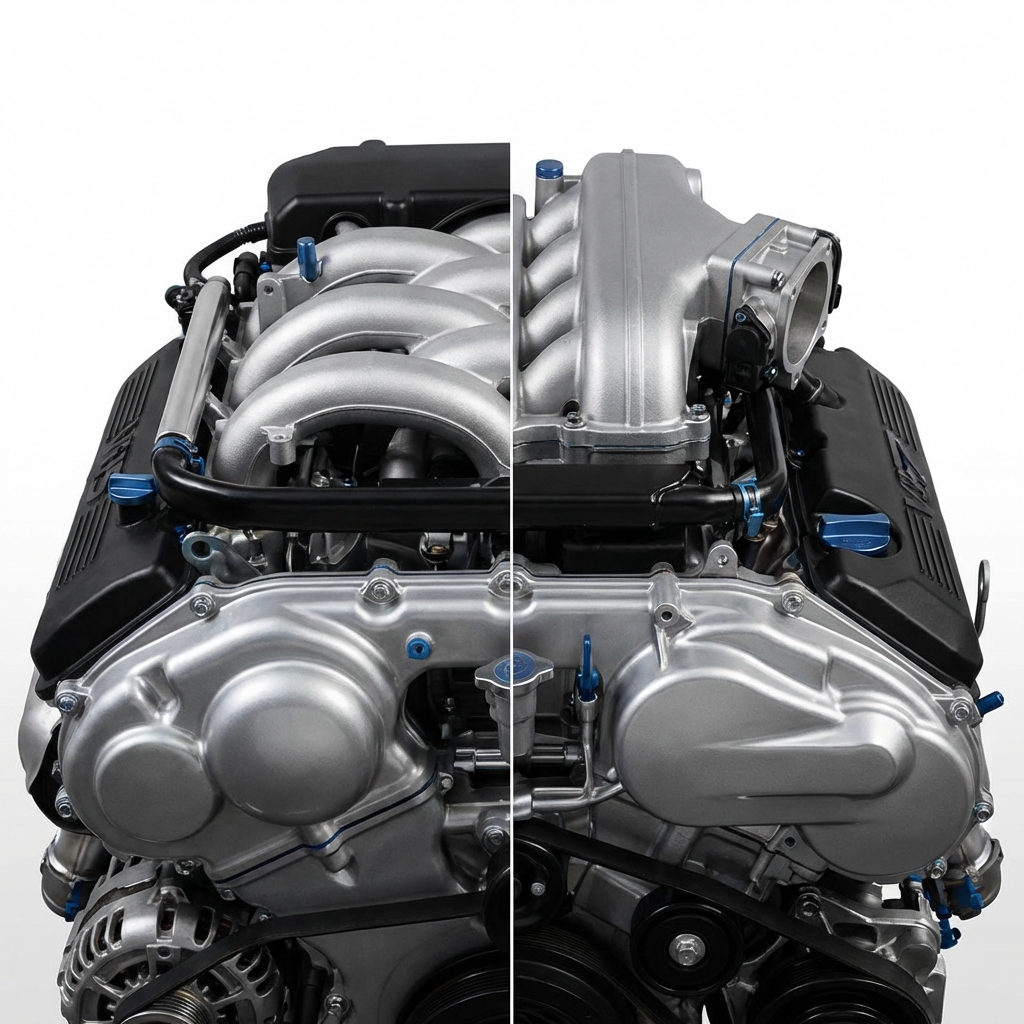
At a basic level the 350Z uses the VQ35 3.5L V6 while the 370Z uses the larger VQ37 3.7L V6; the engine family change explains much of the stock power difference between model lines and model years Edmunds 350Z specifications. CarBuzz comparison.
Horsepower and how it varies by year and trim
Factory horsepower tends to be mid-to-high 200s for many 350Z years and trims and roughly low- to mid-300s for many 370Z model years, and that gap directly affects straight-line performance comparisons MotorTrend 370Z overview.
Curb weight and power-to-weight basics
Curb weights for many comparable model years are often similar between the two cars, so the higher factory horsepower on the 370Z typically produces a better power-to-weight ratio in matched comparisons MotorTrend 370Z overview.
Run Vehicle History Report to confirm trim and history
Run a VIN report to confirm trim and original powertrain specifications before comparing listings, and use local pricing context to see how similar cars are priced in your market.
Remember that manufacturer horsepower ratings and curb weight are the baseline; direct comparisons should match model year and transmission to avoid misleading conclusions.
Published 0-60 tests and road reviews: what independent testers report
Summary of road-test findings
Independent road tests and first-drive reviews commonly report that production 370Z examples record 0-60 times that are a few tenths quicker than comparable 350Z examples, which aligns with the engines and outputs used by each model Car and Driver first drive. Measured run tables often show similar gaps FastestLaps.
Why reported times vary
Reported 0-60 times vary because of transmission choice, test conditions, tire condition, altitude and tester method; that is why published times should be used as a guideline rather than a precise prediction for a specific VIN Road & Track notes.
For any specific listing the best verification is a documented test result or a dyno sheet tied to the vehicle, combined with VIN-verified service records and the listing's stated drivetrain details.
How power-to-weight and gearing explain straight-line differences
Power-to-weight ratio explained
Power-to-weight ratio is the conceptual bridge between horsepower and acceleration: with similar curb weight, the car with higher usable power tends to accelerate faster, which is one reason the 370Z often outpaces the 350Z in stock form MotorTrend 370Z overview.
Gearing and final drive shape how that available power translates into measurable 0-60 runs, so two cars with similar power-to-weight numbers can still show differing short-run acceleration if the gearbox tuning or final drive differs Road & Track notes.
Manufacturer specifications and independent road tests typically show the 370Z is faster in stock form, mainly due to its larger VQ37 engine and higher factory horsepower, but overlap exists and the exact result for any specific car depends on year, trim, transmission and modifications.
Small weight differences, mounted accessories, or even cabin loads can nudge a measured 0-60 time in real-world testing, so always match vehicle details when comparing published runs.
Transmission, year and trim: why some 350Zs can out-accelerate some 370Zs
Manual versus automatic differences
Transmission choice affects launch behavior and shift time; a well-driven manual 350Z can sometimes beat an automatic 370Z in short runs because of launch control differences and shift characteristics MotorTrend 370Z overview.
High-performance trims and options
Certain 350Z model years or special trims, or lightly modified examples, can match or exceed the straight-line performance of some 370Z trims; verify trim, transmission and documented modifications for any listing rather than assuming stock performance applies across the board Edmunds 350Z specifications.
Tuning and aftermarket: which platform scales better for power
Aftermarket ecosystem overview
From a tuning perspective the VQ35 platform used in many 350Z years has a deep aftermarket parts ecosystem and many documented high-power builds, while the VQ37 also accepts bolt-ons and forced induction but with fewer long-standing build recipes EngineLabs tuning guide.
Quick power-to-weight estimate to compare builds
Use measured dyno HP when possible
Forced induction and major builds
Dyno and modification reports show that bolt-ons produce moderate gains on both engines, while forced induction and full engine builds produce the largest and most variable increases; results depend heavily on build quality and supporting modifications EngineLabs tuning guide.
If you are evaluating modified cars, request dyno sheets, receipts and service records, and cross-check those items against the VIN-verified history to see if modifications were installed professionally and consistently documented.
Typical bolt-on gains and dyno patterns you should expect
Common bolt-on categories
Common bolt-ons include intake, exhaust and ECU tuning, and these categories tend to provide moderate horsepower gains when installed and tuned correctly Road & Track notes.
Why dyno results vary
Dyno numbers vary by dyno type, environmental conditions and baseline tune, so compare dyno sheets only when you know the measurement method and see consistent results across runs EngineLabs tuning guide.
For used buyers a dyno sheet tied to the vehicle VIN or a printout from a known shop is stronger evidence than unsupported seller claims in an ad.
Used-car checklist: VIN, title, service history and pricing context
Essential vehicle history checks
Always run a vehicle history report that covers title status, ownership history, service history and mileage checks before assuming any listing reflects factory condition KBB used-car guidance.
How to use pricing context before buying
Compare local pricing context and price analysis labels when possible to see whether a listing is above or below market for its documented condition; price context helps put any claimed performance or modifications in financial perspective KBB used-car guidance.
Checklist for reviewing a listing: 1) Run the VIN report and confirm trim and mileage. 2) Review service records and dyno sheets for modified cars. 3) Compare local pricing context to similar verified listings. 4) Inspect for signs of unreported damage or inconsistent maintenance.
Decision framework: pick the 350Z or 370Z based on your priorities
If you want stock straight-line performance
If your priority is stock straight-line acceleration with minimal modification, the 370Z often makes sense because factory horsepower typically gives it a measurable edge in matched comparisons Car and Driver first drive. See broader comparison pieces Autoblog.
If you plan to modify or track the car
If you plan significant modifications the 350Z's VQ35 platform offers a deep parts ecosystem and many documented high-power builds, which can make it attractive for tuners despite starting from lower stock power EngineLabs tuning guide.
Also factor in maintenance budget and resale expectations: modified cars may carry higher maintenance needs and their market depends on documentation and build quality.
Common pitfalls and red flags when comparing listings
Listing language that hides issues
Avoid assuming stock specs from photos or short captions alone; sellers may omit details needed to compare cars fairly and that can lead to incorrect performance assumptions KBB used-car guidance.
Overlooking title and service history
Red flags include salvage or rebuilt titles, incomplete service history, inconsistent mileage and undocumented mods; these factors can change both expected performance and long-term costs KBB used-car guidance.
When a seller claims upgrades, ask for receipts, dyno sheets and the VIN history that ties the modifications to the car.
Practical scenarios: how to compare two used listings step by step
Step 2, modification evidence: for the modified 350Z request dyno sheets and invoices and check whether the work is tied to the VIN in service records.
Scenario B: high-mileage 370Z vs low-mileage 350Z with service records
Step 1, confirm mileage and ownership history via the VIN report. Step 2, weigh likely maintenance needs for the high-mileage 370Z against the documented service history of the lower-mileage 350Z.
Step 3, test drive and verification: prioritize a test drive and inspection, and if possible a dyno or professional pre-purchase inspection to verify claimed performance and mechanical condition.
Wrap-up: key takeaways and next steps for your search
Summary of evidence
Manufacturer specs and published road tests usually show the 370Z has the straight-line advantage over the 350Z in stock form, but overlap exists and real-world performance depends on year, trim, transmission and documented modifications MotorTrend 370Z overview.
What to check next
Immediate next steps: run a VIN report to confirm VIN-specific details, compare pricing context for similar verified listings, and request dyno sheets or service records for modified cars before assuming any performance advantage KBB used-car guidance.
Published tests and factory specs typically show the 370Z is a few tenths quicker in 0-60 runs, but exact differences depend on year, transmission and conditions.
Yes, well-documented modifications on a 350Z can match or exceed some 370Z trims, but verification with dyno sheets and service records is essential.
Run a vehicle history report to confirm title status, ownership history, mileage and documented service before relying on advertised performance claims.
Choosing between a 350Z and a 370Z comes down to priorities and documentation. Use VIN-verified history reports and local pricing context to turn headline performance claims into a verifiable buying decision.
If a listing lacks service records or dyno evidence for claimed upgrades, treat the advertised performance with caution and prioritize verifiable listings.


 Blog
Blog