This guide helps research-oriented buyers spot used risks in pick up trucks for sale by focusing on model-year problems, regional corrosion, and powertrain failure modes. Use a VIN-based vehicle history report and an NHTSA recall lookup as the primary verification steps, then follow with a focused inspection before contacting a dealer. CarFax Deals can surface history reports and pricing context to help compare listings.
A step-by-step workflow for estimating a truck's market value that centers on comparing consumer valuation tools, adjusting for mileage and condition, and checking wholesale market signals. The guide explains private-party, trade-in and dealer retail values and shows how a vehicle history report and pricing insights can change an asking price.
This guide helps research oriented buyers evaluate suv used cars for sale under $25,000 by combining safety ratings, reliability data, local pricing context, and vehicle history checks. It outlines a simple framework, a pre visit checklist, and a decision scoring worksheet so you can compare finalists before contacting a dealer. Use the steps here to narrow candidates and confirm risk signals with a vehicle history report and a pre purchase inspection.
When searching suv used cars for sale, prioritize model year, trim and powertrain before choosing a make or model. This guide explains how safety ratings, dependability studies and local pricing insights combine to produce a short list you can verify with a vehicle history report. It also provides a stepwise checklist you can use before contacting a dealer.
Used pickup trucks are popular for buyers who need towing, cargo space, or durability. Yet not every used truck is the same. Many risks come from specific model years, powertrain choices, and prior use patterns rather than the brand alone.
This guide explains how to spot higher-risk pick up trucks for sale, what checks to run first, and how to use VIN-based vehicle history reports and NHTSA recall lookups to reduce surprise repairs. The aim is to give clear steps you can follow when comparing listings.
Model-year problems and regional corrosion risks drive most used pickup risk, not broad brand labels.
Start with a VIN vehicle history report and an NHTSA recall lookup before you visit a dealer.
Prioritize frame and transmission issues during inspection; documented problems should heavily influence your decision.
Quick answer for buyers looking at pick up trucks for sale
When deciding which pick up trucks for sale to avoid, think in terms of model year and configuration rather than whole brands. Many risks come from specific powertrain choices, certain model years, and regional corrosion exposure.
Start every serious listing with a VIN-based vehicle history report and an NHTSA recall lookup to check for open safety actions and reported defects; these two checks together form the most practical first filter for safety and major problem history NHTSA recalls database.
Run vehicle history report
Before you visit a dealer, run a VIN report to confirm title, ownership, and any reported accidents, then use that report to compare listings.
After those checks, a focused professional inspection that looks at frame, drivetrain and leaks can confirm whether known model-year problems affect this unit. Use pricing context to decide if the asking price reflects repair risk.
This short guide shows the most common failure categories, a step-by-step pre-purchase workflow, practical red flags in listings, and simple decision criteria buyers can use on any pick up truck for sale.
What we mean by 'avoid' when shopping for pick up trucks for sale
In this guide, avoid means a higher likelihood of recurring major failures, costly repairs, or open safety recalls for a particular model year and configuration. It does not mean rejecting every vehicle of the same make automatically.
Independent reliability surveys show wide variation across models and years, so brand-level generalizations can be misleading; use model-year evidence instead when judging risk Consumer Reports reliability guidance.
Region and previous use change risk. Trucks from salt-belt areas often have more underbody corrosion. High-tow or commercial histories raise drivetrain wear. Check ownership history and service records in the vehicle history report to see these patterns.
A practical framework to evaluate any pick up trucks for sale
Use a simple three-step workflow for every listing: VIN and recall checks, service and ownership review, then a focused inspection and cost estimate. This sequence lowers surprise risks and clarifies trade-offs before you contact a dealer.
Step 1 begins with a VIN-based vehicle history report and an NHTSA recall lookup. The NHTSA database is the authoritative source for open safety recalls and defect investigations for specific model years or VINs recalls look-up by VIN and related resources.
Avoid specific model years or configurations with repeated major failures, open safety recalls, or documented structural corrosion. Use a VIN report, NHTSA recall search and a focused inspection to identify those units.
Step 2 is reviewing service and ownership history. Use the report to confirm title status, single-owner history if important to you, and documented service entries that may show transmission or engine repairs.
Step 3 is a focused professional inspection that emphasizes frame rails, suspension mounts, drivetrain condition and fluid leaks. Combine inspection notes with pricing context and any price analysis label to decide whether repair risk is justified by the asking price.
Common failure categories that make some used pick up trucks for sale higher risk
High-level problem categories to watch are powertrain and transmission faults, structural corrosion, and diesel emissions or engine issues. These categories account for many of the costly repairs reported in owner surveys and service summaries.
Transmission-related failures are frequently reported in used full-size pickups and are highlighted in reliability studies and owner reports; use those sources to flag model-year patterns when you compare listings J.D. Power dependability findings.
Frame and underbody corrosion is a structural concern that can affect safety and resale value, especially for older trucks and vehicles driven in salt-belt regions RepairPal truck reliability summaries.
Diesel powertrains in some heavy-duty models have recorded emissions system and engine component failures that are model-year specific and often costly to repair. Treat these as powertrain risk trade-offs rather than categorical exclusions.
Transmission failures to look for in used pick up trucks for sale
Certain older automatic transmissions used in some Ford and GM full-size pickups have been frequently reported for problems in owner and survey data; these model-year patterns are worth flagging before a test drive J.D. Power dependability findings.
In listings and at a test drive, watch for delayed shifts, harsh or abrupt engagement, slipping under load, or a transmission fluid leak. These symptoms can indicate the kind of issues that later appear in service records.
Request the VIN and look for documented transmission repairs or service bulletins in the vehicle history report. If the listing omits the VIN or the dealer resists providing service records, treat that as a sign to press for more evidence.
At a minimum, ask the inspector to check transmission fluid condition and to perform a stress test on a highway section to reveal shift quality. If repairs are documented, compare estimated repair risk against the listing price and local pricing context before proceeding.
Frame, underbody and corrosion problems in used pick up trucks for sale
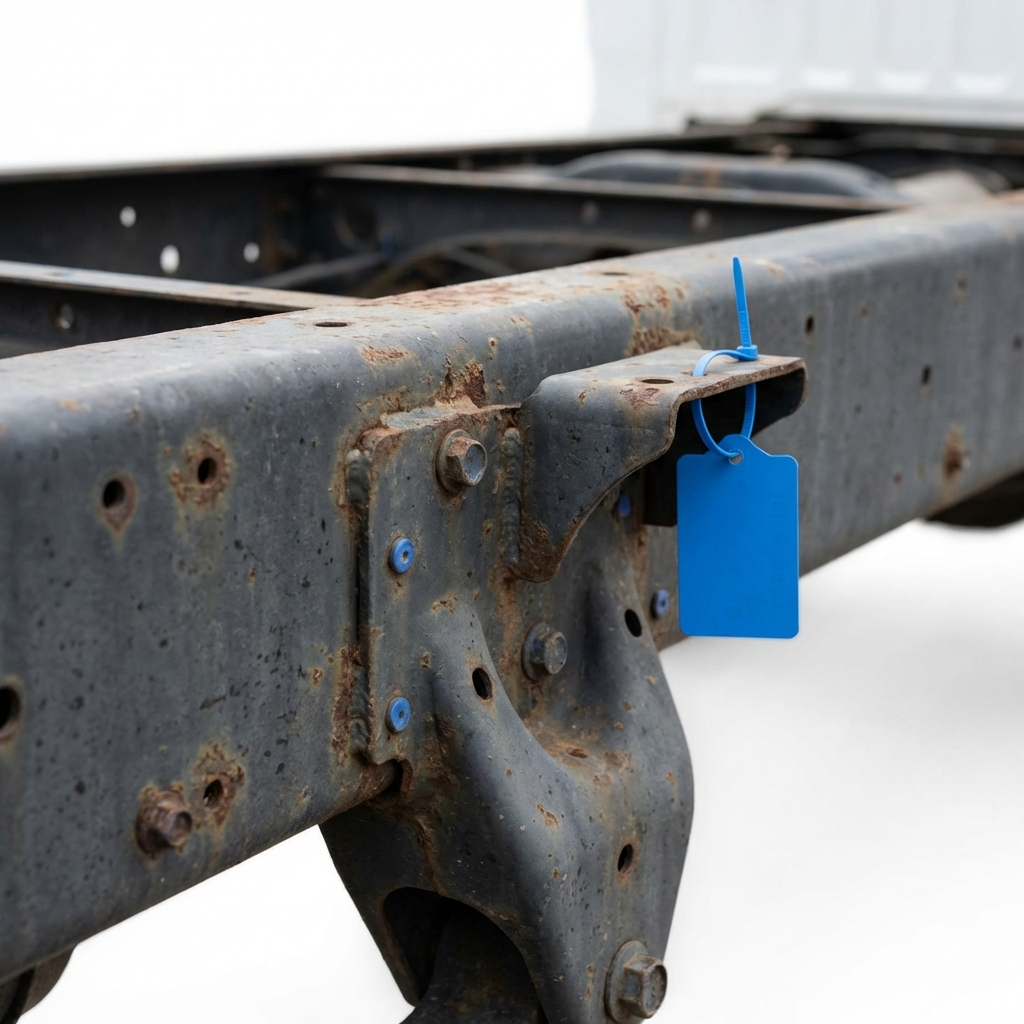
Frame and underbody corrosion can compromise long-term safety and resale value. This concern is commonly reported in older trucks and in vehicles driven in regions that apply road salt frequently RepairPal truck reliability summaries.
Inspect frame rails, suspension mounts, cab mounts, bed floor and exhaust hangers for heavy rust, cracked welds, or repairs that look recent but undocumented. Even surface rust can be an indicator of more advanced underbody damage.
Ask the dealer for recent underbody photos and any documented rust repairs in the vehicle history report. Prioritize trucks that show consistent documentation rather than informal or vague notes in service history.
Diesel and heavy-duty powertrain issues buyers should weigh
Some Ram and GM heavy-duty diesels have documented problems with emissions systems and certain engine components in specific model years. These issues can be expensive to repair and tend to be model-year dependent rather than universal across a brand J.D. Power dependability findings.
Diesel repairs can change the total cost to own substantially, so confirm maintenance history and towing or heavy-use records in the VIN report before you proceed.
Compare listing price plus likely repair costs against expected resale
Use local repair quotes for higher accuracy
If you plan to use a diesel truck for heavy towing, weigh the expected duty and maintenance history against the repair risk. A well-documented diesel with consistent service entries can make sense for heavy users; otherwise, the repair exposure may be too high.
Pre-purchase checks every buyer must run on pick up trucks for sale
Run a VIN-based vehicle history report to confirm ownership history, title status, service entries, and reported accidents. Use the report to spot inconsistencies that suggest hidden damage or title problems.
Run an NHTSA recall and defect search for the VIN or model year. The NHTSA database is the authoritative place to confirm open safety recalls and defect investigations that matter for immediate safety risk NHTSA recalls database.
Request a focused professional inspection that emphasizes frame and underbody condition, drivetrain checks, and leak identification. Ask the inspector to perform a road test that stresses the transmission and brakes.
Combine the inspection results, VIN report findings and pricing context to estimate likely near-term repairs and the resulting total cost to own. Use that estimate to compare comparable listings, and prioritize trucks with clear documentation and reasonable price analysis labels.
How to spot red flags in dealership listings for pick up trucks for sale
Watch for vague or missing service history entries, absence of the VIN in the public listing, and lack of recent underbody photos. Those cues often mean you should request a VIN report before visiting.
Inconsistent mileage claims, or a dealer that resists sharing the VIN, recent inspection records, or clear title status, are legitimate red flags. Ask for documentation and treat refusal as a reason to delay contact.
Compare the listing price against local pricing context and price analysis labels. An unusually low price can reflect needed repairs, so verify with a VIN report and inspection rather than assume it is a bargain CARFAX used car guidance. You can also check recall tools from third parties such as KBB when confirming reported issues.
Decision criteria: how to choose among several pick up trucks for sale
Create a simple risk score using these criteria: open recalls, transmission history, frame corrosion, ownership and service history, and pricing context. Weight safety recalls and major structural issues most heavily.
Assign higher priority to open safety recalls and documented frame problems, and to repeated transmission repairs in the history. Use inspection findings to adjust scores and to estimate repair costs that feed into a total cost to own estimate.
Compare the adjusted score and estimated total cost to own across your shortlist. If one truck has a lower score due to a structural or safety issue, it is often the right choice to walk away even if the price seems attractive.
How region and previous use change which pick up trucks for sale to avoid
Salt-belt exposure increases the likelihood of underbody corrosion, so prioritize frame inspection and underbody photos for trucks originating from those regions RepairPal truck reliability summaries.
Towing and commercial-use histories raise the chance of drivetrain wear. Look for multiple owners in a short period or commercial titles in the ownership history as indicators of heavier use.
Local pricing context matters. In some areas, rust treatment or common repairs are routine and lower cost, while in other regions the same repairs may be rarer and more expensive. Factor that into your total cost estimate.
Practical examples: three buyer scenarios for pick up trucks for sale
Family buyer prioritizing reliability. A family shopper narrows choices to trucks with single-owner histories, consistent service records, and no open recalls on the VIN. If the VIN report shows repeated transmission repairs or an open recall, the buyer typically moves to the next option NHTSA recalls database.
Buyer needing towing capacity. This buyer checks towing-related service entries, transmission history, and any heavy-use ownership records. If the VIN history shows commercial use or frequent towing claims and the inspection finds drivetrain wear, the buyer may require extended inspection or higher contingency in repair budgeting.
Budget buyer evaluating cheaper listings. A budget-minded shopper may accept cosmetic surface rust but should walk away from documented frame repairs or major corrosion found in the history report. If a test drive reveals transmission slip, budget buyers should expect high repair costs and usually pass.
Typical mistakes buyers make with pick up trucks for sale and how to avoid them
Relying on photos alone. Listings often hide underbody issues. Always run a VIN report and request underbody photos or an inspection to confirm structural condition.
Skipping VIN and recall checks. Not checking the NHTSA database or a VIN report misses open safety recalls and documented failures that inspections can focus on; these checks catch many critical issues early NHTSA recalls database.
Assuming a low price equals good value. Low prices can reflect hidden repair needs. Compare potential repair costs against the price and local pricing context before contacting the dealer.
Ready-to-use checklist and next steps for pick up trucks for sale
Quick checklist: run a VIN history report, perform an NHTSA recall lookup, request recent underbody photos, get a focused inspection emphasizing frame and drivetrain, and compare findings to local pricing context and a price analysis label.
Walk-away conditions: unresolved open safety recall for this VIN, major frame or structural corrosion, or documented recurring transmission failure without clear repair documentation.
After you complete checks and inspections, use the combined findings to decide which listings to contact. Keep records of the VIN report and inspection notes to support negotiation and to compare alternatives.
Run an NHTSA recall lookup for the VIN or model year and review the vehicle history report for any recorded recalls or service actions.
Common costly problems include transmission failures, significant frame or underbody corrosion, and diesel emissions or engine component failures in some heavy-duty models.
Consider walking away for an unresolved open safety recall, major frame corrosion, or documented recurring transmission failure without clear repair records.
Deciding which used pickup to avoid is a matter of weighing documented risk against price and intended use. Use VIN reports, recall lookups, and focused inspections to turn listing uncertainty into a clear comparison between options.
When in doubt, prioritize safety recalls and structural issues and use pricing context to decide whether a repair risk is worth the asking price.


 Blog
Blog