A rav4 used for sale can be a sensible pick for many research-oriented buyers because reliability aggregators rate the model above average and safety ratings are generally strong. This guide explains how to vet listings, what model years tend to be better, and a step-by-step checklist to reduce risk before you buy.
This guide explains how to estimate the cost of buying an R34 Skyline, with attention to import rules, condition-driven price tiers and landed cost. It shows which factors move value, how to verify history and paperwork, and offers a checklist you can follow when you search for a nissan skyline r34 for sale.
This guide helps buyers set realistic expectations for tacoma trucks for sale by explaining the main price drivers and a repeatable method to build conservative, typical, and ambitious offer ranges. It shows how the 2024 redesign, valuation guides, and vehicle history reports interact to change asking prices and reduce purchase risk.
This guide shows how to evaluate affordable cars for sale by looking beyond sticker price to total cost to own, reliability, fuel use and safety. It explains how to use model-level 5-year TCO tools, EPA fuel data and vehicle history reports to compare small cars, and gives checklists and scenarios for common buyer profiles.
This guide helps research-oriented buyers decide whether a used RAV4 is a sensible purchase. It summarizes reliability and safety evidence and gives a practical, step-by-step checklist to vet any listing.
You will find guidance on VIN checks, service history review, inspection priorities and how price analysis labels can speed comparison. The goal is to reduce uncertainty before you contact a dealer.
Major reliability aggregators rate the RAV4 generally above average for many recent generations.
Run a VIN-level vehicle history report and confirm title before a test drive.
Later-generation RAV4s (post-2019) often offer a stronger combination of safety and resale retention.
Short verdict: Is a used RAV4 a good purchase?
If you are looking at a rav4 used for sale, many recent model years are sensible candidates for buyers who prioritize reliability and predictable ownership costs, but VIN-level checks are essential before you decide. Consumer Reports and other reliability aggregators rate the RAV4 generally above average, which supports considering well-documented examples for purchase Consumer Reports RAV4 reliability page.
Check VIN and recalls before you test drive
Before you commit, run a VIN-level vehicle history report and confirm title and recall status to reduce avoidable risk.
Crash protection tends to be strong across many years, yet recalls and safety investigations affect only specific model-year groups, so check records by VIN for the exact vehicle you are considering IIHS RAV4 ratings.
In practice, the RAV4 also retains resale value well compared with compact-SUV peers, though exact trade-in and private-sale expectations depend on trim, mileage and local market trends Edmunds RAV4 pricing.
How to evaluate a rav4 used for sale
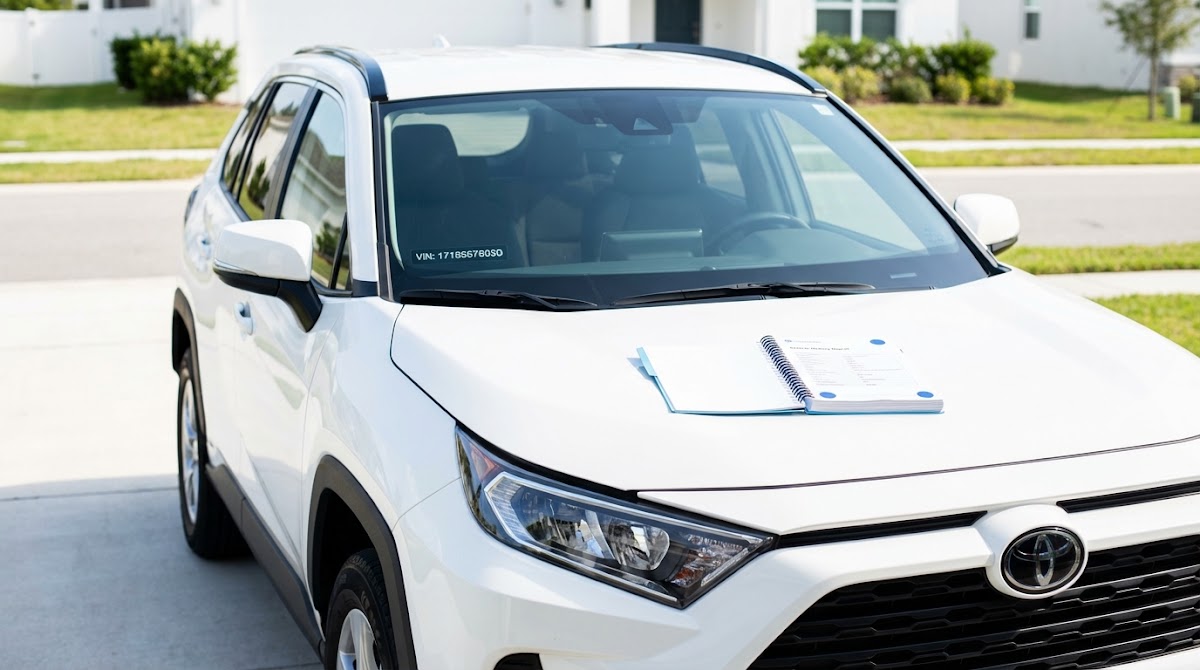
Start with a VIN-level vehicle history report. A VIN report shows title status, ownership history, reported accidents and mileage checks, which together reduce the biggest unknowns before you visit the seller.
Run the vehicle history report early enough that you can compare multiple listings. If the report shows a salvage title, odometer discrepancy or repeated accident damage, you should treat that listing differently from a single-owner, clear-title example.
Confirm title status and ownership history in the same session as the VIN lookup. Title status tells you whether the car has a clean title, rebuilt title or other markers that affect value and insurability.
Review service history next. Service records that show regular maintenance, oil changes and scheduled inspections increase confidence that wear items were managed. Gaps in service records or odd mileage jumps should prompt follow-up questions with the dealer and more scrutiny on inspection.
Arrange a professional pre-purchase inspection before you make an offer. A trained technician can identify issues that do not appear on paper, such as early transmission wear or hidden structural repairs.
Use price analysis labels and local market context to judge whether the asking price is reasonable. Labels that indicate Great Deal, Good Deal or Fair Deal are shorthand for how a listing compares to local supply and comparable trims, but always verify the reasoning behind a label before relying on it CarFax Deals home.
When pricing looks unusually low, require a full VIN check and inspection before proceeding, and consult RepairPal's recall listings RepairPal recalls.
What makes the RAV4 dependable: reliability data at a glance
Major reliability aggregators place the RAV4 above average for many recent generations, so many well-documented used examples tend to be reasonable choices for reliability-focused buyers Consumer Reports RAV4 reliability page.
Repair and owner-reported data generally align with that view, though they also flag recurring issues on selected older model years that buyers should watch for RepairPal RAV4 reliability summary.
Many recent RAV4 model years are rated above average for reliability and have strong safety ratings, making well-documented used examples sensible for buyers who run VIN-level checks, verify service history and obtain a professional inspection.
If you prefer later-generation models for a stronger mix of features and fewer known age-specific issues, prioritize post-2019 redesigns when possible. Later generations tend to offer updated powertrains and safety features that many reliability studies treat more favorably.
Always verify service history for the exact vehicle. Even a model year with a strong reputation can have individual examples that were neglected or repaired after a significant event, so confirm maintenance records before you rely on general ratings.
Safety, recalls and VIN-level checks for RAV4s
Crash-test results from the IIHS show strong protection for many model years, but crash ratings are model-year specific, so use the IIHS pages to compare the exact year and trim you are considering IIHS RAV4 ratings.
NHTSA maintains complaint, investigation and recall records by model year and VIN, and you should consult those records to see if an individual vehicle has open recalls or ongoing investigations that affect safety systems NHTSA RAV4 safety page.
If a VIN-level check shows an open recall, confirm with the seller that the manufacturer or dealer completed the remedy before you finalize a purchase, or check Toyota's recall lookup Toyota recall lookup.
Pricing and resale value of used RAV4s
Industry valuation sources indicate the RAV4 retains resale value relatively well within the compact-SUV segment, but exact pricing depends on trim, mileage and local demand Edmunds RAV4 pricing.
Price drivers to watch are model year, trim level, powertrain choice and mileage. A higher trim with safety and convenience packages typically commands a premium versus base models, and lower mileage tends to reduce near-term repair risk.
Use price analysis labels to compare a listing against local market context. A Good Deal label often means the listing aligns with comparable trims and condition in your area, while an outlier price should prompt a VIN check and inspection before you negotiate.
Common issues by model year and what to watch for
Owner-reported complaints and some recall histories identify recurring engine or transmission concerns on selected older model years, so treat older RAV4 generations with closer inspection and stronger proof of maintenance RepairPal RAV4 reliability summary.
When evaluating service history, look for repeated repairs of the same system, such as transmission work or engine repairs. Multiple entries for the same fault can indicate a chronic issue rather than a one-off repair.
Sourcing clear maintenance records, receipts and an explicit description of any major repairs will reduce risk. If the dealer cannot produce detailed service invoices for important work, consider that a reason to require a pre-purchase inspection or to walk away.
Pre-purchase checklist: steps to vet any rav4 used for sale
Before a test drive, run a VIN-level vehicle history report or a VIN decoder to confirm title status, ownership history, recorded accidents, mileage checks and open recalls via NHTSA's recall lookup NHTSA recall lookup.
Quick VIN and listing vetting checklist
Use before test drive
Interpret service history entries carefully. Dates, mileage and type of service matter. Routine maintenance entries spaced at expected intervals are reassuring. A cluster of repairs at similar mileages may indicate a recurring fault.
Arrange a professional pre-purchase inspection if the VIN report and service history look acceptable. Ask the inspector to focus on known RAV4 issue areas such as transmission behavior on older models and any signs of engine repairs, and to verify repairs listed in service documents.
Check for odometer consistency across inspection records, title documents and the vehicle history report. Any discrepancy should be explained and documented before you make an offer.
Inspection and test-drive focus areas
On the walkaround, inspect exterior panels for mismatched paint, gaps in trim, uneven panel fit that could indicate prior collision repairs, and check tires for even wear that matches the car's service history.
Look under the car for fluid leaks and check visible components for fresh welds or panel replacements. Evidence of structural work or aftermarket frame repairs is a concern and warrants a professional look.
During the drive, pay attention to transmission shifts. Hesitation, slipping or rough shifts can be early signs of transmission wear on older examples. Note any unusual engine noise, sputtering or hesitation under load.
Also test brakes for consistent pedal feel, HVAC for proper heating and cooling, and infotainment and driver-assist features for operation. Cross-check any observed issues with the vehicle history report and service records to see if they are already documented.
Negotiating and pricing signals: using price analysis labels
Price analysis labels can guide negotiation by showing how a listing compares to local market pricing and similar trims. Treat these labels as context, not as the final decision; always verify the supporting data behind a label CarFax Deals home.
If a listing shows a Great Deal or Good Deal label, confirm that the VIN report and inspection align with that assessment. If not, ask questions about service history and title status before making an offer.
An unusually low price is a red flag that should prompt immediate VIN-level checks and a pre-purchase inspection. Low price can be legitimate, but it can also reflect hidden damage, unresolved recalls or title branding that affects future resale and insurance.
Ownership costs and resale considerations
Estimate total cost to own by considering fuel, scheduled maintenance, likely wear items, insurance and depreciation. These elements vary by powertrain choice, trim and local fuel prices.
RAV4s historically retain value relatively well, but resale depends on condition, trim and documented care. Buyers who preserve maintenance records and avoid title issues tend to retain more resale value when they sell.
Consult model-year-specific reliability studies and safety ratings when estimating future costs. A model year with a known engine or transmission issue can carry higher maintenance risk and therefore higher expected ownership costs Consumer Reports RAV4 reliability page.
Typical buyer scenarios: which RAV4 suits you?
Commuter: If you need a dependable daily driver with moderate mileage expectations, a later-generation RAV4 with complete service history and lower mileage generally fits this use case. Prioritize a verified VIN report and recent maintenance.
Small family: For family use, focus on trims with active safety packages and clear service history. A post-2019 model often provides a helpful mix of safety features and interior comfort for family needs.
Budget buyer or high mileage: If your budget favors older or higher-mileage examples, insist on a thorough VIN report and a professional inspection, and be ready to accept higher near-term maintenance costs due to wear items.
Common mistakes buyers make with used RAV4s
Not running a VIN-level report is a frequent error. Skipping that step leaves title problems, open recalls and accident history hidden until after purchase, which can be costly to correct NHTSA RAV4 safety page.
Another common mistake is relying solely on price without verifying service records. A low price might mask major repairs or missing maintenance, so always correlate price to verified history.
Failing to get a professional pre-purchase inspection is also common. An inspector can surface issues that do not appear in reports and give you negotiating leverage or a clear reason to walk away.
Sample checklist: evaluating a specific listing, step by step
Example case: 2018 RAV4, 60,000 miles. Step 1, run the VIN report to confirm title status, ownership history and whether recalls are open. If the VIN report shows no major title issues and service history is coherent, proceed to step 2.
Step 2, review service history for regular maintenance entries and compare recorded mileages across service visits. If service records match expected intervals and there are no repeated repairs for the same component, proceed to step 3.
Step 3, schedule a professional pre-purchase inspection focused on transmission smoothness, engine mounts and evidence of structural repairs. If the inspection finds minor items, use that information to negotiate or request repairs. If it finds serious structural damage or unresolved mechanical faults, walk away.
Step 4, compare the seller price to local market listings and price analysis labels. If the listing shows a Good Deal label and the VIN report plus inspection are clean, consider an offer. If price is unusually low, require full documentation and repairs before purchase.
Final takeaways and next steps
Short verdict: many used RAV4s are reasonable purchases for buyers who run VIN-level checks, verify service history and require a professional inspection. Later-generation RAV4s tend to be stronger choices for reliability and features.
Essential next steps: run a vehicle history report, confirm title status and ownership history, review service records, get a pre-purchase inspection and verify open recalls by VIN. Using tools that pair listings with vehicle history reports and pricing insights can speed research and reduce uncertainty; see our how-to-use guide or CarFax Deals home.
Start with a VIN-level vehicle history report to confirm title status, ownership history, recorded accidents, mileage checks and open recalls before you visit the seller.
Many RAV4 model years rate above average for reliability and have strong safety ratings, but verify the exact model year, trim and service history before relying on general reputations.
Treat unusually low prices as a red flag and require a full VIN report and a professional inspection to rule out title issues, open recalls or major repairs.
If you plan to pursue a RAV4, save the checklist and run a VIN-level report on any listing you consider. Pairing listing details with documented history and a focused inspection will give you the evidence you need to decide with confidence.
For many buyers, later-generation RAV4s with full service records present the best balance of reliability, safety features and resale retention, but individual VIN checks determine the final risk.

 Blog
Blog