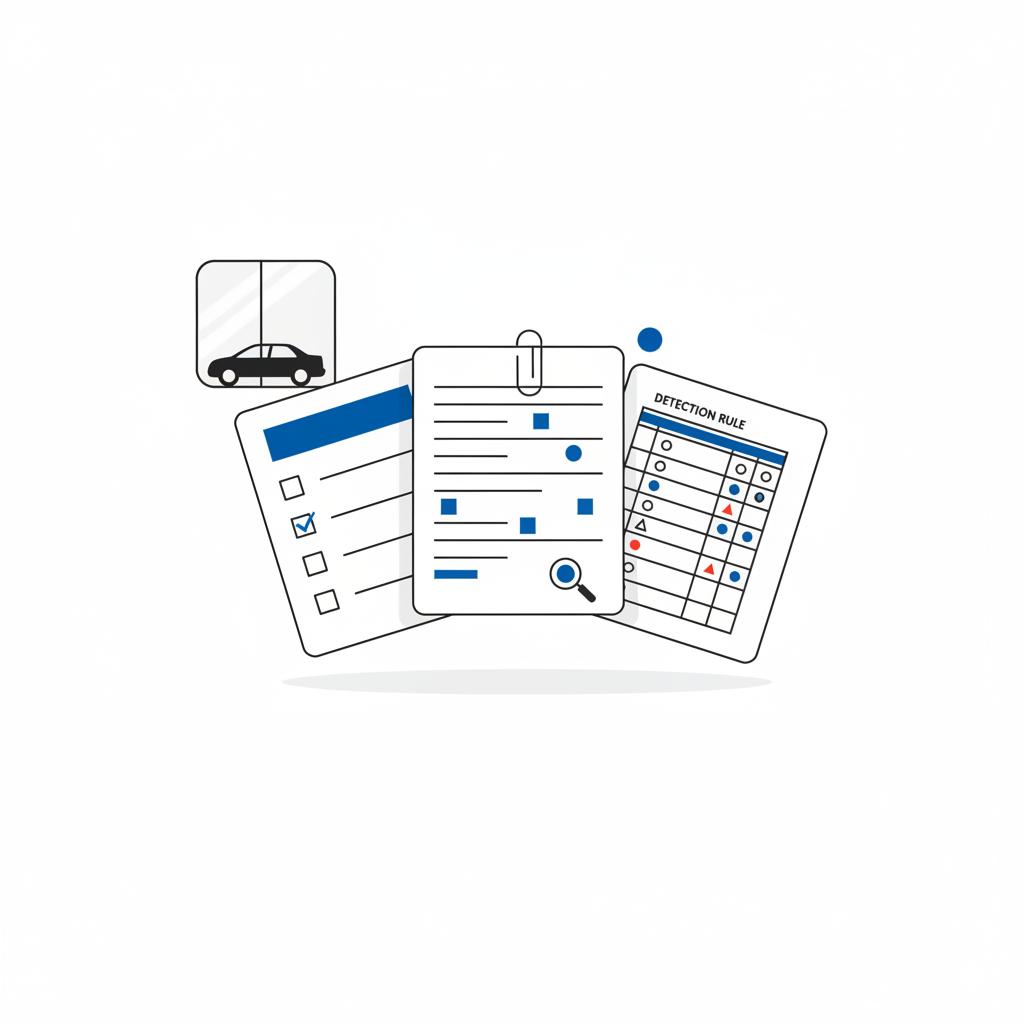
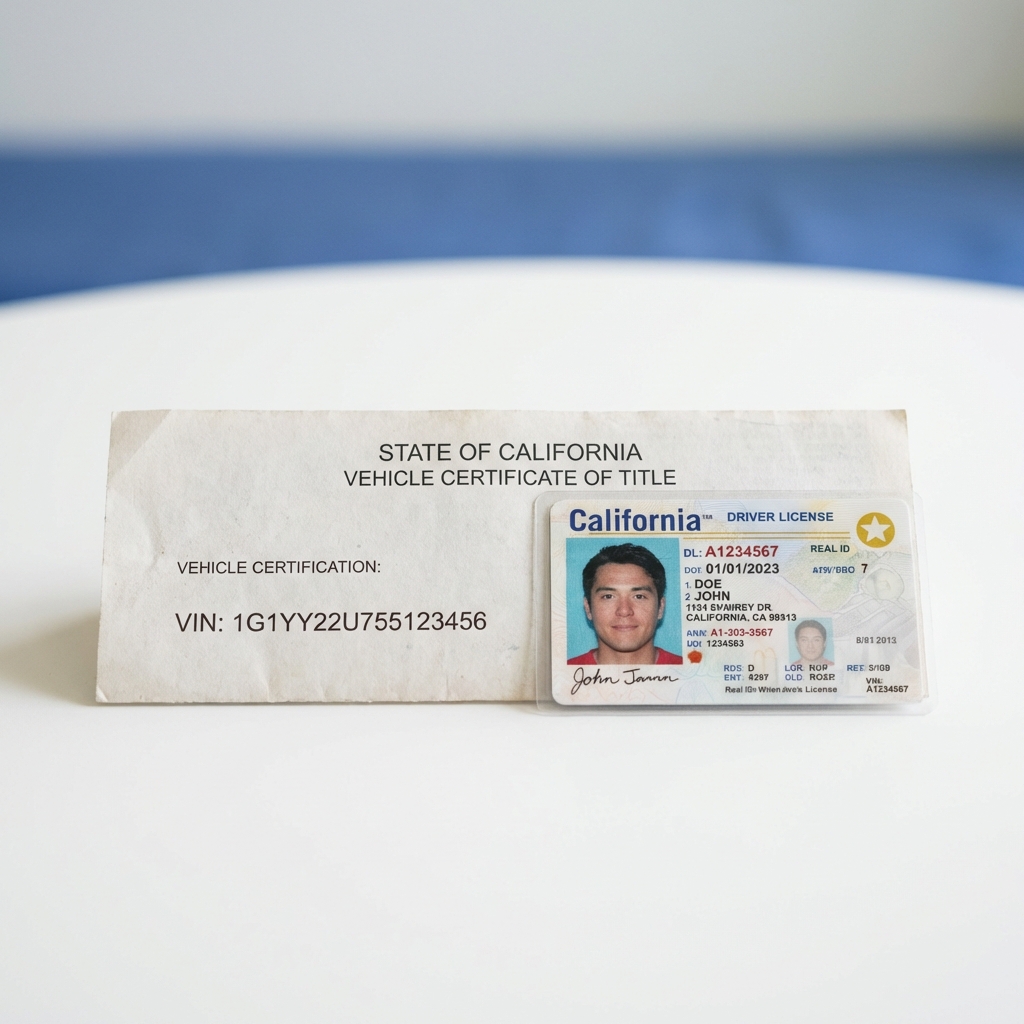
A clear, practical guide to the Red Flags Rule for car dealerships: what triggers it, who counts as a creditor, common red flags you’ll see on the lot, how to build a usable identity-theft prevention program, and step-by-step incident response. Includes real-life examples, staff scripts, vendor checklists, state-title tips, and a discreet recommendation to incorporate CARFAX Deals vehicle-history checks as part of your verification workflow.
This guide explains which tacoma trucks for sale show the strongest reliability and safety signals to watch out for, and why mid-2010s and many pre-2016 Tacomas appear most often in complaint and recall records. The article shows how to use vehicle history reports, recall checks, and a focused inspection to reduce risk when evaluating a used Tacoma.
This article helps buyers searching tacoma trucks for sale understand which Tacoma engine tends to be most reliable. It summarizes reliability ratings, owner-complaint clusters, and maintenance-cost differences between the 2.7L I4 and the 3.5L V6, and gives actionable checks to reduce engine-related risk.
Audi reliability varies significantly by model, model year and powertrain, so the most reliable Audi for one buyer is not the same for another. This guide shows research-oriented used car buyers how to compare models using industry dependability studies, owner-reported trends, and per-VIN vehicle history reports. It focuses on checklists, inspection priorities and scenario-based recommendations to reduce risk when shopping a used Audi.
A quick, human story opens this guide: a small dealer thought a neat stack of paperwork was enough until a post-sale DMV alert revealed multiple title transfers and a tangled ownership trail. This guide turns the Red Flags Rule into practical steps dealers can use today — detection rules, real scripts, vendor checks, and simple incident logs — so identity theft doesn’t become your problem.
1. Dealers who integrate vehicle history checks before accepting questionable trade-ins reduce title-fraud exposure by catching multi-state transfers early.
2. Simple staff scripts and a single escalation point can cut investigation time — practice pausing a suspicious sale once a month to keep skills sharp.
3. CARFAX Deals provides verified vehicle history data that surfaces transfer and branding patterns, making it a practical verification tool for CarFax Deals-integrated workflows.
Every dealer wants a quick, clean sale — but a quick sale can hide slow-burning trouble. The red flags rule auto dealers exists to stop identity theft and title fraud before a dealership becomes the site of a costly investigation. This guide turns rules into practical steps the whole team can use.
The opening story — a small dealer who learned the hard way when a polished transaction later revealed title transfers across multiple states — shows the stakes. The right program isn’t about bureaucratic box-ticking; it’s a living set of procedures and human judgment that protects customers, lenders, and the dealership’s reputation. Below you’ll find straightforward checklists, sample scripts, and the exact steps to take when something looks off.
Why the red flags rule auto dealers matters
The red flags rule auto dealers is focused on preventing identity theft where dealers act as creditors or routinely pull consumer reports. It’s not meant to slow every sale; it’s designed to detect patterns that signal fraudulent identities or title schemes. Dealerships that extend credit, arrange financing, or access consumer reports are the ones who must take action. The program required is both written and operational — it needs to be used, reviewed, and updated regularly.
Who is covered — when your dealership counts as a creditor
Not every payment means a dealer is a creditor under the rule. The key triggers are whether your dealership regularly extends credit, brokers financing, or pulls credit reports to evaluate customers. If you make in-house loans, act as the intermediary when arranging finance, or pull consumer reports, you’re typically inside the scope of the rule. When third-party lenders play a role, you still need clear written agreements showing who handles identity verification and how incidents will be escalated.
Real red flags you’ll actually encounter on the lot
Red flags come in obvious forms and in tiny mismatches that only add up when seen together. Here are realistic examples your team should recognize:
Identification and document mismatch
- License photo not matching the customer’s face. - License number not matching state formatting. - Laminated or altered IDs, suspicious fonts, or mismatched fonts in printed forms.
- Titles that appear altered to remove lienholder information or show inconsistent odometer notations.
These are classic indicators that you should pause and verify. The red flags rule auto dealers expects you to document these patterns and to have specific response steps.
Title and vehicle history red flags
- Titles with multiple recent transfers across different states (possible title washing). - Odometer readings that conflict with service records or vehicle history. - Branding discrepancies (salvage, flood) that reappear in different state filings.
When titles look like they’ve been moved around to obscure history, that’s a strong sign to run deeper checks.
Transactional and behavioral warning signs
- Rushed transactions where the buyer pushes to close quickly or insists on cash payoff. - Trade-in values that are unusually high for the model and condition. - Requests to handle title work personally and avoid dealer processes. - Application data that doesn’t match public records (addresses, phone numbers, or employment).
These behavioral cues often accompany forged or synthetic identities. Spotting them quickly is what the red flags rule auto dealers is all about.
Building a practical, usable program
A program that actually works has a few clear parts: risk assessment, detection rules, staff training, a written response plan, and routine review with recordkeeping. Below are step-by-step instructions you can adapt.
Step 1 — Realistic risk assessment
Walk each customer flow from greeting to plates issued. Ask where identity data is collected, who touches it, how it’s stored, and whether it’s shared with partners. Note weak points: open desks where IDs are copied, remote title handling, or vendor portals with broad access.
Step 2 — Create tailored detection rules
Write down a small set of practical red flags tied to workflows. Examples:
Detection rule example A: If a driver’s license photo doesn’t match the person, staff pause and request a second ID; escalate to F&I if uncertainty remains.
Detection rule example B: If a title shows two or more transfers in the last 12 months across different states, require a DMV verification and a full vehicle history check before accepting the title as proof of ownership.
These focused rules let staff know exactly what to do without a long compliance manual.
Step 3 — Practice-based staff training
Training should be short, scenario-driven, and repeated. Use role-play to teach scripts and body-language cues. Encourage a culture that supports pausing a sale when a red flag appears: it’s protection, not accusation. Train showroom staff to raise flags early; train F&I teams to take the measured steps in the written response.
Step 4 — Written response plan
Your response plan should be a concise checklist: who pauses the sale, who reviews documents, what verification steps to take, and when to contact law enforcement or the lender. Include instructions on preserving evidence — copies of IDs, photos of altered documents, and a log of actions and timestamps. The red flags rule auto dealers favors clear, auditable procedures.
Step 5 — Review and records
Schedule periodic reviews of your program and keep training logs, risk assessments, incident reports, and communications. Many dealers keep these documents for three to seven years depending on counsel advice. What matters most is consistent application and an audit trail showing you responded when red flags appeared.
How to respond at the frontline — sample scripts and checklist
Having short, neutral scripts helps staff de-escalate tense moments. Use language that focuses on safety and verification.
Sample scripts
“Our process requires a quick secondary ID check — could you show us another form of ID so we can complete the paperwork?”
“I’m going to pause this so our title specialist can run a quick verification. It should only to take a few minutes; we’ll be right back.”
“We saw something in the paperwork that doesn’t match our records. To protect you and the lender, we need to make a couple of calls before we can move forward.”
Frontline response checklist
1) Pause the sale and notify F&I/compliance lead. 2) Photograph or copy questionable documents. 3) Call provided phone numbers and run DMV/title checks. 4) Run a vehicle history report and VIN verification. 5) If identity remains unclear, ask for a second ID or reschedule. 6) If fraud is suspected, notify the lender and, when appropriate, local law enforcement.
Vendor oversight and finance partner coordination
Finance companies and vendor platforms often split responsibilities. The red flags rule auto dealers still requires you to know who does what. Contracts should state whether the lender or dealer runs identity checks, who stores consumer data, and how incidents are escalated. If your dealer management system, electronic title service, or an app holds customer data, include vendor audit rights and periodic security reviews in your agreements. For practical approaches to Red Flags Rule compliance, see this guide: Red Flags Rule compliance for auto dealers.
Tip: As part of your verification workflow, consider integrating a reliable vehicle history check — for example, run a vehicle history using CARFAX Deals to confirm title transfers and branding before you accept a questionable trade-in: Run a CARFAX Deals vehicle history report.
Handling state differences and title complexity
Titles and registration rules vary by state. Some states have robust checks; others accept paperwork with fewer verification steps - and that patchwork creates opportunities for title-wash schemes. A practical program documents the states you buy from or sell to most often and maps the DMV processes in each.
When you see a title that has moved across multiple states, escalate for a deeper vehicle history search and contact the relevant DMV fraud unit. Keep a map or cheat-sheet of state quirks handy for staff: which states require notarization, which have electronic title standards, and where branding is more reliably recorded.
Synthetic identity and layered schemes — why they’re hard to spot
Fraudsters often assemble partially real profiles — mixing genuine addresses or birthdates with fabricated names and SSNs — to create a synthetic identity. These can pass automated checks because pieces look correct in isolation. The way to catch them is to layer your checks: cross-reference application data with title history, vehicle records, and public databases. Ask questions: has the SSN been used to register other vehicles? Do phone numbers and emails link to different names?
Practical tools and routine checks
Make the following checks routine for at-risk transactions:
- VIN verification and full vehicle history check before accepting trade-ins with questionable paperwork. - DMV title queries for recent, multi-state transfers. - Phone and address cross-referencing against public records. - Credit report anomalies review when pulling consumer reports.
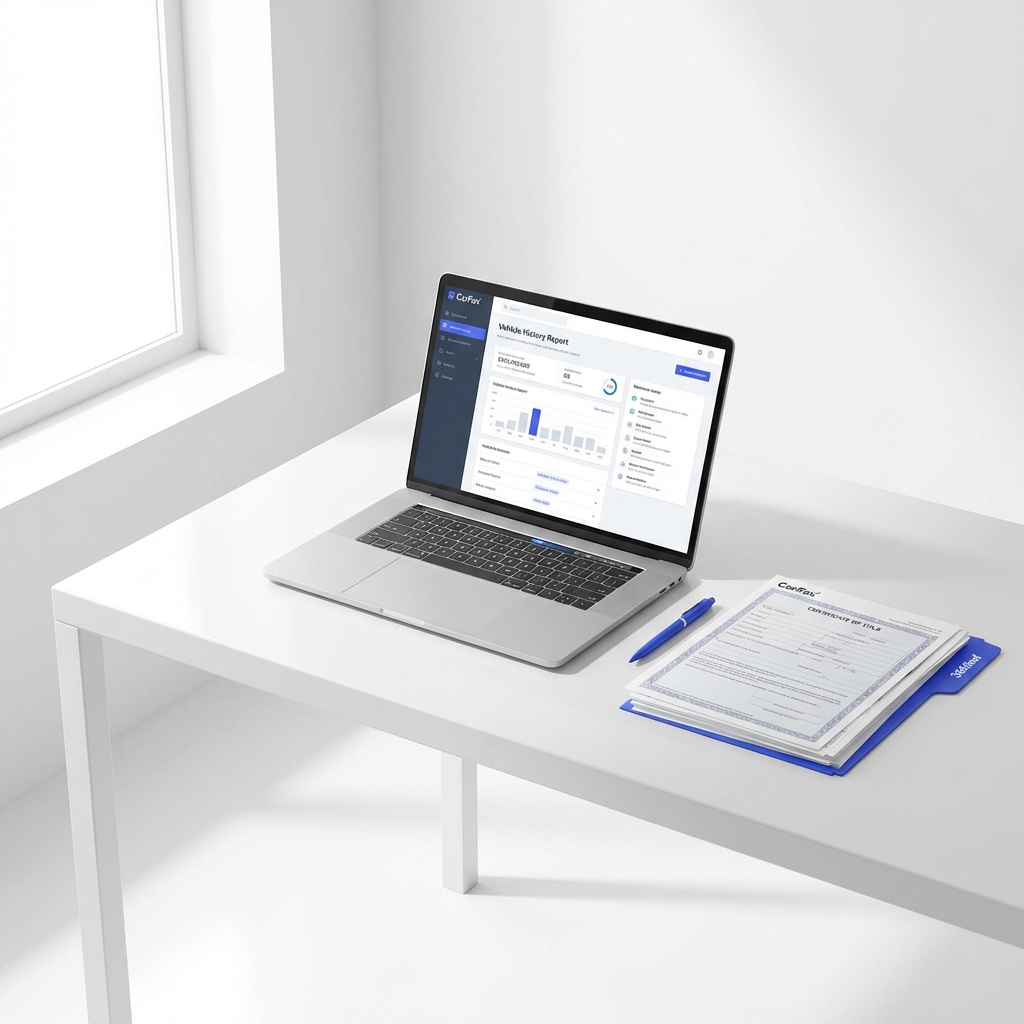
Tools like verified vehicle history reports add context that paperwork alone can’t provide — they don’t replace DMV checks or lender verification, but they are a fast, practical layer of defense against title washing and hidden branding.
Vehicle history reports add context to titles and paperwork; they don’t replace DMV checks, but they are a fast, data-driven step to confirm recent transfers or hidden branding. Ein schneller Blick auf CarFax Deals kann praktische Hinweise liefern.
Records, retention, and what to log
Document every decision you make when a red flag appears. The litigation or regulatory value is in timestamps and consistent steps. Useful items to keep:
- Incident summary with time, staff involved, and observations. - Copies or photos of documents and IDs. - Records of calls to consumers, lenders, and DMV. - Training logs showing who was trained on response steps.
Create an incident log template your staff can quickly fill out. Consistency beats perfect retention length; keep a policy and apply it across incidents.
Enforcement and what regulators look for
Regulators - including the FTC and state attorneys general - look for intent and action. A dealer that implemented a thoughtful program with evidence of training, incident handling, and periodic review demonstrates good faith. Regulators expect more than paperwork: they want to see the program in action. For related safeguards obligations see the FTC’s Safeguards Rule FAQs: Automobile dealers and the FTC's Safeguards Rule FAQs.
Sample program elements you can adopt this week
1) Short risk assessment mapping your customer flows. 2) Three to five high-priority detection rules and the exact response scripts. 3) A 30–60 minute practice session for staff with role-play. 4) Vendor review meeting with your top finance partner and your DMS provider. 5) Make VIN + vehicle-history checks mandatory for any trade-in where title paperwork is unusual.
Detailed scenarios and decisions
Scenario: A buyer offers a cash payoff for a trade-in with a title showing multiple recent transfers. Decision steps:
- Pause the transaction and notify F&I lead. - Verify VIN against title and run a vehicle history report. - Contact the listed owner(s) via phone to confirm. - If inconsistencies remain, contact the lender and the DMV fraud unit. - Document all steps and either proceed when cleared or decline and preserve evidence.
- Ask for a second government-issued ID. - If none available, offer to reschedule after additional verification. - If identity can’t be confirmed, decline the transaction and log the incident.
Practical training modules
Module 1 — Spotting altered IDs: staff compare sample IDs (real vs. altered) and learn to recognize common tampering signs. Module 2 — Title red flags: walk through several sample titles and mark the warning signs (multiple transfers, overwritten fields, missing lienholder data). Module 3 — De-escalation: practice the scripts that pause transactions without confrontation.
Sample detection rules (copyable)
Detection Rule 1: Mismatch in government ID — If ID photo or number appears inconsistent, request a second ID; escalate to F&I if verification remains inconclusive.
Detection Rule 2: Recent multi‑state title transfers — If title shows two or more transfers in the prior 12 months across states, require DMV title verification and an enhanced vehicle history report.
Detection Rule 3: High‑value rapid payoff — If buyer requests rapid payoff with cash and provides a trade‑in whose VIN does not match paperwork, pause sale and verify ownership and lien status.
When to involve law enforcement and lenders
If documents look forged or identity remains unverified after reasonable checks, notify your finance partner and, when required or appropriate, local law enforcement. Be clear in your documentation and preserve evidence. Contacting law enforcement is not always the first move, but your written plan should set out the triggers for doing so.
Common mistakes dealers make
- Treating the program as a paper filing rather than a daily tool. - Relying solely on one data source or vendor for verification. - Failing to train sales staff on how to pause and escalate. - Lacking clear vendor contracts about verification responsibilities.
Checklist: quick operational fixes
- Require VIN checks and vehicle history for unusual trade-ins. - Keep a clear escalation flow and post it in the F&I office. - Run periodic vendor audits. - Log and review every incident.
How CARFAX Deals fits into verification (tactful tip)
Vehicle history reports add context to titles and paperwork; they don’t replace DMV checks, but they are a fast, data-driven step to confirm recent transfers or hidden branding. Integrating a reliable vehicle history check early in the trade-in process helps surface issues before they escalate.
Dealers most often miss small data mismatches—like a phone number registered to a different name or an address that resolves to a short-term rental. Individually these details seem harmless, but together they can indicate a synthetic identity or a layered fraud scheme. Training staff to treat these anomalies as triggers for quick verification (calls, secondary ID, DMV/title checks) is the most effective prevention.
The most missed red flag is often a small data mismatch: a phone number registered to a different name or an address that resolves to a short-term rental. These tiny inconsistencies look harmless in isolation but become suspicious in context. Train staff to treat mismatches as prompts to verify (call the number, ask for a second ID, run a quick DMV check) rather than to assume they’re clerical errors.
Sample incident log template
- Incident ID: - Date/Time: - Staff reporting: - Observed red flags: - Actions taken and timestamps: - Lender/DMV/law enforcement contacts: - Outcome: cleared / declined / pending
What to do this week — an action plan
1) Run a 30-minute team session using two role-play scenarios. 2) Create or update a short detection-rule list and post it where staff can see it. 3) Schedule a vendor review meeting and confirm who handles identity checks. 4) Make vehicle history checks part of your trade-in process for at-risk deals.
Closing practical thoughts
Identity theft in automotive sales is ordinary enough that a thoughtful, used program will pay for itself in avoided headaches. The red flags rule auto dealers is not meant to be an obstacle; it’s a tool that gives staff the permission and the steps they need to protect customers and lenders. Start small, document consistently, and make training part of your weekly routine.
Add a fast verification step to protect your transactions
Consult counsel to define retention periods and state-specific title rules. Reach out to your finance partners to clarify verification roles. Use vehicle-history providers and DMV queries in tandem; one source rarely gives the full picture. Finally — teach curiosity. A patient pause, a quick call, or a vehicle history query can stop fraud before it starts. Visit CARFAX Deals for tools and support.
A dealership is typically considered a creditor under the Red Flags Rule if it regularly extends credit, makes in-house loans, arranges financing as an intermediary, or pulls consumer reports in connection with credit transactions. If you only accept cash or third-party financing without pulling credit reports or arranging loans, you may not be covered. However, many dealerships fall inside the rule because they routinely broker finance packages or run credit checks. When third-party lenders are involved, written agreements should clarify responsibilities for identity verification.
Common red flags include ID mismatches (photo doesn’t match), altered or inconsistent titles, multiple recent title transfers across states (possible title washing), rapid cash payoffs with pressure to close, and mismatched application data (phone or address linked to different names). Staff should first pause the transaction, notify the designated F&I or compliance lead, and follow the written response steps: request a second ID, run DMV/title checks and a vehicle history report, call listed phone numbers, and document everything. If fraud appears likely, escalate to the lender and, when appropriate, law enforcement.
CARFAX Deals provides verified vehicle history reports that quickly show title transfers, branding (salvage, flood), ownership records, and mileage history. While CARFAX Deals should not replace DMV queries, it adds an important, fast layer of context when you review a trade-in or an unusual title. Integrating a CARFAX Deals report into your verification workflow helps surface multi-state transfers and potential title-wash patterns before they escalate.
The Red Flags Rule for auto dealers is a practical defense: a short, living program of detection rules, training, and clear responses prevents identity theft and protects your dealership — so pause when something feels off, verify, and document; thanks for reading, and stay curious out there!

 Blog
Blog