Can I still buy a car after a repossession? - Can I still buy a car after a repossession?
This guide explains whether you can buy a car after a repossession, practical timing and legal issues, and the due diligence steps buyers should take. It shows common resale channels for repo cars and how to verify title and history, and it outlines financing options and steps to rebuild credit after repossession.
A rav4 used for sale can be a sensible pick for many research-oriented buyers because reliability aggregators rate the model above average and safety ratings are generally strong. This guide explains how to vet listings, what model years tend to be better, and a step-by-step checklist to reduce risk before you buy.
This guide explains how to estimate the cost of buying an R34 Skyline, with attention to import rules, condition-driven price tiers and landed cost. It shows which factors move value, how to verify history and paperwork, and offers a checklist you can follow when you search for a nissan skyline r34 for sale.
This guide helps buyers set realistic expectations for tacoma trucks for sale by explaining the main price drivers and a repeatable method to build conservative, typical, and ambitious offer ranges. It shows how the 2024 redesign, valuation guides, and vehicle history reports interact to change asking prices and reduce purchase risk.
If you are wondering whether you can still buy a car after a repossession, this guide lays out what to check and how timing and title status affect risk. It is aimed at research oriented buyers who want clear steps for due diligence before they contact a seller.
The article explains legal options that might have applied before resale, where repo cars typically appear for sale, and a step by step checklist to verify history, title, and pricing. It also covers realistic financing options and basic credit rebuilding actions to consider after a repossession.
A repossession can stay on your credit report for up to seven years and can affect loan terms.
Always order a vehicle history report and confirm title status before you bid or buy a repo car.
Special finance channels can offer access sooner but generally at higher overall cost.
What a repossession means and why it matters for buyers
A repossession happens when a lender retakes a vehicle because loan payments stopped, and that event commonly appears on credit files. If you are searching for repo cars for sale you should start by understanding how a repossession can affect credit and future loan access. A repossession can remain on a consumer credit report for up to seven years and commonly lowers credit scores, which reduces access to favorable auto loans, so buyers should plan around that possibility Equifax explanation.
On a credit report a repossession may show as a public record or a negative tradeline depending on how the lender reports it. The record can influence lending decisions for some years, and lenders often react by requiring larger down payments or different terms. Check the exact language on any report and watch for a deficiency balance entry, which is the shortfall the borrower may owe after the sale of the vehicle.
A number of states and many lenders offer legal or contractual options to reinstate the loan or redeem the vehicle before it is sold. Those options, and the time you have to act, vary by state law and by the contract with the lender, so confirm the available steps in your state if you are considering a particular repossessed vehicle CFPB guidance.
For a buyer, a repossessed vehicle may carry complications beyond credit history. The vehicle may still show a lien, a title brand, or an unresolved deficiency balance, and those items affect your ability to finance, register, and insure the car. Confirm title status early in your checks.
Even when a listing calls a car a repo sale, the legal status can differ. Some repossessions are redeemed by the original borrower before resale. Others proceed to auction and then to dealer inventory. That sequence matters because it changes which claims remain against the vehicle and whether a buyer could inherit any unpaid debt or lien.
How repossession appears in public records and credit reports
Repossession entries tend to appear as negative trade history or a public record on credit files, and the presence of such an entry typically reduces loan access. A clear check of the consumer credit file and any public filings helps you understand how long the record may affect borrowing costs and options Equifax explanation.
State rights, lender notices and possible redemption options
State law and the loan contract determine whether the original borrower had a right to reinstate payments or redeem the vehicle before it was sold, and those procedures include notice requirements and time windows that differ by jurisdiction. Before assuming a repo sale cleared all claims, check lender notices and relevant state rules for the transaction you are examining FTC guidance.
Can you buy a car after repossession? Legal options and timing
Reinstate or redeem: what those terms mean
Yes, you can buy a car after repossession, but the timing matters. If a vehicle was redeemed or the borrower reinstated the loan before sale, the later sale may clear the lender's immediate claims. If the lender sold the car at auction, title status and any remaining deficiency obligations become the buyer's primary concerns. Confirm whether the original borrower exercised reinstatement or redemption rights before purchase CFPB guidance and see how to reinstate a car loan.
Reinstatement generally means the original borrower pays the past due amount and fees to return the loan to good standing. Redemption commonly means the borrower pays the full amount required to reclaim the vehicle before the sale. Both options close the lender's immediate right to sell, but contract terms and state law control the exact steps and timelines.
Yes, but it depends on title status, whether the original borrower redeemed or reinstated the loan before sale, and on the vehicle's post-repo paperwork; always verify the VIN, title, and history before you buy.
How resale timing affects buyer risk
When a repossessed vehicle reaches auction, the sale record should transfer title, but buyers must confirm whether the sale cleared any liens or deficiency claims. Auctions and secondary market sales move quickly, and the resale timing determines whether prior claims were extinguished or remain potential issues for the new owner FTC guidance.
If a title is branded, shows a salvage notation, or lists an open lien, that changes financing and insurance options. Do not assume a dealer or auction seller cleared all lender claims; instead, check official title records for the vehicle you plan to buy.
Where repossessed vehicles are sold and what to check first
Common resale channels: auctions, dealer lots, online dealership listings
Repossessed vehicles are frequently resold at auctions or by dealerships, and many later appear on online dealership listings, so most buyers will encounter repo inventory in those channels. Knowing the likely path helps you choose the right verification steps for a listing you find Experian guide.
Auction purchases often come with different protections and different title paperwork than dealer purchases. Dealer listings may offer more time for inspection and clearer return or warranty options, but auction titles can be priced lower. Inspect the sale terms and confirm who is responsible for clearing liens before you bid or sign.
Essential first checks before you contact a seller
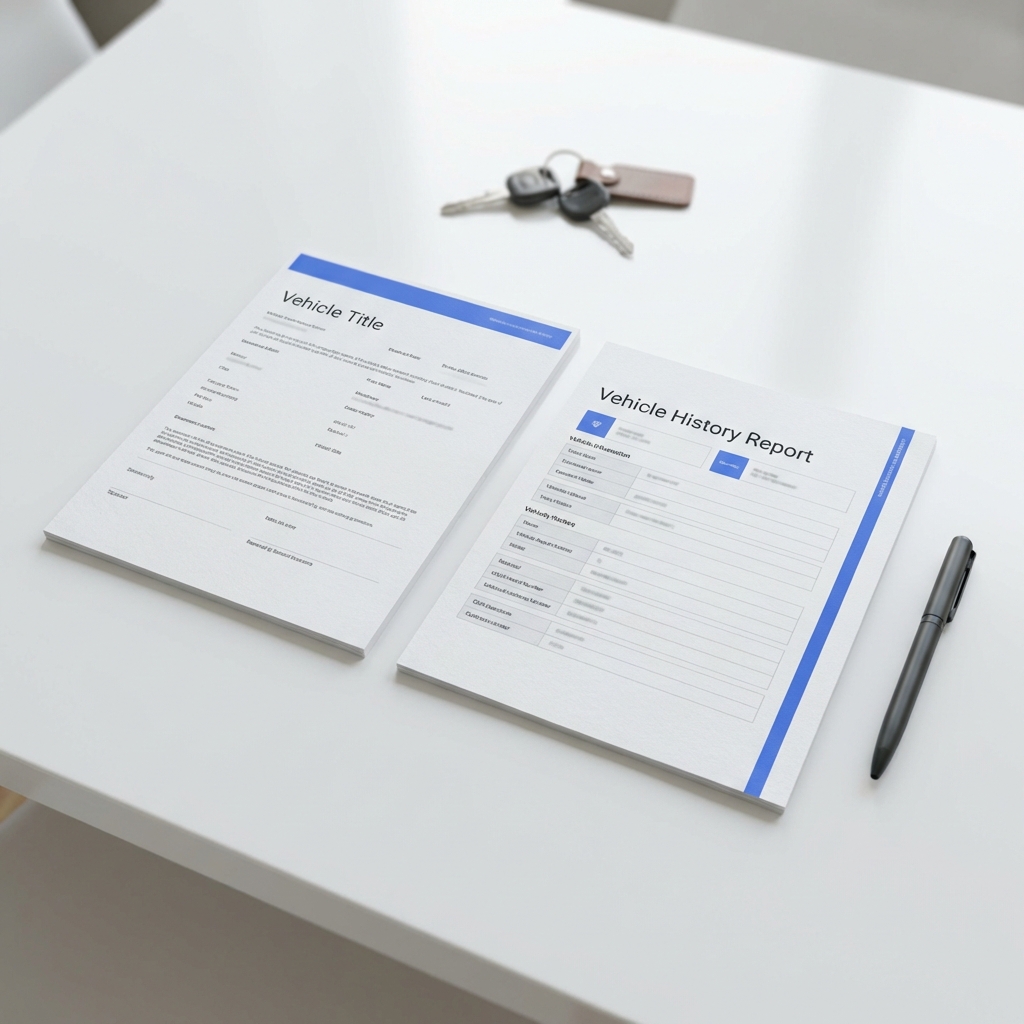
Before you contact a seller or place a bid, order a vehicle history report, verify the title status, and review any disclosure of salvage or branded title. A vehicle history report can reveal accident history, ownership history, service entries, mileage checks, and title status, which are central to deciding whether to pursue a repo car.
Check for open liens or a branded title and read the seller's disclosure carefully. If the listing does not clearly show title status, ask the seller to provide official title documentation or a lien release before spending time on a test drive or financing application.
Run a vehicle history check before you call the seller
Order a vehicle history report before you call the seller so you know the car's title status and reported history.
When a vehicle description mentions a repo, ask how and when the lender sold the car. Request the auction invoice or bill of sale if available. Those documents help you confirm whether the sale transferred clear title and whether any deficiency balance or lien was addressed.
Make a habit of matching the vehicle identification number to the history report and title. Small mismatches in VIN, model year, or odometer readings are immediate red flags and should be resolved before you invest more time.
Practical evaluation framework: step by step checklist for repo cars
Use a repeatable checklist for each repo car you consider. Start with a vehicle history report, then verify title status, review pricing context, and schedule an inspection. A clear routine reduces the chance of missing legal or mechanical issues.
Structured steps to verify a repo vehicle before purchase
Use the history report to confirm VIN and title data
Begin by ordering a vehicle history report and reading specific fields: accident history, ownership history, service history, mileage checks, and title status. Those fields are the minimum you need to assess whether a listing matches the vehicle's documented past and whether title issues exist.
Use price analysis labels or local pricing insights to see if the listing fits local market context. A significantly low price can be a warning signal, but a fair price combined with clean title and documented service history can still be a workable option.
Confirm dealer transparency signals such as reviews, ratings, and dealer profile information before you visit. A dealer that provides clear documentation and answers about auction origin or lien releases reduces uncertainty.
For the inspection and the test drive, verify odometer accuracy, look for unreported damage, and check for signs of poor repair. If the vehicle will be financed, confirm the lender will accept the title brand and condition, since some lenders restrict financing on branded titles.
Financing options and rebuilding credit after a repossession
When evaluating financing offers, calculate the total cost across interest, fees, and any balloon payments or add-on services. A lower monthly payment does not always mean a lower total cost to own. Ask lenders for amortization schedules and for any repossession remedies that remain in the contract.
A repossession can remain on a consumer credit report for up to seven years and tends to lower credit scores, affecting financing terms and how lenders evaluate applications. Expect to provide a larger down payment, seek a co-signer, or accept higher interest rates when applying for conventional financing after a repossession Equifax explanation.
Traditional lenders may still consider applicants with a prior repossession, but the terms often change. Many buyers who have a repossession on record gain access to auto loans sooner by offering more cash up front or by using a co-signer who has stronger credit, though those approaches increase immediate cost or shared responsibility Experian guide.
Alternative finance channels, such as buy-here-pay-here dealers and specialty subprime lenders, sometimes provide credit access to buyers with recent repossessions, but those loans generally carry higher rates and fees and require careful contract review. Compare the total cost to own across offers and read payment and repossession clauses closely before signing Bankrate overview.
Rebuilding credit after repossession focuses on resolving deficiency balances when possible, establishing a record of on-time payments on new or existing accounts, and monitoring credit reports to track progress. Recovery timelines vary, but consistent positive activity tends to improve scores over time TransUnion guidance.
When evaluating financing offers, calculate the total cost across interest, fees, and any balloon payments or add-on services. A lower monthly payment does not always mean a lower total cost to own. Ask lenders for amortization schedules and for any repossession remedies that remain in the contract.
If you are rebuilding credit, start with accounts that report on-time payments and consider secured credit or a co-signed credit-building loan. Over time, steady payments and lower credit utilization can expand access to better auto loan terms.
Common mistakes and red flags when shopping repo cars
Failing to order a vehicle history report or to confirm title status is one of the most costly mistakes buyers make. Without a clear report you cannot verify ownership history, title brand, or accident records, and you may inherit problems that increase repair or registration cost CFPB guidance.
Assuming an auction or dealer sale cleared all lender claims is risky. Always confirm the title record with the state agency and request a lien release if a lender was involved. Some listings omit this step, which can leave a buyer exposed to legal or financial claims later.
Overlooking special finance terms that raise total cost is common when buyers focus only on monthly payment. Watch for prepaid arrears, mandatory add-ons, high fees for late payment, and clauses that could accelerate repossession in case of default. Read the contract and have it reviewed when in doubt Bankrate overview.
Buying purely on price without inspection opens you to hidden repair costs. Repo inventory can hide prior damage or inconsistent service history; an inspection by a trusted mechanic reduces that risk and helps you compare repair estimates with the listing price.
Practical scenarios: three buyer stories and how to handle each
Scenario A: buying from a dealer listing
Situation: A dealer lists a repo car with a clean title in their online inventory. First steps: order the vehicle history report, confirm the VIN and service entries, and ask the dealer for documentation showing the vehicle cleared any liens. If the vehicle history report shows a clean title and reasonable service history, schedule an independent inspection and get written sale terms before discussing financing.
Questions to ask the dealer include whether the dealer bought the car at auction, whether the auction paperwork included a lien release, and whether the dealer will provide a written statement of title status. If financing is required, compare the dealer offer to at least two outside lenders.
Scenario B: bidding at an auction
Situation: You plan to bid on a repo vehicle at a public or dealer auction. Auctions often sell vehicles as-is and may provide minimal documentation. Before bidding, pull a vehicle history report, verify the VIN, and confirm whether the auction provides a clear title or simply a bill of sale. If title transfer is uncertain, consider whether you can register and insure the car in your state.
Because auction vehicles usually come with fewer post-sale protections, determine your maximum bid based on repair estimates and potential title issues. If the vehicle needs significant work or if title is unclear, walking away is often the prudent choice.
Scenario C: buying through a special finance dealer
Situation: A special finance dealer offers in-house financing to buyers with recent repossessions. These dealers may approve buyers that conventional lenders would not, but their terms usually include higher rates and fees. Ask for an itemized cost breakdown and check whether the lender reports payment history to the major credit bureaus, which helps rebuild credit when payments are made on time.
If you choose this path, confirm the total cost to own and compare it with alternative options such as a larger down payment to a conventional lender or waiting to improve credit. Consider whether the immediate access to a vehicle outweighs the higher long-term cost.
Conclusion: next steps and a short buyer checklist
Before you make an offer on any repo car, order a vehicle history report, confirm the title and lien status, and verify the VIN. Use price analysis labels to check whether the listing fits local market context, and get an independent inspection when possible Experian guide.
If you plan to finance, be ready to show a larger down payment or a co-signer, and compare total cost across offers. Work on rebuilding credit by resolving deficiency balances when possible and by making on-time payments on accounts that report to the credit bureaus TransUnion guidance.
Quick buyer checklist: order the vehicle history report, confirm title and lien status, inspect the car, compare financing total costs, and keep documentation of everything you are told in writing. Rules and timelines vary by state and lender, so confirm legal details for the specific vehicle before you commit.
A repossession can remain on a credit report for up to seven years, which can affect loan access and terms during that period.
Many lenders will consider applicants after a repossession, but expect higher rates, larger down payments, or the need for a co-signer; special finance dealers are another option but usually cost more.
Order a vehicle history report, confirm the VIN and title status, and schedule an independent inspection before making an offer or applying for financing.
Buying a repossessed car is possible for many buyers, but it requires careful verification of title and history, clear documentation from the seller, and attention to financing terms. Use a consistent checklist and verify legal details for the specific vehicle in your state before you commit.
If you are rebuilding credit, prioritize on-time payments and resolving outstanding balances where possible, and compare total cost across financing options to make the best long term choice.


 Blog
Blog