Many buyers wonder whether repossessed cars for sale are riskier than other used vehicles. This guide explains common auction origins, the checks to run with national systems, and a step-by-step checklist to decide if auction-origin cars make sense for you. It emphasizes VIN and title checks alongside inspections and local price comparisons.
A rav4 used for sale can be a sensible pick for many research-oriented buyers because reliability aggregators rate the model above average and safety ratings are generally strong. This guide explains how to vet listings, what model years tend to be better, and a step-by-step checklist to reduce risk before you buy.
This guide explains how to estimate the cost of buying an R34 Skyline, with attention to import rules, condition-driven price tiers and landed cost. It shows which factors move value, how to verify history and paperwork, and offers a checklist you can follow when you search for a nissan skyline r34 for sale.
This guide helps buyers set realistic expectations for tacoma trucks for sale by explaining the main price drivers and a repeatable method to build conservative, typical, and ambitious offer ranges. It shows how the 2024 redesign, valuation guides, and vehicle history reports interact to change asking prices and reduce purchase risk.
Many buyers see an auction tag and ask whether that car is a red flag. Auction-origin vehicles come from different sources, and each source implies a different set of records to check. This article breaks down common auction paths, the specific checks that matter, and a step-by-step checklist to use before you bid or contact a dealer.
The goal is practical: give research-oriented buyers and first-time shoppers a clear workflow to reduce surprises. Emphasis is on VIN and title checks, recalls lookup, an independent inspection, and local price benchmarking so you can decide with evidence rather than assumption.
Auction origin signals the need for targeted VIN and title checks, not automatic rejection.
Use NMVTIS, NICB VINCheck, and NHTSA recalls alongside an independent inspection.
Compare auction pricing to local retail and wholesale benchmarks before deciding.
Why it matters if a car came from an auction
Cars sold at auction can arrive in consumer markets for many reasons, and that background matters because it often changes what records you should check before buying. For research-oriented buyers, spotting an auction origin is a prompt to run focused checks, because auction channels commonly include repossessions, fleet retirements, insurer dispositions, and dealer wholesale flows, each of which carries distinct information needs Consumer Reports overview of auction sources.
Auction origin alone is not definitive proof of severe problems, but it is a signal to increase verification. In many cases the car was resold after routine fleet use or as a trade-in; in others the vehicle came to auction after lender repossession or an insurer disposition, and those situations tend to produce different records and disclosure levels Manheim market reports on auction flows.
What 'auction origin' can mean for a used car
When a listing traces back to an auction, that can mean anything from a low-risk fleet retirement to a repossession with limited service history. Identifying the likely source helps set priorities for checks: title branding matters most with insurer dispositions, while service records and wear patterns matter more with fleet returns Consumer Reports overview of auction sources.
Which auction channels commonly feed consumer listings
Auction channels that feed dealer lots and online listings include lender repossessions, off-lease and fleet returns, insurer total-loss dispositions that later re-enter the market, and dealer wholesale movements. Recognizing which channel likely supplied a particular car helps you interpret the vehicle history report and inspection findings Manheim market reports on auction flows.
How cars end up at auction: a quick framework
Understanding the main paths into auctions gives a practical way to judge risk. Lender repossessions often go to wholesale auction to recover balance, lease and fleet returns come with predictable wear patterns, insurers dispose of total-loss vehicles through salvage channels, and dealers move trade-ins through auctions when retail sale is not feasible Consumer Reports on auction paths.
Each origin implies different likely issues. Repossessions may lack full service records, fleet vehicles can have high but consistent mileage with scheduled maintenance, and insurer total-loss cars may carry title brands that affect future resale; knowing this narrows which records and inspections to prioritize Manheim market reports on auction implications.
Check the car's history before you bid
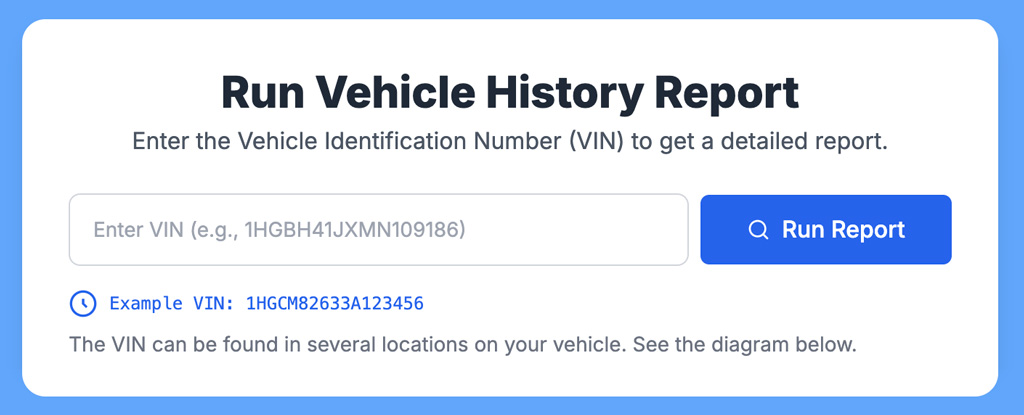
Before you bid, consider running a vehicle history report to confirm title and recall status.
Auctions remain a major distribution channel for used vehicles, and that scale affects pricing signals in local markets. A noticeable discount in a listing that traces to auction stock can reflect faster resale or wholesale pricing pressures rather than a direct indicator of safety or reliability Manheim market reports on auction pricing.
Repossession and lender disposition
Lenders typically move repossessed vehicles through auction to recover outstanding debt; these cars often arrive with gaps in documented maintenance or with ownership transfers that deserve careful title checks Consumer Reports on repossessions.
Lease and fleet retirements
Off-lease and fleet returns commonly enter auctions with regular service records and predictable wear, but they can also show high mileage and nonstandard wear patterns that matter for total cost to own and inspection priorities Manheim on fleet and lease flows.
Insurer total-loss and salvage flow
When insurers declare a vehicle a total loss, it often receives a title brand such as salvage or rebuilt that affects future registration and resale; tracking these branding records is essential before buying an auction-origin vehicle NMVTIS information on title branding.
Dealer trade-ins and wholesale movements
Dealers also use auctions to move trade-ins or to dispose of vehicles that do not fit retail inventory; disclosure can vary, so treat dealer-sourced auction inventory as requiring the same checks as other auction-origin cars Consumer Reports on dealer wholesale.
Key checks to run before you consider a repossessed car for sale
Start with national and secondary title systems to confirm whether the vehicle ever received a salvage, rebuilt, or total-loss brand; NMVTIS is the primary national system used for this purpose and should be part of every pre-purchase workflow for auction-origin cars NMVTIS guidance and checks.
Use the NICB VINCheck tool as a second screen for reported theft and salvage indicators, and run a federal recalls search to check unresolved safety actions listed by regulators NICB VINCheck information.
Quick online check workflow for NMVTIS NICB and NHTSA checks
Use exact VIN when available
State title databases and reporting gaps matter: state-by-state branding rules vary, and incomplete reporting in some jurisdictions means missing data should be treated as an information gap rather than a clean bill of health NMVTIS guidance on state reporting.
NMVTIS and state title checks
NMVTIS aggregates title-brand information to help identify salvage, rebuilt, and total-loss titles; checking it early reduces the chance of surprise branding that limits registration or resale options NMVTIS official site.
NICB VINCheck and salvage indicators
The NICB VINCheck database provides a complementary check for reported salvage and theft history; using both NMVTIS and NICB together gives a broader view than either alone NICB VINCheck page.
Recalls and safety defect lookups
Run an NHTSA recalls search to confirm any unresolved safety recalls before purchase, because recall status is independent of title branding and can affect immediate repair needs NHTSA vehicle recalls.
What to look for in a vehicle history report for auction cars
Vehicle history reports consolidate key records: title status, accident and damage history, ownership changes, and mileage checks are the primary fields to review when a car was sold at auction FTC guidance on vehicle history reports.
Pay special attention to title status and any rebuilt or salvage brands, then cross-check accident reports and gaps in service history that may indicate undisclosed repairs NMVTIS on title brands.
Auction origin is a signal to run thorough VIN, title, recall, and inspection checks rather than an automatic red flag; whether it matters depends on title branding, records, inspection findings, and local pricing context.
Ownership history and odometer records can reveal anomalies such as multiple rapid ownership changes or mileage inconsistencies; if you see those, treat the car as higher risk and order an inspection NICB VINCheck guidance.
Title status and salvage/rebuilt brands
A clear indication of elevated risk is a salvage or rebuilt title, or inconsistent branding records across state filings; that status often changes registration options and resale value and should drive a conservative decision process NMVTIS title guidance.
Accident and service history signals
Look for repeated or severe accident records and for service history gaps that make it hard to confirm major repairs were done properly; absence of records is an information gap, not proof of no damage FTC on checking service history.
Odometer and ownership history anomalies
Watch for odd ownership patterns and mileage jumps that suggest odometer issues or unreported repairs; VIN-based mileage checks and state title histories help identify these anomalies NICB VINCheck.
Independent inspection and red-flag signs in a physical check
No vehicle history report replaces an independent mechanical inspection, especially for auction-origin cars; a licensed inspector should confirm structural integrity, engine health, and signs of major repair work FTC guidance on inspections.
Auctions and wholesale channels can produce limited disclosure, so an inspection protects against hidden damage and establishes repair cost estimates you can use when negotiating price Consumer Reports on auction disclosures.
What an independent mechanic should inspect
Ask a mechanic to focus on frame and suspension signs of collision repair, evidence of structural welding, engine compression or leak tests, and a road test to check drivability. These checks help identify repairs that might not be obvious from photos or a history report FTC on inspections.
Common hidden-damage indicators at auctions
Look for uneven panel gaps, mismatched paint, overspray in hidden areas, poorly aligned doors, and signs of recent seam welding; together these physical clues often indicate earlier collision repair that should match the vehicle history report and title branding Consumer Reports on inspecting auction cars.
Pricing context: when a lower auction price might compensate for risk
A lower auction price can make sense when the expected repair and inspection costs plus the adjusted resale value still leave room for a fair total cost to own. Use local retail and wholesale benchmarks to decide whether the discount compensates for the uncertainty Manheim market insights on pricing.
Auction channels can depress short-term resale values for some models and regions, so factor in likely resale impact when you calculate maximum willingness to pay; the effect varies by make, model, and local demand Manheim on auction price effects.
Using local market benchmarks
Compare the auction listing to nearby retail prices and to wholesale figures to estimate what a typical buyer would pay after necessary repairs. This step helps convert a headline auction discount into a defensible offer or a reason to walk away Manheim local pricing guidance.
How auction channels affect short-term resale values
Vehicles that move through auction channels sometimes face faster depreciation in local retail channels; consider the model's demand and whether a rebuilt or salvage title will further reduce resale options Manheim research on resale patterns.
Price analysis labels and interpreting discounts
Price labels that compare against local context can be helpful, but make sure any discount you see accounts for inspection and potential repairs; conservative assumptions guard against overpaying for an auction-origin car FTC on comparing prices.
Common mistakes buyers make with auction-origin and repossessed cars
One frequent error is skipping VIN and title checks; failing to run NMVTIS and NICB checks leaves buyers vulnerable to hidden branding and theft records that would otherwise be caught early NMVTIS advisory.
Another mistake is trusting seller-only disclosures without an independent inspection; auction-origin cars often have limited paper trails, so relying solely on seller statements increases risk FTC advice on inspections and disclosures.
Skipping VIN/title checks
Not checking national title and salvage systems is a common and avoidable mistake; those checks often reveal branding that materially changes your decision calculus NMVTIS official site.
Trusting seller-only disclosures
Seller disclosures can be incomplete for auction-sourced stock; use independent records and inspections to corroborate what the seller says FTC on seller disclosures.
Assuming low price means good value
Low price is not automatically good value if it hides title, safety, or structural issues; always roll inspection and probable repairs into your total-cost estimate before deciding Manheim on auction discounts.
A step-by-step pre-purchase checklist for auction and repossessed cars
Follow this sequence: obtain a vehicle history report, verify NMVTIS/NICB records, run an NHTSA recall search, arrange an independent inspection, and compare local market prices to set a maximum bid or offer NMVTIS guidance.
Document what you find and use it to set a conservative maximum purchase price that includes inspection and likely repairs; this creates a defensible negotiation position or a clear reason to walk away FTC guidance on documenting checks.
Arrange an independent inspection before finalizing a bid and compare the post-repair retail expectation against local market prices; include service and potential parts costs in your decision math Manheim on pricing context.
Decision step: buy, negotiate, or walk away
Use clear stop conditions: unresolved salvage or rebuilt title without transparent repair history, outstanding safety recalls without documentation, or an inspection showing structural damage should push you toward walking away or demanding a significant price concession NMVTIS title guidance.
CarFax Deals can serve as a verification layer and pricing context to help you compare listings faster, used conditionally alongside NMVTIS and inspection findings rather than as a sole source of truth.
Practical scenarios: short examples to apply the checklist
Scenario: a repo car with limited service records. If the history report shows rapid ownership changes and sparse service entries, prioritize NMVTIS and NICB checks and an inspection focused on drivetrain and evidence of deferred maintenance NICB VINCheck.
Scenario: an insurer-repaired total-loss with a rebuilt title. A rebuilt title requires careful verification that repairs were documented and that state records show the rebuilt status correctly; a mechanical and structural inspection plus title verification should be non-negotiable NMVTIS title information.
Scenario: a fleet return with high-mileage wear. Fleet cars often have predictable service patterns, so focus inspections on wear items and confirm scheduled maintenance entries in the vehicle history report to estimate near-term maintenance needs Manheim on fleet returns.
Decision framework: should you buy a repossessed car for sale?
Weigh price, inspection findings, and title history. If the combined cost of purchase, inspection, repairs, and expected resale still leaves an acceptable margin compared with local retail benchmarks, the car can be a reasonable buy; otherwise, walk away Manheim pricing guidance.
Stop conditions include salvage or rebuilt title without transparent repair records, unresolved safety recalls, and inspection evidence of structural damage; treat missing data as a gap that requires more verification rather than evidence of good condition NMVTIS guidance.
References and tools
NMVTIS is a national title database that aggregates title-brand information to reveal salvage, rebuilt, and total-loss records, helping buyers detect branding that can affect registration and resale.
Not necessarily; repossessed cars can be fine if checks show clean title history, no unresolved recalls, and an independent inspection finds no structural damage, but they often need extra verification.
Run a VIN-based vehicle history report and an NHTSA recalls search, then order an independent inspection if anything looks uncertain.
Buying a vehicle that once passed through an auction can be a reasonable choice when you follow a disciplined process: confirm title and recall status, get an inspection, and compare prices with local context. Treat missing or incomplete records as a gap to fill, not proof of a clean condition.
Use the checklist and decision steps in this guide to form a clear maximum purchase price and stop conditions so you can act confidently or walk away when the risks outweigh the potential savings.

 Blog
Blog