How to purchase a repo car? A practical guide to repossessed cars for sale
This guide explains how to purchase repossessed cars for sale, with a focus on pre-bid checks, budgeting for as-is purchases, and auction logistics. It shows which records to check, how to estimate repair risk, and where a verification layer can help reduce uncertainty. Use the steps here to prepare before you register or bid.
A step-by-step workflow for estimating a truck's market value that centers on comparing consumer valuation tools, adjusting for mileage and condition, and checking wholesale market signals. The guide explains private-party, trade-in and dealer retail values and shows how a vehicle history report and pricing insights can change an asking price.
This guide helps research oriented buyers evaluate suv used cars for sale under $25,000 by combining safety ratings, reliability data, local pricing context, and vehicle history checks. It outlines a simple framework, a pre visit checklist, and a decision scoring worksheet so you can compare finalists before contacting a dealer. Use the steps here to narrow candidates and confirm risk signals with a vehicle history report and a pre purchase inspection.
When searching suv used cars for sale, prioritize model year, trim and powertrain before choosing a make or model. This guide explains how safety ratings, dependability studies and local pricing insights combine to produce a short list you can verify with a vehicle history report. It also provides a stepwise checklist you can use before contacting a dealer.
Buying a repossessed vehicle can offer pricing opportunities but also brings specific risks. This guide walks research-oriented buyers through the lifecycle of repo sales, where to find inventory, the essential checks to run before you bid, and how to budget for as-is purchases.
Use the steps here to decide whether a repo listing matches your tolerance for risk and to prepare the records and funds you will need for a safe purchase.
Repos are commonly sold as-is through lender auctions, bank remarketing, and major online auction platforms.
Always obtain a vehicle history report and confirm title status before bidding on a repo vehicle.
Plan for buyer fees, taxes, transport, and a repair contingency when you calculate your maximum bid.
What repossessed cars are and why they end up for sale
A repossessed vehicle is one taken back by a lender after the borrower falls behind on payments and the lender moves to recover its asset. These vehicles are typically remarketed quickly and commonly sold strictly as-is, meaning the seller offers little or no warranty and limited disclosure about condition.
Sellers in these situations are often banks, credit unions, or finance companies that use dealer or lender remarketing channels to recover value. Because the priority for the seller is to recoup losses rather than to provide a retail buying experience, many listings do not include full service or repair records and are sold with condensed descriptions to speed the sale. This usually leaves buyers to rely on inspection and record checks to learn about prior damage and maintenance.
Run a VIN vehicle history report, confirm title and lien status, arrange an inspection when possible, factor buyer fees and likely repairs into a maximum out-the-door price, and register as required by the auction before bidding.
Understanding that repossessed cars are sold as-is helps explain why buyers need to verify title and service records before committing to a purchase. That verification can reduce surprises but will not change the fact that many repo listings come with limited post-sale recourse.
Definition and common sources
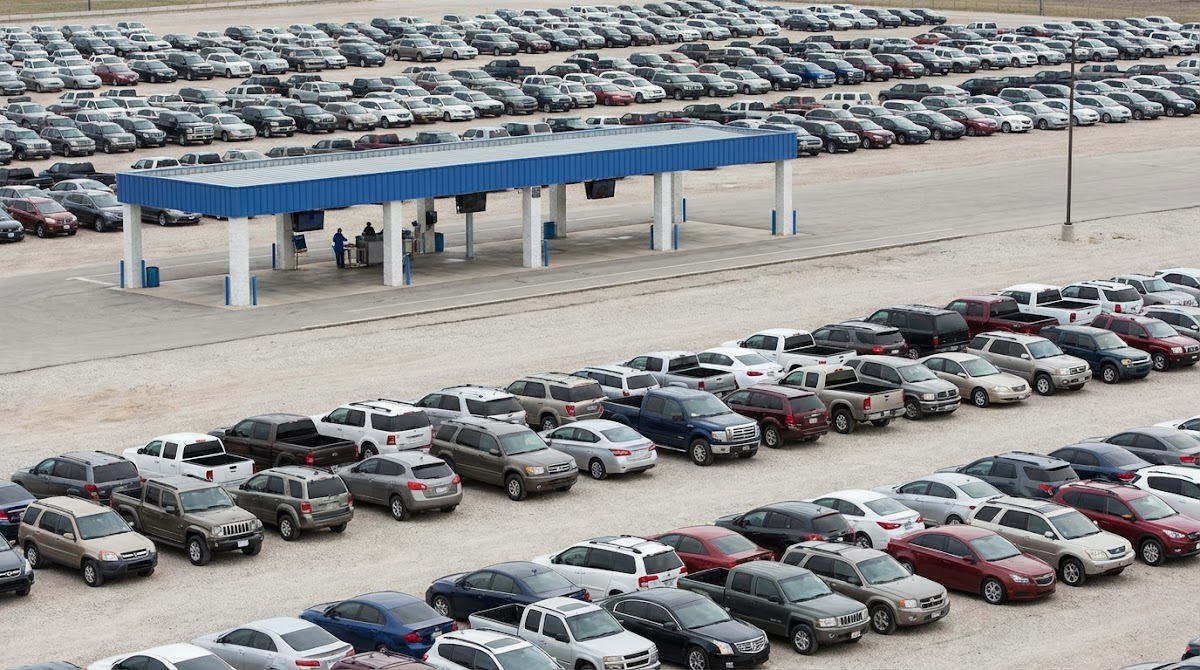
Common sources for repossessed vehicles include lender auctions run for finance companies, bank remarketing channels operated by the bank or credit union, and large online auction platforms that list repossessed and salvage inventory. These channels tend to move inventory quickly and to offer vehicles with minimal seller guarantees, which affects how buyers should prepare to evaluate and budget for a purchase.
Why lenders remarket repossessed vehicles
Lenders typically remarket repossessed vehicles to recover outstanding loan balances and reduce holding costs. That process can involve multiple remarketing steps: internal resale, dealer remarketing lots, and public or dealer-specific auctions. Because the seller is focused on recovery, disclosures may be limited and sales are frequently described as as-is to limit post-sale obligations.
When you think about how to buy a repo car, start from the assumption that the listing will not include full repair warranties and that title or lien questions may require additional verification.
Where to find repossessed cars for sale: auctions, dealers, and online platforms
Types of auction platforms and dealer channels, repossessed cars for sale
Repossessed vehicles are primarily sold through lender or dealer auctions, bank remarketing channels, and major online auction platforms. These venues can be open to dealers, open to the public, or a mix depending on the site and the seller, so check the venue rules before you plan to bid NAAA auto auctions and consider platform-specific rules such as those published by Copart for deposits and bidding.
Registration levels vary by venue. Many auctions require buyer registration with an ID, a deposit or earnest money to gain bidding access, and adherence to their payment windows if you win. Understanding these administrative steps ahead of time avoids being disqualified after a successful bid. See public sale guidance for venue registration rules and buyer requirements (public sale guide).
Compare auction listings and view seller requirements, including fees and title notes
Use this to filter listings that show title disclosure
Online auction platforms often show limited photos and abbreviated descriptions. Some platforms permit inspection or provide a third-party inspection report, while others clearly state vehicles are sold as-is with buyer responsibility to arrange transport and title transfer. If a listing does not permit inspection, treat it as higher risk and build that into your bid strategy.
What to expect from listing detail and seller tools
Expect that many repo listings will include basic details such as make, model, year, mileage, and a short condition note, but do not assume the listing covers every concern. Where available, seller tools may show title status or brief remarks about damage, but these are not a replacement for a full vehicle history report or an inspection. Use available seller tools to identify listings that merit deeper checks.
Essential pre-bid checks: vehicle history report, title status, and liens
Before you register or place a bid, obtain a vehicle history report and confirm title status. The report helps you find accident history, ownership history, service history, and mileage checks that materially affect risk. Checking title status for salvage or branded designations and for open liens is especially important when buying repossessed cars for sale, because those factors influence the cost and feasibility of registering the vehicle FTC shopping for a used car.
Run the VIN through a reputable vehicle history service early in your research so you have a record to compare with auction or dealer notes. A VIN report does not guarantee condition, but it does surface many of the relevant risk signals that should change how you bid. See CarFax Deals VIN report for one example VIN report.
Confirming title status can reveal salvage or brand notations and open liens that might block a clean transfer of ownership. If the report shows a salvage brand or a recorded lien, follow up with the seller or lienholder to clarify whether the title can be cleared and what steps are required to complete a transfer.
What to check on a VIN or vehicle history report
On a VIN report, look for accident history entries, ownership history such as multiple owners in a short period, service history entries that indicate regular maintenance, and any mileage inconsistencies. These items are the most useful early indicators of repair risk and valuation adjustments. Use that information to decide whether to pursue inspection or to set a lower walk-away price. Consider using a VIN decoder to help interpret entries VIN decoder.
How to confirm salvage, branded titles, and liens
Title and lien checks often require cross-checking the vehicle history report with the state title system or by contacting the listed lienholder. If a title is branded as salvage, rebuilt, or otherwise branded, factor title-clearing costs and potential restrictions on registration into your maximum bid. When a vehicle has an open lien, the lender may need to be paid off to clear title, which can complicate or delay transfer.
Inspections, repairs, and budgeting for as-is purchases
Where allowed, arrange a pre-purchase mechanical inspection. An inspection focused on major systems such as powertrain, brakes, suspension, and structural integrity gives a stronger basis for estimating repair costs and deciding how much to bid. If the auction or seller allows a local inspector or a third-party vendor, plan the inspection before bidding when feasible IAA buying guide.
If inspection is not possible, build a larger repair contingency into your budget. That contingency should reflect the service history, any visible damage, and the typical cost to address likely issues for the model year and powertrain you are considering. When you cannot inspect, assume more unknowns and reduce your target bid accordingly.
Common repair categories after a repo purchase include brakes and rotors, tires, routine engine or transmission services, electrical issues, and in some cases body or frame repairs if the vehicle has a reported accident history. Prioritize inspection items that would materially affect safety or the ability to register the vehicle in your state.
When to arrange a mechanical inspection
Arrange a mechanical inspection when the auction or seller permits it and when the vehicle is accessible locally. Use a mechanic familiar with the make and model, and ask for a written list of recommended repairs and estimated costs. That written estimate can be used to adjust your maximum bid or to negotiate with a dealer channel when a repo is sold through a retail lot.
Estimating likely repairs when inspection is not possible
If you cannot inspect, use the vehicle history report, photos, and any available seller notes to identify probable repair areas, then add a contingency that covers parts and labor plus a margin for unknowns. This is not exact science, but a conservative contingency prevents the hammer price from turning into a much larger net cost after fees, transport, and repairs.
Auction logistics: registration, deposits, fees, and financing
Auctions commonly require pre-registration, an upfront deposit or earnest money, and strict payment windows for winning bidders. Registration may require identity verification and proof of funds, and different venues have different deposit rules, so confirm these steps before you register to avoid winning a car you cannot complete payment for NAAA auto auctions.
Buyer fees and taxes add to the hammer price. Typical auction venues include buyer fees calculated as a percentage or a flat fee, and state or local sales taxes and title fees may apply when you register the vehicle. Transport and storage charges can also be meaningful if you do not pick up the vehicle promptly.
Registration and deposit requirements
Registration is often the first step and can be completed online or in person. Expect to show identification and to place an earnest deposit, which the auction holds until you complete payment or forfeit if you fail to pay. Some auctions require dealer credentials, while others are open to the public with the right documentation and deposit.
Buyer fees, taxes, and transport costs
Buyer fees may be a fixed amount or a sliding percentage. Add sales tax, title fees, and transport costs to your calculation before you commit to a maximum bid. If the vehicle requires storage after purchase, daily storage fees can quickly add to your total cost, so plan pickup or transport promptly.
Financing for auction purchases is often more limited than retail financing. Many lenders do not finance auction purchases, so buyers commonly use cash, a bank loan arranged for auction purchases, or auction-approved financing when available. Confirm acceptable payment methods with the auction and arrange pre-approval where possible to avoid last-minute problems.
How to evaluate value: pricing context, repair estimates, and decision criteria
Repos are often priced below retail value but local market conditions and repair and title-clearing costs determine whether a listing is truly a value. Compare pricing context against similar local listings and factor in repair estimates, buyer fees, transport, and taxes when calculating your maximum out-the-door price Edmunds repo car guide. For additional practical how-to guidance on buying repo cars, see industry write-ups on buying repossessed vehicles how to buy repo cars.
Use a decision checklist to set a walk-away price and a target bid before you view an auction. Your walk-away price equals the maximum out-the-door cost you will pay after fees and repairs. Stick to that limit to avoid overpaying in the heat of bidding, since repos are as-is and refunds are rare.
Comparing pricing insights to local market listings
Price analysis labels and local market context help you compare a repo listing to typical retail listings in your area. When a listing appears significantly below local retail, consider why that gap exists and whether title or repair risk explains the difference. Use that gap to decide whether the potential saving justifies the additional risk and likely post-sale costs.
Decision checklist: walk away price and target bid
Create a short checklist: confirm title status and VIN report, estimate repair and title-clearing costs, add buyer fees and taxes, and set a walk-away price. From that figure, determine a target bid that leaves room for last-minute bidding, and never exceed your walk-away price even if the auction feels competitive.
Common mistakes buyers make when purchasing repo cars
One common mistake is skipping a vehicle history report or failing to confirm title and lien status. Without these checks, buyers can unexpectedly inherit title brands or liens that complicate registration or lower resale value. Always run a VIN report and verify title details before bidding Consumer Financial Protection Bureau.
Another frequent error is underestimating buyer fees, taxes, transport, and likely repairs. A low hammer price can be misleading if buyer fees and post-sale costs push total outlay above comparable retail pricing. Treat the hammer price as just one component of the full purchase cost.
Skipping history checks or inspection
Failing to arrange an inspection, or relying solely on seller photos, increases the chance of buying a vehicle with hidden mechanical or structural issues. When inspection is not allowed, widen your repair contingency and be prepared to decline a bid if unknowns are too large.
Underestimating fees and title issues
Assuming a low price offsets title or salvage risks can be costly. A branded title or unresolved lien may reduce resale value dramatically and limit insurance options. Confirm the title path to registration before you buy to avoid an unpleasant and expensive surprise.
Practical walkthroughs: three buyer scenarios
Scenario A: Local auction with inspection allowed. You locate a repo at a local lender auction, run a VIN report, and schedule a pre-bid inspection. The inspector finds a need for new brakes and a minor suspension repair. You obtain a written estimate, subtract repair and fee costs from your maximum out-the-door price, and set a target bid accordingly. This approach reduces the risk of unexpected major repairs and gives a clear ceiling for bidding.
Scenario B: Online bid without inspection. You find a vehicle at an online auction that does not allow inspection. You run the VIN report and review photos. Because you cannot inspect, you increase your repair contingency substantially, factor in possible transport, and lower your target bid to reflect higher unknown risk. If the final hammer price plus estimated costs exceeds your walk-away price, you pass.
Scenario C: Dealer-sold repo with limited disclosures. A dealer lists a repossessed vehicle on a retail lot with some disclosures but no full service history. You run a VIN report, check the dealer profile, and, if allowed, have a mechanic inspect the car at the dealer lot. If the dealer will provide a short timeframe for returns or address a specific issue in writing, consider that in your bid, but remember many dealer channel sales are still as-is and may not include full warranty coverage.
Step-by-step checklist for buying a repossessed car
Pre-bid checklist: 1) Run a vehicle history report for the VIN, 2) Confirm title status and check for liens, 3) Arrange a mechanical inspection when allowed, 4) Estimate likely repairs and set a walk-away price, 5) Verify auction registration and deposit requirements.
At-auction and post-sale checklist: 1) Complete registration and deposit as required, 2) Monitor buyer fees and confirm total due, 3) Arrange payment and transport promptly after purchase, 4) Transfer title and register at the DMV as required by your state, 5) Schedule repairs and retain all receipts for resale or warranty follow-up if any dealer promises were made in writing.
Next steps and where a verification layer like CarFax Deals fits
Vehicle history reports and pricing insights can help you compare local listings and spot risk signals such as multiple owners, reported accidents, and branded titles. Using these verification layers early lets you prioritize listings that merit inspection or closer review and reduces time spent on high risk inventory Edmunds repo car guide.
CarFax Deals can act as a verification layer to surface vehicle history reports that may include accident history, ownership history, service history, mileage checks, and title status alongside price analysis labels and dealer transparency signals. Use the platform as part of due diligence; see how to use the site for verification how to use. CarFax Deals can help you prioritize listings but it cannot guarantee condition or title clearing, so follow up with inspections and official title checks.
Most repo cars are sold as-is with limited or no warranty from the seller. Buyers should plan for repairs and limited post-sale recourse.
Financing for auction purchases is often more restricted than retail financing. Many buyers arrange cash or auction-approved financing and then complete title transfer through the DMV.
Yes. A vehicle history report helps confirm title status, accident and ownership history, and can reveal liens that affect your ability to register the vehicle.
Repossessed cars for sale require careful verification and budgeting. Treat vehicle history reports and inspection findings as part of a broader due diligence routine and use pricing context to decide whether the potential savings justify the risk.
When in doubt, pause and confirm title and lien status before you bid. A cautious approach reduces the chance of unexpected fees or repair costs.

 Blog
Blog