This guide outlines common disadvantages and trade-offs of the Toyota Hilux and what used car buyers should check on listings. It highlights diesel-specific maintenance risks, the vehicle's firmer ride and simpler interior, and region-dependent availability and parts supply. Use targeted checks on service history, VIN-level reports, and local pricing context before contacting a dealer.
A step-by-step workflow for estimating a truck's market value that centers on comparing consumer valuation tools, adjusting for mileage and condition, and checking wholesale market signals. The guide explains private-party, trade-in and dealer retail values and shows how a vehicle history report and pricing insights can change an asking price.
This guide helps research oriented buyers evaluate suv used cars for sale under $25,000 by combining safety ratings, reliability data, local pricing context, and vehicle history checks. It outlines a simple framework, a pre visit checklist, and a decision scoring worksheet so you can compare finalists before contacting a dealer. Use the steps here to narrow candidates and confirm risk signals with a vehicle history report and a pre purchase inspection.
When searching suv used cars for sale, prioritize model year, trim and powertrain before choosing a make or model. This guide explains how safety ratings, dependability studies and local pricing insights combine to produce a short list you can verify with a vehicle history report. It also provides a stepwise checklist you can use before contacting a dealer.
The Toyota Hilux is widely known as a durable, work-focused pickup with a reputation for long service life when maintained. This article examines the realistic disadvantages buyers should weigh when considering a used Hilux, especially across diesel and petrol powertrains.
We focus on practical checks you can run on listings and the specific trade-offs that affect ownership cost and daily comfort. Use these steps to reduce uncertainty before you contact a dealer.
Diesel Hilux models can require more specialist servicing for emissions hardware and turbochargers, particularly on high-mileage work trucks.
The Hilux prioritises durability and payload capacity, which tends to give a firmer ride and simpler interior than passenger-focused pickups.
Regional trim and parts supply differences mean you should check local dealer support and VIN-level recall history before buying.
What the Toyota Hilux is and who typically buys it
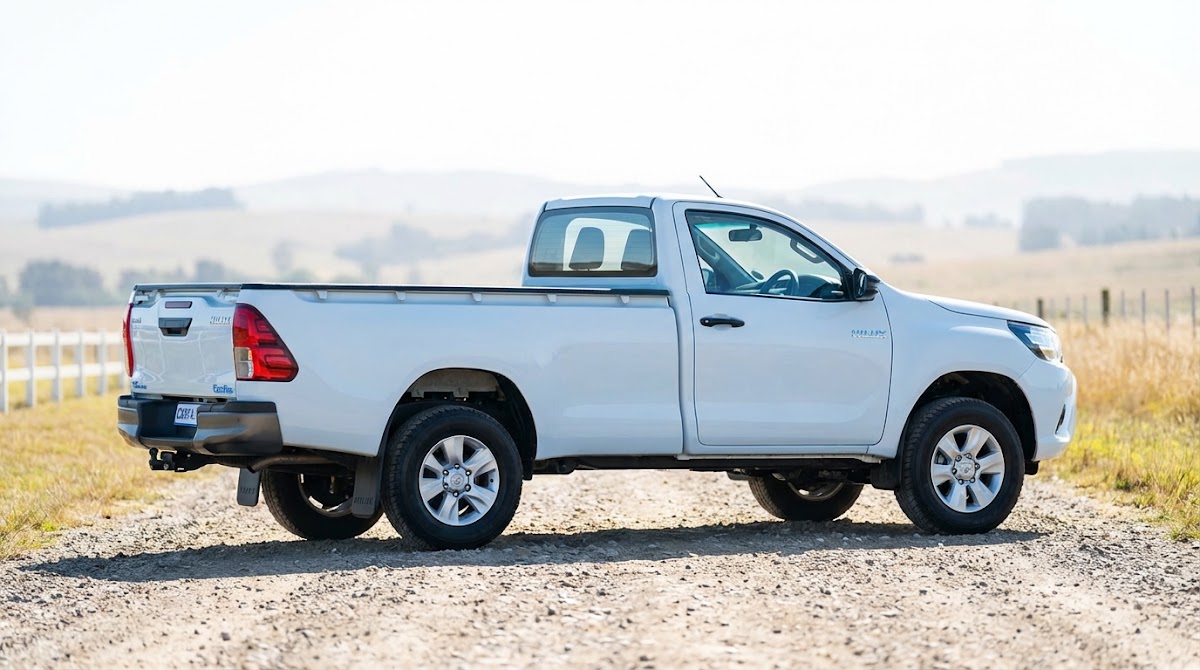
The Toyota Hilux is a globally marketed, ladder-frame pickup known for durability and load-carrying capability; many shoppers searching for a toyota hilux for sale expect a vehicle built for work and rough use rather than a passenger-car feel, and Toyota's global model overview documents its regional focus outside North America Toyota Global model overview.
The principal disadvantages to consider are diesel emissions-system and turbo risks on high-mileage work trucks, a firmer ride and simpler interior caused by chassis tuning for durability, and regional differences in trims and parts availability that affect repair times and running costs.
Buyers commonly choose the Hilux when they need a rugged chassis for towing, frequent off-road driving, or commercial payloads; trims and equipment vary by market, so the exact specification a buyer sees on a listing depends on model year and regional availability Auto Express Hilux ride and interior assessment.
How buyers commonly use the Hilux and what that implies for wear
Model positioning and global availability
Many Hilux owners use the truck for work, including trades, farm duties, and fleet service, where high daily mileage, towing and heavy loads accelerate wear and expose systems that are less likely to fail on lightly used passenger trucks. When those systems fail, the timing and type of failure are often linked to how the vehicle was used rather than to an inherent flaw.
Typical buyer profiles and common uses, toyota hilux for sale
Common buyer types include commercial fleet managers, rural owners who need off-road capability, and buyers who prioritise a long-lived, simple powertrain for towing and load carrying; recreational off-roaders and buyers wanting a utility-first pickup also buy the Hilux. Each use profile changes which disadvantages matter most to the buyer, for example, a work truck will show different wear than a family vehicle.
Heavy-duty usage tends to increase the likelihood of high-mileage service items and emissions-related wear on diesel engines, so buyers of work-oriented Hiluxes should expect a different maintenance profile than those using the truck mainly for commuting.
Main mechanical and reliability concerns to watch (diesel focus)
Owners and technical reviews highlight recurring issues on diesel Hilux variants with emissions hardware and turbo systems, notably DPF and EGR faults and turbocharger wear on high-mileage trucks; these items appear more often on work trucks with heavy duty cycles Toyota Hilux review and ownership notes.
Turbocharger problems and emissions-system faults can be costly to diagnose and repair, and they are typically more common on diesels that spend a lot of time in low-load, short-trip use or high-load towing, both of which affect DPF regeneration and EGR operation.
High-mileage Hiluxes also show predictable wear patterns in suspension components, driveline joints and common service items; the best defence is a clear, dated service history that shows emissions-system maintenance and any turbo or exhaust repairs.
Targeted inspection items for diesel Hilux emissions and turbo systems
Ask a diesel specialist if unsure
When assessing a used diesel Hilux, prioritise service records that list DPF cleanings or replacements, EGR cleaning, and any documented turbo work; absence of these entries is not proof of a problem, but it raises the importance of a specialist inspection before purchase.
Ride quality, interior refinement and comfort trade-offs
The Hilux's suspension and chassis tuning prioritise durability and payload capacity, which often results in a firmer, less refined ride and more cabin noise than passenger-oriented pickups; reviewers note that on-road comfort typically trails softer-sprung rivals designed for everyday commuting Auto Express Hilux ride and interior assessment.
Interior materials and rear-seat space can lag behind newer passenger-focused alternatives in some trims, so buyers focused on family comfort should compare photos and test-drive impressions against their daily needs rather than assuming parity with other midsize pickups.
Trim choice matters: higher-spec models tend to include upgraded seating materials and noise dampening, while base work-focused trims prioritise durability over cabin refinement.
Running costs and maintenance considerations by powertrain
Diesel powertrains can carry higher maintenance and repair costs because emissions equipment often requires specialist service and replacement parts, which increases running costs compared with simpler petrol alternatives in some markets WhichCar on DPF systems and legal outcomesRedBook running costs and resale data.
At the same time, strong resale values in certain markets can offset higher running costs for some buyers, so comparing likely total cost to own against similar vehicles in your region is essential when evaluating a listing.
VIN-level vehicle history reports can surface VIN-level vehicle history reports and pricing context to help verify ownership history and service records before you contact a dealer, which can reduce uncertainty about past emissions or turbo repairs.
Regional availability, trims and parts supply differences
Toyota markets the Hilux widely outside North America and offers different trims and options by region, so the exact features and parts pathways for repairs vary depending on where the vehicle was sold and serviced Toyota Global model overview.
In some markets, parts and specialist service for older or region-specific trims can be slower or more expensive; buyers should check local dealer support and parts lead times for the model year and engine they are considering.
Recall handling and warranty support are also regional, so a VIN-level check and local dealer inquiry can clarify whether past recalls were addressed and how future support is likely to be handled.
Safety ratings and active-safety features by model year
Recent Hilux variants meet ANCAP and region-aligned safety tests, producing competitive results for crash protection, though the active safety packages vary by trim and model year ANCAP safety ratings for Toyota Hilux.
Older model years may lack modern driver-assist suites such as autonomous emergency braking in all trims, so do not assume the presence of active safety features without checking the listing and equipment list for the specific vehicle.
Check the vehicle history before you inspect in person
Before you contact a dealer, consider running a VIN-level vehicle history report to confirm recall and service entries related to safety equipment.
For any Hilux listing, verify the model year, the claimed safety options and whether recalls were completed for that VIN; these checks are straightforward to run and materially change expected ownership risk.
How to evaluate a Hilux listing: a practical checklist
Check the vehicle history report and title status to confirm ownership history and look for recorded accident history or salvage brands.
Verify the service records for scheduled maintenance, emissions-system work and any turbo or exhaust repairs; clear, dated entries are a strong signal that the vehicle was maintained to its intended use.
Inspect photos for signs of heavy use such as bed damage, suspension sag, lifted or modified suspension, and excess tyre wear; these visual clues can indicate nonstandard loading or off-road use that accelerates wear.
Compare the asking price to local similar listings and factor in likely maintenance needs; a low price can reflect anticipated repairs, so add a conservative estimate for emissions or turbo work when comparing value.
Decision criteria: when a Hilux is the right choice and when to walk away
Buy when the vehicle's documented service history matches its claimed use, mileage is reasonable for the model year, and the Hilux fits your intended use such as regular towing or heavy payloads.
Walk away or negotiate hard when you see unexplained emissions repairs, inconsistent ownership history, major rust in structural areas, or when local parts support is weak for the specific trim or engine.
Factor resale expectations: in markets with strong Hilux demand, higher running costs may be balanced by resale, but in markets with limited demand or parts issues the total cost to own can be less favourable.
Another frequent mistake is relying on photos alone without a VIN-level check; a VIN report and a pre-purchase inspection are simple steps that can reveal hidden repair history and clarify mileage authenticity.
Also consider regional service costs before you buy, because specialist diesel repairs or slow parts supply can significantly alter running costs compared with local petrol options.
Scenario: Buying a high-mileage diesel Hilux - what to inspect
If you are looking at a high-mileage diesel Hilux, look for documented DPF cleanings, EGR cleaning or replacement entries and any turbocharger work in the service history; these items are the most common diesel-related service needs reported by owners and reviewers Toyota Hilux review and ownership notes.
On a test drive and inspection, listen for turbo lag, unusual exhaust smoke under load, and check for low power that can indicate emissions or turbo problems; ask the seller for details on regeneration frequency and any fault codes previously addressed.
Estimate potential repair costs conservatively: emissions hardware and turbo repairs can be notable expenses on older diesels, and you should factor these into a value comparison with petrol alternatives or lower-mileage examples.
Scenario: Buying a low-mileage or passenger-focused Hilux
For buyers prioritising comfort, verify interior condition, seat wear, rear-seat space and noise levels during a test drive; higher-spec trims often have better materials and additional noise insulation that improve daily driving comfort Auto Express Hilux ride and interior assessment.
Confirm mileage authenticity and recent servicing records; a genuine low-mileage Hilux with regular maintenance will often show consistent stampings or invoices and a clear ownership chain.
Consider a petrol option if your use is primarily short commutes and light towing, because petrol engines may avoid some of the emissions hardware service costs associated with diesels in those duty cycles.
Price signals, resale expectations and how to judge value
Strong resale in markets such as Australia and New Zealand can reduce total cost to own for Hilux buyers by preserving value at resale, which helps offset higher running costs for some diesel owners RedBook running costs and resale data.
Use local pricing context and price analysis labels to compare similar listings and adjust for documented repair needs; a low asking price paired with incomplete service records should trigger deeper inspection for potential emissions or turbo issues.
Remember that expected resale and running costs are market dependent, so an apparently good price in one region may not be a good value in another if parts or specialist service are scarce.
Final summary and next steps before you contact a dealer
Key trade-offs: diesel Hilux models can show emissions-system and turbo risks on high-mileage work trucks, the chassis tuning favours durability over plush ride, and regional differences affect trims and parts support.
Immediate next steps: run a vehicle history report, confirm service records for emissions and turbo work, compare local pricing context, and schedule a pre-purchase inspection that includes diesel specialist checks when applicable.
Prioritise the checks that match your intended use and ask sellers for VINs and dated service documentation before you visit; these steps reduce uncertainty and help you compare listings on real ownership cost rather than sticker price.
Diesel Hilux variants can show recurring emissions-system faults such as DPF and EGR problems and occasional turbocharger wear, especially on high-mileage work trucks; verify service records and consider a diesel specialist inspection.
Yes, the Hilux's suspension is tuned for durability and payload, which often means a firmer ride and more cabin noise compared with passenger-focused rivals; higher trims may improve comfort.
Request the VIN, run a vehicle history report, review service records for DPF, EGR or turbo work, and get a pre-purchase inspection from a diesel specialist when needed.
Weigh the trade-offs against your intended use. A well-documented, low-mileage Hilux that matches your needs can be a sensible choice, while high-mileage diesels should come with clear emissions and turbo service records.
Run the recommended checks and consider a specialist inspection if you see signs of heavy use or incomplete service history; those steps will help you judge value on real ownership costs, not just the asking price.

 Blog
Blog