Which is better, Tahoe or Sequoia? — Practical guide for buyers
A practical comparison for shoppers who find a toyota sequoia for sale and want to weigh towing, reliability, safety and used-market checks against the Chevrolet Tahoe. This article explains key powertrain and towing differences, where to verify safety ratings, and a step-by-step workflow to vet any used listing. Use a vehicle history report and local pricing insights to reduce uncertainty before contacting a dealer.
This guide helps research-oriented buyers compare used Tacoma options and decide which model years and trims match their priorities. It distinguishes third-generation 2016–2023 Tacomas, which have a long service and parts history, from the 2024 redesign that introduced i-FORCE powertrain options. Use a VIN-based vehicle history report and a professional pre-purchase inspection to reduce risk before you contact a dealer.
This guide explains which tacoma trucks for sale show the strongest reliability and safety signals to watch out for, and why mid-2010s and many pre-2016 Tacomas appear most often in complaint and recall records. The article shows how to use vehicle history reports, recall checks, and a focused inspection to reduce risk when evaluating a used Tacoma.
This article helps buyers searching tacoma trucks for sale understand which Tacoma engine tends to be most reliable. It summarizes reliability ratings, owner-complaint clusters, and maintenance-cost differences between the 2.7L I4 and the 3.5L V6, and gives actionable checks to reduce engine-related risk.
If you are searching for a toyota sequoia for sale, you likely want clarity on towing, reliability, safety and used-market checks. This article lays out the practical differences between the Sequoia and the Chevrolet Tahoe and gives a repeatable workflow to vet any used listing.
You will find head-to-head notes on towing and fuel economy, guidance on safety and long-term reliability sources, and a step-by-step evaluation framework that starts with confirming trim and ends with inspection and test drive steps.
The Sequoia's i-FORCE MAX hybrid trims publish higher factory tow ratings than many Tahoe V8 configurations.
EPA combined mpg and safety ratings vary by engine and trim; always check the exact model year and drivetrain.
Use a VIN-based vehicle history report plus local pricing context to prioritize listings before contacting dealers.
What the Toyota Sequoia and Chevrolet Tahoe are, and who they suit
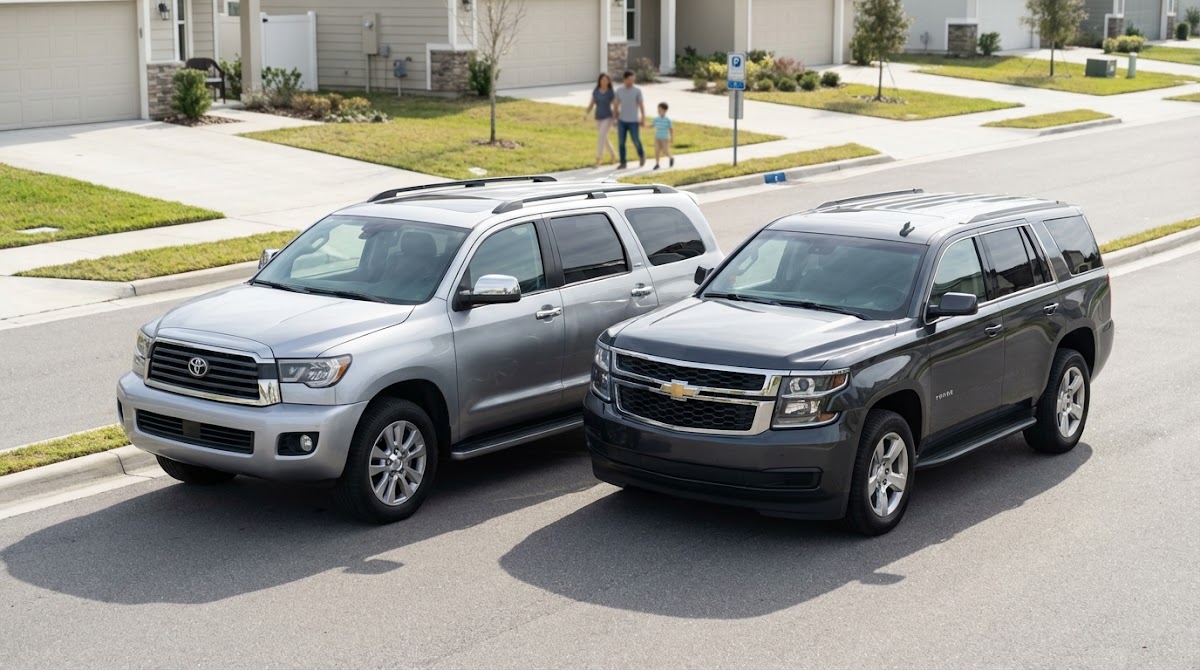
The Toyota Sequoia is Toyota's full-size SUV that offers a modern hybrid option called i-FORCE MAX, while the Chevrolet Tahoe is Chevrolet's full-size SUV available with multiple V8 and other engine choices. For official model details, check the Toyota Sequoia factory specifications page for model and trim differences Toyota Sequoia features & specs.
It depends on your priorities: choose Sequoia trims with i-FORCE MAX if towing and long-term reliability are top priorities; choose the Tahoe if engine choice, local availability and lower entry price matter more. Verify year, trim and history for any used listing.
Both vehicles aim at full-size SUV buyers but they tend to draw different priorities. The Sequoia often appeals to buyers focused on towing capability and long-term dependability, while the Tahoe often attracts buyers looking for a range of engine choices, broad local availability, and sometimes lower entry prices. For official Chevrolet data, consult the Tahoe specifications and features page Chevrolet Tahoe specs & features.
Remember that exact year, trim and powertrain change many key specs. Always confirm the model year and trim on a specific listing before drawing conclusions.
Head-to-head summary: towing, fuel economy and pricing at a glance
Published tow ratings compared
Manufacturer specs show that Tahoe maximum published tow ratings for modern model years fall around 8,200 to 8,400 pounds depending on engine and drivetrain; check the manufacturer page for the exact configuration you are evaluating Chevrolet Tahoe specs & features.
Fuel-economy differences and how they vary by drivetrain
EPA combined mpg varies substantially by engine and by 2WD or 4WD choice; fuel economy comparisons require looking up the exact model year, engine and drivetrain on EPA listings to be accurate EPA fuel-economy comparison.
Typical tradeoffs in new and used pricing
Editorial and ownership-cost analysis indicate Toyota full-size SUVs tend to score better on long-term reliability and resale, while the Tahoe often shows broader local availability and sometimes lower entry prices; factor this into how you weigh initial cost versus projected resale value Ownership and market comparison.
Towing and powertrain deep dive: what to check when towing matters
Why published tow ratings differ by engine and drivetrain
Factory towing numbers change with engine choice, axle ratio, and whether the vehicle is two-wheel drive or four-wheel drive. That means a single model name can cover several tow-capable configurations; always read the tow rating for the exact powertrain and axle on the listing.
How hybrid i-FORCE MAX changes Sequoia towing and fuel use
Hybrid systems can also change real-world fuel use when towing, and the EPA combined mpg differs by powertrain and drivetrain; if fuel economy on towing trips matters, compare EPA figures for the precise model and axle before deciding EPA fuel-economy comparison.
Practical towing checks for used listings
On a used listing, verify whether the vehicle actually has a factory towing package or recommended towing equipment. Confirming the tow-capable trim, hitch rating and axle ratio helps avoid surprises later.
Always ask the seller for documentation of towing-related maintenance and for any receipts for hitch or brake upgrades. Use a vehicle history report to confirm title status and service records before relying on a listing's towing claims Market guidance on ownership checks.
Safety and long-term reliability: how the models compare
Where to find trim- and year-specific crash ratings
IIHS provides trim- and year-specific crash ratings; compare the Tahoe and Sequoia pages for the exact model year and trim you are considering to see differences that matter for your buyer profile Toyota Sequoia crash ratings.
Evidence on long-term reliability and resale trends
Editorial and ownership-cost studies suggest Toyota's full-size SUVs tend to score better on long-term reliability and resale value, while the Tahoe often competes by offering lower entry pricing and wide availability; treat these trends as guidance and verify with model-year-specific sources Ownership and reliability overview.
Safety and reliability also depend on maintenance history and specific trim, so use both crash ratings pages and vehicle history reports to evaluate a used unit.
A step-by-step framework to evaluate a used toyota sequoia for sale
Step 1: Verify listing details and trim
Confirm the model year, exact trim, powertrain and listed equipment that affect towing, towing package presence, and safety features. Note the odometer value, title status, and any listed service history items.
Step 2: Run a vehicle history report and interpret key flags
Run a VIN-based vehicle history report to check title status, ownership history, reported accidents, and service records. Prioritize listings that show clean title indicators like single-owner and consistent service history, and flag items such as salvage or inconsistent mileage for further inspection Toyota Sequoia features & specs.
Check the VIN and title status before you call
Before you call a dealer, run a VIN-based vehicle history report so you can prioritize clean title and consistent service records when comparing listings.
Interpret a history report by focusing on title status, any reported structural or salvage records, and repeated failure or repair patterns in the service history. Use the report along with price analysis labels to triage which listings are worth a physical inspection Market guidance on using history and pricing together.
Step 3: Use price analysis labels and local pricing to set expectations
Price analysis labels like Great Deal, Good Deal or Fair Deal provide context but are one input among several. Combine the label with local comparables and the vehicle history report to set a realistic target negotiation range.
Local supply, trim and mileage drive price variation, so use listing filters and local comps to see whether the label fits the current market for the same year and trim.
Step 4: Inspect, test-drive and confirm towing or equipment needs
Arrange a pre-purchase inspection that includes brakes, frame and hitch condition if you plan to tow. A test drive should check engine response, transmission behavior under load, and any towing-specific gear.
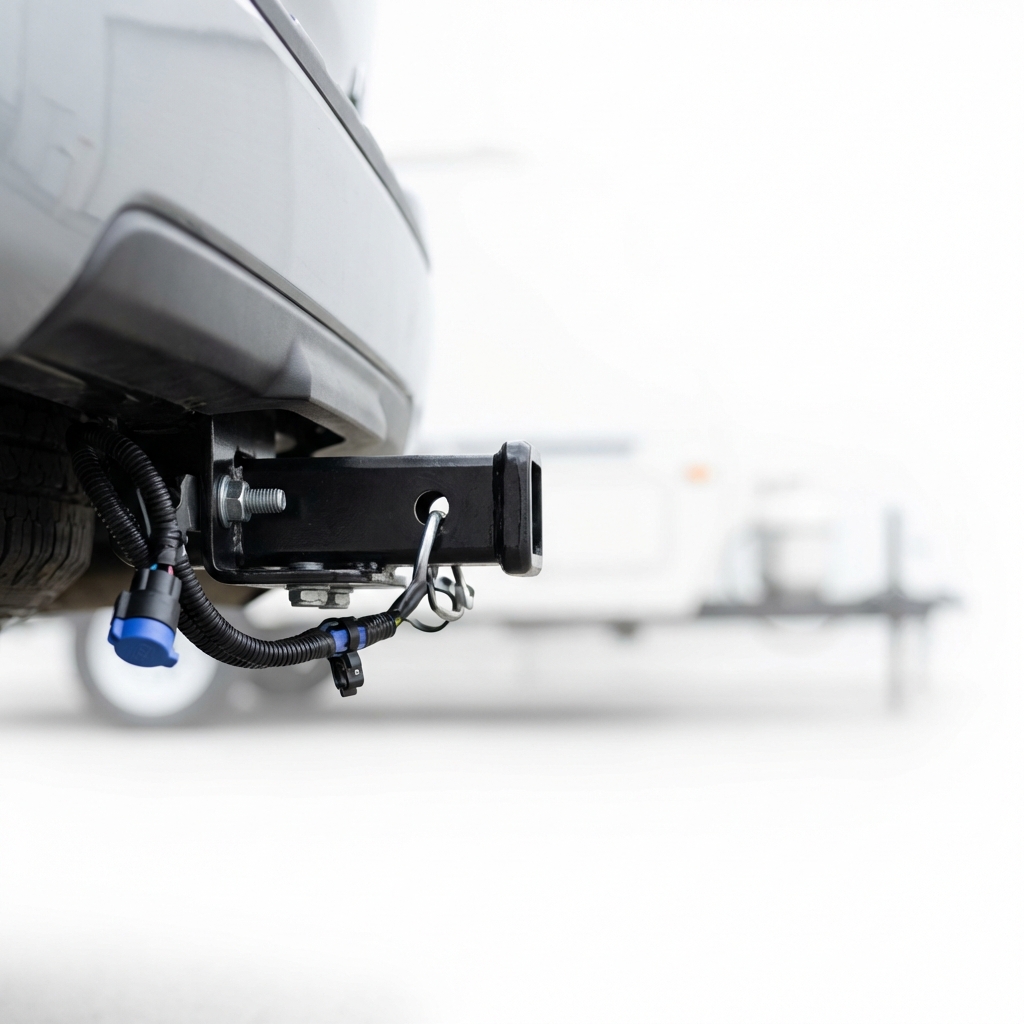
If towing is a priority, request documented proof of tow-related maintenance and inspect the hitch, wiring and transmission cooler if present.
Decision criteria: which factors should weigh most for you
Make a short decision matrix listing your priorities: towing capacity, long-term reliability, initial price, fuel economy, and local dealer availability. Weight each factor based on how you plan to use the vehicle.
If towing is decisive, put greater emphasis on the Sequoia i-FORCE MAX trims and their published tow ratings; if entry price and engine choice are primary, the Tahoe's range of configurations may matter more.
Also account for local market context: dealer availability and used prices in your area can shift the practical choice even when factory specs favor one model.
Common mistakes and red flags when hunting a used Sequoia or Tahoe
Listing red flags include inconsistent mileage history, missing or rolled-back service records, salvage title mentions, and vague ownership notes. These issues often show up on a vehicle history report and should raise caution.
Run a VIN report and confirm title status before buying
Use the report to prioritize inspections
Inspection oversights that cost buyers later include skipping a frame and brake inspection for towing-capable units, trusting seller statements about towing equipment without documents, and not confirming the exact tow package.
Paperwork pitfalls include accepting vague service records or failing to confirm any lien release and title transfer details before payment.
Three practical listing scenarios: how the framework plays out
Scenario A: Single-owner low-mileage Sequoia with towing package
Positives: single-owner history, documented towing package, and low miles. Important checks: run a VIN report, verify title status, and request receipts for tow-related maintenance. Suggested action: proceed to a pre-purchase inspection focused on hitch and transmission cooling.
Scenario B: Tahoe with low entry price but unclear service records
Positives: lower entry price and wide dealer availability. Negatives: unclear service history and potential deferred maintenance. Important checks: run a VIN report, ask for full service documentation, and schedule a thorough inspection before committing.
Scenario C: Higher-mileage Sequoia with full service history and aftermarket towing gear
Positives: full service history and visible towing upgrades. Negatives: higher mileage increases the need to confirm maintenance on major items. Important checks: verify that aftermarket gear was professionally installed, confirm no structural repairs tied to towing modifications, and consider a detailed transmission inspection.
Cost considerations and typical used price ranges for a Sequoia
Main price drivers for a used Sequoia are model year, trim, mileage, condition, local supply and demand, and any towing or equipment options that add value. Use a price analysis label in combination with local comparables to form a reasonable range.
Total cost to own depends on local fuel prices, insurance, maintenance, and how you drive. For fuel-economy estimates, consult EPA combined mpg for the exact trim and drivetrain you are evaluating EPA fuel-economy comparison.
Do not rely solely on an attractive price label; a lower sticker can be offset by a poor service history or required repairs.
Conclusion: practical next steps when you see a toyota sequoia for sale
If you find a toyota sequoia for sale that interests you, follow a short pre-contact checklist: confirm year and trim, run a vehicle history report, compare the price analysis label to local comps, and schedule an inspection or request service records before visiting the dealer Market guidance on checks before buying.
When safety or towing is a deciding factor, cross-check IIHS crash pages and EPA fuel-economy listings for the exact year and trim to back up your assessment.
Verify the listed trim, axle ratio and any factory towing package details; ask the seller for documentation and confirm the tow rating on the manufacturer's specs for that model year and powertrain.
Look for clean title indicators such as single-owner history, consistent service records, no salvage or structural damage notations, and no odometer inconsistencies.
Consider a Tahoe if local availability and lower entry price are priorities and if the specific Tahoe configuration meets your towing and safety needs after inspection.
Focus on the specific model year, trim and powertrain of any listing and use objective checks before you contact a dealer. Run a VIN-based vehicle history report, compare price analysis labels to local comps, and get a pre-purchase inspection focused on towing and safety needs.
These steps reduce uncertainty and help you decide whether a Sequoia or a Tahoe better matches your priorities.

 Blog
Blog