When you search for a used 4runner for sale, "high mileage" is a practical threshold buyers use to prioritize inspections and budget for repairs. For 4Runners, under about 100,000 miles is commonly treated as low, 100,000 to 200,000 miles as moderate, and above 200,000 miles as high, but service history and ownership records often matter more than the odometer when predicting near-term reliability. This guide explains those thresholds, common wear areas, and a step-by-step checklist to vet higher-mile 4Runners before you make an offer.
This guide explains which tacoma trucks for sale show the strongest reliability and safety signals to watch out for, and why mid-2010s and many pre-2016 Tacomas appear most often in complaint and recall records. The article shows how to use vehicle history reports, recall checks, and a focused inspection to reduce risk when evaluating a used Tacoma.
This article helps buyers searching tacoma trucks for sale understand which Tacoma engine tends to be most reliable. It summarizes reliability ratings, owner-complaint clusters, and maintenance-cost differences between the 2.7L I4 and the 3.5L V6, and gives actionable checks to reduce engine-related risk.
Audi reliability varies significantly by model, model year and powertrain, so the most reliable Audi for one buyer is not the same for another. This guide shows research-oriented used car buyers how to compare models using industry dependability studies, owner-reported trends, and per-VIN vehicle history reports. It focuses on checklists, inspection priorities and scenario-based recommendations to reduce risk when shopping a used Audi.
When you search for a used 4runner for sale you will quickly see mileage as a primary filter. Mileage bands help triage listings, but they do not replace documentary checks and inspections.
This guide explains common thresholds buyers use for 4Runners, highlights the wear areas to inspect on higher-mile examples, and provides a step-by-step checklist to help you evaluate risk and set realistic offers.
For 4Runners under 100,000 miles risks are generally lower, but service history remains the best early predictor of near-term reliability.
Many 4Runners can reach 200,000+ miles with regular maintenance, making documented service essential when judging high-mile examples.
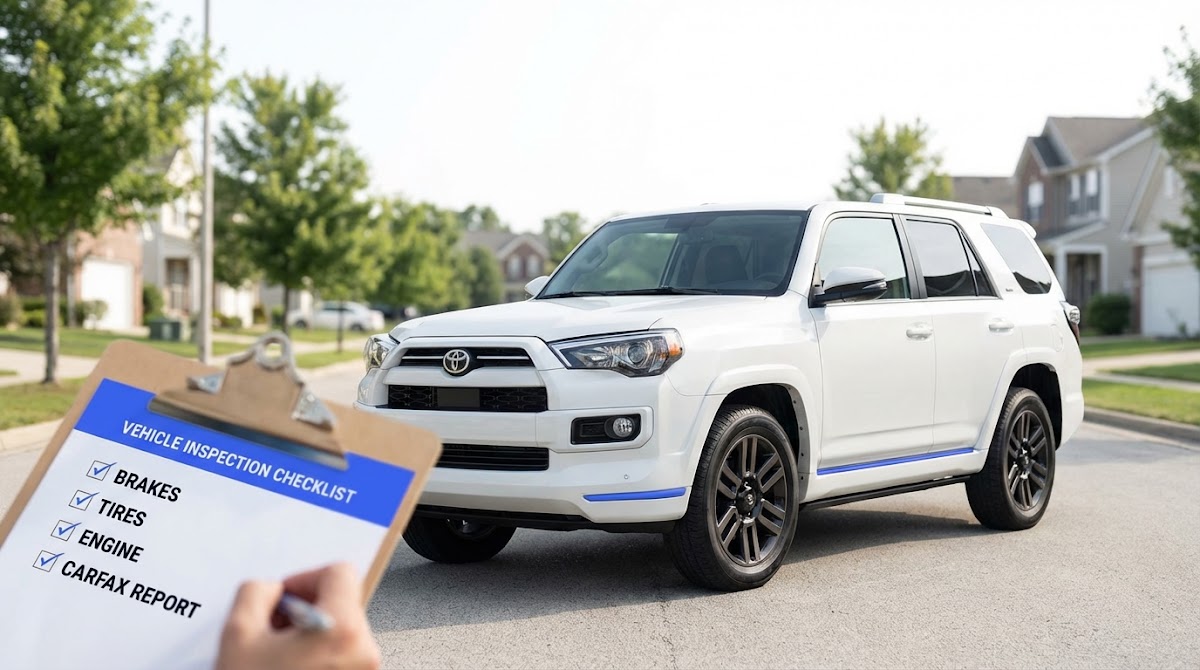
A VIN-level vehicle history report plus a focused pre-purchase inspection are the best early checks before making an offer.
What "high mileage" means when you search for a used 4runner for sale
Quick definition, used 4runner for sale
When you see a listing that says "used 4runner for sale," mileage is a quick filter many buyers use to sort options, but it is only one part of the picture. Industry guidance commonly treats under about 100,000 miles as low, 100,000 to 200,000 miles as moderate, and above 200,000 miles as high for SUVs like the 4Runner, and that framework helps buyers set expectations when scanning listings, not to define mechanical fate Kelley Blue Book buyer guidance.
Odometer numbers matter because they correlate with wear patterns, but they do not alone predict near-term reliability. For 4Runners, documented maintenance and ownership records often give stronger signals than a bare mileage figure, so pairing a mileage check with a vehicle history report is a practical first step Consumer Reports on 4Runner reliability.
How buyers interpret mileage depends on intended use. A commuter who plans mostly highway miles will view a 120,000-mile 4Runner differently than an owner who wants off-road weekend use, because certain wear items and service intervals show different risks depending on use and maintenance.
How buyers use mileage thresholds
Buyers typically set automatic filters on listings to remove extremes, then examine the remaining units more closely. Using banded thresholds helps quick triage: under 100k for low risk, 100k to 200k for considered buys, and over 200k for high-mileware scrutiny and stricter inspection standards iSeeCars longevity study.
Those bands are buyer tools, not engineering absolutes. A well-documented 180,000-mile 4Runner with consistent service can be less risky than an 80,000-mile truck with gaps in maintenance records, so mileage bands should adjust how you prioritize documentary checks and inspections.
Mileage thresholds to know when looking for a used 4runner for sale
Where the thresholds come from
The numeric ranges many shoppers use come from buyer guidance and longevity analyses that summarize broad patterns across SUVs, and they help set pragmatic expectations when you scan listings for a used 4runner for sale Kelley Blue Book buyer guidance. Many owners report long life.
Research aggregators that study outcomes for large samples of used cars show Toyota models, including the 4Runner, often have a higher-than-average chance of reaching 200,000 miles when maintained, which shifts how some buyers set filters for acceptable mileage bands iSeeCars 200,000 miles study.
How thresholds affect listing selection
When you sort listings, think of bands as a way to change your questions, not to accept or reject automatically. Under 100k typically means fewer immediate service items, 100k to 200k means expect some medium-term maintenance, and over 200k should trigger a deeper inspection and stricter documentation checks RepairPal 4Runner overview.
Use price analysis labels and local market context to compare similar listings. A high-mile 4Runner in an area where these trucks retain value may still be priced higher than rivals elsewhere, so adjust your offer based on local supply, the vehicle's condition, and documented service entries.
How 4Runner longevity studies change how you judge high miles
What longevity and reliability studies report
Multiple longevity analyses and reliability aggregators list the 4Runner among models likely to reach 200,000 miles with regular maintenance, which means many 4Runners can remain mechanically serviceable well past common "high-mileage" thresholds if cared for iSeeCars 200,000 miles study. Dealers and owner accounts often highlight similar longevity observations.
Those studies are useful but imperfect. They can reflect sample bias toward vehicles that received good maintenance, and outcomes vary by model year, generation and powertrain, so use the studies to adjust your risk tolerance rather than to assume guaranteed durability.
Run a VIN report and get a focused inspection
Check longevity context before you buy and consider pairing VIN-level history with a focused inspection to set realistic expectations.
Practically, that means a documented 180k 4Runner with a consistent service history and recent major items completed can be a reasonable buy for many owners, whereas an undocumented 80k example might carry more uncertainty about deferred maintenance and hidden issues.
Common high-mileage problem areas to inspect
Suspension and steering wear
Suspension and steering components commonly show wear on higher-mile 4Runners; look for uneven tire wear, loose or clunking noises over bumps, and visible play in tie rods and ball joints during inspection RepairPal 4Runner repair notes.
Check service records for recent suspension work, and during a test drive listen for play on rough pavement and deliberate turns. A clean service history that documents bushings, shocks or alignment work reduces near-term uncertainty.
Check service records for recent suspension work, and during a test drive listen for play on rough pavement and deliberate turns. A clean service history that documents bushings, shocks or alignment work reduces near-term uncertainty.
Emissions systems and EVAP
Higher-mileage 4Runners sometimes show failures of emissions-related parts, such as EVAP valves and sensors, which can trigger check-engine lights and emissions test failures; verify that any codes have been addressed and ask for repair invoices if recent work was done Car and Driver overview.
During a pre-purchase inspection, request a scan of stored and pending codes and confirm the seller resolved any longstanding codes with receipts. Occasional EVAP fixes can be moderate in complexity but matter for emissions compliance and immediate drivability.
Transmission and driveline
Some high-mile 4Runners have reported transmission or driveline complaints; check for harsh shifts, delayed engagement, fluid contamination or metal particles on drain plugs, and review service history for transmission service entries RepairPal 4Runner reliability and repair data.
If the truck has 4WD, inspect transfer case service records and listen for unusual noises when engaging and disengaging 4WD. Driveline checks during a test drive are essential for spotting impending repairs.
Why service history matters more than the odometer
What a vehicle history report reveals
Vehicle history reports show ownership history, title status and recorded service events that often predict short-term reliability more directly than mileage alone, so obtaining a VIN-level report should be a standard early step when you spot a used 4runner for sale Consumer Reports on 4Runner data.
Reports can reveal whether oil changes, major services and ownership transfers were recorded, which helps you understand whether the odometer reading aligns with documented care.
Quick verification steps to review a VIN report and service history
Use this before scheduling an inspection
Key service items to prioritize include regular oil changes, timing or drive-system services if applicable, and differential or transfer-case service for 4WD models; documentation of these items shifts a vehicle from unknown to reasonably predictable in the near term RepairPal maintenance notes.
Price and resale: how high mileage affects value
How 4Runner resale strength alters pricing
The 4Runner has historically retained value better than many rivals, so higher-mile examples can still command stronger prices relative to other SUVs, but they typically sell at discounts versus lower-mile counterparts and should be compared within local market context Kelley Blue Book guidance. Studies on Toyota SUV longevity note this relative strength.
When you see the same model at different mileage bands, use price analysis labels to see whether a listing is priced as a great, good or fair deal in your area and let that inform what margin you need for potential short-term repairs.
Adjusting your offer for maintenance and local demand
Adjust offers to reflect documented maintenance and local demand: a high-mile 4Runner with recent major services should carry less discount than one with missing receipts, and areas with strong demand for rugged SUVs compress discounts for higher-mile trucks.
Check multiple listings and ask the dealer for service invoices. If a price-analysis label is available, use it to set a negotiation range that accounts for likely repairs and local pricing insights.
A buyer's pre-purchase checklist for high-mileage 4Runners
Document checks before visiting
Start with a VIN-level vehicle history report and confirm title status, ownership history and recorded service entries before you contact a dealer about a specific listing; verify there are no salvage or rebuilt title markers and that recorded mileage matches the odometer reading where possible NHTSA recalls and investigations.
Request service receipts that support the vehicle history report. If the seller cannot provide documentation for major services, treat that as a risk factor and weigh it into your offer or inspection requirements.
Consider a high-mile 4Runner when it has an excellent documented service history, recent major services, a clean title, and a professional pre-purchase inspection that shows no immediate high-cost repairs.
Inspection and test-drive steps
Schedule a pre-purchase inspection with a mechanic experienced in Toyotas or trucks and ask them to focus on frame and rust, suspension, drivetrain and emissions systems; confirm there are no open recalls before you finalize a purchase NHTSA recall check.
During the test drive, listen for transmission behavior, steering play, and unusual vibrations. Have the inspector scan for stored fault codes and perform a visual check for leaks and frame issues.
Red flags that should trigger a walk-away
Major red flags include missing service history for higher-mile examples, evidence of frame or structural damage, persistent transmission slips or repeated driveline complaints, and title problems such as salvage branding; any of these should prompt caution or walking away RepairPal report guidance.
If the seller resists providing a VIN for a history report or a professional inspection, treat that as a significant risk signal and consider focusing on better-documented listings instead.
How to prioritize inspection items for different 4Runner generations
Older generations - what to watch for
Older 4Runners tend to need careful frame and rust checks, especially in regions with salted roads, and inspectors should examine body mounts, floor pans and suspension mounting points for corrosion Car and Driver maintenance notes.
For older trucks, also verify any documented frame repairs and ask whether rust was treated professionally, because structural fixes are expensive and affect long-term resale.
Mid-generation models - common focuses
Mid-generation 4Runners may show more driveline or transmission concerns depending on mileage and usage; prioritize transmission function tests, fluid condition checks, and service entries related to the drive system RepairPal maintenance and repair data.
If the truck has been used off-road, check for underbody damage and whether differential and transfer-case services were performed on schedule.
Recent refreshes - remaining unknowns
Refreshes and recent model years can improve certain components but also introduce unknown long-term patterns; treat 2024 through 2026 refreshes as promising but watchful, and prioritize documented service even more because full-life repair-cost data are still emerging iSeeCars longevity context.
For recent trims, confirm the exact model year and trim and check powertrain service records when possible, since powertrain updates can shift common maintenance items.
Scenario: buying a 150,000-mile 4Runner - step-by-step checks
Questions to ask the seller
Ask for service receipts, dates and mileage for major services, whether timing or drive-system work was performed, and the reason for sale; verify that oil change intervals and any differential or transfer-case services are recorded in the vehicle history report Consumer Reports on documentation.
Confirm whether the truck has any open recalls or pending investigations and request recent photos of underbody and engine compartments if you cannot see the vehicle in person before a first contact.
Inspection focus for 150k mileage
At about 150k, prioritize suspension and steering checks, transmission shifts, and leaks. Have the inspector pay attention to bushings, shocks and tie rods, and perform a fluid inspection for transmission and differential systems RepairPal inspection guidance.
Also confirm the odometer aligns with ownership records and that no major repair entries are missing from the history report; unresolved questions here should reduce the offer you are willing to make.
Short-term cost checklist
Budget for likely maintenance items such as suspension refresh, minor emissions fixes, brake service and routine fluids; use local repair quotes to refine a realistic budget buffer and let documented recent major services reduce that buffer.
Ask the dealer or seller to share invoices for any recent large items, and factor those into your offer rather than assuming the mileage alone will cover unknown repairs.
Scenario: buying a 220,000-mile 4Runner - risks, red flags, and when to walk away
High-mile red flags
Above 200,000 miles is commonly treated as high mileage for buyer decision-making, and at this level pay special attention to lack of service history, evidence of frame damage, and repeated driveline or transmission complaints that suggest deferred major repairs Kelley Blue Book guidance.
If a 220k unit has gaps in ownership records or the seller cannot produce service receipts for major intervals, treat that as a significant risk and price it accordingly or walk away.
When high mileage can still be acceptable
A very high-mile 4Runner can still be reasonable if it has an excellent documented service history, recent large services completed, and a price that reflects required repairs; longevity studies show many well-maintained 4Runners reach 200,000+ miles, which supports cautious purchases in the right circumstances iSeeCars analysis.
Even then, budget conservatively for component replacement cycles that commonly occur in very high-mile vehicles and get a professional pre-purchase inspection before committing.
Budgeting for likely repairs
For 220k examples, prioritize an inspection that focuses on transmission condition, suspension teardown potential, and frame integrity; these are the areas most likely to need near-term attention and should factor into your offer calculations RepairPal repair areas.
Ask for local repair estimates if the inspection flags anything significant and add a contingency buffer for unexpected findings, then compare that total to the price difference against a lower-mile comparable.
Decision framework: is a high-mile 4Runner right for you?
Weighing total cost to own
Decide by comparing your intended use, repair budget and access to trusted mechanics. If you plan heavy towing or off-road use, lower-mileage and documented maintenance matter more; if you need a daily highway commuter and have room to budget for repairs, a documented high-mile 4Runner can be acceptable iSeeCars longevity context.
Factor in resale plans: 4Runners hold value, which can mitigate some depreciation concerns but does not eliminate near-term repair exposure.
Matching the truck to your intended use
If your priority is predictable low-maintenance commuting, favor lower-mile, well-documented trucks. If you prioritize capability and are comfortable with a maintenance budget, a higher-mile 4Runner with strong service history may fit your needs.
Create a simple matrix: intended use, documented service, inspection results, and price; if most boxes check positively, the risk-adjusted decision often favors proceeding with a professional inspection and a VIN history check.
Common mistakes buyers make with high-mile SUVs and how to avoid them
Relying on odometer alone
One frequent mistake is treating mileage as the sole reliability indicator; evidence shows documented service history often predicts near-term reliability better than mileage alone, so always pair a mileage check with a VIN-level history report Consumer Reports guidance.
Comparing maintenance entries across similar listings helps you spot deferred services that the odometer would not reveal.
Skipping a pre-purchase inspection
Skipping a professional inspection risks missing hidden issues; a mechanic can identify wear in suspension, driveline and frame areas that are costly to fix and likely on high-mile vehicles RepairPal inspection advice.
Schedule the inspection early in negotiations and use any findings to adjust your offer or require repairs before purchase.
Ignoring recalls and title issues
Not checking recalls, salvage branding or title irregularities can leave you exposed to safety or legal complications; always run a recall check and review title status before agreeing to a purchase NHTSA recall page.
If recalls are open, ask the dealer for documentation showing completion before finalizing the sale or require that the work be completed as a condition of purchase.
Estimating near-term repair costs for high-mile 4Runners
Common parts and labor items
Typical repair categories for higher-mile 4Runners include suspension component replacement, emissions and EVAP repairs, and transmission or driveline services; these categories reflect commonly reported trouble areas in repair databases RepairPal common repairs.
Labor and parts vary by region and model year, so get local shop quotes for the specific items flagged by your inspection to refine budgeting.
How to create a realistic budget buffer
Add a contingency buffer for unknowns after inspection and reduce that buffer when recent major services are documented. Use local repair quotes and consider the truck's resale strength to decide how much of that buffer you can accept in your offer.
If invoices show recent major work, such as transmission service or suspension replacement, allow that to lower your contingency and increase your confidence in the purchase.
Next steps: a short checklist before contacting a dealer
Final document checks
Obtain a VIN-level vehicle history report and confirm title status, ownership history and service entries before you contact a dealer about a specific listing; verify there are no salvage or rebuilt title markers and that recorded mileage matches the odometer reading where possible Consumer Reports recommendation.
Compare price analysis labels against local listings and ask the dealer to provide service invoices for inspection items cited in the report.
Questions to ask at the dealer
Ask for a full service history, recent repair invoices, whether recalls have been completed, and whether the dealer will allow an independent pre-purchase inspection. Use dealer transparency signals like reviews and ratings as additional context when evaluating trustworthiness.
If the dealer resists sharing VIN information or invoices, consider walking away; documented transparency tends to reduce risk for higher-mile examples.
When to walk away
Walk away if the title status is unclear, service history is missing for higher-mile listings, or inspection finds structural damage or persistent transmission issues. These signals often outweigh the attraction of a lower sticker price.
Choosing a better-documented listing usually reduces near-term repair risk and makes ownership costs more predictable.
Closing thoughts
Mileage bands are practical tools to triage listings when you search for a used 4runner for sale, but they are not destiny. For 4Runners, longevity evidence supports careful consideration of well-documented higher-mile examples, provided you confirm service history and complete a focused inspection iSeeCars study.
Use a VIN-level history report, a professional pre-purchase inspection and local pricing context to turn mileage into a clear risk assessment and a fair offer.
Many buyer guides treat over about 200,000 miles as high for SUVs like the 4Runner, while under 100,000 is generally low and 100,000 to 200,000 is moderate. Use those bands as guidelines, not absolute limits.
Yes, many 4Runners reach 200,000+ miles when well maintained. Documented service history and a clean inspection matter more than the odometer alone when assessing near-term reliability.
Start with a VIN-level vehicle history report to confirm title and service entries, then schedule a pre-purchase inspection that focuses on suspension, drivetrain, frame and emissions systems.
If you find a high-mile 4Runner that interests you, prioritize the VIN history report and a professional inspection before making an offer. That combination turns mileage into actionable context and reduces uncertainty.
Use local price comparisons and documented service entries to negotiate a fair, risk-adjusted offer.

 Blog
Blog


