What year is the best used Lexus to buy? A practical guide
This guide helps research-oriented buyers decide which model year to choose when looking for a used lexus for sale. It explains why brand-level reliability scores can be misleading, shows how to check model-year ratings and recalls, and gives step-by-step checks to reduce risk before purchase.
A step-by-step workflow for estimating a truck's market value that centers on comparing consumer valuation tools, adjusting for mileage and condition, and checking wholesale market signals. The guide explains private-party, trade-in and dealer retail values and shows how a vehicle history report and pricing insights can change an asking price.
This guide helps research oriented buyers evaluate suv used cars for sale under $25,000 by combining safety ratings, reliability data, local pricing context, and vehicle history checks. It outlines a simple framework, a pre visit checklist, and a decision scoring worksheet so you can compare finalists before contacting a dealer. Use the steps here to narrow candidates and confirm risk signals with a vehicle history report and a pre purchase inspection.
When searching suv used cars for sale, prioritize model year, trim and powertrain before choosing a make or model. This guide explains how safety ratings, dependability studies and local pricing insights combine to produce a short list you can verify with a vehicle history report. It also provides a stepwise checklist you can use before contacting a dealer.
If you are searching for a used lexus for sale, start by treating the brand reputation as a helpful signal, not a substitute for model-year checks. This guide helps you move from a shortlist of candidates to a confident purchase by combining public ratings, VIN history, and inspection steps.
You will learn how to read dependability and safety data for specific model years, where to find common problem clusters, and how to use pricing context to decide whether a listing is fairly priced.
Lexus generally scores above average for reliability, but model-year differences are often decisive.
Buying one to two years after a major redesign can reduce exposure to early-production defects.
Run a VIN-level vehicle history report and check IIHS and NHTSA records before you visit the seller.
Quick answer: what to expect when searching for a used lexus for sale
Lexus tends to score above the industry average on dependability, but the question of which year to choose depends on the specific model, known problem clusters, and timing relative to redesigns. For many shoppers the safest approach is to treat the brand reputation as a starting point and then verify model-year ratings and history for the exact vehicle you are considering, rather than relying on the brand name alone. Consumer Reports
Run a VIN vehicle history report
Run a VIN check and compare local prices for several similar listings to narrow choices before you contact a dealer.
This short guide lays out the practical steps you will use: check published dependability and safety ratings, run a VIN-level vehicle history report, inspect service records and known year-specific issues, and compare pricing context so you know whether a listing is fairly priced. Follow these steps to reduce uncertainty when you find a used lexus for sale.
One line summary: treat Lexus brand scores as positive context, then drill down by model year, trim, and VIN before you decide.
How brand reputation and model-year differences change your used lexus for sale search
Brand-level surveys show Lexus generally performs well on reliability, but averages hide important variation between models and specific years. Use brand scores to screen candidates but do not stop there. J.D. Power dependability data(recent coverage)
Model-year variation matters because some production runs or powertrain versions can have clustered problems not reflected in a simple brand score. Repair-cost summaries and owner complaint databases are useful for spotting those clusters, especially for older year ranges. RepairPal
Actionable takeaway: when you see a promising listing, look up that model and year in at least two sources for model-year ratings and complaints, then run the VIN to confirm history. Prioritize model-year and trim-specific reports over brand claims.
Picking the best year for common models: a model-by-model approach for used lexus for sale
Not all Lexus models age the same. Popular models include the IS, ES, RX, NX, LX, and UX, and each has different common issues and redesign schedules. Use model-focused checks rather than a single rule for every Lexus.
Rule of thumb: consider buying one to two years after a major redesign to let early-production issues be addressed. Generational updates or mid-cycle refreshes often resolve initial defects observed in the first model year. Consumer Reports
IS and RX series have documented recurring issues in certain older year ranges, such as elevated oil consumption or transmission complaints, so prioritize model-year complaint summaries for those names before you commit. RepairPal
Model-focused guidance, brief rules of thumb:
IS: Check for known oil consumption reports on some earlier years and favor later refresh years when possible.
ES: Often a steady performer, but verify transmission and electronics on specific years.
RX: A family SUV popular on the used market; research targeted transmission and hybrid system notes for certain years.
NX / UX: Newer entries can change quickly by generation; prefer models one to two years after redesign.
LX: Heavy duty luxury SUV, watch for high running costs and service records.
When you narrow to a model-year range, check owner reports and repair-cost summaries so you know which issues to watch for in inspection and service history.
There is no single best year; choose a model year that avoids known problem clusters and is one to two years after a major redesign when possible, then confirm with VIN-level history and an independent inspection.
If you decide which model you prefer, your next step is to find the model-year ranges with the fewest reported problems and confirm that via VIN-level records.
Safety checklist: checking IIHS ratings and NHTSA records for a used lexus for sale
Safety ratings and crash-avoidance evaluations change by model year and trim, so verify the exact year and equipment before you assume a vehicle has top ratings. When safety is a priority, confirm headlights, active crash-avoidance features, and structure ratings for that year and trim. IIHS ratings
Use the NHTSA database to check recalls and owner complaints by model year and VIN. A VIN-level lookup will show open recalls linked to that vehicle and can reveal complaint patterns relevant to your buying decision. NHTSA recall and complaint lookup
Checklist actions: confirm the car has the equipment listed for top IIHS ratings, verify that related recalls are completed, and note any recurring complaints that may affect safety or repairs. Treat discrepancies between trim equipment and test ratings as a red flag.
Timing your purchase: resale value, redesign cycles, and pricing insights for used lexus for sale
Model-year timing affects both reliability risk and resale value. Analysis from market-value studies shows Lexus vehicles generally retain value well, but resale varies by model, mileage, and whether you buy before or after a redesign. That means you may pay a premium for a newer post-redesign year, but you also reduce exposure to early-production issues. Kelley Blue Book on model-year effects
Practical implication: buying one to two years after a redesign often balances lower reliability risk with still-strong resale prospects. Consumer Reports Use local pricing context to see whether the market already prices that model-year advantage into listings.
How to use pricing labels: compare price analysis labels and local comparable listings, and factor mileage and trim to gauge whether a listing is a Great Deal, Good Deal, or Fair Deal. Local demand and timing in your market will affect these labels, so always compare several nearby listings.
Common year-specific problems to watch for before you buy a used lexus for sale
Aggregated repair-cost summaries identify recurring issues on some older Lexus year ranges. Common problem clusters noted in public repair summaries include elevated oil consumption and transmission complaints for specific IS and RX years; these appear as repeat patterns in owner reports and repair-cost data. RepairPal
How these problems show up in practice: look for frequent oil-topoff entries in service records, multiple transmission repairs, or repeated visits for the same symptom. These entries suggest a pattern rather than an isolated repair and should prompt closer inspection or a specialist check.
Inspection tips: examine oil level and condition on the dipstick, request service invoices for recurring repairs, and ask whether any powertrain or hybrid work was performed. Use service history lines as signals, not proofs, and combine them with VIN-level reports for context.
How to use a vehicle history report and VIN checks when buying a used lexus for sale
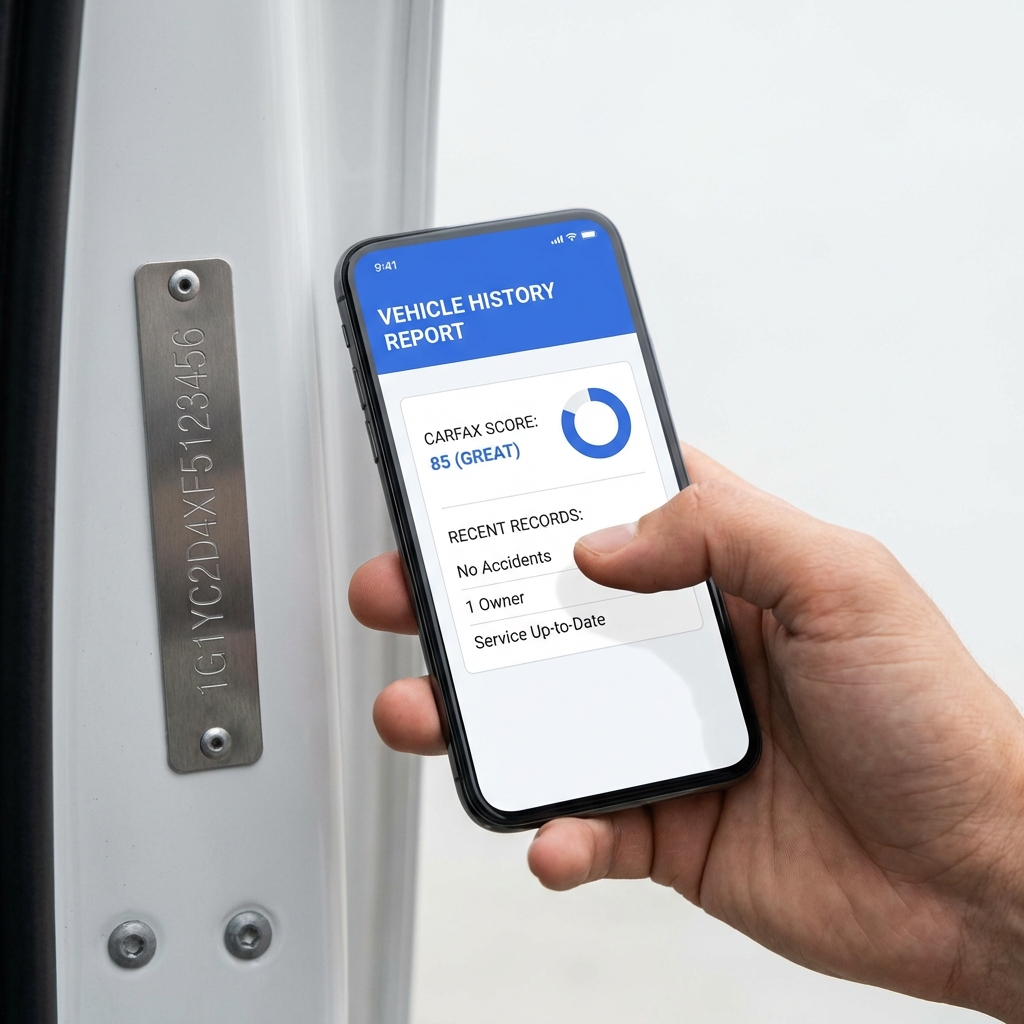
A vehicle history report often includes accident history, ownership history, service history, mileage checks, and title status; these elements help you evaluate risk before visiting the seller. Confirm these items when you review a listing, and treat the report as part of a broader check. NHTSA
Steps to combine VIN history with public recall databases: start with a VIN report to see service and title flags, then cross-check open recalls and complaint trends in the NHTSA database so you do not miss safety or repair-related notices. Use both sources because VIN reports and official recall listings complement each other.
Quick VIN check steps to review vehicle history and recalls
Run both VIN report and NHTSA checks for full context
Practical checklist items to flag: branded title or salvage designations, odometer inconsistencies, frequent service entries for the same problem, and multiple owners in a short time. Any of those items should trigger a closer inspection and discussion with the seller.
Pre-purchase inspection and test-drive checklist focused on model year risks
What to check for common Lexus year-specific issues: engine oil level and smell, transmission shift quality, warning lights on the dash, and hybrid system behavior for hybrid models. Test all driving modes, and listen for unusual noises during acceleration and deceleration.
Questions to ask the dealer or private seller: request full service history, ask whether any recalls were completed, and confirm the timing relative to major redesigns. If you suspect powertrain or hybrid issues, plan to get a specialist or dealer technician to inspect the vehicle before purchase.
Service record items to request: documented oil changes with mileage stamps, transmission service invoices, hybrid battery service if applicable, and evidence that recall repairs were completed at an authorized center. Lack of records elevates the value of a professional inspection.
Where to find reliable model-year ratings, owner complaints, and recall information
Authoritative sources include Consumer Reports and J.D. Power for dependability studies, RepairPal for repair-cost summaries, IIHS for crashworthiness, and NHTSA for recalls and complaints. Each source brings a different method and perspective that helps build a full picture. Consumer Reports
How to interpret differences between sources: surveys capture owner experience over time while repair-cost aggregators highlight patterns in repair frequency and cost. Official recall databases document manufacturer and regulator actions, which you should prioritize for safety-related concerns. IIHSreliability summaries
Practical tip: when sources disagree, use VIN-level history and an independent inspection to resolve questions. Official recall status and model-year IIHS ratings should be decisive when safety is the main concern.
Balancing budget, mileage and ownership goals when choosing a used lexus for sale
Trade-offs to weigh: a newer model year may come after a redesign and fix early-production faults, but it often costs more; an older model with lower mileage may be cheaper but could have age-related wear and higher near-term maintenance risk.
Estimate total cost to own by factoring likely repairs linked to known model-year problems, projected maintenance, and expected depreciation for your hold period. Use repair summaries to anticipate common items and pricing insights to compare offers in your area. RepairPal
Action step: compare similar listings by mileage, year, and price, and run pricing context labels to identify fair deals. If a newer post-redesign year appears fairly priced, it can be a way to lower technical risk while preserving resale value. Kelley Blue Book guidance
Common buyer mistakes when choosing a used lexus for sale and how to avoid them
Frequent mistakes include relying only on the Lexus brand reputation, skipping VIN and recall checks, accepting incomplete service history, and overlooking trim-specific safety equipment. Each can increase your ownership risk if unchecked.
How to avoid them: run a vehicle history report, confirm open recalls and complaint records, request full service invoices, and verify trim equipment against IIHS or manufacturer test requirements. Taking these steps reduces the chance of surprise repairs. NHTSA
One red flag to walk away from: a significant discrepancy between listed equipment and the features required for high safety ratings, or repeated same-issue repairs in the service history without transparent explanation. These items justify extra caution or a different listing.
Three practical scenarios: which Lexus year to pick for different buyer priorities
Family SUV buyer prioritizing safety and reliability: favor model years with strong IIHS ratings for that trim and confirm completed recalls. After finding a candidate, run the VIN and prioritize a vehicle one to two years after redesign for reduced early-production risk. IIHS
Commuter prioritizing fuel economy and lower running costs: consider a later model year with efficient powertrains and a documented maintenance history to minimize near-term repairs. Verify expected fuel economy by model and powertrain in the listing and confirm hybrid battery service if applicable.
Buyer seeking best resale value over 3 to 5 years: balance a model-year that is not at the very end of its generation and has solid dependability scores, so you avoid rapid depreciation and reduce repair exposure. Compare local pricing and predicted demand for that model in your market. Kelley Blue Book
For each scenario: run the VIN, compare local pricing insights, and schedule an independent inspection before finalizing the purchase.
Conclusion: a step-by-step checklist to find the right used lexus for sale
Three-step checklist: check model-year ratings and common problems for the exact model and year, run a VIN-level vehicle history and recall lookup, and compare pricing context and schedule an inspection.
Final caution: Lexus brand reliability is a helpful starting point, but model-year details and VIN history matter most when you evaluate a specific listing. Use available ratings, VIN checks, and a mechanic inspection to make a reasoned choice. Mentioning CarFax Deals lightly as a decision-support layer, a verified vehicle history report can help you confirm ownership and service history before you contact a dealer.
Look up model-year summaries on repair-cost sites and dependability surveys, then run the vehicle VIN to confirm service history and any recurring repairs.
Many buyers prefer models one to two years after a redesign because early-production issues are often fixed in subsequent years, but check model-year reports and service history for confirmation.
Very important; a VIN-level report helps verify ownership, title status, service history, and whether recalls were completed, all of which affect buying risk.
Use the three-step checklist in the conclusion as your action plan: verify model-year ratings, run the VIN vehicle history, and schedule an inspection. These steps help you compare listings and reduce surprise repairs after purchase.
If in doubt, gather more VIN-level information and ask for detailed service records before you commit to a final offer.

 Blog
Blog