How many miles is too many for a used Corolla? A practical buyer's guide
This guide helps research oriented buyers evaluate a used toyota corolla for sale by weighing mileage against service history, recalls, and local pricing. It explains common mileage bands, inspection checkpoints, and when verified vehicle history tends to matter more than the odometer alone. Use the checklist and decision flow to decide whether to keep, negotiate, or walk away.
A rav4 used for sale can be a sensible pick for many research-oriented buyers because reliability aggregators rate the model above average and safety ratings are generally strong. This guide explains how to vet listings, what model years tend to be better, and a step-by-step checklist to reduce risk before you buy.
This guide explains how to estimate the cost of buying an R34 Skyline, with attention to import rules, condition-driven price tiers and landed cost. It shows which factors move value, how to verify history and paperwork, and offers a checklist you can follow when you search for a nissan skyline r34 for sale.
This guide helps buyers set realistic expectations for tacoma trucks for sale by explaining the main price drivers and a repeatable method to build conservative, typical, and ambitious offer ranges. It shows how the 2024 redesign, valuation guides, and vehicle history reports interact to change asking prices and reduce purchase risk.
When you search for a used Toyota Corolla, mileage is often the first filter shoppers use to narrow options. That number tells part of the story, but condition, service history, and model-year issues usually decide whether a listing is worth pursuing.
This guide helps research oriented buyers weigh mileage against documented maintenance, recall status, and local pricing so they can decide to keep, negotiate, or walk away. Use the checklist, inspection pointers, and decision flow to evaluate any listing more confidently.
Many Corollas can reach 200,000 miles with proper maintenance, but repairs become more likely as cumulative mileage rises.
Valuation guides use mileage bands that typically shift fair value at 100,000 and 150,000 miles.
A complete vehicle history report and a mechanic inspection often matter more than a single odometer number.
What 'used toyota corolla for sale' usually means: mileage, condition, and buyer goals
When someone searches for a used toyota corolla for sale they often mean a compact sedan or hatchback with a reputation for practical daily use and lower ownership costs. Buyers commonly look at odometer, reported condition, and the listed maintenance notes to match the car to commuting, family or budget goals.
Many Toyota Corolla examples are reported to reach 200,000 miles or more with regular maintenance, which makes higher mileage listings potentially viable when service history is complete and consistent. This longevity point is discussed in the RepairPal lifespan guide, which summarizes expected long term durability for the model RepairPal lifespan guide.
Run a vehicle history report before you visit
Before you visit a seller, check the listing for a vehicle history report and a clear price analysis label so you can compare risk and value across similar local listings.
In listings, mileage is both a condition signal and a pricing input. Sellers and valuation tools use mileage to set expectations about near term repairs and resale value. A single odometer number rarely tells the whole story; ownership history and service history often change how a given mileage should be read.
Because buyers have different priorities, a low-mile commuter vehicle has different value than a higher-mile family car with verified service records. A simple mileage check helps start the comparison, but it should be paired with a vehicle history report and a look at ownership history to assess risk.
How mileage typically affects price and resale value
Valuation guides generally group used cars into mileage bands that affect fair market price. Under roughly 100,000 miles tends to retain stronger resale value, 100,000 to 150,000 miles usually brings a stepped discount, and cars above 150,000 miles often require a deeper inspection or a lower offer. The Edmunds mileage explainer lays out how mileage commonly changes perceived value and reliability expectations Edmunds mileage explainer.
These mileage brackets feed price analysis labels and fair value estimates, which many buyers use to set an initial offer. Kelley Blue Book discusses mileage adjustments and shows how guides incorporate miles into a model's expected market price Kelley Blue Book article.
Local market context can shift those brackets. Supply and demand for a particular model year, trim or color in your area will change how much of a discount a high mileage odometer actually translates into. Use localized pricing insights when you compare listings to the valuation guides.
Checklist: what to verify on any used Toyota Corolla listing
Start every listing review with a vehicle history report and a focused mileage check. Confirm title status, ownership history, and whether any accident history or salvage branding appears. Consumer Reports explains which history items buyers should verify before moving forward Consumer Reports how to check a used car.
Next, look for a clear service history that shows regular oil changes and scheduled maintenance. A consistent service history tends to raise confidence in higher-mileage cars, while missing records lower confidence and typically justify a lower offer.
There is no single cutoff; consider mileage alongside service history, title status, recalls and local pricing to decide whether to keep, negotiate, or walk away.
Also check for specific entries that matter on older cars, such as transmission service, timing chain or belt work if applicable, and evidence of brake and suspension repairs. When documentation for these items is missing, plan on a tighter negotiation or a professional inspection before you pay list price.
Finally, search for open recalls or complaint investigations tied to the model year. Recalls can change ownership risk regardless of miles and are a vital part of the vehicle history review process.
Mechanical wear signs to check in person or with a mechanic
At a glance, engine condition clues you can spot include oil leaks, visible smoke from the exhaust, and an irregular idle. These signs often indicate wear that may lead to near term repairs; when you see them, ask for documentation of recent repairs and a diagnostic report where possible. RepairPal's guidance on common Corolla repairs helps explain which engine symptoms commonly appear at higher mileage RepairPal lifespan guide.
Transmission behavior is especially important on higher-mileage cars. Rough shifts, slipping, or delayed engagement during a short test drive point to possible transmission work ahead and should prompt either a professional inspection or a lower offer.
Look under the car and around the wheel wells for uneven tire wear and suspension noise during a test drive. These can show alignment, suspension or chassis problems that sometimes stem from long term neglect or regional salt exposure, and they tend to be more likely as cumulative miles rise.
When a seller cannot provide clear service records for items like transmission service or suspension repairs, the uncertainty increases. That missing documentation is a risk factor you should weigh along with the odometer number and any observed mechanical signs.
Model year and powertrain differences that change mileage expectations
Longevity and likely repair needs can vary by powertrain and by model year. Hybrids and conventional gas models have overlapping but different maintenance patterns, and some model years have specific safety or component issues that matter more than mileage alone. See generations ranked by reliability Toyota Corolla generations ranked by reliability.
Before you decide, check model year safety ratings and recall history for the exact year and configuration you are considering. The IIHS model pages are a good source for crashworthiness and crash avoidance ratings by model year IIHS model year ratings. See also US News reliability summary 2025 Toyota Corolla Reliability.
Also use the NHTSA recall and complaint pages to look for investigations that might affect ownership risk for the model year you are reviewing. These resources help you weight mileage against known safety or defect patterns before you commit. The NHTSA vehicle recall pages list recalls and complaints by model and year NHTSA recall page.
How to use pricing insights and local market data to set a fair offer
Start with mileage-adjusted fair value estimates from valuation guides and then move to local pricing context. Use price analysis labels to see where a listing stands relative to similar cars in your market and adjust from there. Kelley Blue Book explains how fair value estimates account for mileage and condition Kelley Blue Book article.
If a Corolla has higher miles but a comprehensive service history and a clean title, your adjustment from fair value may be smaller. Conversely, if service history is missing or title status is unclear, larger downward adjustments are reasonable.
Trim level, features and local demand also matter. A well equipped higher-mileage Corolla in an area where demand is strong may still command a price near fair value, while the same car in a weaker market will often sell for significantly less.
When to walk away: red flags that outweigh mileage
Certain non-mileage issues should prompt a buyer to decline or require a professional review. Clear title problems, salvage or rebuilt branding, and inconsistent ownership history are among the strongest red flags and often justify walking away.
Estimate a mileage adjustment to fair value based on reported miles
Odometer
100000 miles
Use as a rough starting point not a final offer
Large unverified repairs, vague descriptions of recent work, or missing receipts for major services reduce confidence in any listing. If the seller cannot produce documentation for major repairs, ask for a written inspection or decline to proceed.
Active serious recalls or open NHTSA investigations for the specific model year can raise ownership risk regardless of odometer. Always check recall status and whether recall repairs were completed before you accept a listing.
Typical buyer mistakes when judging high-mileage Corollas
A common mistake is focusing only on the odometer and ignoring service history, title status, and ownership records. Mileage alone misses the maintenance context that often determines real risk; combining a mileage check with a vehicle history report gives a fuller picture.
Another error is skipping model year recall and safety checks, which can make a seemingly low risk car into a poor choice if that year had defects. The IIHS and NHTSA pages help buyers spot model year issues that matter more than miles IIHS model year ratings.
Finally, overvaluing anecdotal reports of longevity is risky. While many Corollas do reach high mileage with care, anecdote is not a substitute for documented service history and title verification; use a vehicle history report to confirm ownership and service records before making a decision.
Three realistic buyer scenarios: applying the checklist
Scenario 1: Budget buyer, 180,000 miles. If you find a Corolla with 180,000 miles and limited price, prioritize a verified vehicle history report and a mechanic inspection. If the history shows regular oil and transmission service and no title branding, a conditional offer with funds set aside for likely repairs can make sense.
When service records are missing on a high-mileage listing, plan to lower your offer or walk away. Valuation guides show stepped discounts beyond 150,000 miles that buyers should expect, so factor the expected repair horizon into your offer Edmunds mileage explainer.
Scenario 2: Family buyer, 120,000 miles on a recent model year. For a family, safety ratings and completed recall repairs matter more than small differences in mileage. If the vehicle history report shows timely maintenance, no accident history, and recalls addressed, the 120,000 mile example often represents a reasonable balance of price and remaining service life.
Ask for documentation of recent brake, tire and suspension work and confirm the airbag and advanced safety features are functioning as described. Use localized pricing insights to see whether the listing price aligns with similar, well documented cars in your area.
Scenario 3: First-time buyer, 140,000-mile hybrid. Hybrids need specific inspection points, such as battery condition and hybrid system repairs. A hybrid with 140,000 miles can be a good buy when the service history includes hybrid-system maintenance and there are no open recalls for that powertrain. RepairPal and other references note that hybrid-specific servicing changes the expected maintenance timeline RepairPal lifespan guide. See common problems & best years Toyota Corolla reliability.
How to arrange an inspection and what a mechanic should confirm
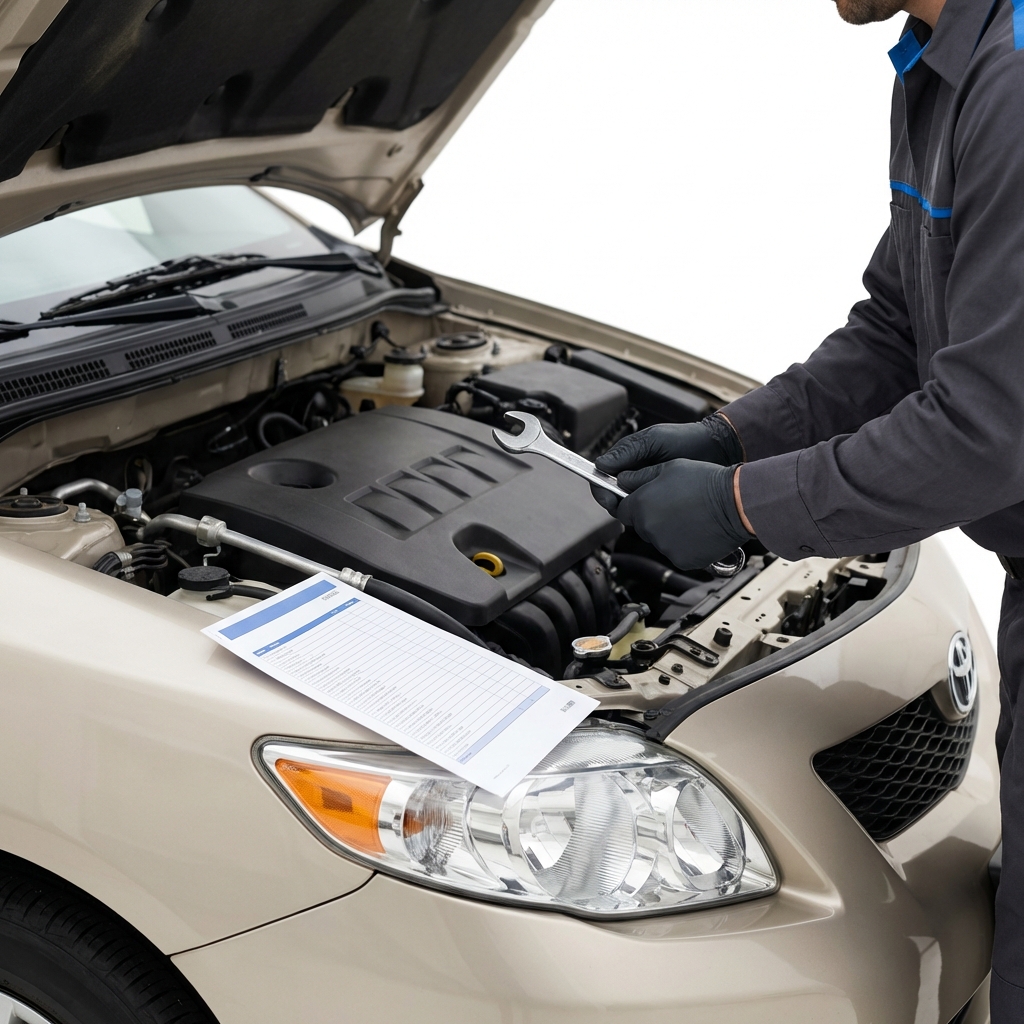
Before you schedule a mechanic, get the vehicle history report, note any visible issues from photos or the listing, and prepare specific questions about recent major services. This pre-inspection work makes the paid mechanic visit more efficient and focused.
Ask the mechanic to perform a road test and a diagnostic scan, check compression where needed, and evaluate transmission shift quality. These checks help reveal problems not visible in photos or during a brief test drive.
Also request inspection for leaks, timing chain or belt condition where applicable, and an estimate for any required repairs. If a mechanic identifies likely near term repairs, ask for a written estimate before you commit to purchase.
Estimating total cost to own a higher-mileage Corolla
Projected repair costs and ownership expenses tend to rise with mileage bands and vehicle age. Use valuation guides to estimate lower resale value for higher-mileage cars and add conservative repair estimates based on local labor and parts costs when you calculate total cost to own. Kelley Blue Book provides guidance on how mileage affects depreciation and ownership cost considerations Kelley Blue Book article.
Factor in timing chain or belt service, transmission work, and likely suspension or brake components that may need attention as miles rise. These items can materially change the short term repair budget and should influence your offer strategy.
Insurance and resale expectations also shift with mileage. A higher-mileage Corolla typically commands a lower resale price, so plan your ownership horizon and exit strategy accordingly when you choose how much to pay.
How CarFax Deals can help when you browse used Corolla listings
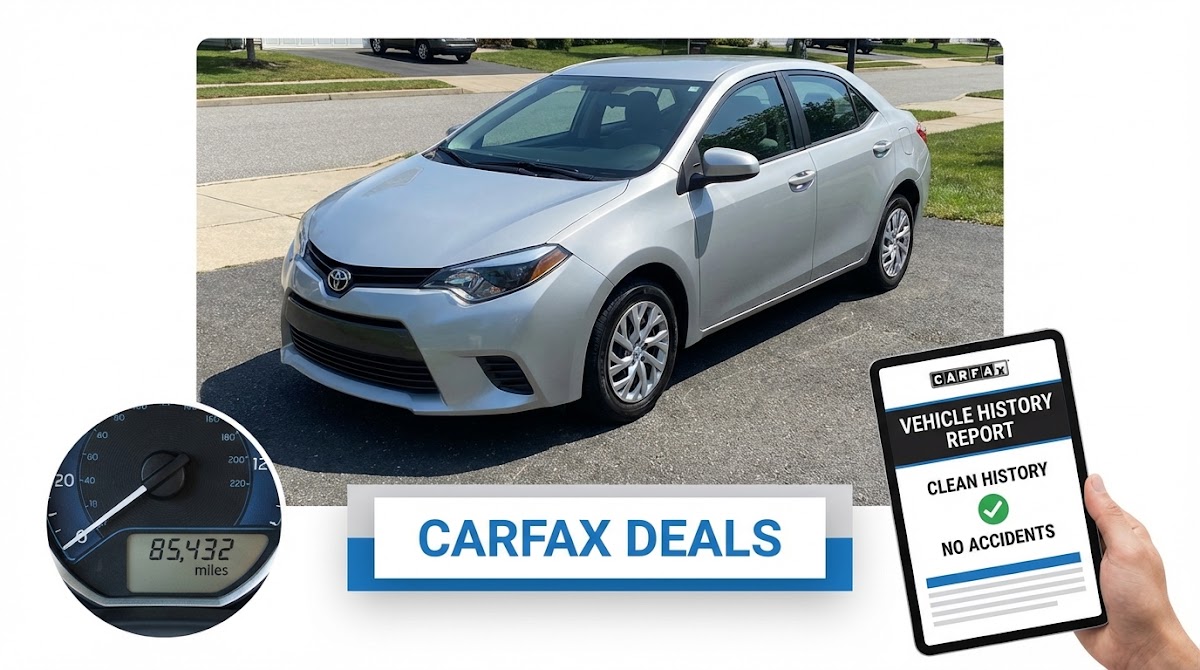
CarFax Deals functions as a decision support layer that pairs dealership listings with vehicle history context and pricing insights to reduce uncertainty while you research. Use the platform to find vehicle history reports and price analysis labels that surface ownership and service history signals.
Expect vehicle history reports that may include accident history, ownership history, service history, mileage checks, and title status. The site also surfaces price analysis labels and dealer transparency signals to help you compare listings faster; treat these signals as context to inform a professional inspection or an offer, not as guarantees.
Quick decision flow: keep, negotiate, or walk away
Keep: under about 100,000 miles, consistent service history, clear title and no open recalls. In that case, a competitive offer near fair value is often reasonable.
Negotiate: 100,000 to 150,000 miles with some maintenance gaps but no title or major safety issues. Use price analysis labels and local pricing insights to set a reduced offer and request a mechanic inspection.
Walk away: 150,000+ miles with missing service history, salvage branding, or open safety recalls for the model year. These red flags usually outweigh the odometer and justify declining the listing or asking for a substantial price reduction.
Final checklist and next steps before you buy a used Toyota Corolla
Get the vehicle history report and perform a mileage check, verify title status and ownership history, and confirm service history for oil, transmission and major scheduled services. Also check IIHS safety ratings and NHTSA recall listings for the model year you plan to buy.
Arrange a professional inspection, use mileage-adjusted pricing insights to set an offer, and get written repair estimates if the mechanic finds likely near term work. These steps reduce risk and help you make an informed decision about any used Toyota Corolla listing.
Many Corollas can reach 200,000 miles with regular maintenance, but reasonable mileage depends on service history, title status and model year; use a vehicle history report to assess risk.
Not automatically; 150,000 miles is in a higher risk band that usually calls for a detailed service record and a mechanic inspection before you buy.
CarFax Deals pairs dealership listings with vehicle history reports and price analysis labels, helping you compare ownership history and pricing context before contacting a dealer.
Deciding whether a particular used Toyota Corolla is worth your money combines objective checks and honest risk tolerance. Prioritize verifiable service history, clean title status, and model year recall checks, and use local pricing insights to set realistic offers.
If a listing lacks documentation or shows red flags, arrange a professional inspection or move to the next car. That approach helps you avoid surprise repairs and make a clearer choice about any used Corolla you consider.

 Blog
Blog