This guide explains which Toyota Tacoma model years had documented frame corrosion problems and how to check a specific truck before you buy. For buyers searching for a used toyota tacoma for sale, the most reports concentrate in roughly 2005 through 2010. The article gives VIN checks, inspection steps, and documentation to request so you can assess risk before contacting a dealer.
A step-by-step workflow for estimating a truck's market value that centers on comparing consumer valuation tools, adjusting for mileage and condition, and checking wholesale market signals. The guide explains private-party, trade-in and dealer retail values and shows how a vehicle history report and pricing insights can change an asking price.
This guide helps research oriented buyers evaluate suv used cars for sale under $25,000 by combining safety ratings, reliability data, local pricing context, and vehicle history checks. It outlines a simple framework, a pre visit checklist, and a decision scoring worksheet so you can compare finalists before contacting a dealer. Use the steps here to narrow candidates and confirm risk signals with a vehicle history report and a pre purchase inspection.
When searching suv used cars for sale, prioritize model year, trim and powertrain before choosing a make or model. This guide explains how safety ratings, dependability studies and local pricing insights combine to produce a short list you can verify with a vehicle history report. It also provides a stepwise checklist you can use before contacting a dealer.
This article helps buyers who are evaluating a Toyota Tacoma listing for potential frame corrosion. It identifies which model years show the most documented problems and explains what regulators and the manufacturer did.
The aim is practical: give VIN-level checks, inspection priorities, and documentation steps you can use when you see a used Tacoma listing. The guidance is evidence-based and focused on reducing uncertainty before you contact a dealer.
Most documented Tacoma frame corrosion reports are concentrated in 2005 through 2010 and are linked to heavy road-salt exposure.
Toyota offered targeted remediation for qualifying VINs, but eligibility depended on location and observed damage.
Before buying, combine a VIN check, vehicle history report, and an independent underside inspection to reduce risk.
Quick summary: which Tacoma years had documented frame corrosion problems
Short answer for buyers
For anyone looking at a used toyota tacoma for sale, the clearest pattern in public records shows the most severe frame corrosion reports concentrated in mid-2000s through early 2010s, with many complaints clustered around 2005 to 2010, especially for trucks driven in heavy road-salt regions NHTSA preliminary evaluation.
Why this matters when shopping used
Frame corrosion can compromise structural integrity, affect suspension mounting points, and lead to expensive repairs; for used-truck buyers this changes both immediate safety risk and future resale considerations owner complaint summaries.
Short answer for buyers: quick check
Immediate actions: check the truck's VIN for campaign or owner-letter eligibility, ask the seller for any frame repair or replacement receipts, and schedule an independent underside inspection focused on frame rails and crossmembers Toyota owner information and program FAQ.
At-a-glance timeline: investigations, owner complaints, and manufacturer communications
NHTSA preliminary evaluations and investigations
NHTSA opened preliminary evaluations and investigations after owner complaints described frame rust and cracking on Tacoma frames; those agency records formed part of the public case history that buyers and inspectors can consult NHTSA preliminary evaluation. See related TSB details on the NHTSA TSB page.
Toyota owner letters and program announcements
Toyota published owner information and program details that described inspection and possible remediation routes for qualifying vehicles, with eligibility tied to VIN, region, and the observed extent of corrosion Toyota owner information and program FAQ. You can also look up recalls directly through Toyota's recall lookup recall page.
Check VIN eligibility with the Run Vehicle History Report flow
Before you proceed, run a VIN check and request any repair receipts from the seller so you can confirm campaign eligibility and past frame work.
News coverage and complaint aggregators tracked owner reports and settlement activity, documenting how public attention and remediation offers evolved after regulators and the manufacturer acknowledged corrosion issues in certain model years news coverage of remediation details.
How and where corrosion tended to form on affected Tacomas
Common corrosion locations on the frame
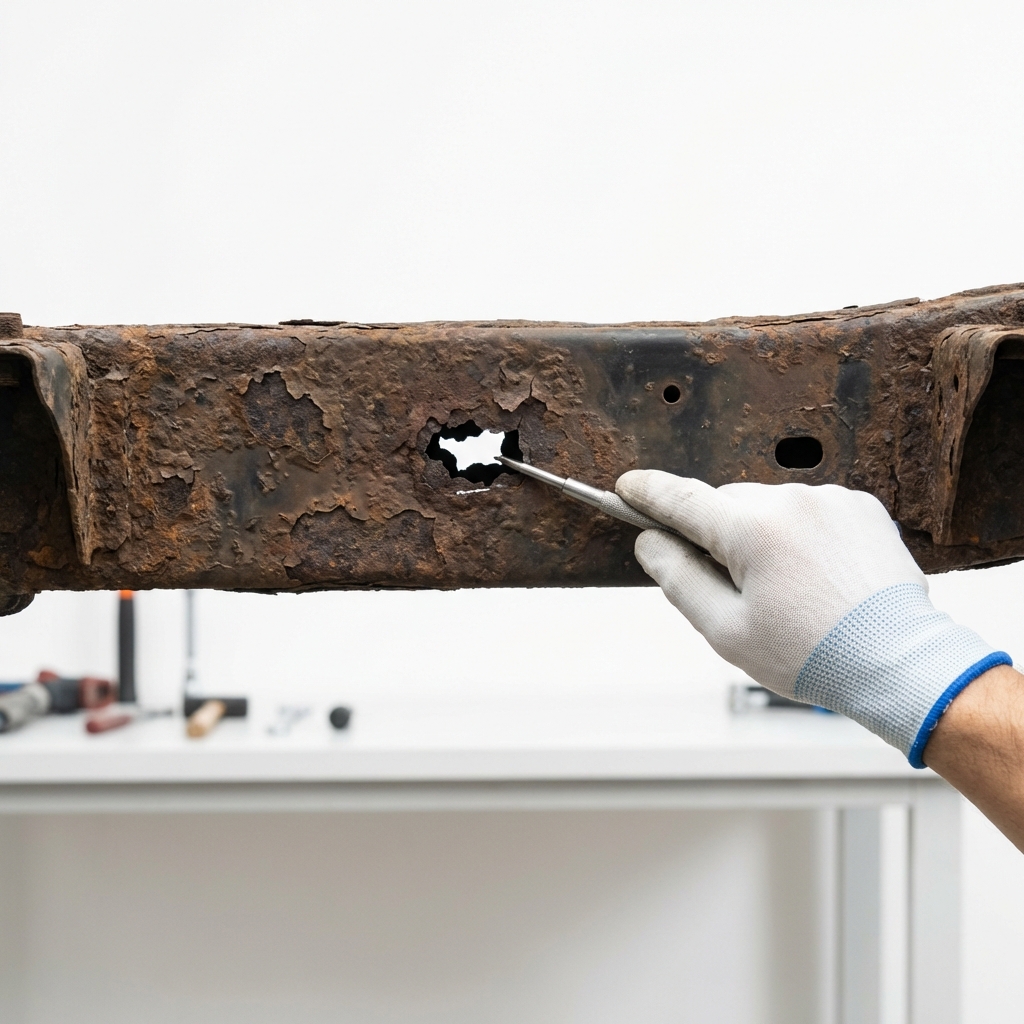
Reported corrosion most often appeared on frame rails, crossmembers, weld joints, and suspension mount areas where moisture and salt accumulate; these locations are priority check points during any underside inspection owner complaint summaries.
Mechanical consequences: cracks, perforation, and sagging
When corrosion progresses to through-rust or perforation it can produce weld cracking, visible buckling or sagging of the frame, and weakened suspension attachment points that affect handling and alignment NHTSA SaferCar vehicle pages.
Environmental and use factors that increase risk
Exposure to road salt, frequent wet-dry cycles, and time accelerate protective-coating degradation and raise the chance that localized corrosion will advance to structural compromise; trucks from salt-belt regions therefore present higher risk and merit closer scrutiny inspection guidance on corrosion risk factors.
What Toyota and regulators did: recalls, replacement programs, and inspection guidance
Scope and limits of manufacturer programs
Toyota offered targeted remediation programs in some cases, including dealer inspection, corrosion-control treatments, and frame replacement for qualifying VINs and regions, but those programs had eligibility limits based on geography and the degree of corrosion observed Toyota owner information and program FAQ.
NHTSA communications and technical service bulletins
NHTSA records include preliminary evaluations and related communications that document investigations and technical observations used by inspectors and buyers to identify high-risk vehicles NHTSA preliminary evaluation.
Public records show the most severe frame corrosion reports concentrated in roughly 2005 through 2010. To check a specific truck, run VIN-level recall and campaign checks, request repair receipts, and get an independent underside inspection focused on frame rails, crossmembers, and welds.
Technical service bulletins and owner letters provided inspection points and described repair options, which buyers should use to frame questions for a mechanic and to verify any dealer work orders or replacement paperwork Toyota owner information and program FAQ.
What to check during a pre-purchase inspection for frame rust
Visual checks the buyer can request or do
Request clear photos and, if possible, view the underside: look for through-rust holes, visible perforation, cracking at welds, buckled rails, and areas where undercoating is missing or flaking away inspection guidance on visual checks.
When to get a professional underside inspection
Get an independent mechanic to lift the truck and inspect frame rails, crossmembers, suspension mounts, and weld joints; ask them to report on any structural cracks, signs of prior welding, or frame replacements and to photograph findings for your records owner complaint summaries.
Documentation to request from the seller
Request service history that documents underbody treatments, any receipts or dealer work orders for frame repair or replacement, and the exact VIN so you can confirm campaign eligibility with the manufacturer and regulator pages Toyota owner information and program FAQ. You can run a report on the VIN with a VIN report to help verify entries.
Remediation options and typical cost ranges reported in the public record
Minor welds and localized corrosion control
For localized corrosion, common remedies include cutting out rusted sections and performing weld repairs plus corrosion inhibitors and protective coatings; owners and shops reported these fixes as lower cost but still substantial compared with routine maintenance owner complaint summaries.
Corrosion-control coatings and dealer treatments
Dealer-applied corrosion-control coatings and seam treatments were offered in some remediation programs and can slow future progression when applied correctly, though the effectiveness depends on the extent of existing damage and the quality of application Toyota owner information and program FAQ.
When corrosion was severe, public reports and news coverage described full frame replacement as a remedial option; owners and media noted that out-of-pocket costs vary widely and can exceed several thousand dollars to well over ten thousand dollars when no manufacturer program applies news coverage of remediation details.
How to verify VIN-specific eligibility for Toyota programs and official records
Where to check recalls, owner letters, and campaign pages
Check the NHTSA SaferCar recall and investigation pages and the Toyota campaign or owner-letter pages by entering the truck's VIN to see whether recalls, owner letters, or specific remediation campaigns apply to that vehicle NHTSA SaferCar vehicle pages or use the NHTSA recalls lookup NHTSA recall tool.
What documentation to request from the seller
Ask the seller for dealer repair orders, frame replacement receipts, and any service records that show underbody treatments; suppliers and insurers typically record part numbers and labor orders that help confirm a manufacturer-covered repair Toyota owner information and program FAQ.
Steps to confirm a frame replacement or covered repair
Confirm a reported replacement by matching the VIN-specific campaign documentation, examining dealer work orders for part and campaign codes, and checking the vehicle history report for entries that note frame replacement or major structural work Toyota owner information and program FAQ. You can also review a vehicle history or run a report via Run CarFax Report to corroborate service dates.
Decision framework: when to proceed, negotiate, or walk away
Factors that increase buyer risk
Higher buyer risk comes from visible through-rust, perforation at frame rails, missing repair documentation, vehicles from heavy-salt regions, and independent inspections that note structural cracking or prior poor repairs owner complaint summaries.
When a documented frame replacement is acceptable
A documented frame replacement performed by a dealer or an authorized facility with clear dealer orders, part numbers, and an owner-letter or campaign code tied to the VIN is often a stronger position than undocumented repairs, though buyers should still verify workmanship and any state title requirements Toyota owner information and program FAQ.
simple scoring rubric to weigh inspection findings and documentation
add scores and total for decision support
How to weigh repair cost, safety risk, and resale impact
Weigh the cost of required repairs, the inspector's assessment of structural integrity, and how documented repairs might influence future resale value; if repair estimates plus the asking price exceed your budgeted total cost to own, negotiate or walk away owner complaint summaries.
How frame repairs or replacements typically affect resale and insurance considerations
Title branding and disclosure expectations
Title branding rules vary by state; some major structural repairs can trigger branding or disclosure requirements, so keep repair receipts and dealer orders to show future buyers and insurers the scope of work performed owner complaint summaries.
Buyer perception and resale pricing
Documented repairs reduce uncertainty but can still lower buyer willingness to pay; many buyers prefer trucks with no structural repair history, so expect some resale price impact even when repairs are properly documented news coverage of remediation details.
Insurance underwriting and safety documentation
Insurers assess repairs and documentation on a case-by-case basis; providing detailed dealer orders and owner-letter confirmations helps in underwriting conversations and claims handling if a post-sale issue emerges Toyota owner information and program FAQ.
Common mistakes buyers and sellers make with frame-affected Tacomas
Relying on photos alone
Photos can hide underside damage and do not replace a lifted inspection; buyers who rely on listing pictures risk missing through-rust or perforation in hard-to-see areas inspection guidance on visual checks.
Skipping the VIN and campaign checks
Failing to run a VIN check can let potential manufacturer remediation eligibility be overlooked; a VIN lookup on NHTSA and Toyota campaign pages can reveal owner letters or campaign codes relevant to cost exposure NHTSA SaferCar vehicle pages.
Accepting verbal claims without paperwork
Verbal seller claims about repairs or replacements are weak evidence; always get repair receipts, dealer work orders, or documented campaign codes that tie the work to the vehicle's VIN Toyota owner information and program FAQ.
Practical checklist and example scenarios for buyers reviewing listings
Checklist to include in the listing review
Copy this checklist into your listing notes: 1) record VIN, 2) run VIN checks for recalls and campaigns, 3) request underbody photos and repair receipts, 4) schedule an independent underside inspection, 5) get written estimates for any required repairs inspection guidance on what to check. For more detail on how to use these steps, see our guide how-to-use.
Three buyer scenarios and recommended actions
Scenario A, clean inspection: no visible corrosion and no campaign entries, proceed with normal due diligence and use the vehicle history report to confirm service history Toyota owner information and program FAQ.
Scenario B, localized corrosion with receipts: request the dealer or shop work orders, verify the VIN-specific campaign coverage if any, and obtain a post-repair inspection; negotiate price to reflect remaining risk owner complaint summaries.
Scenario C, undocumented severe corrosion: get an immediate independent estimate for full frame replacement, confirm whether the VIN was eligible for manufacturer remediation, and be prepared to walk away if repair costs and safety concerns are significant NHTSA preliminary evaluation.
How to use a vehicle history report with inspection findings
Use the vehicle history report to corroborate repair dates, dealer entries, and title events; combine that report with the independent inspector's photographs and work-order documentation to form a balanced purchase recommendation Toyota owner information and program FAQ.
Conclusion: next steps when you find a used Tacoma you like
Immediate verification steps
Record the VIN, run VIN checks for campaign eligibility, request repair receipts, and schedule an independent underside inspection to confirm frame condition NHTSA SaferCar vehicle pages.
When to walk away
Consider walking away if the independent inspection documents through-rust, perforation, or structural cracking without clear, verifiable documentation of a manufacturer-covered replacement or a high-quality documented repair owner complaint summaries.
How to keep the documentation trail
Keep copies of dealer work orders, receipts, inspection reports, and any owner-letter or campaign confirmations; these documents help with resale, insurance, and personal assurance about repair quality Toyota owner information and program FAQ.
Public records and owner complaint aggregators concentrate the most severe reports in roughly mid-2000s through early 2010s, with many complaints clustered around 2005 to 2010.
Toyota offered remediation programs for some VINs and regions that met program criteria, but eligibility depended on VIN, geography, and the extent of corrosion.
Request the VIN, ask for repair receipts and underbody photos, run VIN checks for campaigns, and schedule an independent underside inspection before proceeding.
If a truck you like shows frame issues, prioritize verifiable documentation and an independent inspection before making an offer. Manufacturer programs existed for some VINs and regions, so check campaign eligibility and retain all repair records.
Keeping a clear documentation trail and running a VIN-specific vehicle history report helps you compare listings and decide whether to proceed, negotiate, or walk away.

 Blog
Blog