This guide shows how to find target vehicles under 10000 using a research-first workflow. It combines safety and recall screening, reliability and repair-cost checks, a vehicle history report review, and local pricing tools so buyers can build a defensible shortlist before contacting a seller.
This guide explains which tacoma trucks for sale show the strongest reliability and safety signals to watch out for, and why mid-2010s and many pre-2016 Tacomas appear most often in complaint and recall records. The article shows how to use vehicle history reports, recall checks, and a focused inspection to reduce risk when evaluating a used Tacoma.
This article helps buyers searching tacoma trucks for sale understand which Tacoma engine tends to be most reliable. It summarizes reliability ratings, owner-complaint clusters, and maintenance-cost differences between the 2.7L I4 and the 3.5L V6, and gives actionable checks to reduce engine-related risk.
Audi reliability varies significantly by model, model year and powertrain, so the most reliable Audi for one buyer is not the same for another. This guide shows research-oriented used car buyers how to compare models using industry dependability studies, owner-reported trends, and per-VIN vehicle history reports. It focuses on checklists, inspection priorities and scenario-based recommendations to reduce risk when shopping a used Audi.
Buying a car under $10,000 requires a focused research approach. Price alone can be misleading; safety and reliability checks often matter more for long-term value. This guide gives a step-by-step workflow that combines authoritative safety sources, aggregated reliability signals, vehicle history reports, and local market valuations.
It is designed for research-first buyers and first-time shoppers who want clear actions they can repeat for each candidate. Follow the sequence: safety and recall screening, reliability and repair-cost review, local pricing checks, then history and inspection verification.
Start with safety and recall checks before you consider price to avoid costly surprises.
Combine reliability ratings, local valuations, and a vehicle history report to build a defensible shortlist.
Use a simple printable checklist and a pre-purchase inspection to reduce hidden risk.
What 'vehicles under 10000' means and who this guide is for
In this guide, "vehicles under 10000" refers to the used-car market segment where asking prices are typically at or below ten thousand dollars. These listings often include compact sedans and older small SUVs with higher model years or mileage. Availability and common trims vary by region, so expect a different mix of makes, years, and mileage depending on local supply and demand. For a quick regional sense of what appears in this price band, check a local valuation source for examples in your ZIP code, then use that as the baseline for your search. Kelley Blue Book regional listings
set a realistic local target purchase range
use this before contacting sellers
Research-first buyers, including first-time buyers and families prioritizing predictable ownership costs, benefit most from a structured workflow. That means starting with safety checks and moving through reliability and pricing checks before you contact a dealer. A measured approach reduces the chance you narrow on a low sticker price but a high long-term cost. Keep in mind that regional differences and trim level matter: the same model and year can have different standard equipment and powertrain options that affect reliability and resale value.
When you see a listing described as a compact sedan or small SUV, confirm the exact model year and trim in the listing. Trim and powertrain choices can change common failure modes and fuel economy, so they matter for both reliability and total cost to own.
Key safety and recall checks to run first
Before you shortlist any candidate, use IIHS guidance to check crashworthiness and how a model performs in real-world crash tests. IIHS provides model-year specific insight that helps you avoid models with poor ratings for the exact year and body style you are considering. IIHS used car guidance and check Edmunds recall resources
After checking crashworthiness, search the NHTSA recall database for the vehicle's make, model and model year to identify outstanding safety campaigns or defect investigations. A listing with unresolved recalls or open safety campaigns should be treated cautiously, and you should ask the seller for proof that recalls were addressed. NHTSA buying used vehicle checklist
Safety performance can change between model years and with different trims or optional equipment, so match the exact model year and trim features when you check ratings and recalls. Often, higher trims add safety features that change a vehicle's risk profile for certain crash types.
How to combine safety, reliability, and pricing into a shortlist
Make safety and recall status the opening filter. Remove models and model years with poor crashworthiness or unresolved recalls from your candidate list before you consider price or repair costs. Starting here reduces the chance of buying a car that will require expensive structural repairs or has an open defect campaign. IIHS used car guidance
Prioritize safety and recall screening, then check reliability and average repair costs, set a local price target, and always review a vehicle history report and get a pre-purchase inspection.
Next, apply reliability and average repair-cost screens using aggregated sources to estimate expected maintenance burden. Reliability resources summarize common failure modes and typical annual repair costs; use them to exclude models that routinely need costly repairs for the age and mileage you are considering. RepairPal reliability and cost guide
Finally, run a local price check to set a target purchase range and spot listings priced above market. Use Kelley Blue Book or Edmunds to input the exact model year, trim, mileage and your ZIP code so you understand local typical asking prices. Listings that sit well above the local range deserve extra verification about condition, included service, or mis-specified trim. Edmunds used car values
Putting those three steps in order helps you create a defensible shortlist of candidates that balance safety, predictable maintenance expectations, and realistic pricing. Keep notes for each candidate so you can compare safety ratings, reliability scores, and local valuations side by side.
What to check in a vehicle history report and why it matters
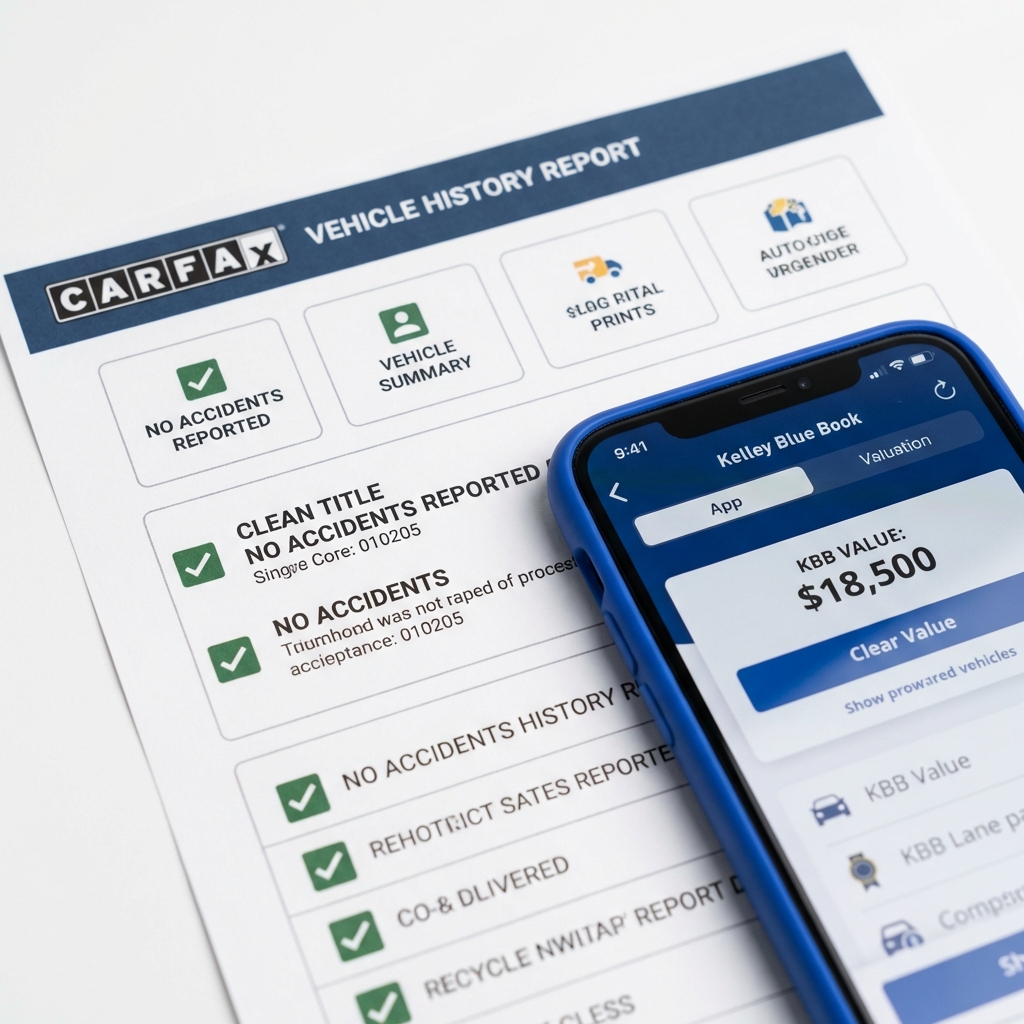
A vehicle history report typically shows title status, ownership history, accident history, service history and odometer checks. Each element reduces different hidden risks: title branding can signal salvage or rebuilt status, ownership history can identify lease or fleet use, and service history can show whether routine maintenance was performed. When you use a history report, verify the VIN and cross-check reported mileage against listed mileage. Consumer Reports used car buying guide
Title issues like salvage or rebuilt branding can affect future insurability and resale value, and they may indicate significant prior damage. A clean title narrows risk but does not replace a careful inspection. Treat the history report as necessary but not sufficient: combine it with service records and an independent inspection before deciding. RepairPal reliability and history notes
Practical pricing checks: using KBB and Edmunds to set target ranges
To set a realistic target range, enter the exact model year, trim, mileage and your ZIP code into Kelley Blue Book or Edmunds. Use the resulting local valuation range as the primary benchmark when assessing any listing. If a listing sits above the top of the local range, verify the seller's condition claims and included documentation before proceeding. Kelley Blue Book pricing guide
Common reasons a seller lists a car above local market include low local supply for that model, recent dealer reconditioning that the seller expects to recover, or a mis-specified trim in the listing. Check photos, the listed trim and the equipment list to confirm the vehicle matches input you used for the valuation tools. Edmunds market trends
Rather than target a single price, set a purchase window that reflects top local retail, a reasonable dealer margin, and a lower target you would accept for a quick, certain purchase. That window gives you negotiation room without chasing an unrealistically low sticker price.
How to weigh reliability and expected repair costs
RepairPal and Consumer Reports aggregate reliability data and estimated average annual repair costs that help predict maintenance burden for older vehicles. Use their summaries to identify common failure modes for a specific model and approximate what annual maintenance might look like for the car's age and mileage. RepairPal reliability overview
Older vehicles tend to have a higher probability of component failure, and average repair costs typically rise with age and mileage. Translate a model's average annual repair cost into a simple ownership budget you can compare across candidates, and then adjust based on any available service history. Consumer Reports can help prioritize the aspects of reliability that matter most for daily use. Consumer Reports used car reports
Combine aggregated reliability scores with the car's actual maintenance history. A model with average ratings but a complete, well-documented service history can be a better pick than a higher-rated model with spotty records.
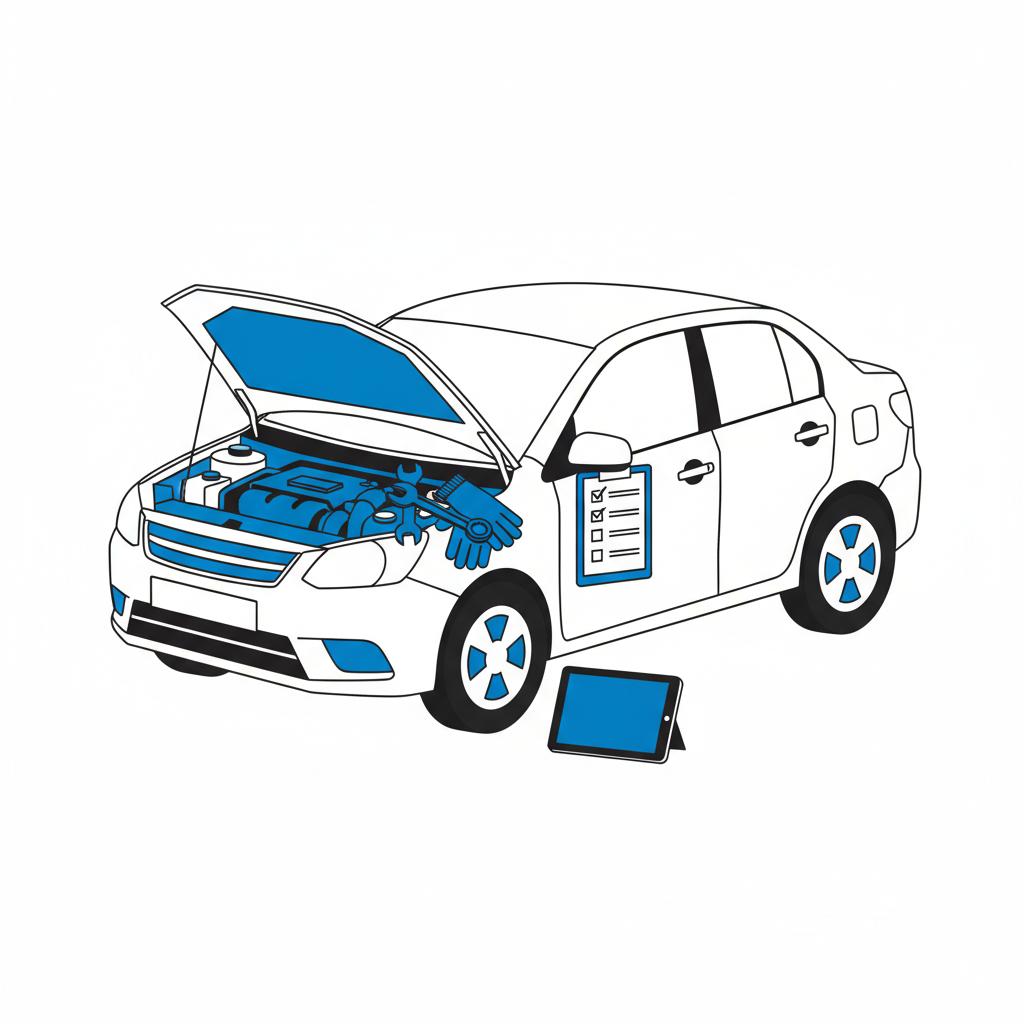
A concise step-by-step inspection and verification checklist
When you review listings, verify the exact model year, trim, listed mileage, and whether the seller includes a vehicle history report or service records. Look for consistent VIN reporting between photos and the listing text, and note any service receipts or recent major repairs listed. These checks reduce surprises when you inspect the car in person. RepairPal maintenance guidance
In person, examine the title documents, confirm the VIN on the car matches paperwork, look for signs of structural repair, and take a careful test drive to detect obvious leaks, noises, or transmission concerns. Ask the seller for recent receipts and verify that routine maintenance items were performed. These simple verifications help prevent common hidden risks. Consumer Reports inspection recommendations
Before you pay, arrange a professional pre-purchase inspection. Tell the inspector your top concerns based on the car's age and known model-specific issues, and ask them to check for structural damage, engine and transmission condition, suspension wear, and evidence of flood or long-term neglect.
Order a vehicle history report
Consider ordering a vehicle history report and arranging a professional pre-purchase inspection before you pay.
Common mistakes buyers make when shopping under $10,000
Choosing only by the lowest asking price is a common pitfall. The lowest sticker can hide high future repair bills or title problems that expensive repairs will reveal. Balance price with documented maintenance and history to reduce long-term ownership surprises. RepairPal reliability guide See Consumer Reports for examples of hidden risks.
Skipping a vehicle history report or a pre-purchase inspection increases the chance of missed title branding, odometer discrepancies, or undisclosed accidents. Treat the history report as a required step to reduce hidden risk when shopping in the under-$10k market. Kelley Blue Book advice
Three practical search scenarios and sample shortlists
Budget commuter, low-mileage compact sedan. Priority: low running cost, fuel economy, and recent maintenance. For this scenario favor well-documented service history and lower annual repair-cost models. Use the three-step workflow: confirm safety ratings, check RepairPal and Consumer Reports for common failure modes, then set a local target price via KBB or Edmunds. Edmunds market tools
Small family SUV with focus on reliability. Priority: safety features, passenger space, and predictable repair costs. Emphasize model-year-specific crashworthiness and trims with tested safety packages, then use reliability summaries to choose models with lower average repair costs for their age. Kelley Blue Book selection notes
High-mileage bargain with acceptable repair costs. Priority: low asking price with transparent service history and no major structural or title issues. Expect some higher short-term maintenance, so model choice should favor lower-cost parts and straightforward serviceability. Verify history reports and prioritize vehicles with recent major services documented.
How to interpret dealer information and transparency signals
Check dealer profile pages and review patterns to assess transparency. Dealers that publish clear vehicle history reports, show service records, and provide honest VIN-based listings tend to reduce initial uncertainty. Use dealer ratings and reviews as one signal among many, not as a sole decision factor. Kelley Blue Book dealer guidance
When a dealer offers a vehicle history report or a price analysis label, use those documents to cross-check your own findings. Dealer-provided reports can be helpful but should be verified against independent history and valuation sources.
When a car is a reasonable value versus when to walk away
Walk away if you find a salvage or branded title, unresolved safety recalls, large unexplained gaps in service history, or inconsistent mileage records. These red flags increase the probability of expensive repairs or legal complications down the road. NHTSA recall and safety checklist
Pay a modest premium when documentation justifies it: recent major service with receipts, a documented recent timing-belt or transmission job, unusually low mileage for the age, or low regional supply that makes similar condition cars rare. Always combine these condition notes with safety, reliability and local pricing checks before deciding. RepairPal repair cost context
A simple negotiation posture for buyers without dealer experience
Prepare before you call: have safety notes, reliability summaries, and local valuation ranges ready. Use neutral, factual language and ask concise questions about title status, recent repairs, and whether the vehicle has open recalls or pending campaigns. Presenting clear data tends to be more effective than high-pressure negotiation. Edmunds negotiation guide
Ask the seller to explain any service records and to confirm the VIN and title status. If you find discrepancies between the listing and history report, request clarification before scheduling an inspection. Rely on documented local valuations rather than intuition when suggesting a fair adjustment.
A compact pre-purchase checklist to print or save
Top 10 quick checks
Confirm VIN, year, trim and listed mileage
Check IIHS crashworthiness for the exact model year
Run NHTSA recall search for make, model and year
Order a vehicle history report and review title status
Compare RepairPal or Consumer Reports reliability notes
Use KBB/Edmunds for local target price range
Verify service records and recent repairs
Inspect for structural repair signs and leaks
Arrange a professional pre-purchase inspection
Save all documents and compare candidates in a spreadsheet
Use a simple spreadsheet or notes to track VIN, year, trim, mileage, price, and key flags. Save the vehicle history report and any service receipts for each candidate so you can compare apples to apples when choosing.
Final recommendations and next steps
Use the combined approach: safety first (IIHS and NHTSA), then reliability (RepairPal and Consumer Reports), then local pricing checks (Kelley Blue Book or Edmunds), and finalize with a vehicle history report and inspection. This layered workflow tends to reduce hidden risk and makes value comparisons more defensible. IIHS buying guidance
Practical next steps: run a local valuation for your top candidates, order a vehicle history report for each VIN, request service records from the seller, and arrange a pre-purchase inspection before any payment. CarFax Deals can act as a verification layer that helps surface history context and pricing signals while you do this research.
Yes. A vehicle history report helps identify title issues, ownership records, accident history and odometer checks, which reduce hidden risk when shopping lower-priced used cars.
Start with IIHS for crashworthiness and use NHTSA to search for recalls and defect campaigns for the exact model year and trim.
Enter exact model year, trim, mileage and ZIP code into Kelley Blue Book or Edmunds to get local valuation ranges and create a purchase window rather than a single number.
Follow the layered checks in this guide each time you compare candidates. Order a vehicle history report early, verify safety and recall status, confirm reliability expectations against service records, and get an independent inspection before payment. That approach helps you prioritize value while reducing the chance of expensive surprises.

 Blog
Blog