When you shop for a used car, a VIN check is one of the first practical steps to reduce risk. Buyers often ask whether a Carfax VIN lookup is free and what they can learn without paying.
This article explains how Carfax’s free VIN preview works, how it differs from a paid vehicle history report, and how Kelley Blue Book (KBB) and government tools fit into a low-cost research workflow. It concludes with clear decision rules for when buying a full report is worth the price.
Carfax offers a limited free VIN preview but full accident, title, and service details usually require a paid vehicle history report.
Use NHTSA VIN decoder and NICB VinCheck as free, authoritative first checks before buying a paid report.
Run a KBB valuation for pricing context, then buy a full report if red flags appear or paperwork is incomplete.
Quick answer: Is Carfax VIN lookup free?
Short answer: Carfax offers a limited free VIN lookup that surfaces basic identifiers and will flag whether a full vehicle history report exists, but the detailed accident, ownership, service and title records are generally available only in the paid Carfax vehicle history report.
That means you can confirm basic model information and see if a full report is available without paying, but you should not assume a free preview is a substitute for the full report when you see any risk signals in a listing CARFAX vehicle history report.
Run free VIN checks before buying a report
Run the free government and valuation checks listed below first, then decide whether a paid vehicle history report is necessary for this specific car.
When to act: use the free lookup to screen listings quickly. If you find inconsistency, unclear title notes, or sparse maintenance information, plan to buy the full report before making a deposit or final commitment.
Short answer
The free Carfax VIN lookup is a preview rather than full access. It helps you determine whether to proceed to a paid report when details matter.
What this page will cover
This guide explains what the free lookup shows, how KBB valuation differs, useful free government tools, a simple workflow for research, and clear rules for when to buy a paid vehicle history report.
What Carfax's free VIN lookup actually shows and its limits
Which fields are visible for free: the free preview typically reveals basic identifiers such as model year, trim, and an indicator that a full Carfax vehicle history report exists, rather than the complete dataset behind the paid product CARFAX reports - pricing and product information.
That preview helps confirm the VIN matches the listing and gives you a quick read on model-year and trim details, but the preview usually omits full accident history, ownership history, service history, title status and detailed mileage checks until you purchase the full report CARFAX vehicle history report.

Example: a free lookup may show the vehicle is a 2016 midsize SUV, X-trim, and that a full report is available, without listing past accidents or service entries. Relying on the preview alone can miss branded title notes or multiple prior owners that only appear in the paid record.
Which fields are visible for free
Expect to see manufacturer identifiers and basic configuration details, plus a clear prompt when a full report exists; these are useful for quick filtering but are lightweight compared with a paid report.
When a full report is required
Buy the full Carfax vehicle history report when the listing shows possible red flags or the seller cannot produce clear documentation. The full report typically provides the depth you need to confirm or rule out issues such as salvage or branded titles and odometer inconsistencies CARFAX vehicle history report.
How vin lookup kbb compares to Carfax for VIN-based checks
What KBB focuses on: Kelley Blue Book (KBB) specializes in pricing and valuation tools, providing VIN-based estimates and market context that help set price expectations for a listing Kelley Blue Book vehicle value page.
KBB is designed to help you understand fair market value and typical pricing trends in your area, which is useful early in research but it does not provide the depth of accident or title records that a paid vehicle history report delivers.
What KBB does not provide compared with Carfax: KBB valuation does not replace a dedicated vehicle history report when you need accident history, ownership history, service records or title status. Use KBB to set pricing context, not as a history report substitute.
What KBB focuses on
Use KBB early to compare the listing price to local market values; this gives you a baseline for negotiating or identifying listings that are unusually cheap or expensive.
What KBB does not provide compared with Carfax
KBB will not show detailed accident timelines, branded title histories or service log entries. Pair a valuation check with a proper vehicle history report when those items matter for safety or resale considerations.
What a full Carfax vehicle history report includes
What to check in a vendor’s package: verify which data fields are included, whether recent entries are updated often, and whether the package covers multiple VINs on a single purchase. These factors determine how useful a package is compared with buying single reports as needed.
How to read key flags: learn what common flags mean. A salvage or rebuilt title entry indicates a previous brand on the title; multiple owners in a short time can suggest persistent issues; odometer discrepancies warrant documented service records or dealer confirmation.
Core report sections
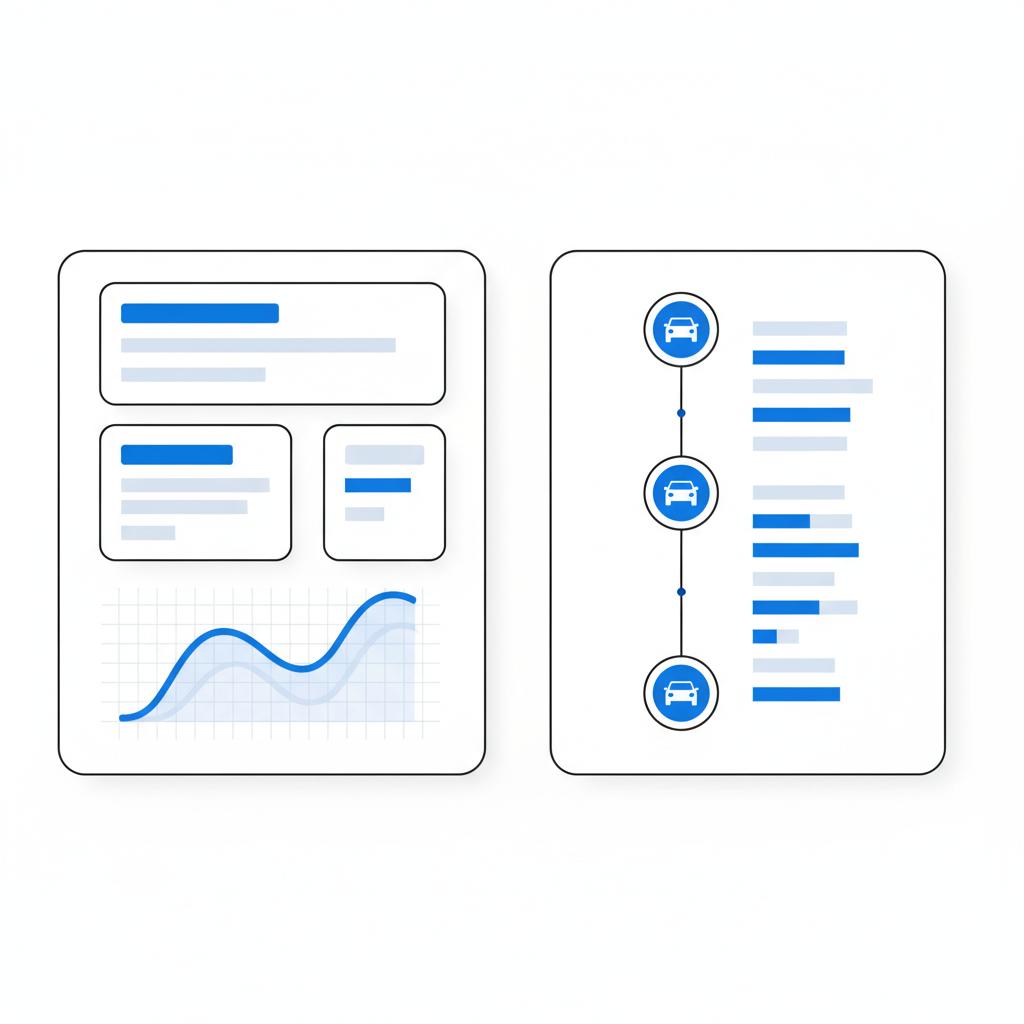
Accident history shows reported incidents and dates, ownership history lists prior owners and states of registration, service history lists recorded maintenance events, and title status flags salvage or rebuilt notations where present.
How to read key flags
When you see a salvage or rebuilt title note, ask the seller for repair invoices and the title document. Treat odometer inconsistencies as a trigger to verify maintenance logs or a certified inspection.
Free government alternatives: NHTSA VIN decoder and NICB VinCheck
What NHTSA returns: the NHTSA VIN decoder gives manufacturer and specification data such as model year, engine and powertrain options and basic OEM configuration, useful to confirm the listing matches factory specifications NHTSA VIN decoder.
What NICB VinCheck covers and limits: NICB’s VinCheck provides a free lookup for reported theft and certain total-loss records, which can catch vehicles reported as stolen or declared a total loss to participating databases NICB VinCheck.
Limitations: neither the NHTSA decoder nor NICB VinCheck replaces a paid vehicle history report for accident narratives, service history depth, or detailed ownership records. Use them together with valuation tools for a stronger free baseline.
What NHTSA returns
Run the NHTSA decoder to confirm factory details like trim and engine type and to detect mismatches between the posted VIN and the seller’s description.
What NICB VinCheck covers and limits
Use NICB to check for reported theft or total-loss indicators; if the VinCheck returns a hit, pause the transaction and request documentation from the seller or dealer.
When to buy a paid vehicle history report: red flags and decision criteria
Common red flags to trigger a paid report include salvage or rebuilt title indicators, inconsistent mileage across documents, a chain of many prior owners, or sparse and unverifiable maintenance records; consumer guidance favors buying a full report when these appear Consumer Reports guidance on VIN checks.
Prioritizing cases to buy a report: if the listing price is unusually low relative to KBB value, paperwork is incomplete, or the dealer will not share title documentation, buy the full report before leaving a deposit or agreeing to final payment CARFAX vehicle history report.
Common red flags to trigger a paid report
Look for words like salvage, rebuilt, branded, or language suggesting parts or bodywork; also treat inconsistent odometer entries and missing service records as triggers.
Prioritizing cases to buy a report
High-priority situations for buying a report include private sales with limited paperwork, listings with large price discounts, or any time the vehicle has a complex ownership trail.
A practical workflow: run NHTSA and NICB, check KBB value, then decide on Carfax
Step-by-step checklist: 1) Confirm the VIN on the listing matches the posted paperwork and photos. 2) Run the NHTSA VIN decoder to confirm manufacturer data. 3) Run NICB VinCheck for theft or total-loss indicators. 4) Use KBB to get a pricing baseline. 5) If red flags appear, buy a full Carfax vehicle history report before final commitments NHTSA VIN decoder.
When to pause and buy: pause and purchase the full report if any of the previous checks return mismatches, flagged title notes, or if the KBB valuation and listing price suggest an unexplained discount NICB VinCheck.
CarFax Deals can act as a verification layer in this workflow by surfacing available vehicle history context and pricing signals alongside dealership listings, helping you compare options before contacting a seller. Use the platform as one part of research, not as a replacement for inspection or paperwork verification.
Step-by-step checklist
Follow the ordered steps to avoid skipping critical checks: start free, add valuation, then buy a report if needed.
When to pause and buy
If a VIN mismatch, a NICB hit, or unusual KBB delta appears, stop and buy the full report to reduce uncertainty before placing money down.
How paid report pricing and bundles typically work
Single reports versus bundle options: history providers commonly sell single reports and multi-report packages; the multi-report approach helps buyers who plan to check multiple cars, but prices and included data fields differ between vendors so compare carefully CARFAX reports - pricing and product information.
What to check in a vendor’s package: verify which data fields are included, whether recent entries are updated often, and whether the package covers multiple VINs on a single purchase. These factors determine how useful a package is compared with buying single reports as needed.
Single reports vs bundle options
Single reports are convenient for one-off purchases; bundles can be cost-efficient if you are actively shopping several vehicles in a short window.
What to check in a vendor’s package
Check that the package includes the core fields you need-accident history, title status, mileage checks and service history-and confirm current pricing on the vendor page before buying.
How to compare Carfax reports to other paid providers
Checklist for meaningful comparison: compare included fields such as depth of accident history, title status coverage, mileage checks and documented service history; also check how each vendor sources its data and the typical recency of entries CARFAX reports - pricing and product information.
Data fields that matter most: prioritize clear title status entries, mileage history, and accident reporting depth when comparing providers. Price alone does not guarantee equivalent coverage.
Checklist for meaningful comparison
Ask which databases the provider taps, how often records update, and whether the package limits searches or adds usage restrictions.
Data fields that matter most
Accident entries, branded title flags, and mileage verification tend to be the most valuable when deciding whether to proceed with a purchase.
Common mistakes buyers make with VIN lookups
Overreliance on a single free check is a common error: a free preview or a single valuation can miss important branded title notes or service history gaps that would change your decision to buy Consumer Reports guidance on VIN checks.
Misreading value signals: assuming a KBB-friendly price means the vehicle has no history issues is risky; price can reflect cosmetic problems, omitted maintenance, or title history that a valuation tool will not reveal Kelley Blue Book vehicle value page.
Overreliance on a single free check
Using only one free service leaves gaps; combine NHTSA, NICB and a valuation check before deciding whether to buy a paid history report.
Misreading value signals
Use KBB as a pricing context tool, not an all-clear for title or accident history; always verify with records or a full report when the stakes are high.
Practical examples and scenarios
Dealer listing with low price: step 1, confirm the VIN on the listing with the NHTSA decoder. Step 2, run NICB VinCheck for theft or total-loss flags. Step 3, run KBB to see typical market value. Step 4, if price is well below KBB and any check shows inconsistencies, buy the full Carfax vehicle history report to avoid surprises NHTSA VIN decoder.
Private seller with sparse records: start with NHTSA and NICB, then use KBB to set expectations. If the seller cannot show title documents or service records, treat the situation as high priority for buying a paid report NICB VinCheck.
High-mileage but well documented car: if service history is extensive and matches mileage entries, a KBB valuation can confirm reasonable pricing; still buy the full vehicle history report if you plan to place a deposit to verify title status and accident history.
Dealer listing with low price
When a dealer lists a car well below market, the steps above help separate bargains from risky buys; documentation and a paid report can confirm whether the discount is justified.
Private seller with sparse records
Private sales need extra caution; a paid report can reveal title branding or prior auction history that a private seller might not disclose.
Checklist: what to confirm before you pay or sign a deposit
Immediate pre-purchase checks: confirm the VIN matches the listing and paperwork, run the NHTSA VIN decoder and NICB VinCheck, and compare the KBB valuation to the seller’s price NHTSA VIN decoder.
Documents to request from the seller: title certificate, maintenance records, service invoices, and any proof of repairs following major incidents. If anything is missing or inconsistent, buy a full vehicle history report and request clarification before transferring funds CARFAX vehicle history report.
Immediate pre-purchase checks
These checks take little time and reduce risk: VIN confirmation, free government checks, and a KBB valuation often reveal whether deeper review is needed.
Documents to request from seller
Ask for original title pages, recent service receipts and any inspection certificates; combine that paperwork with the purchased report for the best protection.
Conclusion: next steps and the role of CarFax Deals in your research
Short recap: use free government tools (NHTSA, NICB) and a KBB valuation first, then buy a full Carfax vehicle history report when red flags or documentation gaps appear. This sequence helps prioritize spending on reports when they matter most CARFAX vehicle history report.
Where to go from here: run the NHTSA VIN decoder and NICB VinCheck for any car you consider, check KBB for pricing context, then use a paid vehicle history report to confirm title and accident history before final commitments. CarFax Deals can surface vehicle history context and price analysis labels next to dealership listings to help narrow choices, but always verify documents and consider inspection for high-stakes purchases.
Use the ordered workflow in this guide to prioritize checks and limit unnecessary spending on reports. Free government checks and a KBB valuation are cost-effective first steps; buy a full vehicle history report when red flags or documentation gaps appear.
CarFax Deals can help surface vehicle history context and pricing signals next to dealership listings, but always verify title documents and consider a physical inspection before finalizing a purchase.


 Blog
Blog