This guide explains what a vin lookup kbb search can and cannot do, which free government tools return authoritative VIN facts, and how to combine KBB estimates with local listings and title data to form a realistic value range. It shows practical steps to run free checks, when to pay for extra verification, and how a verification layer like CarFax Deals can help reduce uncertainty before contacting a dealer.
A rav4 used for sale can be a sensible pick for many research-oriented buyers because reliability aggregators rate the model above average and safety ratings are generally strong. This guide explains how to vet listings, what model years tend to be better, and a step-by-step checklist to reduce risk before you buy.
This guide explains how to estimate the cost of buying an R34 Skyline, with attention to import rules, condition-driven price tiers and landed cost. It shows which factors move value, how to verify history and paperwork, and offers a checklist you can follow when you search for a nissan skyline r34 for sale.
This guide helps buyers set realistic expectations for tacoma trucks for sale by explaining the main price drivers and a repeatable method to build conservative, typical, and ambitious offer ranges. It shows how the 2024 redesign, valuation guides, and vehicle history reports interact to change asking prices and reduce purchase risk.
A vehicle identification number is a starting point for learning about a car, not the whole story. This article helps clarify what a vin lookup kbb search can reveal for free, and what it cannot.
You will get step-by-step checks to run now, guidance on when to pay for reports or inspections, and practical examples for translating a valuation range into a negotiation plan.
Government VIN decoders and NICB VINCheck let you confirm recalls and theft or total-loss records for free.
KBB offers VIN-linked estimates that require mileage and condition inputs and return ranges, not guaranteed sale prices.
Use NMVTIS guidance for authoritative title status and consider paid reports or inspections when flags appear.
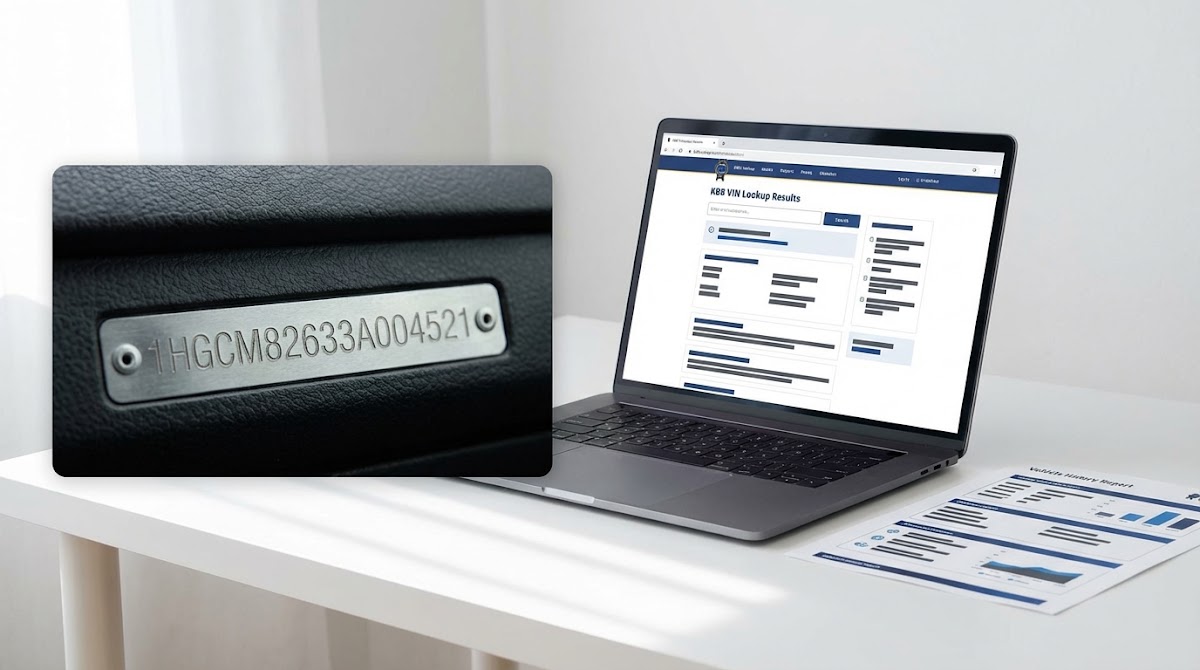
vin lookup kbb: what a free VIN-based value check can and cannot show
A vin lookup kbb search can often give you a quick starting estimate and VIN-specific facts such as recall and manufacturer data, but it usually cannot produce a precise sale price by itself. The government VIN decoder shows what the vehicle was built as and helps spot recalls, which helps explain why a VIN is useful for an initial check NHTSA VIN decoder
A free VIN lookup gives important facts like recalls and theft or total-loss reports, and KBB can return a VIN-linked value range, but a VIN alone usually cannot confirm trim, options, or condition that materially affect price; combine free checks with local comparables and inspections when needed.
Kelley Blue Book offers VIN-based value tools that return free estimates, but those tools rely on extra inputs like exact mileage, condition, and options to tighten a range, so take the result as a starting band rather than a guaranteed price Kelley Blue Book value guide
Quick answer
Short answer, yes and no. You can run free VIN checks that confirm recalls and some title or theft flags, and you can get a KBB estimate tied to a VIN, but the estimate is a range that needs local context and condition details before you trust it for negotiation.
Why VIN matters and what it usually reveals
A VIN reliably identifies model year, engine type, and factory options that were installed at build time, and it points to manufacturer recalls. That identification is why VIN-based checks are the first step for many buyers when assessing value NHTSA VIN decoder
Where to get free VIN information: NHTSA, NICB, and NMVTIS explained
What each government source provides
NHTSA’s VIN decoder returns manufacturer data and links to safety recalls, which is useful for spotting recalls before you estimate value NHTSA VIN decoder
NICB’s VINCheck is a free lookup for theft and total-loss records reported to insurers; it helps rule out known stolen or salvage-flagged vehicles before you make a buying decision NICB VINCheck
Run the NHTSA VIN decoder and NICB VINCheck now and note any flags
Use results to confirm recalls and theft or total-loss flags
NMVTIS centralizes title and salvage information and is the authoritative source for title status, but consumer access typically comes through approved providers, many of which charge fees for a formatted report NMVTIS consumer access information
How to use each free lookup in practice
Run NICB VINCheck first to confirm no reported theft or total-loss history, then use NHTSA’s VIN decoder to check recalls and to confirm the build data you will use when entering options at valuation sites NICB VINCheck
If title history matters, check NMVTIS guidance and consider an approved NMVTIS provider to see branded title or salvage records; if a report shows a branded title you should treat valuation ranges with extra caution NMVTIS consumer access information
How Kelley Blue Book uses VINs to produce free estimates
What information KBB can parse from a VIN
KBB can use a VIN to prefill model year, make, and some factory options, and then it asks you for mileage and condition to produce a value range; that VIN-linked tool is free to use but the estimate depends on your inputs Kelley Blue Book value guide
Even with a VIN, KBB cannot always detect nonfactory options, recent repairs, or interior condition from a VIN alone, so its range will widen if you cannot supply accurate mileage, trim, and known options Why a VIN Alone Doesn’t Set a Car’s Value
CarFax Deals can act as a verification layer by surfacing vehicle history reports and price analysis labels alongside listings, which helps compare pricing context across dealers before you call, but platform signals do not replace a physical inspection or a title check
Step-by-step: how to check car value by VIN for free
A concise checklist you can follow now
Step 1, run a NICB VINCheck to confirm no theft or reported total-loss history for the VIN you are evaluating NICB VINCheck
Continue your VIN checks
Continue the checklist by running the NHTSA VIN decoder and noting any recalls or build data.
Step 2, run the NHTSA VIN decoder and record recall notices and the factory build details you will use when getting valuation estimates NHTSA VIN decoder (or use our VIN decoder).
Step 3, enter the VIN into KBB’s VIN-based tool and supply exact mileage, the condition grade, and any known options to get a tighter KBB range Kelley Blue Book value guide
Step 4, if title clarity matters, search for NMVTIS-approved providers to confirm branded title, salvage, or theft status; consider paying for an NMVTIS report if an online VIN check shows potential issues NMVTIS consumer access information
Step 5, compare the KBB range to local comparable listings and any price analysis labels you find; use those comparables to translate a valuation range into an expected sale band for your market FTC guidance on buying a used car (see our how-to guide for comparing listings).
How to combine VIN checks with local market comparables
Take the VIN-linked KBB range and overlay two or three nearby listings for the same model year, similar mileage, and similar condition; prioritize listings with clean title and consistent service history when refining your expected sale band Kelley Blue Book value guide
If the KBB range and local comparables align, you have more confidence to set a negotiation target; if they diverge, pause to verify title records, service history, and trim/options before proceeding NMVTIS consumer access information
When to rely on a free VIN estimate and when to seek more certainty
Decision criteria and red flags
Rely more on free VIN estimates when the vehicle shows a clean title, a single-owner history, consistent mileage, and well documented service records; these signals tend to reduce the likelihood that hidden condition issues will move price materially NMVTIS consumer access information
Red flags that call for paid verification include any branded title entries, salvage or rebuilt records, inconsistent mileage history, or missing trim and option information, since a VIN alone may not capture those details Why a VIN Alone Doesn’t Set a Car’s Value
When major discrepancies appear between KBB’s VIN-based range and local listings, or when NICB or NMVTIS show flags, pay for a detailed history report or arrange a mechanic inspection before an offer FTC guidance on buying a used car
When a paid report or inspection is worth it
Consider a paid NMVTIS or branded history report when title or salvage status is uncertain, and hire a mechanic inspection when service records are incomplete or when you suspect recent repairs that could affect safety or value NMVTIS consumer access information
Common mistakes buyers make when using free VIN value checks
What to avoid
A common mistake is treating a VIN-based KBB range as a guaranteed sale price; KBB returns ranges because condition, options, and local demand change outcomes, so expect a band rather than a single number Kelley Blue Book value guide
Another error is skipping title checks; assuming no accident or salvage because a quick search showed no results risks missing records that appear only in NMVTIS or in paid reports NMVTIS consumer access information
A reliable habit is to cross-check multiple valuation sources and local listings, and to use price analysis labels and service history to narrow your expectations rather than relying on a single free result FTC guidance on buying a used car
Practical examples: reading reports and comparing to local listings
Example 1: a late-model sedan with full service records
If the VIN returns no NICB or NMVTIS flags, KBB’s VIN-based range lines up with several nearby listings that have similar mileage and full service history, you can treat the KBB band as a practical negotiation band after an inspection and with confirmation of title status Kelley Blue Book value guide
In that case, use the lower end of the KBB range as a walk-away threshold and the middle of the band as an initial offer, adjusting for any issues uncovered during inspection.
Example 2: a truck with unclear title history
If NICB or an NMVTIS check show possible salvage or total-loss history, pause and get a paid NMVTIS or branded report and a mechanic inspection before assuming the KBB estimate applies; a title brand can change the market and affect resale significantly NMVTIS consumer access information
When a paid report confirms a branded title, you may use the KBB range only as a reference and expect market discounts; that outcome often changes whether buying is reasonable.
How to translate a KBB range into a negotiation target
Start with the KBB mid-range as your reference, adjust down for cosmetic or service issues identified in inspection, and adjust up if local comparable listings consistently exceed KBB’s top of range for similar condition; document your adjustments so you can explain your offer to a seller Kelley Blue Book value guide
Next steps: when to pay for a report, get an inspection, and how CarFax Deals fits in
Paid reports, inspections, and your checklist before visiting a dealer
Pay for an NMVTIS report when title status is unclear or when a VIN check shows potential salvage, and hire a mechanic inspection when service history is incomplete or when you suspect recent repairs that affect value or safety NMVTIS consumer access information
CarFax Deals can help by surfacing vehicle history reports, price analysis labels, and dealer transparency signals so you can compare listings faster and identify which cars merit a deeper check; use those signals as part of your verification, not as a substitute for inspection
If uncertainty remains after free checks and platform signals, pay for a detailed history report and get a pre-purchase inspection before finalizing any purchase decision FTC guidance on buying a used car
CarFax Deals can help by surfacing vehicle history reports, price analysis labels, and dealer transparency signals so you can compare listings faster and identify which cars merit a deeper check; use those signals as part of your verification, not as a substitute for inspection
No, a VIN alone usually cannot produce an exact sale price because it does not show trim-level options, recent repairs, interior condition, or actual odometer history; use VIN checks plus condition and comparables.
Start with NICB VINCheck for theft or total-loss records and NHTSA’s VIN decoder for recalls and manufacturer build data, then compare results to a KBB VIN-based estimate.
Pay for an NMVTIS report when title or salvage status is uncertain, and get a mechanic inspection when service history is incomplete or when you find discrepancies in mileage or damage reports.
Free VIN checks are a useful first filter, but they are not a substitute for clear title records, an accurate mileage history, and a physical inspection. Use the steps in this guide to reduce uncertainty before you contact a seller.
When the stakes are high or data conflicts appear, pay for a detailed history report and a mechanic inspection to get the certainty you need.

 Blog
Blog


