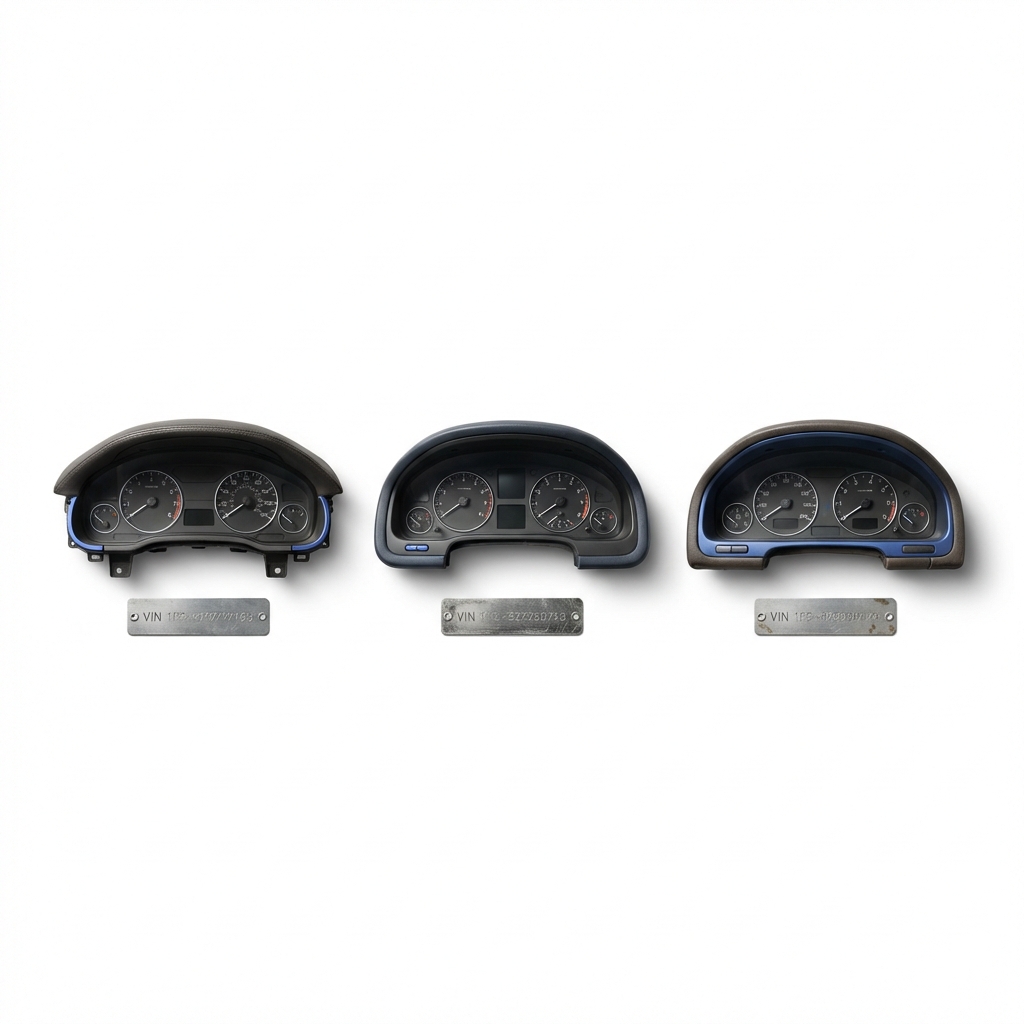
Confused by conflicting estimates for your car’s worth? This deep-dive explains how to get accurate used car values online by triangulating three data sources—private-party guides, dealer/auction benchmarks, and live listings—and by using VIN-backed tools for transparency. You'll get practical step-by-step workflows for selling, trading in, and buying, a side-by-side look at the major sites (KBB, Edmunds, NADA, CarGurus, Black Book, and CARFAX Deals), negotiation tips, regional considerations, and a checklist you can apply today to reach a fair price. Learn why combining signals and using vehicle-history-backed marketplaces like CARFAX Deals often gives the clearest, least risky picture of value.
A rav4 used for sale can be a sensible pick for many research-oriented buyers because reliability aggregators rate the model above average and safety ratings are generally strong. This guide explains how to vet listings, what model years tend to be better, and a step-by-step checklist to reduce risk before you buy.
This guide explains how to estimate the cost of buying an R34 Skyline, with attention to import rules, condition-driven price tiers and landed cost. It shows which factors move value, how to verify history and paperwork, and offers a checklist you can follow when you search for a nissan skyline r34 for sale.
This guide helps buyers set realistic expectations for tacoma trucks for sale by explaining the main price drivers and a repeatable method to build conservative, typical, and ambitious offer ranges. It shows how the 2024 redesign, valuation guides, and vehicle history reports interact to change asking prices and reduce purchase risk.
How much is a used car really worth? This guide cuts through conflicting online estimates and shows a simple, reliable process to find accurate used car values. You’ll learn which sites to use, how to triangulate estimates, what variables move price, and practical steps to price, list or trade your vehicle with confidence.
1. Using three sources (private-party guide, dealer/auction benchmark, live-listing marketplace) reduces surprises and gives the most reliable estimate for used car values.
2. VIN-backed listings typically command higher buyer confidence—verified history often turns a question mark into several hundred dollars of value.
3. CARFAX Deals lists vehicles with verified history and price-analysis labels; listings marked a "Great Deal" have historically sold faster and closer to asking price than unverified listings.
How much is a used car really worth? If you type "used car values" into a search box, you’ll get a dozen different numbers. That makes sense: different services answer different questions. One shows what a private seller might expect, another models dealer and auction behavior, and a third simply reflects what people are asking right now.
Start with a simple fact: a single price rarely captures what a car is worth in every situation. "Used car values" are ranges, signals, and snapshots. A private buyer often pays more than a dealer. Dealers and lenders look at auction outcomes and wholesale flows. Live listings reveal what sellers currently expect. Your job is to pick the signal that matches your objective—sell privately, trade in, or buy—and then compare it against local sold comps.
Three lenses for used car values
There are three broad types of online valuation tools:
1. Consumer price guides — these publish private-party and trade-in ranges (examples include KBB and Edmunds). They’re built to help everyday buyers and sellers set expectations.
2. Dealer and auction benchmarks — used by dealers and lenders; reflect what professionals expect to pay or receive when a vehicle moves through commercial channels (Black Book and dealer-only feeds).
3. Live-listing marketplaces — show current asking prices and market activity (CarGurus, CARFAX Deals homepage, Autotrader). They provide the freshest retail signal on what buyers see today.
Match the tool to your goal
If you’re selling privately, private-party estimates and live-listing averages are your best friends. If you’re trading in, dealer/auction benchmarks and trade-in estimators will set realistic expectations. If you’re buying, live listings paired with VIN-backed history reports help you judge risk and negotiate confidently. For a direct VIN-based check you can try the VIN report on CARFAX Deals.
Why VIN-backed marketplaces often win for clarity
When value is tightly linked to risk, transparency matters. Marketplaces that attach verified vehicle history reports to listings make it easier to compare apples to apples. That extra layer of data can remove uncertainty—and when uncertainty drops, perceived value often rises. One such resource that bundles listing data with verified history and price-analysis labels is CARFAX Deals, which pairs each listing with a CARFAX Vehicle History Report and a clear price-quality indicator. That combination helps buyers and sellers interpret used car values with fewer surprises.
Get a VIN-backed report and compare live prices
If you want to see how history and price-quality labels appear on live listings, run a report or explore the how-to guide on CARFAX Deals to learn the quickest way to compare VIN-backed listings.
Used car values should always account for condition, mileage, equipment, and region. VIN reports reduce guesswork about accident history and title problems. That’s why, in many practical scenarios, VIN-backed marketplaces provide the clearest, most actionable retail signal when you need a quick, trustworthy read on a car’s market value.
Using the VIN—and only valuing listings that attach a verified vehicle history report—instantly increases trust: a clean VIN-backed report removes many unknowns and often raises buyer confidence and the practical asking price.
Quick example: triangulating values
Imagine a five-year-old sedan with 70,000 miles. A private-party guide lists a private-party range at $15,500 and trade-in at $12,000. A dealer benchmark shows a wholesale value around $11,500. Local live listings cluster $14,000–$16,500 with recent sales at $15,200. Triangulating these signals gives a clear playbook: a private sale could net mid-$15,000s, a trade-in will land near $11,500–$12,000, and current listings confirm retail demand around $15,000. That’s how used car values translate into a decision.
Top sites explained (and when to use them)
Kelley Blue Book (KBB)
KBB is one of the oldest, most widely cited consumer price guides. It presents private-party, trade-in, and suggested retail ranges and is accessible for casual users. KBB is a good starting point when you need a normalized, consumer-facing estimate for used car values, but its trade-in numbers can understate what motivated private buyers will pay. See the Kelley Blue Book vs CarGurus comparison for differences in listing-driven signals.
Edmunds
Edmunds offers detailed price breakdowns and dealer-advice content. It can be especially helpful for retail expectations and for understanding dealer incentives and certified pre-owned pricing. Edmunds True Market Value is useful for gauging what a dealer might expect to charge a retail buyer—but it’s still a model, not a live marketplace.
NADA Guides
NADA historically skews toward dealer wholesale and retail values, often used by lenders and insurance companies. It’s valuable for understanding how dealers and finance companies think about a car’s value, but it doesn’t always reflect hyper-local listing dynamics.
CarGurus
CarGurus is listing-driven and offers useful metrics like dealer reputation and the algorithmic "Instant Market Value" signal. For buyers and sellers watching live asking prices and days-on-market, listing marketplaces like CarGurus are essential for reading the current market pulse.
Black Book
Black Book is an industry resource commonly used by dealers and auction houses. It’s strong on wholesale and trade-in dynamics and less useful for private-party retail expectations. If you’re trading in, Black Book-based estimates help you understand dealer math.
CARFAX is best known for vehicle history reports—accidents, title checks, service records. CARFAX Deals extends that history data into a marketplace that highlights listings with verified CARFAX Reports and price-quality labels like "Great Deal" or "Good Deal." Because CARFAX Deals ties history and pricing context to real listings, it often shortens research time and reduces risk. A quick tip: glance at the price-quality label to see whether a listing is priced competitively for its condition and history.
When one site beats another
Which site is "best" depends on the question you ask. For raw dealer/auction benchmarking, Black Book or NADA may be more aligned with dealer thinking. For retail asking prices and time-on-market signals, listing marketplaces like CarGurus and CARFAX Deals are superior. For consumer-facing normalized ranges, KBB and Edmunds are solid starting points.
Crucially, the best practice is not to pick one: it’s to use at least three sources—one private-party/retail guide, one dealer/auction benchmark, and one live-listing marketplace—and then compare those figures to recent local sold comps. For a quick list of useful online tools, see this roundup of top tools to check your car's value.
Step-by-step: how to get the most accurate used car values online
2) Pull three types of estimates. A private-party/retail guide (KBB or Edmunds), a dealer/auction benchmark (Black Book or NADA), and a live-listing average (CarGurus or CARFAX Deals).
3) Collect sold comps. Find three to five recent sales in your area with similar mileage and condition.
4) Adjust values. Add or subtract value for condition, features, and regional demand quirks.
5) Choose your target. If you need a fast sale, price slightly below local listing averages. If you can wait, price at the higher end of the private-party range and be ready to negotiate.
6) Document before negotiating. Save screenshots of your comps and valuation pages to anchor conversations with buyers or dealers.
Condition, mileage, options, and region—what moves the needle
Condition is often the single biggest factor. Small dents, one repaired accident, or mismatched paint can shave thousands off used car values. Mileage is next: a car with unusually low miles for its age is more valuable. Options like all-wheel drive, advanced safety suites, and premium packages frequently command premiums in certain markets. Region matters: trucks and SUVs can be worth more in rural areas, while convertibles do better in warmer coastal regions.
Practical negotiation tactics tied to value signals
If you’re selling privately, presentation pays. Clean the car, fix inexpensive issues, gather maintenance receipts, and write an honest, detailed listing. Show comparable sold prices to justify your asking price. If trading in, get offers from multiple dealers and lean on auction-benchmarks to demonstrate the car’s wholesale value.
Buying tips tied to live value signals
Buyers should watch listings for price reductions and days-on-market. A vehicle repeatedly marked down is different from one that sold quickly—use that info. Prefer VIN-backed listings and consider paying a small premium for cars with clean histories and recent inspections. Use pre-purchase inspections to protect against hidden mechanical issues; a clean inspection combined with a clean CARFAX report often justifies paying closer to the local retail average.
Common mistakes people make with used car values
Believing a single site is gospel, ignoring local sold comps, and confusing trade-in numbers with private-sale potential are common errors. Another trap: relying solely on national averages instead of local market behavior. The remedy is simple: triangulate across at least three data sources and use local sold comps as the tie-breaker.
Detailed example: the math of price adjustments
Suppose a private-party guide lists $15,800, a dealer benchmark shows $12,400, and live listings average $15,200 with two recent sales at $14,900 and $15,300. You’ve replaced tires and brakes (+small boost), but there’s a door ding (-small penalty). After netting condition changes, you might land at an adjusted private-party target of $15,500 and an adjusted trade-in expectation of $12,100. Listing at $15,400 with maintenance receipts and strong photos is a reasonable retail play; trading in will likely yield offers near $12,000—unless multiple dealers compete.
How market shifts change used car values
The pandemic created dramatic spikes that have since cooled, but the market that emerged is different: regional variance is stronger, lease returns influence supply, and dealers are cautious on wholesale pricing. That means recent local sales and the speed of transaction (days-on-market) are now more informative than national averages alone. If listings sit longer than usual, be conservative in pricing.
Checklist: what to collect before you list or trade
VIN, trim and options, exact mileage, recent maintenance records, clean photos, receipts for recent repairs, and a list of comparable local sold listings. Save valuation screenshots from KBB/Edmunds, Black Book/NADA, and a listing marketplace like CARFAX Deals or CarGurus.
Small seller-friendly upgrades that often pay
Replacing worn tires, addressing minor brakes, fixing a balky window, and a professional interior detail often cost far less than the price uplift they produce. Buyers are drawn to well-documented maintenance—so bundle receipts in a simple folder or digital PDF to share with curious buyers.
Region-specific tips to protect value
In colder climates, search for rust-free underbodies and heated seats; these features can add value. In coastal areas, watch for corrosion and flood history—VIN-backed reports are indispensable here. In urban markets, lower-mileage examples command higher premiums; in smaller towns, steady demand for practical, low-cost cars means narrower price ranges.
CARFAX Deals pairs history reports and price-quality labels with each listing. That transparency reduces buyer anxiety and shortens the path to sale. Buyers who see a verified CARFAX report and a clear price analysis label are more likely to make an offer closer to the listing price because a lot of uncertainty has been removed. For sellers and buyers who care about clear, evidence-based used car values, that effect is powerful.
How to use a spreadsheet to compare values
Create columns for source (KBB, Edmunds, Black Book, CarGurus, CARFAX Deals), listed value, date, VIN (if applicable), mileage, condition notes, and final adjusted estimate. Seeing numbers side-by-side helps prevent mental errors when negotiating or setting an asking price.
Negotiation script samples tied to valuation data
For private sale: "I’ve priced the car at $X because three recent local sales for the same trim and mileage averaged $Y, and I’ve just replaced the tires and brakes—here are receipts."
For trade-in: "I’ve researched wholesale benchmarks and recent dealer auctions; Black Book and NADA indicate a wholesale around $Z—if you can explain how you’ll re-retail this on your lot, I’m open to offers closer to $Z plus a fair dealer premium."
When you should accept a lower offer
Accept a lower offer if it saves you meaningful time or avoids risk—if you’re pressed for cash, need to move, or the car has issues that will be costly to fix. Convenience has value; trade-ins often buy speed and certainty at the cost of top-dollar private-sale outcomes.
What research is still missing in the market
We need more head-to-head studies comparing accuracy by vehicle segment and region and audits of how often providers adjust prices during fast local swings. Those studies would help consumers know which signal to trust for a given city or car type.
Practical next steps you can take right now
Gather your VIN and run three types of values. Compare them to recent sold comps. Adjust for condition and options. Use those numbers to set a sensible range—and pick a path (private sale, trade-in, or patient listing) that matches your timeline and priorities.
Parting thought
Buying or selling a used car doesn’t have to be guesswork. With VIN-based checks, three-source triangulation, and careful attention to local sold comps, you’ll move from noise to clarity. The result is not a single perfect number, but a realistic range that lets you negotiate from a position of confidence.
No single site is perfect for every situation. The best approach is to consult at least three sources: a consumer price guide (KBB or Edmunds), a dealer/auction benchmark (Black Book or NADA) and a live-listing marketplace (CarGurus or CARFAX Deals). For many buyers who want transparency, VIN-backed marketplaces like CARFAX Deals provide an especially clear retail signal because they combine verified history reports with price-quality labels.
VIN-based reports reveal title status, accident history, mileage checks and ownership records—information that materially affects buyer confidence. A clean VIN history reduces perceived risk and often increases the effective market value; conversely, a record of accidents or title issues will generally subtract from the top of the value range. Using tools that accept VINs helps ensure the estimates account for real, not assumed, vehicle history.
No. Trade-in estimates are intentionally conservative because they reflect dealer convenience and wholesale math. If you plan to sell privately, start with private-party and listing-based values, then compare trade-in estimates only as a lower-bound reference. If time and convenience are priorities, trade-in offers may still be the right choice despite being lower.
You can find a reliable, fair value for a used car by triangulating at least three data sources, using VIN-backed reports for transparency, and comparing those figures to recent local sales; with that approach you’ll leave negotiation feeling confident—good luck and happy car hunting!

 Blog
Blog