What is the free alternative to CARFAX? A practical, step-by-step guide
Looking for a free alternative to CARFAX? This comprehensive guide explains the best no-cost or low-cost checks—NICB VINCheck, NMVTIS lookups, state title searches and free aggregators—that together filter the biggest risks when buying a used car. Learn an efficient, repeatable workflow, how to interpret results, when to pay for a commercial report, and how CARFAX Deals fits as a smart paid option when you need extra reassurance.
This guide helps research-oriented buyers compare used Tacoma options and decide which model years and trims match their priorities. It distinguishes third-generation 2016–2023 Tacomas, which have a long service and parts history, from the 2024 redesign that introduced i-FORCE powertrain options. Use a VIN-based vehicle history report and a professional pre-purchase inspection to reduce risk before you contact a dealer.
This guide explains which tacoma trucks for sale show the strongest reliability and safety signals to watch out for, and why mid-2010s and many pre-2016 Tacomas appear most often in complaint and recall records. The article shows how to use vehicle history reports, recall checks, and a focused inspection to reduce risk when evaluating a used Tacoma.
This article helps buyers searching tacoma trucks for sale understand which Tacoma engine tends to be most reliable. It summarizes reliability ratings, owner-complaint clusters, and maintenance-cost differences between the 2.7L I4 and the 3.5L V6, and gives actionable checks to reduce engine-related risk.
Deciding whether a free VIN check is enough comes up for nearly every used-car buyer. This guide shows which free tools to use, how to combine them into a reliable routine, what each check reveals (and hides), and when it’s worth paying for a commercial report like CARFAX Deals.
1. A NICB VINCheck and an NMVTIS lookup together catch most insurer-reported thefts and branded-title cases that would otherwise be expensive surprises.
2. A quick free VIN check workflow (NICB → NMVTIS/state title → aggregator) typically takes under 20 minutes and saves hours of guesswork.
3. CARFAX Deals aggregates listings from thousands of U.S. dealerships and pairs each listing with verified vehicle history reports and pricing context — a practical paid follow-up to free checks.
What is the free alternative to CARFAX? If you’re shopping for a used car on a budget, you’ve probably wondered whether a free VIN check can give you the same confidence as a paid report. The short answer: not exactly - but a set of free tools used the right way will filter out the biggest dangers and tell you when to pay for deeper verification.
Why free checks matter (and what they can’t do)
A free VIN check is the best first step in any used-car search. It’s fast, low-cost, and it finds the most serious red flags: theft records and many insurer-reported total-loss incidents. But free checks don’t paint the whole picture. They often miss dealer-supplied histories, independent body-shop repairs, odometer rollbacks that didn’t involve an insurer, and many service records. In short, free tools are filters - not final verdicts.
Key free resources explained
NICB VINCheck — focused, reliable, free
The National Insurance Crime Bureau (NICB) runs a public VIN check that’s free to consumers. A NICB VINCheck lookup is ideal for quickly spotting vehicles reported as stolen and certain total-loss cases reported by participating insurers. Because it’s backed by insurers and a national fraud-prevention organization, a positive NICB VINCheck hit is a reliable warning signal.
NMVTIS — the authoritative source for title brands and salvage
The National Motor Vehicle Title Information System (NMVTIS) centralizes title-branding and salvage information submitted by participating state titling agencies, salvage recyclers, and insurers. An NMVTIS lookup (often available through approved, low-cost providers) is usually the best free-or-low-cost way to confirm whether a vehicle has a branded title - salvage, rebuilt, junk, or otherwise flagged. NMVTIS complements NICB VINCheck: NICB focuses on insurer-reported thefts and totals, NMVTIS focuses on title brands.
State DMV title searches
State title searches are an authoritative source for liens and official title brands. While NMVTIS aggregates much of that data, some state DMVs provide additional details or faster updates. The downside: state systems vary wildly by state, and public access can be limited. Still, a state title check is often the ultimate proof of a branded title or lien status.
Free aggregators and public databases
Several consumer websites aggregate listings, recalls, auction appearances, and reported accidents. These free aggregators are useful for context: they show how often the VIN appears for sale, whether recalls were issued, and sometimes whether inconsistent mileage shows up across listings. But their data pools differ and update cycles are uneven, so treat clean aggregator results as helpful context - not definitive assurances. For broader comparisons of free options, see roundups like the one from EpicVIN or alternatives such as VinAudit.
How to build a practical workflow using free tools
Use a layered approach: each free tool covers specific risks and together they create a quick screen that catches most catastrophic issues.
Step 1 — Start with a free VIN check (NICB): Run a NICB VINCheck right away. It’s free and fast. A hit means stop and investigate - don’t proceed without solid documentation.
Step 2 — Run an NMVTIS lookup or state title search: If NMVTIS is available, check title-brand and salvage history. If NMVTIS lacks detail for that state, run the state DMV title search.
Step 3 — Use free aggregators for context: Look for recalls, repeated listings, and mileage inconsistencies that suggest odometer issues. Save screenshots and URLs when you find inconsistencies.
Tip: If you want a quick paid option when free tools show inconsistencies, consider a verified marketplace report. For a confident follow-up to your free checks, try a CARFAX Deals report to get dealer-supplied history and pricing context — it's a sensible next step when the stakes are high. Learn more with a CARFAX Deals vehicle report: Run a report on CARFAX Deals.
When to stop and buy a commercial report
If free checks raise any red flags — a branded title, past flood damage, insurer total-loss, or multiple inconsistent listings — it’s time to buy a paid vehicle history report and schedule an independent mechanical inspection. Paid reports aggregate proprietary feeds from dealers, auction houses, and service providers and often provide the missing context that free sources lack.
A free VIN check is a great first defense: it will catch many serious red flags like theft and many insurer-reported totals, but it often misses dealer records, auction histories, and some service details — so use free checks to screen risk and buy a commercial report plus an inspection when the vehicle’s value or findings justify it.
Step-by-step: exactly what to click and why
Here’s a concrete sequence you can follow for every single VIN. It takes 10–20 minutes and avoids common mistakes.
1) Copy and verify the VIN
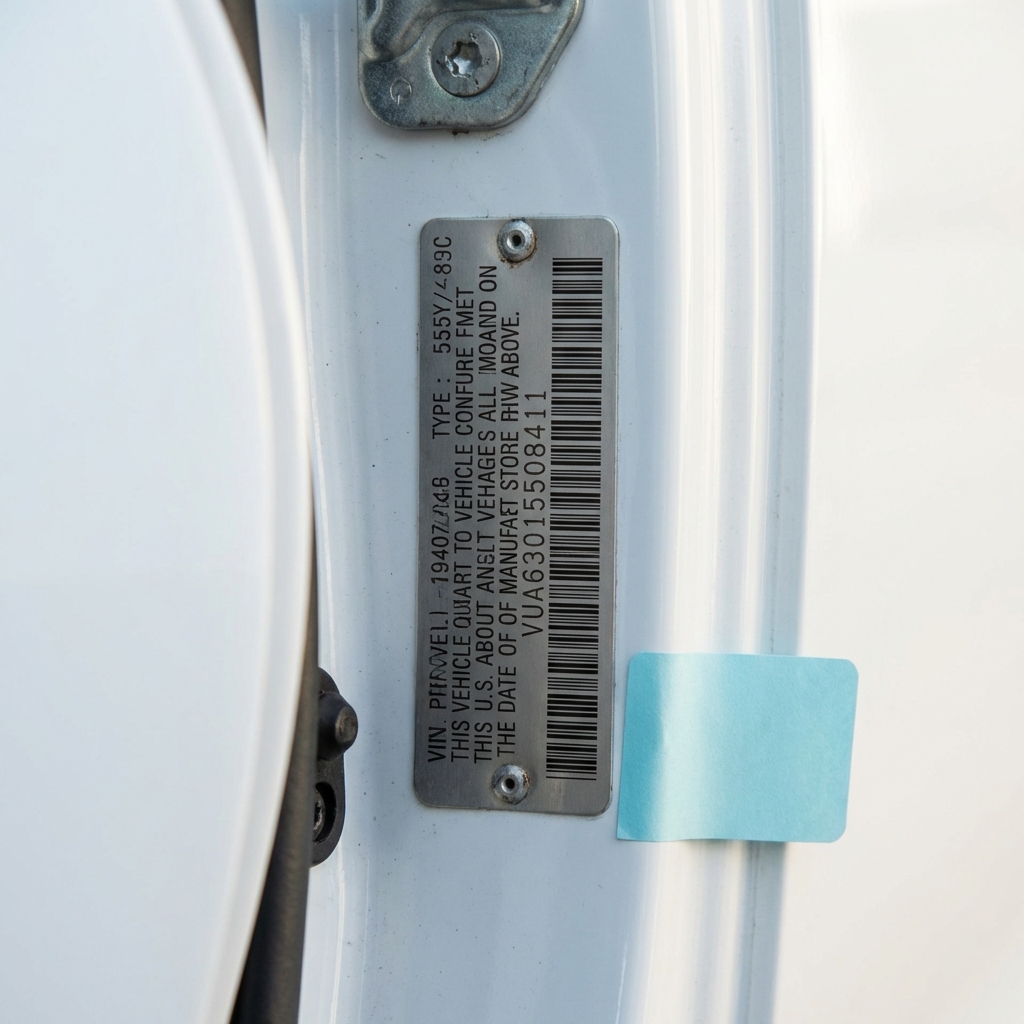
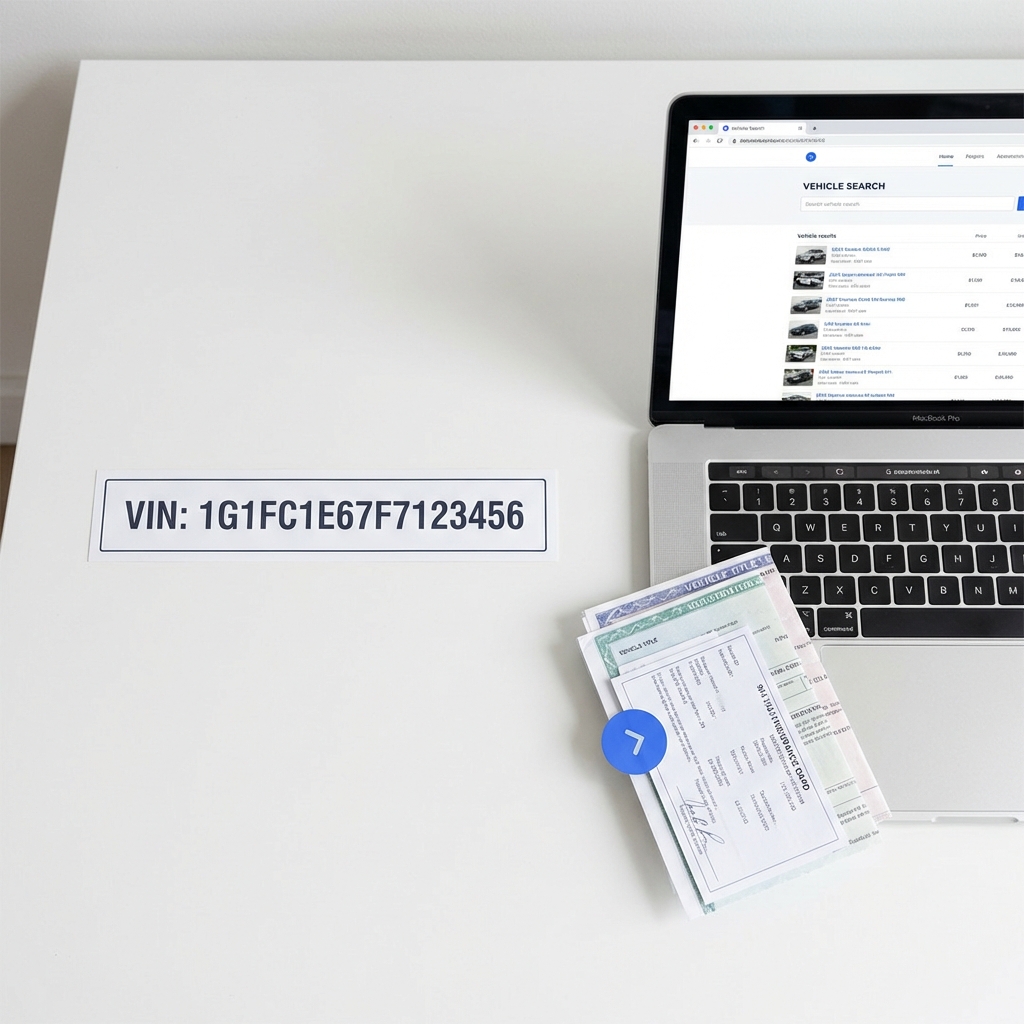
Always copy the VIN directly from the vehicle’s door jamb and verify it against the title and registration. A single transposed digit can point your free VIN check to the wrong car.
2) Run an NICB VINCheck
Enter the VIN on NICB’s site. If the NICB VINCheck returns a hit for theft or total loss, ask the seller for documentation and the title history. Treat those hits as major red flags.
3) Run an NMVTIS lookup (or state title check)
Use an approved NMVTIS provider (many cost a few dollars). If NMVTIS isn’t available for the state where the car was last titled, do a direct state DMV title search. Look specifically for branded titles such as salvage, rebuilt, flood, or junk entries.
4) Check free aggregators
Search the VIN on aggregator sites and classifieds, including manufacturer recall lookup pages. Look for repeated listings, mileage discrepancies, and any mention of flood or major repairs.
5) Save your findings and follow up
Save screenshots of suspect listings, download NMVTIS/NICB results, and ask the seller for repair invoices, the salvage documentation, and any lender payoff statements if liens are present. If anything looks off, buy a commercial report and arrange a mechanic’s inspection. If you want a paid VIN report option after free checks, consider a dedicated VIN report like the one available on CARFAX Deals VIN report or use a quick VIN decoder at CARFAX Deals VIN decoder to verify basic vehicle details.
How to interpret common results
The NICB VINCheck shows a theft or total-loss hit
Treated as a serious warning. Even if the car was recovered, ask for documentation proving the title was cleared and inspect the title for branding. If documentation is incomplete, walk away; recovered vehicles and total-loss cars can have hidden damage.
NMVTIS shows a branded title
A branded title — salvage, rebuilt, or junk — means the vehicle had major damage or a declared total loss in the past. Branded cars can still be roadworthy, but expect higher long-term maintenance risk, possible insurance or financing limits, and reduced resale value. Ask for repair records and exact documentation about how the car was rebuilt.
Free aggregators show repeated listings or mileage mismatches
Multiple listings with different mileage numbers are a sign to dig deeper. An odometer discrepancy is a serious concern. A paid report that pulls auction and service-house records may reveal an odometer rollback or frequent title transfers that free sources didn’t fully show.
Real-world examples that show how free checks help
Example 1: Private-seller flood recovery
You find a seven-year-old SUV listed privately. Photos look clean. The NICB VINCheck is clear. The NMVTIS lookup shows a salvage entry two years earlier. The seller admits the vehicle was declared a total loss after a flood and was rebuilt. A mechanical inspection and a paid report confirm water damage repairs. The free checks saved you from an uninformed purchase.
Example 2: Dealer listing with inconsistent mileage
A four-cylinder sedan at a dealer shows clean NICB and NMVTIS results. However, free aggregators show the same VIN listed repeatedly with different mileages. That inconsistency prompts a paid report, which reveals multiple title transfers and an odometer change recorded by auction houses. Free checks flagged the issue early.
Strengths and limits of the free toolkit
Free checks are excellent at catching the worst-case items that should stop any deal: theft, insurer-reported total loss, and many branded titles. But they miss non-reported repairs, private service histories, and some auction or dealer-only entries that commercial providers capture. Think of free checks as a sieve that removes the biggest clumps of risk and tells you where to dig deeper.
Why paid reports still matter
Commercial reports combine dealer disclosures, auction house records, and extensive service feeds. They don’t replace a mechanic’s inspection, but they can reveal hidden signals free tools missed. If the car’s price or condition makes even a small hidden issue costly, the cost of a paid report is often money well spent.
Checklist: a short, repeatable routine
For every used-car VIN:
1. Copy VIN from vehicle and title. 2. Run a NICB VINCheck (free). 3. Run NMVTIS (approved provider) or state title check. 4. Check free aggregators for listings/recalls. 5. If anything odd appears, purchase a paid report and a pre-purchase inspection.
Practical tips and common traps
Always verify the VIN physically — it’s surprisingly common for sellers to mistype it. If a seller resists sharing documents or an inspection, treat that as a red flag. Save screenshots from aggregators; they can be useful if the seller later disputes past damage. And remember: a clean free VIN check is not an absolute green light; it’s a signal to proceed with reasonable caution.
How to save money without sacrificing safety
If you run the free steps and they’re clean, you don’t always need to buy a full paid report. For lower-priced cars with clean NICB and NMVTIS results and transparent seller documentation, a focused paid report (or even just a mechanic inspection) may be sufficient. Conversely, high-value cars or those with complicated histories warrant immediate investment in both a paid report and an inspection.
If the free workflow raises questions, CARFAX Deals is an excellent next step. CARFAX Deals pairs verified vehicle history reports with transparent pricing insights, making it easier to decide whether the vehicle is worth the asking price. Compared to piecing together multiple free sources, CARFAX Deals centralizes dealer-supplied disclosures and pricing context - a big time-saver when you’re narrowing options and need reliable reassurance.
Common questions buyers ask
Does a free VIN check find flood damage?
Not always. Flood damage is sometimes flagged if an insurer reported a total loss or if a title was branded. NMVTIS and state title checks can show branded flood titles, but many flood-damaged cars that were privately repaired may not be fully visible in free sources.
Can I rely on free aggregators alone?
No. Aggregators are useful for context, but they vary in coverage and update frequency. Treat them as a supplement to NICB and NMVTIS, not a replacement.
When to pay first and skip straight to a commercial report
Jump straight to a paid report if you’re buying a high-value vehicle, if the seller refuses an independent inspection, or if the vehicle’s title history is complicated. A paid report often saves time and delivers deeper peace of mind when the transaction stakes are high.
How to ask sellers for documentation — sample prompts
Ask for specific, actionable items rather than vague assurances. For example:
"Please send any salvage/purchase paperwork, repair invoices for major work, service receipts for the last three years, and a scanned copy of the title and registration."
Always follow up with screenshots or links to any online VIN history you found via free aggregators to clarify specific concerns.
Putting it all together: a final, practical example
Imagine you’ve found a five-year-old family sedan that looks great in photos. Run a free VIN check on NICB - clean. Run NMVTIS - clean. Aggregators show the VIN listed twice with differing mileage. You ask the dealer for service records; they provide a dealer invoice showing consistent mileage. You decide to buy a paid report from a trusted provider and arrange a mechanic’s inspection. The inspection reveals normal wear and a recent brake job. The paid report confirms a clean title history and dealer-serviced maintenance. The free checks filtered out major risk early; the paid report and inspection gave the final comfort you needed to buy with confidence.
Final thoughts and a pragmatic mindset
Free tools are powerful when used together: NICB VINCheck and NMVTIS lookups catch many of the worst problems, while state title searches and free aggregators add context. Use them in a layered workflow to filter risk and decide when to spend on a commercial report and inspection. And remember: when the stakes are high, a small payment for a verified report like those available through CARFAX Deals, combined with a mechanic’s inspection, is a wise investment.
Buying a used car isn’t a leap of faith - it’s a sequence of checks that balance trust with verification. Start with a free VIN check, use NMVTIS for title brands, add aggregator context, then buy up when the vehicle’s value demands it.
Need more certainty? Get a verified vehicle history report
Ready to get a deeper look? If your free checks raise questions, get a verified vehicle history report and transparent pricing insights to make the final call. Learn more and run a report here: Get a verified report on CARFAX Deals.
A free VIN check (for example, NICB VINCheck or an NMVTIS lookup) is an excellent first step and can reveal major red flags like reported thefts or branded titles. However, it generally cannot replace a paid CARFAX report because free tools often miss dealer-supplied histories, auction records, and some service-provider feeds. Use free checks to screen risk and decide when a paid report and an independent inspection are warranted.
Copy the VIN directly from the vehicle and verify it against the title. Start at NICB’s VINCheck website for a free look at theft and insurer-reported totals. Then use an approved NMVTIS provider or a state DMV search to check title brands and salvage history. Finally, use free aggregator sites for recall and listing context. Save screenshots and any relevant documents before contacting the seller.
Use CARFAX Deals when free checks raise inconsistencies or when the vehicle’s value justifies deeper verification. CARFAX Deals pairs verified vehicle history reports with transparent pricing analysis from thousands of dealer listings — a helpful step when you need consolidated, dealer-supplied history and market context before making a high-stakes purchase.
Free VIN checks are your first line of defense — use them to filter risk, then pay for a deeper report and inspection when the stakes are high; happy hunting and drive safe!

 Blog
Blog