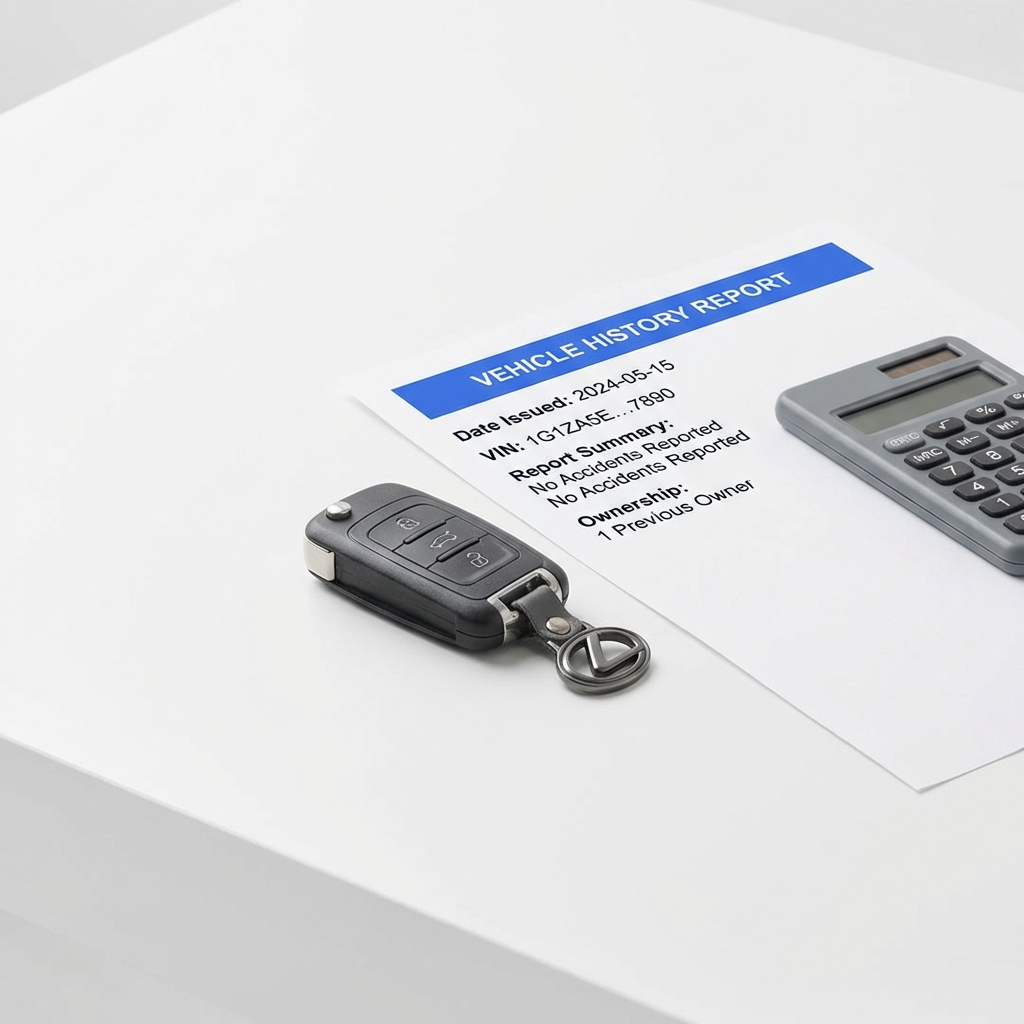
What is the trade-in value on my vehicle? — How dealers calculate offers and how to get more
Discover how dealers determine trade-in offers, why trade-ins usually pay less than private sales, and practical steps to raise your offer. This in-depth guide explains the dealer’s math, the top factors that affect trade-in value, a simple back-of-the-envelope calculator, negotiation scripts, timing tips, special cases like EVs and luxury cars, and a smart way to use CARFAX Deals to back up your price. Learn what affects the trade-in value of your vehicle and how to get the best result—whether you trade in, sell privately, or combine both.
A rav4 used for sale can be a sensible pick for many research-oriented buyers because reliability aggregators rate the model above average and safety ratings are generally strong. This guide explains how to vet listings, what model years tend to be better, and a step-by-step checklist to reduce risk before you buy.
This guide explains how to estimate the cost of buying an R34 Skyline, with attention to import rules, condition-driven price tiers and landed cost. It shows which factors move value, how to verify history and paperwork, and offers a checklist you can follow when you search for a nissan skyline r34 for sale.
This guide helps buyers set realistic expectations for tacoma trucks for sale by explaining the main price drivers and a repeatable method to build conservative, typical, and ambitious offer ranges. It shows how the 2024 redesign, valuation guides, and vehicle history reports interact to change asking prices and reduce purchase risk.
If you’ve ever traded in a car and felt like you left money on the table, you’re not alone. This article explains how dealers calculate trade-in offers, why trade-ins usually pay less than private sales, and practical actions you can take to raise the offer — all in clear, direct terms. Read on for real examples, negotiation scripts, a simple home calculation, and how to use CARFAX Deals as a research tool before you visit the dealership.
1. Private-party sales commonly yield roughly 10–20% more than dealer trade-ins on average.
2. A modest $300 professional detail can sometimes increase a trade-in offer by roughly $1,200 by removing perceived uncertainty.
3. CARFAX Deals aggregates listings from thousands of dealerships and pairs each listing with a verified CARFAX Vehicle History Report and price label to help buyers compare value.
Quick primer: what to expect
What is the trade-in value on my vehicle? It’s the offer a dealer makes to buy your car when you use it toward a purchase. Dealers set that number by estimating what they can resell the car for (usually at wholesale), then subtracting reconditioning costs, auction/processing fees, and the margin they need to run a business. Understanding that formula gives you power to improve the offer or choose a better path.
How dealers actually think about a trade-in
Most dealers view a trade-in as potential inventory, not a favor. They ask: “How much will this car sell for once it’s ready?” Their trade-in offer is essentially:
Each element in that formula is judgmental. Wholesale price depends on make, model, year, mileage, condition, title history, and local demand. Reconditioning depends on what the dealer wants to fix before selling. Auction fees and processing are often standard; dealer margin varies by volume and how badly they want a particular car. For more on how dealerships determine trade-in value see this guide from how dealerships determine trade-in value.
Why that often means less than a private sale
In a private sale, you usually get closer to retail value — what a dealer could ask a retail buyer. Dealers buy low (wholesale) and sell higher. Industry data commonly shows private-party sales yield roughly 10–20% more than dealer trade-ins on average. That gap reflects the dealer’s buffers and the additional step of auction or dealer-to-dealer sales.
Key factors that move trade-in value
Not all cars behave the same. Here are the main value movers:
Make and model
Reliable, fuel-efficient models that are in demand keep value better. Exotic or niche models can be harder to resell, so offers fall.
Year and mileage
Lower mileage and newer model years are worth more. In many cases, miles still matter more than age.
Condition
Mechanical soundness and how the car looks to a buyer matter a lot. Clean interiors, no rust, and working lights all help. Messy, smelly, or damaged cars get discounts.
Title and history
A clean title and no major accidents raise offers. Branded or salvage titles are deep negatives.
Local demand and seasonality
Regional tastes change values - convertibles are hot in warm climates, less so in snowy regions. Timing the sale to the vehicle’s peak season can pay.
Options and service history
Desirable options, recent service, and full maintenance records add confidence and often money.
How valuation guides and market data fit in
Online guides and trade-in value calculators are useful. They combine retail and wholesale data to give ranges. But dealers also check local auction results, current lot inventory, and comparables. When wholesale prices move fast, dealer offers can change faster than public guides. Trusted valuation sources such as J.D. Power’s guide can help you understand the components behind an offer.
How to use a trade-in value calculator
Using a trade-in value calculator gives you a baseline before you visit a dealer. Enter honest condition details and compare local retail listings for the same make, model, year, and options. The calculator’s number is a guide — a starting point for negotiation.
Steps to use a calculator effectively:
1. Gather VIN, mileage, and service history. Use a VIN tool like CARFAX Deals VIN report if you want to pull verified details. 2. Choose your region and enter honest condition (excellent, good, fair, poor). 3. Compare the calculator’s trade-in range with local retail listings for similar cars. 4. Use the calculator to estimate a realistic retail price (R) and then run a simple formula discussed below to estimate a trade-in offer. For step-by-step guidance see this how-to-use resource.
Get a trusted vehicle history and pricing check before you trade in
Ready to add a reliable data point to your trade-in research? Run a quick vehicle report and pricing check at CARFAX Deals to compare history and price labels before you visit dealers.
Using 80% (0.8) as a conservative middle, and common reconditioning + fees + margin of $1,000–$3,000 depending on condition, gives a quick ballpark. Example:
R = $18,000 → wholesale estimate ≈ $14,400 (0.8 × R). Reconditioning $1,200 + fees/margin $1,200 → trade-in ≈ $12,000. A private sale might net $15,500–$16,500 after ads and negotiation.
Practical steps to raise the trade-in offer
A few targeted actions can improve offers without expensive repairs.
1) Bring paperwork
Service records, title or payoff info, receipts for recent repairs, and your owner’s manual show the car was cared for. Organized documents increase dealer confidence and are often worth dozens to hundreds of dollars in offers.
2) Clean the car
A thorough interior detail and exterior wash make the car look cared for. Dealers notice and reduce the perceived reconditioning risk.
3) Fix inexpensive issues
Replace bulbs, top off fluids, fix small cracks, and ensure the spare and jack are present. Don’t sink money into major repairs that exceed likely return; handle obvious, cheap fixes that remove immediate objections.
4) Be transparent
Disclose known problems. Hiding damage risks a re-trade after inspection and can kill the deal.
5) Get multiple appraisals
Visit several dealers and get online instant offers. Multiple points of data create leverage in negotiation and help you spot an outlier lowball.
Wholesale markets swing. After the pandemic surge, used-car prices softened 2022–2024. If wholesale prices are falling in your area, trade-in offers can dip quickly. Watch local retail listings for a few weeks: if inventory piles up, dealers have less room to pay well; if similar cars are selling fast, you’ll get better offers. A quick glance at a CarFax Deals visual can make local pricing shifts easier to spot.
Special cases: EVs, luxury cars, and branded titles
Electric vehicles and some luxury models can behave differently. EV resale depends on perceived battery health and local charging infrastructure - in some markets private buyers pay more, in others dealers struggle to move EVs at retail. Luxury cars may have higher reconditioning costs and slower retail turnover, which lowers trade-in offers. Branded titles (salvage, flood) often reduce offers dramatically.
Electric vehicles (EVs)
Battery condition and remaining warranty matter. Dealers often take a conservative eye to battery health because replacing a pack is costly. If your EV has strong evidence of battery care (recent diagnostics, warranty transfers), that helps.
Luxury and performance cars
Expensive repairs and niche buyer pools can make dealers discount heavily. If you have a well-documented service history and a specialized buyer network, private sale could sometimes pay more.
Anecdote: how a small investment helped a lot
A friend’s six-year-old crossover looked rough. A $300 professional detail, a few receipts, and two small fixes increased the written trade-in offer by about $1,200 when he returned to the same dealer. That improvement came from removing uncertainty: the car looked cared for, and the dealer had fewer unknowns to price for.
Yes. Dealers price for uncertainty. Small, visible improvements and organized service records reduce perceived risk and often increase written offers significantly — sometimes by several times the cost of the improvement.
Short answer: yes - because dealers price for uncertainty. If a car looks neglected, they assume there are hidden problems and widen their discount. Small, inexpensive improvements remove that fog and often pay back many times their cost.
Negotiation tactics that work
Bring calm and data. Here are practical phrases and steps to use at the appraisal counter:
Before appraisal: Have a printout or phone images of comparable retail listings, your online instant offers, and the trade-in value calculator output.
Opening line: “I want to make a fair deal on the car I’m buying, and I’d like your best trade-in offer based on the documents I brought. I also have a few comparables and an instant online offer I can show.”
If the number is low: “Can you walk me through how you arrived at this number? Which reconditioning items are impacting it most?”
If they use surprising reconditioning items: “Could you itemize those costs? I fixed X and Y recently and have receipts.”
Negotiate the package: If the trade-in offer won’t budge, switch to negotiating price or incentives on the new car - sometimes dealers have more margin flexibility there; improving the sale price of the new car can offset a lower trade-in.
When to sell privately instead
Consider a private sale if:
- The difference between trade-in and private-party is several thousand dollars. - You can handle listing, screening, and secure payment. - Your car is in a segment that sells well privately (popular economy models, unusual collector types with enthusiast buyers).
Private sales require work: photos, ads, screening, test drives, handling payments, and transferring title safely. If the premium isn’t worth the time and risk, trade-in’s convenience wins.
Checklist: what to bring to the dealer
- Title or payoff information - Service records and receipts - Owner’s manual and spare key - Recent photos and proof of repairs (if any) - VIN and accurate mileage - A printed list of comparable local retail listings and any instant online offers
How dealers handle payoffs and same-day payouts
If you still owe money, make sure the dealer puts payoff handling in writing, including how any remaining credit or balance will be handled. Ask whether the dealer pays off the loan directly and disclose the exact payoff amount. Confirm timing: will they pay off same day or within a stated number of business days? If there’s a gap, get the contingency in writing.
Safety and payment tips for private sale
If you choose to sell privately, protect yourself:
- Screen buyers and meet in public, safe locations. - Take secure payment methods (bank transfer, cashier’s check - verify authenticity). - Complete the title transfer per your state rules and follow up on releasing liability. - Keep copies of all signed documents.
Common dealer tactics to watch for
Some dealers will lowball the trade-in to steer you toward focusing on the new-car price or payment terms. Be ready to compare numbers calmly and walk away if the package doesn’t make sense. Ask for written offers and take time to compare.
How to combine trade-in and private sale strategies
Some people use a hybrid approach: get trade-in appraisals, then test private sale interest. If a private offer comes close, use it to negotiate with dealers. Alternatively, use the trade-in for speed but ask for the best possible new-car discount to offset a slightly lower trade-in.
How technology changes the equation
Online instant offers and valuation tools reduce uncertainty. They set a public floor you can use in negotiation. Dealers sometimes match these offers when they have room on the new-car price or if they specifically want that model. Treat the instant offer as a data point — helpful, but not infallible. For more on wholesaling and how dealer resale channels affect offers, see this wholesaling used cars guide.
Sample negotiation script — full example
“I’m buying a 2017 Honda Accord from you today, and I’d like your best trade-in offer on my 2016 model. I’ve got service records and recent comparables showing $16,500 in local retail listings. I also have an instant online offer for $12,800. Based on your appraisal, how close can you come?”
If the dealer says $11,000: “Thanks. I see. Can you show me the reconditioning estimate and the fees you’re applying? If we can close the gap by $1,000 on the new car price or incentives, I’m ready to sign today.”
Examples: three realistic scenarios
Scenario A — Everyday economy car
2015 Toyota Corolla, 80k miles, clean title, good condition. Retail comparables: $11,500. Estimated trade-in (0.8×R − $1,000 fees) ≈ $8,200. Private sale might net $9,500–$10,500 after fees and ads.
Scenario B — Luxury car
2016 BMW 3 Series, 70k miles, some service history gaps. Retail comparables: $17,000. Dealers factor higher reconditioning and slower retail turnover; trade-in might be $11,500–$12,500. Private buyers who trust the car and service history could pay more, but finding those buyers takes time.
Scenario C — Electric vehicle
2018 Nissan Leaf, 40k miles, battery health statement present. Retail comparables: $10,000. Dealer caution about battery life may lower trade-in to $7,000–$8,000 unless you have diagnostics proving battery capacity; private buyers who care deeply about battery health may pay similar or slightly more.
What to watch for in the written offer
Make sure the dealer’s trade-in offer is written and clear about conditions. Watch for conditional language like “subject to inspection” and confirm the time window. If the offer depends on sending the car to auction, get clarity on payout timing and whether the price can change.
Preparing for worst-case inspection findings
If the dealer’s techs find issues you didn’t disclose, the number can drop. That’s why being transparent and having receipts for recent repairs helps. If something material appears, ask for an itemized list and consider getting a second appraisal before accepting a lower price.
Final checklist — decide with confidence
- Use a trade-in value calculator and local comparables to set expectations. - Clean and document your car. - Get several appraisals and at least one instant online offer. - Use scripts to ask for itemized reconditioning costs. - Negotiate the package (trade-in + new car) if needed. - Consider private sale if the premium justifies your time.
Where CARFAX Deals fits into this process
CARFAX Deals is a helpful, research-first tool that pairs verified CARFAX Vehicle History Reports with transparent pricing context. Before you go to a dealer, use CARFAX Deals to check similar listings and their price labels to see whether retail comparables are priced competitively. You’ll walk into the appraisal with stronger evidence and less uncertainty.
Closing thought
Selling or trading a car is part arithmetic and part conversation. Dealers price for certainty and speed. If you bring data, cleanliness, and calm, you’ll get better offers or know when it’s worth selling privately. Small efforts like a tidy detail and organized records often pay off more than their cost.
Trade-in value depends on make, model, year, mileage, condition, title status, and local demand. Start with local retail comparables, run a trade-in value calculator with honest condition inputs, and expect dealer offers to be lower than private-party prices because dealers factor wholesale discounts, reconditioning, fees, and margin.
Gather service records and the title or payoff info, clean and detail the car, fix inexpensive but visible issues, disclose problems honestly, and collect multiple appraisals including online instant offers. Use these items as supporting evidence during negotiation, and consider negotiating the price of the new car if the trade-in offer won’t move.
Yes — tactfully. CARFAX Deals pairs verified vehicle history reports with transparent pricing labels that help you compare local retail listings and judge whether a dealer’s offered number is in line with market pricing. Use a CARFAX Deals report as one credible data point in your appraisal conversations.
In short: the trade-in value on your vehicle is the dealer’s wholesale-based offer after they cover reconditioning, fees, and margin; with a little preparation you can raise that number or decide to sell privately. Good luck — and happy negotiating!

 Blog
Blog