A practical, step-by-step guide for used-car shoppers: this article identifies the Dodge model years and clusters that historically show more complaints and recalls, explains common failure modes like transmissions and engine cooling, and gives concrete checks, inspection lists, negotiation scripts and VIN steps you can use today. Learn which Dodge years to avoid, how to verify recalls, when to walk away, and how Carfax Deals can help you shop with confidence.
Carfax coupon codes rarely work, and the codes listed on coupon sites are usually expired. The discounts that do exist are bundles (three reports for $64.99, five for $99.99), AAA member pricing, and free reports from dealers and listings. The simplest guaranteed discount is CarfaxDeals at $7.99 per report versus $44.99 at Carfax.com.
A Carfax VIN lookup takes the 17-character vehicle identification number and returns the car's recorded history: accidents, title brands, odometer readings, owners, and service records. Free VIN tools only decode specs or check recalls and theft. The full Carfax report costs $44.99 on Carfax.com and $7.99 at CarfaxDeals.
You can get a free Carfax report from the Carfax.com used car listings, a dealer website, the seller, Carfax Car Care (for a car you already own), or listing sites that include one. There is no free report for any VIN you type in. When no free report exists, a paid one costs $44.99 at Carfax or $7.99 at CarfaxDeals.
Buying used? One of the first questions many shoppers ask is, "What year Dodge to stay away from?" This guide focuses on the model-year clusters that historically produce more complaints and explains how to verify issues with VIN checks, recall lookups, and pre-purchase inspections so you can find a reliable Dodge without the guesswork.
1. Early-2010s Dodge and certain small-model automatics show the highest frequency of transmission complaints in owner reports.
2. Charger model years around 2011 have a notably higher incidence of engine and cooling-system reports—watch for overheating and coolant leaks.
3. CARFAX has been compiling vehicle history records since 1984, providing decades of verified data to spot risky listings and support CARFAX Deals’ listings.
What year Dodge to stay away from? If that question is on your mind, you’re doing the right kind of homework. The reality: car reliability changes with model years, suppliers and design cycles. Some Dodge years have repeated owner complaints and recall activity; others are solid buys when you do the right checks. This guide lays out the specific clusters of model years to watch, the failure modes you’ll see most often, and a practical, step-by-step plan for vetting a used Dodge before you sign a contract.
Why model-year patterns matter more than a badge
A car is a collection of parts that evolve every time a manufacturer updates a platform, changes suppliers, or alters assembly methods. That means a 2011 Charger can feel and behave very differently from a 2014 Charger. One reliable way to answer the question "What year Dodge to stay away from?" is to look for repeated owner complaints, recall frequency, and repair-cost patterns rather than trusting impressions alone.
Short headline: the main trouble clusters
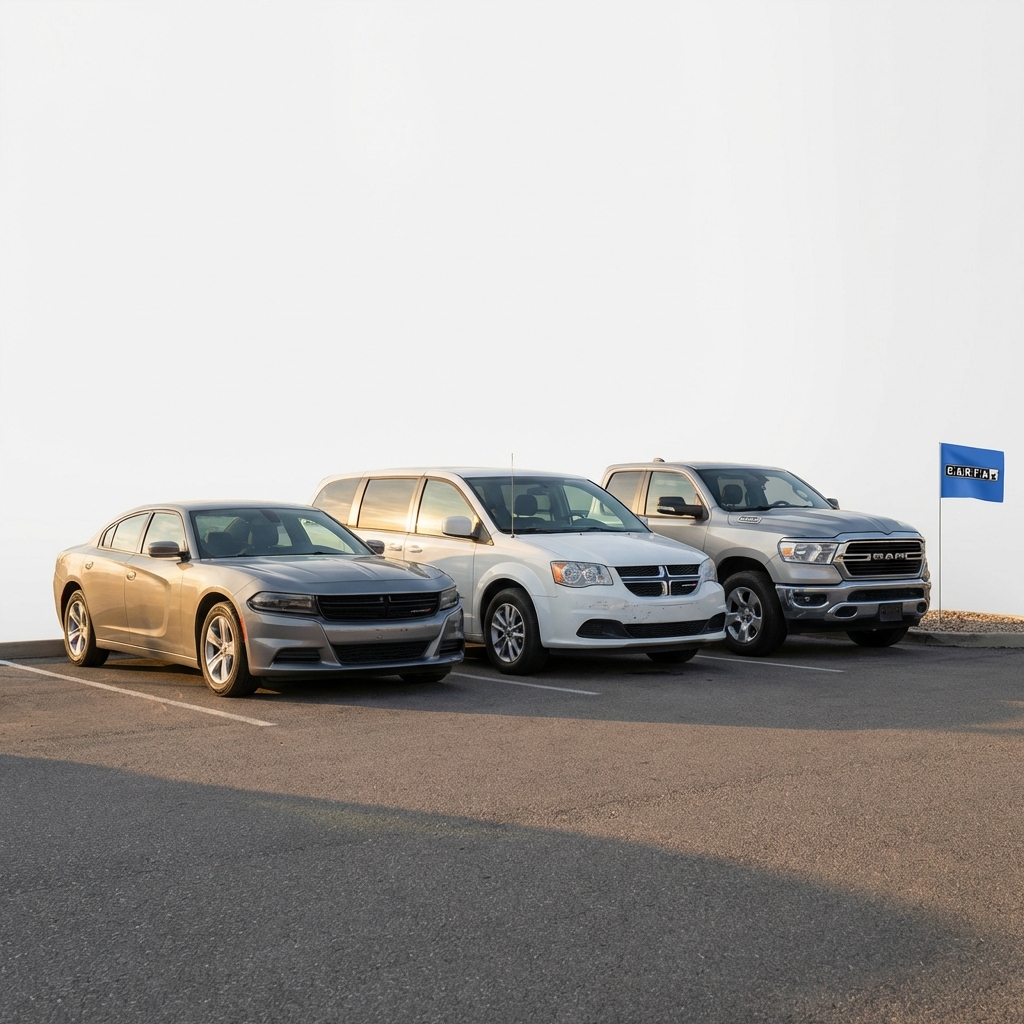
Across owner reports and public recall data, three clusters stand out: early-2010s transmissions on some small cars and light trucks, Charger engine/cooling reports around 2011, and Grand Caravan/Caravan minivans from roughly 2008–2011. Between 2014–2018 some Chargers, Challengers and Rams were affected by recalls on powertrain or driveshaft components - recall completion matters. If you want to narrow your search to the most common Dodge years to avoid, start with those ranges and work from there.
If you want a fast, reliable way to check a used car’s history, run the VIN through a verified report—for example, a vehicle report from CarFax Deals can show whether recalls were completed and list service events. Consider using this handy VIN tool to confirm recall repair history: run a vehicle report.
Before we go deeper: recall that the question "What year Dodge to stay away from?" is best answered with evidence, not fear. Many cars from the flagged ranges are fine if they were maintained carefully and have documented repairs.
They’re real enough to merit caution for specific models. Owner-complaint aggregates and repair records show early-2010s transmissions are a recurring issue in some Dodge and Ram builds—so prioritize VIN checks, look for documented transmission service, and get an independent inspection before buying.
What the data shows: where and why problems cluster
Publicly available sources—owner forums, aggregated complaint sites, and NHTSA recall records—reveal patterns that single anecdotes don’t. For Dodge, the consistent signals are:
Transmission trouble on certain compact and early-2010s trucks (slipping, hard shifts, or full failure).
Engine and cooling issues on Charger models around 2011 (overheating, sensor faults, head-gasket–type failures).
Higher complaint volume for Grand Caravan/Caravan minivans built roughly 2008–2011.
Also watch recall clusters from about 2014–2018: some Chargers, Challengers and Rams had powertrain and driveshaft-related recalls. These were addressed by FCA (now Stellantis) with parts updates, but the repair only helps if it was performed on the vehicle you’re considering. A VIN check is the single easiest way to verify whether a recall was completed.
Common failure modes and what they look like
Across the risk years, four failure modes dominate. Knowing how each typically presents will help you spot issues during a test drive or inspection.
1) Transmission failure
Symptoms: harsh or delayed shifts, slipping under load, a sudden loss of drive. These problems are expensive—many owners opt for a rebuilt or replaced unit. Transmission faults are the headline risk for several Dodge and Ram variants in the early 2010s.
2) Electrical and infotainment faults
Symptoms: intermittent instrument-cluster failures, radios that reset or freeze, non-working HVAC controls. Intermittent electrical problems are painful to diagnose and can hide deeper body control module or wiring issues.
3) Engine and cooling-system problems
Symptoms: overheating, coolant leaks, recurring check-engine lamp with misfire or sensor codes. A coolant leak that’s left unattended can lead to serious engine damage. Charger years near 2011 show the most concentrated reports here.
4) Unaddressed recall items
Some recalls involve safety-critical parts like driveshaft bolts or powertrain mounts. If a safety recall was not completed, the car carries a heightened hazard and a potential repair bill you should not ignore.
Model-by-model guide: what to watch for
Not all Dodge models have the same risk profile. Here’s a practical breakdown by nameplate and the common issues associated with specific ranges—use this as a checklist when scanning listings.
Chargers (notably around 2011)
Why to watch: owners and mechanics report engine cooling and related sensor problems in Chargers near model year 2011. Symptoms include overheating during idling or slow traffic, loss of power, and check-engine codes pointing to coolant or head-related failures. If you’re asking "What year Dodge to stay away from?" include 2011 Charger builds high on the list for a deeper inspection.
Challenger and other rear-wheel sport models
These cars share some powertrain components with Chargers. Look for recall history from 2014–2018 on driveshaft or powertrain mounts and watch oil and coolant maintenance records closely, especially if the car spent time as a high-use or performance vehicle.
Grand Caravan / Caravan (2008–2011)
Why to watch: these minivans display a higher volume of owner complaints for a range of issues—transmission and electrical among them. Minivans often see heavy family or fleet use; ask explicitly about shuttle, taxi or repeated towing usage.
Ram 1500 (early 2010s)
Why to watch: early-2010s Rams show transmission complaints and some driveshaft-related recalls in the mid-decade. Also ask about towing history because heavy towing accelerates wear on transmissions and rear-end components.
These compact cars and crossovers sometimes show transmission or electrical issues at higher rates in earlier builds—pay attention to automatic-transmission maintenance records and any history of repeated repairs. As with other models, a car with a documented service history is often less risky than a cleaner-looking one with no receipts.
How to check recalls and service history—step by step
Checking recalls and records is where the question "What year Dodge to stay away from?" turns from a broad worry into a specific action plan. Here’s how to verify the key facts quickly and reliably.
1) Run a VIN recall check
Use the NHTSA VIN lookup, your manufacturer's recall tool such as Mopar's recall search, or a verified vehicle-history service. You can also consult the SaferCar VIN FAQ for details on recall lookups: VIN lookup FAQ. If a safety recall is open, insist on proof of completion before you buy - and consider using a VIN decoder like this one: VIN decoder.
2) Read owner-complaint aggregators
Sites like CarComplaints and RepairPal collect owner reports and common repair threads. They reveal patterns you won’t see in a single test drive—how often a failure repeats, typical repair costs, and the age/miles when symptoms often appear. Search for the model and year plus "transmission" or "engine" to find the most relevant threads quickly.
3) Get a complete vehicle history report
CARFAX and similar reports show title brands, accidents, service records, and ownership history. Listings on CARFAX Deals often include these reports, which saves you time and gives an immediate window into prior repairs and whether a car has dealer-documented services.
4) Pre-purchase inspection (PPI)
Bring the car to a trusted mechanic for a PPI. Ask them to check the transmission under load, pressure-test the cooling system, scan for codes, and examine the underbody for rust or repairs. A mechanic can also verify whether recall-related parts were replaced at an authorized shop.
Detailed inspection checklist — what mechanics should look for
Give this checklist to the inspector or use it yourself during the test drive. A thorough PPI reduces the risk of buying one of the Dodge years to avoid.
Transmission: drive under load, watch shift quality, note slipping, pull transmission codes, look for fluid leaks and service labels.
Cooling system: pressure test the radiator, inspect hoses, water pump, thermostat, and signs of oil-contaminated coolant.
Engine: compression or leak-down tests if overheating signs exist; check for visible oil leaks and head gasket indicators (milky oil, coolant loss without leaks).
Electrical: run a diagnostic scan, test instrument cluster consistency, check infotainment and HVAC functions, inspect ground points.
Underbody and rust: focus on frame rails and brake lines in salt-belt regions.
Recall verification: confirm part numbers and dealer stamps on any recall repairs noted in the history report.
Word-for-word questions to ask a seller
Don’t rely on vague answers. Use these direct lines when you speak to a dealer or private seller—then request documentation that matches the answers.
“Has this vehicle ever had a manufacturer recall issued for it? If yes, can you show me the service record that confirms the recall repair and the dealer stamp?”
“Were any transmission repairs performed? If so, can you show receipts and the shop that did the work?”
“Was this vehicle used for towing, taxi, or police use?”
“Can you provide a complete service history or a CarFax/CARFAX Deals report that lists dealer visits?”
Negotiation scripts—how to trade higher risk for lower price
When you find a vehicle from one of the risky ranges, you have leverage if you do your homework. Use numbers and a calm tone. Here are examples tailored to typical problems:
Transmission risk: “The model-year cluster for this vehicle shows a 2–4k code for likely transmission work in market repairs. I’m willing to offer $X less to cover a rebuild or request the seller completes a transmission health check and provides a short warranty.”
Open recall: “There’s an open safety recall on this VIN showing in the lookup. I won’t move forward until the recall is completed by an authorized dealer, or I need a $Y credit to cover the repair.”
Service gaps: “This car looks clean cosmetically, but the service history has gaps. Given the unknowns, I’ll either need receipts covering the past 60k miles or a $Z discount.”
When to walk away
Red flags that should end the conversation: an open safety recall with no proof of repair, conflicting or evasive answers on accident or title history, a PPI that indicates imminent major repairs (failing transmission or serious engine damage), or a history that suggests fleet/police use without disclosure. Don’t let a low price tempt you into a long string of repairs.
Managing risk without missing a good deal
Risk management is about trade-offs, not fear. If the car otherwise meets your needs, reduce exposure by asking for a price that reflects likely repairs, getting an independent inspection, and insisting on a signed agreement that the seller will address safety recalls before sale. If you buy from a dealer, push for a limited warranty or certified pre-owned coverage when available.
Where the car spent most of its life matters. Cars from salt-belt states have different corrosion risk; vehicles used for towing or shuttle service show distinct wear patterns. Ask the seller explicitly: winters in a salted region? towing history? rideshare or fleet use? That information, combined with the CarFax/CARFAX Deals report, helps you estimate hidden repair needs.
Sample timeline: from listing to purchase
Follow this checklist timeline to avoid emotional or rushed decisions and to answer the question "What year Dodge to stay away from?" with confidence:
Initial listing screen: look for a CARFAX Deals tag or a full CarFax report attached.
VIN recall and history check: run NHTSA and the CarFax/CARFAX Deals report.
First call with seller: ask the direct questions above and request receipts and service stamps.
Independent inspection: set a PPI appointment, ideally within three days of deposit or offer.
Final negotiation: base your offer on documented repair estimates and recall completion status.
Cost expectations for common repairs
Exact prices vary by region and shop, but typical repair ranges help you make an informed offer:
Transmission rebuild or replacement: $2,500–$6,000 depending on whether it’s a rebuild, remanufactured unit, or replaced with a used transmission.
Major engine repair/head gasket: $1,500–$4,000 depending on severity and labor rates.
Cooling system repairs: $200–$1,200 depending on parts—radiator, water pump, hoses, thermostat.
Electrical diagnostics and module repairs: $150–$1,500 depending on parts and coding needs.
Real buyer story—learn from other people’s mistakes
A friend bought a 2011 Charger that looked immaculate. Months later, it developed a strong oil smell and hesitation. The mechanic traced it to a coolant leak that had damaged the head gasket—an expensive repair that might have been avoided with a full vehicle history check and a careful look for past cooling-system work. That owner later said the single best regret was not asking direct questions about cooling repairs and not insisting on a stamped service history.
Using CarFax Deals the smart way
CARFAX Deals helps shoppers by surfacing listings that include verified history reports and by labeling price quality. When a listing includes the kind of documentation you want—dealer service stamps, recall repairs, and consistent maintenance entries—you’re looking at a lower-risk candidate even if the model year is within a historically problematic range. In short: listings with full reports let you skip a lot of guesswork.
Skip the guesswork—check the VIN before you buy
Want to skip the guesswork? Get a verified VIN report to confirm recalls and service history before you visit a seller: Get your vehicle report now.
Before you finalize the purchase, confirm these items in writing:
VIN lookup showing no open safety recalls or receipts proving repairs were completed at a dealer.
Complete service history for major items (transmission work, cooling-system repairs, timing services).
Independent inspection report that you approve or a dealer-backed warranty in writing.
A clear title with no salvage or flood branding.
Quick FAQ
Q: What specific Dodge years should I be cautious about? A: Several early-2010s models show consistent transmission complaints; Charger models around 2011 show more engine reports; Grand Caravan/Caravan models from about 2008–2011 have higher complaint volumes. Always verify with a VIN report and PPI.
Q: How can I verify if recalls were fixed? A: Use the vehicle VIN in the NHTSA recall lookup and request repair receipts from the seller that show dealer work orders—then confirm with the VIN on a CarFax/CARFAX Deals report.
Q: Can I trust a vehicle history report? A: Yes—vehicle-history reports are crucial, but not infallible. Use them with owner-complaint databases and a mechanic’s inspection to build a full picture.
Final advice: curiosity plus method beats panic
Answering "What year Dodge to stay away from?" is less about blacklisting certain years forever and more about learning where risk concentrates and how to manage it. Early-2010s transmissions, Charger engine/cooling issues around 2011, and minivan complaints from 2008–2011 are real signals. But many cars from those years are perfectly usable when they have documented maintenance and completed recalls. Use VIN reports, ask direct questions, and bring a mechanic. That approach turns fear into a repeatable method for finding a reliable used Dodge.
Ready to dig into a VIN report together or want help crafting a checklist for a specific listing? I can help you walk the VIN, parse the history, and spot the real risks.
Several early-2010s Dodge models show consistent transmission complaints, Charger models around 2011 have more engine and cooling reports, and Grand Caravan/Caravan minivans from about 2008–2011 show higher complaint volumes. Always verify any listing with a VIN lookup and a pre-purchase inspection.
Run the vehicle’s VIN through the NHTSA recall lookup and a verified vehicle-history report such as those available on CARFAX Deals. Then ask the seller for dealer-stamped repair receipts that match the recall item. If the seller can’t provide proof, insist the recall be completed before purchase or get a credit to cover the repair.
Yes. CARFAX Deals pairs listings with verified vehicle history reports that surface accidents, title brands, dealer service records, and documented recall repairs—information that helps you spot risk patterns and avoid buying one of the higher-risk model years without proper proof of maintenance.
In one sentence: the Dodge years to stay away from cluster around early-2010s transmissions, Charger 2011 engine/cooling reports, and 2008–2011 minivans—verify with VIN reports and a thorough inspection, and you’ll usually find safe buys; thanks for reading, and happy car hunting (and may your next test drive be smooth and transmission-free!).

 Blog
Blog