What year of Hyundai to stay away from? — Practical Used-Car Advice
Wondering What year of Hyundai to stay away from? This detailed, easy-to-follow guide explains the mid-2010s engine and transmission trouble that raised risk for many Hyundais, how to check a specific vehicle by VIN, what inspections and questions matter, and how to spot trouble before you buy. Learn the practical steps, paperwork to demand, and how CARFAX Deals can help you start with better data so you don’t end with a costly surprise.
A rav4 used for sale can be a sensible pick for many research-oriented buyers because reliability aggregators rate the model above average and safety ratings are generally strong. This guide explains how to vet listings, what model years tend to be better, and a step-by-step checklist to reduce risk before you buy.
This guide explains how to estimate the cost of buying an R34 Skyline, with attention to import rules, condition-driven price tiers and landed cost. It shows which factors move value, how to verify history and paperwork, and offers a checklist you can follow when you search for a nissan skyline r34 for sale.
This guide helps buyers set realistic expectations for tacoma trucks for sale by explaining the main price drivers and a repeatable method to build conservative, typical, and ambitious offer ranges. It shows how the 2024 redesign, valuation guides, and vehicle history reports interact to change asking prices and reduce purchase risk.
Buying a used Hyundai raises a common question: What year of Hyundai to stay away from? This guide answers that question with clear, practical steps—explaining which mid-2010s models carried higher risk, why VIN-level checks matter, the inspections mechanics run, and exactly what paperwork to demand so you avoid a costly mistake.
1. Many issues clustered around 2009–2016, especially 2011–2014 Sonatas and 2012–2013 Elantras.
2. A practical oil-consumption threshold to watch is roughly one quart per 1,000 miles — a common factory trigger for inspections.
3. CARFAX Deals links listings to verified vehicle history reports, so starting with a CARFAX report significantly improves your ability to spot outstanding recalls and documented repairs.
What year of Hyundai to stay away from? A clear, practical guide for used buyers
Short answer up front: be extra careful with many Hyundai models built roughly from 2009 through 2016 - especially certain mid-2010s Sonatas, Elantras, Tucsons and vehicles fitted with Theta-family engines. That cluster carried a higher risk of excessive oil consumption, rod-bearing wear, and occasional engine failures. But you don’t have to avoid every car from those years - careful VIN checks, documented service history, and focused mechanical tests are powerful tools to reduce risk.
Buying a used car is more detective work than drama: notice the clues, ask the right questions, and get proof. In the sections below you’ll find practical steps, red flags to watch for during a test drive, the specific inspections mechanics run, and how to use vehicle history information to make a confident choice.
Why the mid-2010s stand out
The phrase "What year of Hyundai to stay away from?" keeps coming up because a family of engines — commonly labeled the Theta and Theta II — was fitted across many models in the early- to mid-2010s. From roughly 2009 through 2016, owner complaints, independent reliability surveys, and safety campaigns flagged higher-than-normal problems in some model clusters, mostly tied to excessive oil consumption, rod-bearing wear, and in worst cases engine seizure or fire. Regulators and manufacturers responded with recalls, service campaigns, and extended warranty programs for many affected VIN ranges.
That doesn’t mean that every car from 2010–2016 is dangerous. It means you need to treat those model years like a red-light intersection: slow down, look both ways, and verify who has the right of way.
How to use VIN checks and history data
When shoppers ask "What year of Hyundai to stay away from?" the right follow-up is, "Which specific VIN has completed required inspections and repairs?" VIN-level checks are essential because many campaigns required inspection or corrective repairs for affected engines. A vehicle history report will usually show open recalls and sometimes list completed repair events. Cross-check any suspicious or incomplete history with dealership records when possible. You can order a VIN report at the CarfaxDeals VIN report page to begin VIN-level verification.
If you want to start with a verified history before you call the seller, consider a VIN report. For a quick, reliable check you can run a CARFAX report to see open recalls, ownership history, and many recorded service events — a useful first step when deciding whether to proceed to mechanical inspection.
Key symptoms and on-road warning signs
Ask yourself during the test drive: does the engine smoke, knock, or smell like burning oil? Do shift changes feel harsh or delayed? These are not subtle problems: excessive blue or gray smoke at startup or during acceleration, metallic knocking, or a sweet burning-oil smell are obvious warning signs. If you see or hear them, walk away — or insist on an immediate, thorough inspection.
To answer the common search: "What year of Hyundai to stay away from?" — focus less on a single year and more on symptoms, documentation, and targeted testing for the VIN you’re considering.
What to ask the seller and what paperwork matters
Good sellers will have records. Demand them. The most important documents are dealer repair orders that reference recalls or service bulletins, and invoices that show engine inspections or frequent oil-top offs. When a safety campaign or technical service action is involved, the most convincing paperwork will include recall or service campaign numbers, not vague notes.
Practical questions to ask:
How much oil do you add between changes? (More than one quart per 1,000 miles is a useful threshold to probe)
Do you have dealership or shop invoices for any engine inspections or repairs? Can you show the repair order that references the recall number?
Which engine is in the car? (Find the engine code on the window sticker or service records)
How mechanics check engine health
A qualified technician can run a few inexpensive, targeted checks that reveal early internal problems:
Compression test: compares cylinder health; large variances suggest trouble.
Oil-pressure test: measures system pressure at idle and under load; consistently low oil pressure is a red flag.
Borescope inspection: visual check of cylinder walls and piston crowns through spark-plug holes.
Diagnostic scan and road-load noise check: looks for logged misfires, oil-pressure codes, and audible rod-bearing noise under load.
If the technician finds metallic knocking, low oil pressure, or evidence of metal in the oil, the safe play is to walk away unless the seller agrees to a documented repair.
Which models and months were most affected?
When people ask, "What year of Hyundai to stay away from?" they are usually asking because of the Theta-family engine history. The most concentrated reports clustered around 2011–2014 Sonatas and some Santa Fe Sport models, with Elantra complaint spikes near 2012–2013 (and another cluster around 2017 for certain driveline issues). Some mid-2010s Tucsons, Velosters, and early Konas experienced transmission or shift-related complaints in specific trims and production runs.
Remember: model-year alone is not destiny. A well-documented 2013 Sonata that received the required manufacturer inspection and has clean compression and pressure tests could be a safer short-term buy than a 2018 car with little paperwork and unknown recall status.
Open recalls, campaigns, and what they mean
Many affected vehicles were covered by recalls, technical service bulletins (TSBs), or extended warranty programs. Recall repairs required by regulators are generally performed free while the recall is active. Service campaigns and warranty remedies sometimes involved inspections, software updates, or even engine replacements. VIN-level verification tells you whether the manufacturers logged that work. For original recall documentation see the NHTSA recall report (15V-568), the NHTSA recall overview at NHTSA, and the related important safety recall notice.
If a listing shows an open recall, use that as leverage in the negotiation: demand the seller have the recall completed before sale, or ask the dealer to complete it if you’re buying from a retailer. For private-party deals, you can insist on documented completion or get the work done and adjust the purchase price accordingly.
Step-by-step pre-purchase checklist
Instead of a blanket, "avoid these years," use this checklist to evaluate the specific car you’re considering.
Preliminary online checks
Run a VIN report (recalls, title history, accidents, service events).
Compare the listing’s mileage and service notes with the report.
Look for flagged titles, salvage entries, or repeated ownership transfers.
Seller interview
Ask about oil consumption and maintenance habits.
Request original service orders for any recall, TSB, or engine work.
Confirm the exact engine code or ask where the engine code is recorded on the paperwork.
Mechanical tests to require
Compression test for all cylinders.
Oil-pressure test at idle and at normal operating temperature.
Borescope inspection if any compression or pressure anomalies appear.
Transmission road test for shift quality and hesitation.
Make these tests a non-negotiable part of any offer on a potentially affected model year.
Red flags that should end the conversation
There are a few things you should simply treat as deal-killers:
Seller refuses to allow a professional inspection.
Evidence of regular oil-top offs with no documentation (or a claim of "I just add oil sometimes" without receipts).
Open recalls for safety issues that seller will not have addressed before sale.
Compression or oil-pressure readings outside factory specifications.
Real-world examples (short, useful anecdotes)
Concrete stories help illustrate the stakes. One shopper found a pristine-looking 2012 Sonata priced far below market. The listing didn’t show completed repairs. A quick VIN check showed a service campaign logged but no repair order. A compression test revealed uneven cylinders and the buyer walked away — that car later surfaced at auction after engine seizure. Another buyer purchased a 2016 Tucson only after seeing dealership invoices documenting the required engine inspection and a CARFAX-linked service history; that car had trouble-free ownership for years.
Regional differences and why they matter
Climate, commute type, and local maintenance practices influence outcomes. Long highway miles versus short urban trips lead to different wear patterns. In hot, dusty climates, engines and filters take a bigger beating. So when asking "What year of Hyundai to stay away from?" remember your region’s patterns matter: a VIN history and inspection tell a truer story than a national complaint count.
Cost reality: repairs vs. replacement
Engine rebuilds or replacements for internal damage are expensive. If a mechanic identifies rod-bearing wear or low oil pressure traced to internal damage, the repair costs often exceed the buyer’s room for negotiation. That’s why targeted testing is inexpensive insurance. Compression and oil-pressure checks cost a small fraction of what an engine rebuild would cost — and they save you from a big mistake.
Comparing years: when to prefer a newer model
If your budget allows, favor 2018 and newer Hyundais. Post-2018 models generally show improved reliability in industry surveys and owner feedback. That improvement reflects changes in engine designs, manufacturing processes, and factory service responses. But newer doesn’t remove the need to check VINs and paper trails — any model can have unresolved recalls or poor maintenance.
Still wondering, "What year of Hyundai to stay away from?" — prioritize post-2018 when you can, and when you can’t, insist on the checklist above.
Why documentation often beats model-year rules
Model years describe broad tendencies. Documentation describes a specific car’s life. A 2013 Sonata with detailed dealership records, documented engine checks, and clean compression/oil-pressure readings may be a better short-term bet than a later car with poor paperwork. So treat documentation as your primary safety net.
How CARFAX Deals can help
Online history services make VIN checks fast and actionable. Listings that include verified vehicle history reports and pricing context help you narrow choices before you call the seller. Use those reports to find vehicles that already show completed recall work and regular maintenance.
Costs and trade-offs of extra diligence
Hiring a mechanic for targeted inspections adds an upfront cost, but it’s often the difference between a reliable purchase and a money pit. Consider inspection fees part of the purchase cost rather than an optional add-on. If a seller balks at testing, that’s often the clearest answer you’ll get.
Frequently asked quick answers
Which single year should I avoid entirely? There isn’t a single year to blacklist; instead, treat early- to mid-2010s models (roughly 2010–2016) with extra scrutiny, especially if the car has a Theta-family engine.
Is a Hyundai from 2018 or later safe? Later years generally show improved reliability, but always do VIN checks and request service records.
What oil-consumption threshold is concerning? Factory guidance often uses about one quart per 1,000 miles as a threshold to prompt further testing.
Buying remotely or from out-of-state
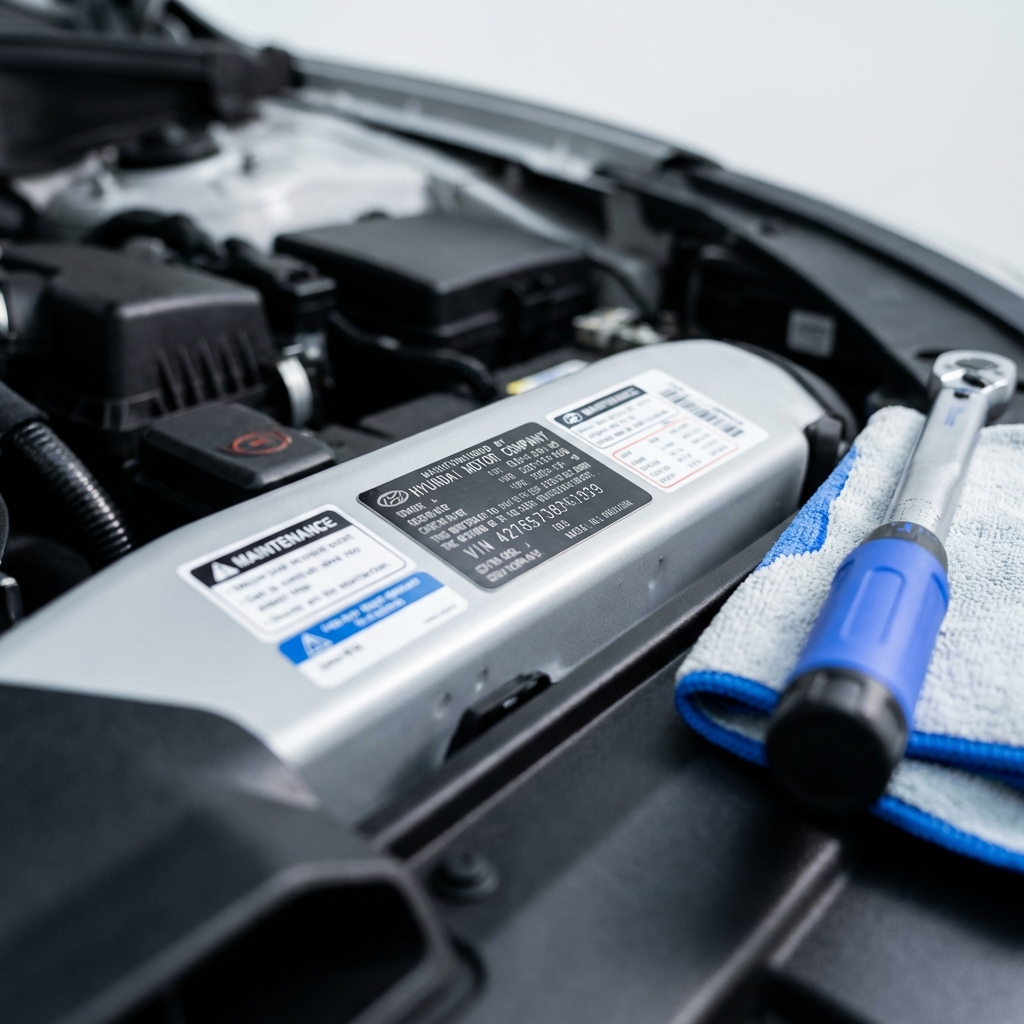
If you’re looking at cars far away, insist on a third-party inspection and detailed photo and video evidence of the engine bay and service stickers. Transporting a problematic car home can be costly; make sure the inspection and VIN checks are complete before you pay for shipping.
Treat each VIN like its own story: use VIN checks, documented service history, and compression/oil-pressure tests to let facts — not fear — decide whether a car is a safe buy.
Negotiation tips when the VIN shows minor issues
If a VIN shows minor recorded issues but the tests are clean, negotiate a price that reflects those service events. If a VIN shows required campaigns that haven’t been completed, ask the seller to complete them or reduce the price enough to allow you to have the work done. Dealers are more likely to complete documented campaign work than private sellers; use that reality when deciding whether to buy from a dealership or a private party.
When to walk away
Walk away when the seller refuses inspection, cannot provide service records, reports excessive oil consumption without proof of remedy, or when mechanical tests show abnormal compression or pressure values. Walking away is often the best money-saving move.
Checklist you can print or save
Run a VIN report and note open recalls.
Ask for dealer repair orders that reference recall numbers.
Confirm engine code and match it to known Theta-family lists.
Require compression and oil-pressure tests.
Evaluate service records for regular oil changes with proper specs.
Walk away if tests show internal damage or seller blocks inspection.
Final practical advice
People asking "What year of Hyundai to stay away from?" are doing the right kind of homework. The mid-2010s have more risk, but thorough VIN-level checks and mechanic tests are stronger tools than a blanket model-year rule. Treat documentation as your safety net and insist on the simple checks that reveal the biggest problems.
Where to go next
Start with a verified VIN report, review the service history, and schedule a targeted inspection. If you’d like to begin by seeing a vehicle’s verified history and recall summary, the quickest way is to run a CARFAX report for the VIN you plan to inspect — it’s a smart first move that gives you facts to guide the conversation with the seller. For more detail on ordering and using reports, see the CarfaxDeals how-to page.
Run a vehicle history report before you buy
Ready to check a vehicle’s history? Start with a report that shows recalls, service events, and ownership history so you can ask the right questions at the right time. Run a CARFAX report now and move forward with confidence.
Careful buying beats blanket avoidance. If you prioritize VIN checks, documented maintenance, and the few practical mechanical tests described above, you’ll avoid the worst outcomes and still find well-priced, dependable Hyundais — even sometimes from the model years people worry about most.
The strongest concentration of complaints and manufacturer actions centered on early- to mid-2010s builds, roughly 2009 through 2016. Within that window, 2011–2014 Sonatas and some Santa Fe Sport models saw notable action, and Elantras around 2012–2013 (and some 2017 variants) had elevated complaint volumes. That said, each VIN matters more than the calendar year—documented inspections and compression/oil-pressure tests are crucial.
Yes. A competent technician can run compression tests, oil-pressure checks, borescope inspections, and diagnostic scans to find early signs of rod-bearing wear or other internal engine problems. These tests are relatively inexpensive and help reveal issues that are not obvious on a casual test drive.
CARFAX Deals links listings to verified CARFAX Vehicle History Reports, showing open recalls, service events, title history and ownership—giving you an early picture of risk. Use those reports as a starting filter, then verify repairs with dealership records and require mechanical testing before purchase.
In short: be cautious with many early- to mid-2010s Hyundais, but make decisions by VIN-level evidence—documented recalls, consistent maintenance, and targeted mechanical tests beat blanket year-based rules; happy hunting, and may your next used Hyundai surprise you with reliability and not repair bills!


 Blog
Blog