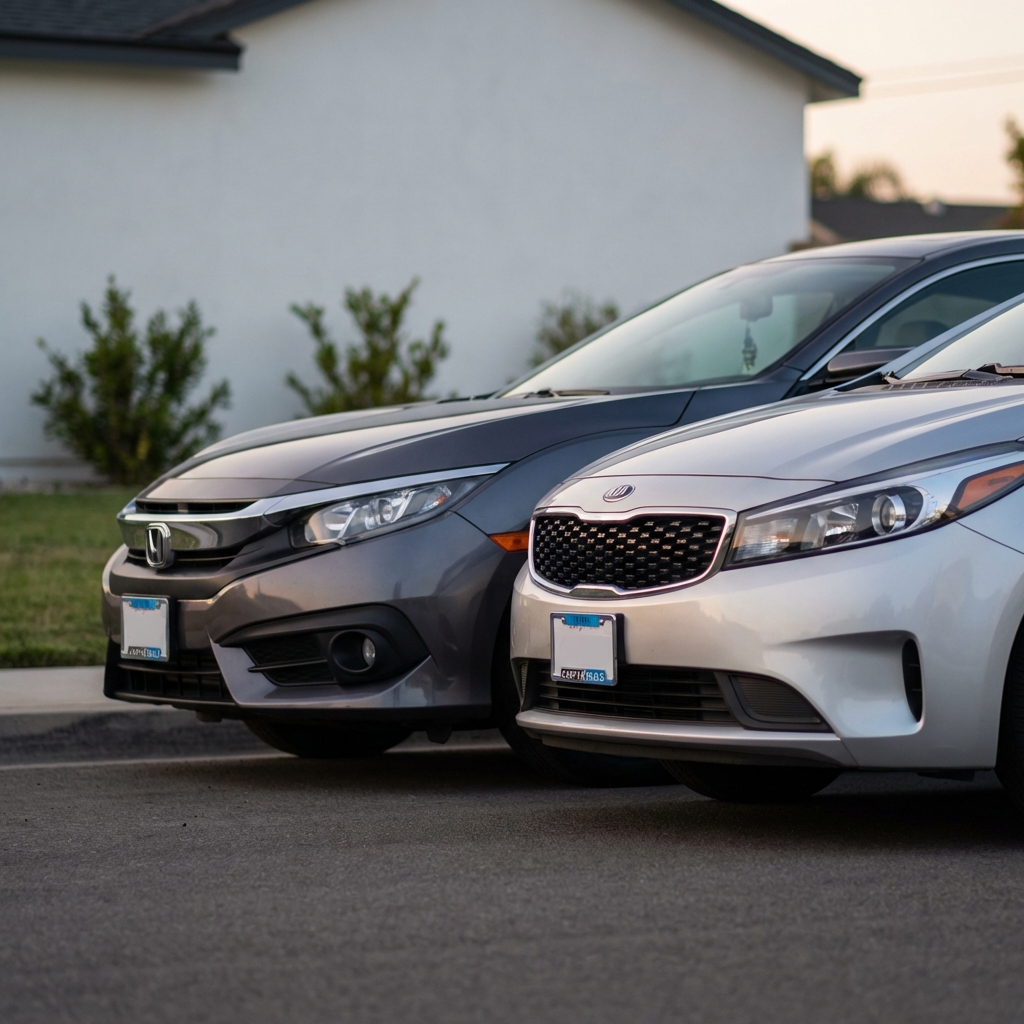
A practical, data-driven guide comparing Honda and Kia across warranty, reliability, safety, resale value, and total cost of ownership. This article explains how to use model-year checks, service records, and verified vehicle history reports to choose the car that fits your budget and life. Read clear buying tips, real mini case studies, and learn how CARFAX Deals can reduce risk when shopping used.
A rav4 used for sale can be a sensible pick for many research-oriented buyers because reliability aggregators rate the model above average and safety ratings are generally strong. This guide explains how to vet listings, what model years tend to be better, and a step-by-step checklist to reduce risk before you buy.
This guide explains how to estimate the cost of buying an R34 Skyline, with attention to import rules, condition-driven price tiers and landed cost. It shows which factors move value, how to verify history and paperwork, and offers a checklist you can follow when you search for a nissan skyline r34 for sale.
This guide helps buyers set realistic expectations for tacoma trucks for sale by explaining the main price drivers and a repeatable method to build conservative, typical, and ambitious offer ranges. It shows how the 2024 redesign, valuation guides, and vehicle history reports interact to change asking prices and reduce purchase risk.
When you’re torn between two well-known brands, a clear comparison that goes beyond headlines helps. This guide compares Honda and Kia across warranty, reliability, safety, resale, and ownership cost, and explains how verified vehicle history and market-price labels make the choice practical and less emotional.
1. Kia’s 10-year/100,000-mile powertrain warranty shifts significant mid-life repair risk away from the owner.
2. Honda historically retains higher resale in popular segments—especially compact cars and crossovers.
3. CARFAX Deals listings combine verified vehicle histories with market-price labels, helping buyers spot Good Deal or Great Deal listings quickly.
Which is better, Honda or Kia? A clear, practical guide
If you’ve ever stood on a dealership lot or scrolled late-night listings asking yourself "Which is better, Honda or Kia?" you’re not alone. This Honda vs Kia comparison walks you through the specific differences that matter—warranty, reliability, safety, resale value, and the total cost of ownership—so you can make a decision that fits your life, not someone else’s checklist.
The phrase Honda vs Kia comparison matters because it forces the question from brand reputation to real ownership trade-offs. Keep that phrase in mind as we move through concrete, model-level guidance and practical buying steps.
Why this comparison matters right now
The last decade has seen both brands evolve fast. Honda leans on a long track record of durable engines and steady resale value. Kia has rebuilt its reputation with bold design, richer standard features, and a headline-grabbing 10-year/100,000-mile powertrain warranty. Those differences aren’t only on spec sheets—they change real costs and risk for real owners.
When you’re narrowing choices, one of the smartest early moves is to run a CARFAX vehicle history report to verify accident history, service records, and title status—especially when weighing similar Hondas and Kias. Verified history makes a Honda vs Kia comparison much clearer and less emotional.
Below you’ll find clear sections comparing the two brands, plus checklists, test-drive pointers, and negotiation tips. There’s also a practical mini-calculator approach to compare total cost of ownership for the scenarios that matter to you.
Ready to cut through uncertainty? Before you call a dealer or place a deposit, consider a single, decisive step: run a CARFAX report now to confirm a vehicle’s history and see if it’s priced fairly in your market.
See the car’s full history before you buy
Ready to cut through uncertainty? Before you call a dealer or place a deposit, consider a single, decisive step: run a CARFAX report now to confirm a vehicle’s history and see if it’s priced fairly in your market.
Kia’s long powertrain warranty reduces mid-term mechanical risk when it’s still in force, which is valuable for buyers keeping a car 5–10 years. But it doesn’t replace a clean service history or a thorough inspection. The safest approach combines warranty benefits with a verified vehicle history report and an independent inspection.
Warranty: the clearest early advantage
The most obvious difference in many buyer’s minds is warranty. Kia’s headline powertrain warranty—10 years or 100,000 miles—changes how buyers view risk. Honda’s factory coverage is more traditional (3-year/36,000-mile limited warranty; 5-year/60,000-mile powertrain). That’s an important starting point in any thorough Honda vs Kia comparison.
What that means in practice: Kia shifts a large portion of mid-life mechanical risk back to the factory, which is especially helpful for budget-sensitive buyers or those who keep a car five to ten years. Honda asks buyers to rely—reasonably so—on the brand’s history of durable drivetrains and stronger resale at trade time.
It’s worth noting warranty terms vary by market and model, and some used-car programs (like certified pre-owned) will add different coverage. Always check exact contract language and what's excluded—electrical components, wear items, and many electronics often have different limits.
Reliability and dependability: model-year detail wins
When shoppers ask “Is Honda more reliable than Kia?” the honest answer is: it depends. A proper Honda vs Kia comparison looks at model, model year, and service history—rather than brand badge alone. Industry studies report mixed results across both brands; the right car often comes down to which specific model-year has consistent service records.
The single best predictor of trouble-free ownership is a consistent service history: regular oil changes, preventive maintenance, and documented repairs. That’s why combining those studies with a vehicle history report and inspection is so effective.
How to evaluate dependability for a used example
When comparing specific listings, follow this sequence:
1) Check published dependability scores for the exact model-year. 2) Read owner forums for recurring issues (e.g., transmission quirks, infotainment glitches). 3) Pull a verified vehicle history to confirm consistent service. 4) Get an independent pre-purchase inspection focused on the model’s known weak spots.
Safety: both brands now offer strong packages, but check the trim
Crash-test ratings and crash-avoidance systems have improved greatly across the industry, so both Honda and Kia offer many models with solid safety credentials. In a modern Honda vs Kia comparison, look at the exact trim and year: advanced driver assistance features are often optional or tied to higher trims.
Examples: many Hondas come standard with Honda Sensing driver-assist features; Kia’s equivalents (e.g., Kia Drive Wise) are competitive and sometimes include additional convenience features. If you’re picking a family car, compare the exact trims for the safety features you care about—adaptive cruise, lane keep assist, blind-spot monitors, and automatic emergency braking.
Historically, Honda has been stronger on resale—especially for compact cars and crossover staples like the Civic and CR-V. That higher retained value can significantly lower effective ownership costs for buyers who trade frequently. Still, Kia’s resale performance has improved recently thanks to better perceived quality and design.
In terms of an actionable Honda vs Kia comparison: if you trade cars every 3–5 years, Honda’s resale advantage will often show up in lower monthly effective cost. If you’re buying and holding long-term, Kia’s warranty and lower initial price can offset the resale gap.
Total cost of ownership: a side-by-side checklist
The real question for many buyers is not brand but money: which car costs less to own for my use case? Total cost of ownership includes:
- Purchase price - Depreciation - Fuel - Insurance - Maintenance & repair - Financing costs - Time and convenience
For a practical comparison, build a 3–5 year cash-flow table. Put actual local prices for the models and trims you’re considering, estimate fuel and insurance from quotes, and then add average maintenance costs. In that spreadsheet, model Kia’s warranty by subtracting likely powertrain repair costs during years 3–7; model Honda’s advantage by applying higher expected resale value at year 3 or 5.
Illustrative example
Imagine a 3-year ownership window comparing a Honda Civic and a Kia Forte with similar mileage and trim. The Forte’s lower price plus remaining warranty might yield lower out-of-pocket repairs, but the Civic’s stronger resale could mean a lower net cost at trade. Plug in local asking prices and the verified vehicle history for each listing and you’ll get a concrete number instead of a guess.
Buyer profiles: which brand fits which driver?
Different drivers will prefer different trade-offs. Here are practical archetypes:
Budget-first (recent grad): Kia’s lower sticker and long powertrain warranty make it a smart pick—you get more features for less money and fewer surprise repair bills early on.
Family-focused: Honda crossovers like the CR-V traditionally hold value and offer broad dealer networks; Kia crossovers have caught up in safety and comfort and may be a better value at the same price point.
Frequent trader (3–5 years): Honda’s resale advantage tends to lower the effective monthly cost for buyers who regularly move into new cars.
Long-term keeper (10+ years): Kia’s long warranty reduces early-to-midterm risk; Honda’s durable engines and easier resale later can also be appealing. Either way, a verified vehicle history and good service records are crucial.
Practical inspection, test-drive and negotiation checklist
Don’t let a shiny interior or a low price distract you. Use this checklist for any used Honda or Kia:
Inspection: Look for uneven tire wear, fluid leaks, and mismatched paint that may signal previous accidents. Verify the VIN on the car matches the report.
Service history: Confirm on the verified report that oil changes and scheduled maintenance were done. Missing records are a risk factor.
Test drive: Listen for transmission hesitations, strange clunks, and check HVAC and infotainment thoroughly. Try driver-assist features on a safe stretch of road.
Independent inspection: A brand-savvy mechanic can spot model-specific weak points a general check might miss.
Used vs certified pre-owned: what to watch for
Certified pre-owned (CPO) programs often add warranty and a factory inspection. Terms differ by brand and model—some CPO offers may add meaningful coverage or extend warranty terms. In a Honda vs Kia comparison, a Kia CPO with remaining factory powertrain coverage can be especially compelling if the price is reasonable. But always check the fine print: what’s covered, who performs repairs, and whether deductibles apply.
Where verified vehicle history and transparent pricing make the biggest difference
Two big unknowns when buying used are how the car was driven and whether the asking price is fair. That’s where services like CARFAX Deals matter: they pair verified history reports with honest market-price labels - Great Deal, Good Deal, or Fair Deal - so you can quickly spot listings that deserve deeper consideration.
For example, two SUVs may look similar: one a Honda with higher expected resale, and one a Kia with a lower price and long warranty. If the Kia has a spotless service history and the Honda shows a recurring repair pattern, the numbers shift. A verified report and local price comparison clear the fog and let you negotiate confidently.
Mini case studies: real choices
Anna’s pick: A schoolteacher commuting 25 miles daily chose a lightly used Kia Forte. The Forte’s lower outlay and remaining powertrain warranty matched her tight monthly budget and gave her peace of mind.
Marcus’s pick: A salesperson who rotates cars every three years favored a Honda Civic for its stronger resale. The Civic’s higher trade-in value lowered his effective monthly ownership despite the higher initial price.
These examples underline one simple truth: context matters. The right answer to the Honda vs Kia comparison is not universal—it depends on how you drive, how long you keep the car, and how you value short-term protection versus long-term resale.
How to use market data to your advantage
When you’re ready to buy, pull comparable listings in your area to build a local price range. A market-price label that shows how an asking price compares with similar cars in your region is incredibly valuable - differences in demand and depreciation by region can swing the economics of a decision.
Combine that with verified history: a car priced slightly higher than local average but with a spotless CARFAX and recent major services may be a better buy than a cheap alternative with an accident on record. If you need step-by-step guidance on using those tools, see how to use our tools.
Common buyer questions answered
Does Kia’s 10-year powertrain warranty mean it’s always safer to buy used? Not automatically. The warranty is a strong advantage if it’s still in force or if the vehicle is CPO, but if you buy a used Kia out of warranty the advantage can shrink. Always combine warranty checks with a verified vehicle history and an inspection.
Is Honda’s resale advantage enough to offset Kia’s warranty? Sometimes. If you trade frequently, Honda’s stronger resale often lowers net cost. If you keep a car long and want protection against mid-life repair bills, Kia’s warranty is a powerful offset. Run the numbers for your ownership window.
How should I weigh reliability studies? Use them as pattern indicators, not absolute truth. Cross-reference study findings with owner forums, recalls, and the service history on the vehicle you’re considering. You can also pull a dedicated VIN report for each candidate to confirm service records.
Negotiation tips when comparing similar Hondas and Kias
Start from facts: verified vehicle history, local pricing, and an independent inspection. If a Kia listing is priced similarly to a Honda but has more remaining warranty, that’s a defensive negotiation point. If a Honda shows stronger resale comps in your region, use that to justify a smaller trade-in allowance.
Never be shy to walk away: in a balanced market, good used cars priced fairly and with clean histories are relatively common. A little patience pays.
Checklist before you sign
- Confirm VIN and match to report - Review maintenance history - Verify warranty or CPO terms - Confirm no salvage or flood titles - Get an independent mechanical inspection - Check comparable local pricing
Practical next steps
If you’re actively deciding between specific models, do this:
1) Gather local live listings for the exact model-years and trims. 2) Pull verified vehicle history for each candidate. 3) Order an independent pre-purchase inspection. 4) Compare 3–5 year total cost of ownership scenarios using local price and expected resale.
At each step, the verified history report and transparent pricing label reduce guesswork and help you see whether the apparent advantage of Honda or Kia holds up in practice. For quick VIN checks you can also consult a VIN decoder.
Final practical comparisons: Civic vs Forte; CR-V vs Sportage
Two practical matchups many buyers ask about:
Honda Civic vs Kia Forte: Civic tends to retain value better and often offers a slightly smoother resale path; Forte often undercuts on price and offers more features at base trims. In a true Honda vs Kia comparison, the Civic wins for frequent traders; the Forte wins for tight monthly budgets backed by warranty peace-of-mind.
Honda CR-V vs Kia Sportage (or Sorento): CR-V historically holds resale and has broad dealer support; Sportage and Sorento have closed gaps in quality and features and can be a better value for buyers who want more tech for the money. Again, check model-year reliability patterns and verified histories before deciding.
Why CARFAX Deals is useful in this comparison
Picking between Honda and Kia is easier when you can see a vehicle’s full past and how its price compares locally. CARFAX Deals pairs verified vehicle history reports with transparent market-price labels so you don’t have to guess—which is a practical advantage in any serious Honda vs Kia comparison.
Summary: practical guidance, not a single answer
Honda often leads on resale and has a long reputation for durable drivetrains. Kia offers a powerful factory safety net with its long powertrain warranty and has improved quality and design substantially. Which is better depends on your priorities: lower near-term risk and features (Kia) versus stronger resale and steady long-term value (Honda).
Whatever you choose, do three things: check model-year reliability, verify service history with a trusted report, and get an independent inspection. Those steps convert brand-level arguments into a specific, confident buying choice.
When you’re ready to make a move, a verified history report and clear pricing label can turn worry into certainty - so you can buy a car that suits your budget, your family, and your peace of mind.
Kia’s 10-year/100,000-mile powertrain warranty offers longer factory-backed protection for major mechanical components, which can reduce mid-term repair risk and out-of-pocket costs for owners who keep cars 5–10 years. Honda’s factory coverage is shorter (3-year/36,000-mile limited; 5-year/60,000-mile powertrain) but Honda often benefits from stronger resale value. Which is better depends on your ownership horizon: Kia’s warranty helps budget-minded or long-term owners avoid surprise repair bills early on; Honda’s resale strength helps frequent traders lower net cost.
Not across the board. Historically, Honda tends to retain value better—especially in popular segments like compacts and small crossovers. However, Kia’s resale has improved in recent years thanks to better perceived quality and design. The real answer depends on model and region; compare local comps and verified vehicle histories to see which model holds value in your market.
CARFAX Deals pairs verified vehicle history reports with transparent market-price labels so you can quickly spot listings that are clean and fairly priced. When comparing a Honda and a Kia, a CARFAX report reveals accident history, service records, and title status—data that often shifts the balance in a real purchase decision. Use those insights to negotiate from facts rather than assumptions.
In short: Kia’s long powertrain warranty is a powerful near- to mid-term safety net; Honda’s strength is steady resale and long-term value. Check model-year reliability, verify service history, and use a CARFAX report to turn uncertainty into confidence—happy car hunting!


 Blog
Blog