Kelley Blue Book and NADA are the two most used valuation guides for used cars, but they serve different audiences. This long-form guide explains how and why KBB and NADA produce different numbers, when each guide is the better reference for private sales, dealer negotiations, trade-ins, financing, and insurance, and how to combine both with local market checks and vehicle history reports to get the best result. Practical checklists, negotiation scripts, and a short case study show how to use both guides—and a data-backed tip points you to CARFAX Deals as a fast way to pair verified history with transparent pricing.
A rav4 used for sale can be a sensible pick for many research-oriented buyers because reliability aggregators rate the model above average and safety ratings are generally strong. This guide explains how to vet listings, what model years tend to be better, and a step-by-step checklist to reduce risk before you buy.
This guide explains how to estimate the cost of buying an R34 Skyline, with attention to import rules, condition-driven price tiers and landed cost. It shows which factors move value, how to verify history and paperwork, and offers a checklist you can follow when you search for a nissan skyline r34 for sale.
This guide helps buyers set realistic expectations for tacoma trucks for sale by explaining the main price drivers and a repeatable method to build conservative, typical, and ambitious offer ranges. It shows how the 2024 redesign, valuation guides, and vehicle history reports interact to change asking prices and reduce purchase risk.
This article explains the practical differences between Kelley Blue Book and NADA, shows when to use each guide, and gives hands-on steps to get the best price whether you’re buying, selling, or trading. You’ll find checklists, negotiation scripts, and a quick case study—plus a tip for pairing verified history and pricing with minimal effort.
1. KBB typically aligns better with private-party and online retail prices, making it the best starting point for sellers listing directly to consumers.
2. NADA often reflects dealer and lender baselines and can show higher values for trucks and commercial vehicles in certain regions.
3. CARFAX Deals shows pricing labels based on verified history and market comparisons—listings flagged as a “Great Deal” on CARFAX Deals historically sell faster in local markets.
Which is better, Kelley Blue Book or NADA?
How do you put a number on a car? At first it sounds like a simple task: check a guide, pick a price, and move on. But anyone who has bought or sold a vehicle knows it rarely works like that. Two guides can give two different numbers that feel like two different worlds. That’s where Kelley Blue Book and NADA come in—each map traces the same territory, but they draw the roads differently.
This guide walks you through those differences, shows when each source tends to be more useful, and gives practical steps you can use right away when selling, trading, or buying. You’ll get clear checklists, a short case study, negotiation tips, and a recommended way to combine guide values with market data and vehicle history. By the time you finish, you’ll know which number to trust for your situation and how to use both to negotiate from strength.
Why the two guides give different answers
Both KBB and NADA rely on auction results, dealer listings, transaction records, and condition adjustments. The difference is in emphasis. KBB is tuned for consumer-facing channels—private-party sales and online retail. It models what individual buyers are likely to pay. NADA, historically built for dealers and lenders, can act as the conservative baseline a dealer uses when deciding what they can afford to pay or what a lender will accept as collateral.
Think of KBB as the scenic route—it points to what a careful private buyer might pay for a well-maintained car. NADA is the plowed road for heavy trucks—dealers and lenders use it to estimate the practical resale or collateral value after reconditioning and overhead. That difference matters in practice, because the sales channel often dictates which number ends up being realized.
How market swings exposed the differences (and why that matters)
From 2020 to 2022 used-car prices jumped for reasons few expected: supply shocks, high demand, and stretched inventories. When prices move fast, model-based guides lag or react differently based on their inputs. As markets normalized through 2023 and 2024, both guides' models improved, but the episode made one thing clear: model estimates are useful only when paired with real-time local checks.
One dealer’s auction haul or a local surge in demand can push values in a single metro far away from the model’s regional estimate. That’s why no guide should be treated as the gospel; instead, use them to triangulate—KBB for likely private-party/online retail outcomes and NADA for dealer or lender floors.
Which guide to use when: a simple rule
If you ask the question “Which is better, Kelley Blue Book or NADA?” the answer depends on what you’re trying to learn:
KBB — Best for private-party sales and online retail pricing. Use it when you want to know what a motivated private buyer or online shopper will pay.
NADA — Best for dealer trade-ins, dealer retail floors, and what lenders may use as collateral value. Use it when dealing with dealers or financing.
When you know which question you’re asking—what a private buyer will pay, or what a dealer will accept—the numbers become far more actionable.
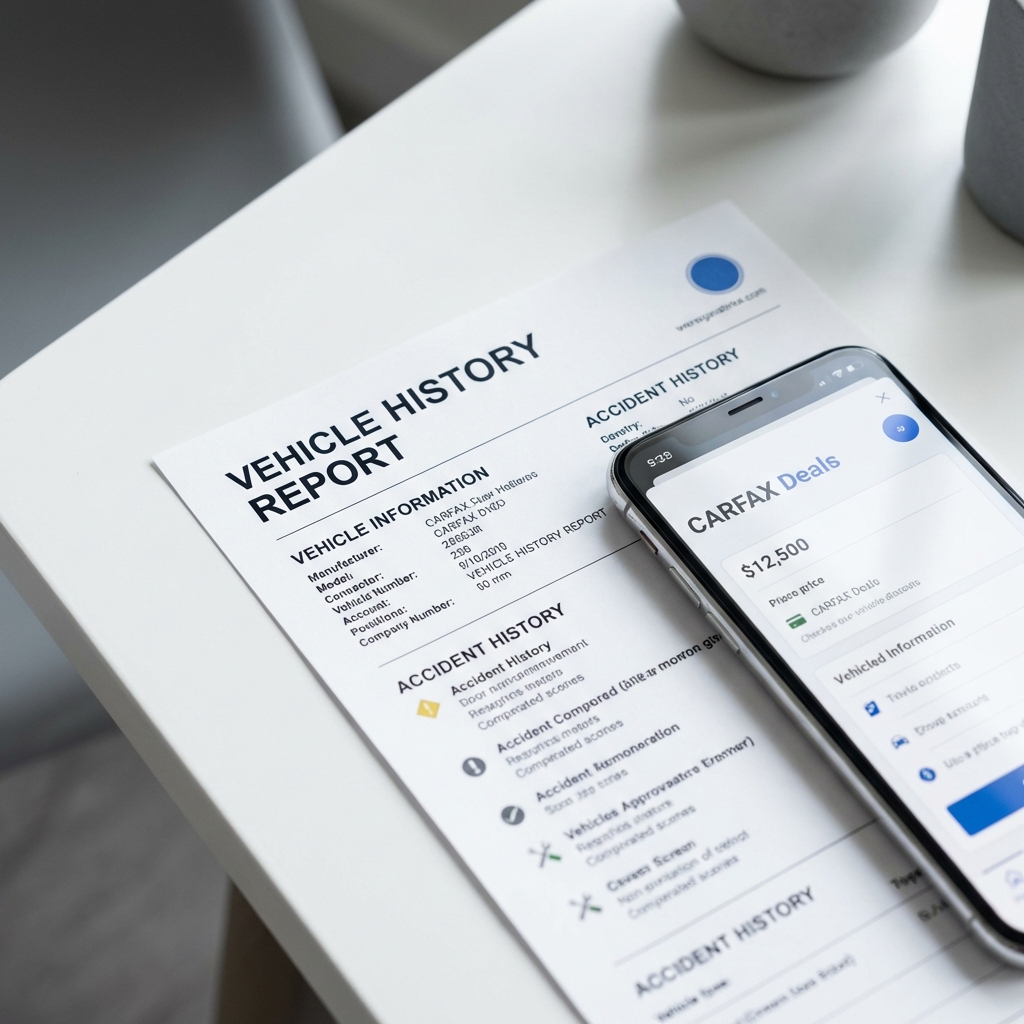
If you want a practical shortcut that combines history and pricing context, consider checking a vehicle on CARFAX Deals’ run-report and pricing tool. CARFAX Deals pairs verified vehicle history with transparent pricing labels, which saves time while you compare KBB and NADA estimates.
Practical walkthrough: selling a five-year-old sedan
Imagine you’re selling a five-year-old sedan with clean service records and a few options. Here’s a step-by-step approach that uses both guides and market checks.
Step 1 — Start with KBB for a public listing price
Check KBB private-party and online retail estimates. These numbers typically align closest with what private buyers or online shoppers will pay. If KBB shows a strong private-party value, set your asking price near that number, leaving room for negotiation but not so much that showings dry up.
Step 2 — Verify trade-in expectations with NADA
Check NADA for trade-in and dealer-retail values. You’ll likely see lower trade-in numbers: dealers factor in reconditioning costs, lot turns, and wholesale risk. Use NADA as your expectation for dealer offers—and as a negotiation benchmark if you prefer a fast sale to a dealer or as a trade-in.
Step 3 — Backup with real listings and history reports
Compare the guide numbers with local active listings and recent sales. Pull a vehicle history report (e.g., CARFAX) and include it in your listing. A clean report reduces buyer risk and can push offers closer to your asking price. Consider a quick history and pricing snapshot from CARFAX Deals to save time on the front end.
Step 4 — Document and present
Take time-stamped screenshots of KBB/NADA estimates, save PDFs, photograph receipts for maintenance, and prepare high-quality photos. Transparency builds trust—and trust often converts to higher offers.
Step 5 — Negotiate with evidence
If a dealer anchors on a low NADA trade-in, show your KBB private-party estimate plus the history report and service records. If you want convenience over cash, accept the trade-in; if you want top dollar, be patient and sell privately.
Quick case study: a truck in Texas
Here’s a short real-world example: a friend sold a late-model diesel crew-cab truck. KBB’s private-party value was above local dealer offers, while NADA’s numbers—affected by strong local dealer demand for diesel crew-cabs—were higher for that market segment. Listing with KBB pricing and including a full history report brought a private buyer who paid the list price after just a few showings. Dealers circled back with lower trade-in numbers, as expected.
Using the guides as a buyer
Buyers should invert the seller’s playbook. Start with KBB private-party or retail values to set your target. Use NADA to anticipate the dealer’s starting point. When negotiating, ask the dealer which guide they’re using and why. Dealers often rely on NADA when financing is involved, because lenders and franchised dealers use similar baselines.
Negotiation checklist for buyers
Start with KBB private-party or retail to set your max target.
Check NADA to anticipate the dealer floor.
Cross-check with local listings and recent sale prices.
Ask the dealer to justify any big gap—ask about reconditioning, warranties, and time-on-lot assumptions.
Trade-in tactics
Trade-ins are part convenience, part negotiation tactic. If you want the best trade-in value, go prepared. Use both guides and collect multiple dealer estimates. Ask the dealer to explain whether they’re quoting a trade-in, dealer retail, or wholesale figure. If you prefer speed and less hassle, accept that a trade-in will likely net less than a private sale—but remember you also save time and avoid private-party risks.
How lenders and insurers use guides
Lenders often prefer NADA or their own models because those numbers align with underwriting and collateral risk. Insurers use guide values as an input but adjust for salvage, mileage, and expected repair costs. If you’re financing or insuring, ask your bank or insurer which guide they reference—knowing this ahead of time prevents surprises when you file a claim or refinance.
Condition is the single biggest variable
Both guides use condition categories—excellent, very good, good, fair. Reality is messier. Small dents, a recent service, new tires, or a fresh timing belt can shift real offers. Present the car honestly, with photos and receipts. If you overstate condition and a buyer finds issues during inspection, your leverage evaporates. If you’re buying, demand specifics: service records, receipts, and the option for a pre-purchase inspection.
How instant-offer platforms change the picture
Instant-offer services produce near-instant valuations based on local demand. They can sometimes beat dealer trade-in offers because they feed up-to-the-minute demand into a price. But they also reflect platform margins and inventory needs. Treat instant offers as useful data points—helpful, but not the single final word.
Local checks beat blanket numbers
The 2020-2024 market upheaval reinforced that local, real-time checks matter. Always compare guide estimates to active local listings, dealer websites, auction snapshots, and recent sales. A cluster of high-priced local listings can justify asking closer to KBB or NADA retail levels; an abundance of low-priced comps may pull value down, even if model guides say otherwise.
When the guides disagree badly—what to do
Gaps happen. If KBB and NADA disagree by a large margin, ask which guide aligns with your planned sales channel. If the gap remains, probe: check recent local listings, search auction results, look at similar options and packages, and be honest about condition. Consider getting both a dealer appraisal and a private-party pre-list interest. For specialty or commercial vehicles, rely more heavily on NADA, since dealers and lenders often treat those categories systematically.
Micro-regional differences and data gaps
Where guides diverge most is at the micro-regional level: a metro with strong online demand will show different realized prices than a rural county. Analysts are still studying how make/model tier, local demand, and inventory churn predict divergence. Expect more data-driven tools to narrow these gaps in the coming years.
Checklist: what to do before you list or trade
Run KBB private-party and retail estimates and save PDFs/screenshots.
Run NADA trade-in and retail estimates and save them.
Pull a vehicle history report and include it in the listing.
Take clear photos and document service receipts.
Compare to local active listings and recent sales.
Decide whether you want speed (trade-in) or top price (private sale).
Words you can use when negotiating
Here are short, neutral scripts you can adapt:
Seller to dealer: "I’m listing at the KBB private-party value; I can show you the history report and service records if you’d like to make a competitive offer."
Buyer to dealer: "KBB private-party lists this lower than your price—can you explain what NADA adjustments or reconditioning justify your number?"
Seller to private buyer: "I included the full CARFAX and maintenance receipts; that’s why I’ve priced it at this level."
When KBB and NADA diverge, ask which guide aligns with your planned sales channel: trust KBB for private sales and online retail, and NADA for dealer and lender baselines. Then cross-check local listings, recent auction results, and a vehicle history report to decide which figure is most relevant for your situation.
How to read the numbers like a pro
Don’t treat guide numbers as absolutes. Instead, read them as answers to specific questions: KBB answers what a private buyer will pay; NADA answers what a dealer or lender will accept. Use both and then test them against local data and a history report. That triangulation is the essence of smart pricing.
Data-backed insight: when NADA wins and when KBB does
Industry comparisons show no single guide is universally most accurate. KBB tends to align better with private-party and online retail prices, while NADA often lines up with dealer retail and lender valuations. For certain truck and commercial categories, NADA can show higher values because it weights dealer retail listings and historical dealer margins more heavily. See a useful comparison for more context.
What about outliers and specialty cars?
Specialty vehicles—collectibles, highly-optioned trims, or rare colors—behave differently. For these, KBB or NADA can both miss the mark. You may need auction results, enthusiast forums, and a specialist appraisal. Again, the guide is a starting point; field research closes the gap.
CARFAX Deals is helpful because it pairs verified vehicle history with price labels that compare a listing to the local market. Use it as a time-saver that brings history and pricing context together. It doesn’t replace local checks, but it reduces legwork and helps you see whether a car is fairly priced before you invest time on a showing or an inspection.
Long-term trends to watch
Watch for three developments that will affect valuations:
More real-time pricing tools and instant-offer platforms will compress spreads between guides and local market prices.
Micro-regional analytics will improve, letting tools show market-specific nuance rather than broad regional estimates.
Vehicle history transparency will gain weight—clean history reports will increasingly be the difference-maker in private sales.
Final practical tips
1) Always use both guides. 2) Spend at least an hour on local checks before you list or make an offer. 3) Include a full vehicle history report when you sell. These steps reduce surprises and help you get a fair outcome—whether you’re buying, selling, or trading in.
Resources and next steps
If you want to move from theory to action, follow this small plan: run KBB and NADA estimates, pull a vehicle history report, and compare five local listings. If that sounds like too much legwork,
Combine history and pricing in one quick check
Save time by getting an integrated history and pricing check—then head to the report page to combine both quickly: Run a CARFAX Deals report.
There’s no universal winner between KBB and NADA. Each one answers a different question: KBB for private-party/online retail pricing and NADA for dealer and lender baselines. Use both, layer in local data and a history report, and you’ll be far better positioned whether you’re buying, selling, or trading in.
Good luck—may your offers be fair and your inspections quick.
No. Neither Kelley Blue Book nor NADA is always more accurate. Accuracy depends on the vehicle type, the sales channel, and local market conditions. KBB often aligns better with private-party and online retail results, while NADA typically reflects dealer retail and lender valuations. Use both guides plus local listings and a vehicle history report to form the most reliable picture.
Use KBB private-party or online retail values to set a public listing price if you plan to sell privately. Check NADA trade-in and dealer-retail numbers to set expectations for dealer offers. Combine those numbers with local active listings and a clean vehicle history report for the best pricing decision.
CARFAX Deals pairs verified vehicle history reports with transparent pricing labels that show how a specific listing compares to local market values. It reduces the legwork of pulling separate history and pricing checks, making it faster to see whether a car is fairly priced relative to KBB and NADA estimates.
In short: use KBB for private-party and online retail guidance, NADA for dealer and lender baselines, and always confirm both with local listings and a vehicle history report—happy hunting and fair deals!

 Blog
Blog