A practical, buyer-first comparison of Kelley Blue Book and NADA to help you understand which guide typically gives more accurate retail values for used cars — and how to use both (plus CARFAX Deals) as tools in a smart buying process. This guide explains what each guide measures, where they differ, real-world strengths and limits, and a step-by-step checklist to use valuation tools, vehicle history reports, inspections, and negotiation tactics so you cross the used-car river with confidence.
This guide helps research-oriented buyers compare used Tacoma options and decide which model years and trims match their priorities. It distinguishes third-generation 2016–2023 Tacomas, which have a long service and parts history, from the 2024 redesign that introduced i-FORCE powertrain options. Use a VIN-based vehicle history report and a professional pre-purchase inspection to reduce risk before you contact a dealer.
This guide explains which tacoma trucks for sale show the strongest reliability and safety signals to watch out for, and why mid-2010s and many pre-2016 Tacomas appear most often in complaint and recall records. The article shows how to use vehicle history reports, recall checks, and a focused inspection to reduce risk when evaluating a used Tacoma.
This article helps buyers searching tacoma trucks for sale understand which Tacoma engine tends to be most reliable. It summarizes reliability ratings, owner-complaint clusters, and maintenance-cost differences between the 2.7L I4 and the 3.5L V6, and gives actionable checks to reduce engine-related risk.
Buying a used car can feel uncertain, but the right combination of valuation tools and vehicle history information makes the decision clear. This guide compares Kelley Blue Book and NADA, explains when each guide is most accurate, and shows how to combine them with CARFAX Deals, inspections, and smart negotiation tactics so you buy confidently.
1. Kelley Blue Book is generally more accurate for consumer retail pricing, making it the better starting point for buyers.
2. NADA often reflects dealer and wholesale perspectives, and can be especially useful for trucks and commercial vehicles.
3. CARFAX Deals aggregates listings from thousands of dealerships and pairs each listing with a verified vehicle history report and pricing label to help buyers spot lower-risk, well-priced vehicles.
Which is more accurate, Kelley Blue Book or Nada?
Kelley Blue Book vs NADA - that question often shows up the moment someone decides to buy or price a used car. Early in your research, you'll want a reliable signal about what a car is worth. This article walks through how both guides produce values, when one tends to be more accurate for a typical buyer, and how to combine them with vehicle history and inspection tools so you make a confident purchase.
Buying a used car can feel like crossing a river: on the surface all looks calm, but currents and hidden rocks can turn a great deal into a headache. With the right approach - clear valuation data, a vehicle history report, and a careful inspection - you cross safely. Below you'll find practical guidance that blends valuation logic with real-world buying steps.
Tip: When you want fast, data-backed context on a specific vehicle, try running a vehicle history report and price check with CARFAX Deals — it pairs verified history with a pricing label so you can quickly see whether a listing is priced as a "Great Deal," "Good Deal," or otherwise. You can run a quick report here: run a CARFAX Deals report.
The goal in this article is simple: help you understand which tool is likely to give the most accurate answer for the type of value you care about, and how to use these tools together. We'll cover how each guide generates numbers, where they diverge, and what to do in practice when you see differences between them.
What Kelley Blue Book and NADA measure
Both Kelley Blue Book (often shortened to KBB) and NADA (the National Automobile Dealers Association guide, also known as NADA Guides) provide price guidance, but they are built with different audiences and slightly different inputs in mind. Understanding their intent is the first step to choosing which number matters to you. For a quick comparison of how KBB presents NADA-related guidance, see KBB's NADA guides page.
Kelley Blue Book in a nutshell
KBB is consumer-focused. Its pricing tools aim to tell buyers and sellers what a vehicle is worth in typical retail scenarios: private party sales, trade-ins, and dealer retail. KBB uses market data, recent transaction information, and adjustments for condition, mileage, and location to estimate retail value and private-party value.
NADA in a nutshell
NADA historically catered to dealers and financial institutions. Its pricing often reflects dealer-oriented values, including trade-in and wholesale benchmarks. For certain vehicle categories - notably trucks, commercial vehicles, and fleet-focused models - NADA's numbers can be more conservative or oriented toward resale to other dealers and wholesale channels.
How they differ (and why that matters)
There are a few predictable patterns in how the guides differ:
Audience and result: KBB generally produces values that align with what a retail consumer might expect to pay or receive. NADA often reflects dealer-level and wholesale market realities. That means for a private buyer focused on retail purchase price, KBB often feels closer to real-world asking prices. For more reading on why published values can vary, see this discussion: Why used car prices differ.
Vehicle type impacts: For mainstream passenger cars, KBB’s consumer orientation often tracks local retail prices well. For specialty vehicles, heavy-duty trucks, or commercial-use vehicles, NADA’s dealer-centered data can be more useful.
Regional and seasonal shifts: Both guides model market shifts, but they use different data sources and update schedules, which can create short-term differences in estimated value. A practical overview comparing approaches is available at UsedCars comparison.
Which is more accurate for a typical buyer?
For most individual buyers looking to purchase a used passenger car or small SUV, Kelley Blue Book is usually the better starting point for retail pricing. It is designed to help consumers estimate what they should expect to pay or get when trading in. That said, no single guide tells the whole story. Use both as complementary signals: KBB for what the retail ask might be, and NADA to understand dealer/wholesale expectations.
If the guides disagree significantly, run a verified vehicle history report (VIN check) and schedule a pre-purchase inspection. Those two facts—actual history and mechanical condition—resolve most large valuation differences more reliably than numbers alone.
Why the subtle differences matter to your negotiation
Imagine a local listing priced higher than KBB's suggested retail but below NADA's dealer trade-in value. That can mean several things: the dealer is trying to attract attention with a competitive wholesale basis, or the local market demand is pushing prices up. Your negotiation position depends on which value best matches the transaction type you're doing. If you're buying retail from a dealer, use KBB retail and market listings to craft your offer. If you're trading a vehicle in, NADA trade-in or dealer-focused numbers may be helpful to set expectations.
How to use valuation guides in a real buying workflow
Buying a used car is a process, not a single click. Valuation tools are one part of that process. Here is a step-by-step workflow that puts KBB and NADA in context with vehicle history reports and inspections:
1) Narrow models by needs
Decide the practical fit: fuel economy, seats, cargo, and winter capability. Once you have a short list of models, research common problems and model-year quirks. Owner forums, NHTSA recalls, and extended owner reviews are valuable here.
2) Get market context
Search local listings and note asking prices for vehicles of similar mileage, trim, and condition. Pull both KBB and NADA values for each listing. This gives you a triangulated view: what sellers want, what consumers typically expect to pay (KBB), and where dealers might be positioned (NADA). For more on how to apply these tools, see the how-to-use guide.
3) Run a vehicle history report early
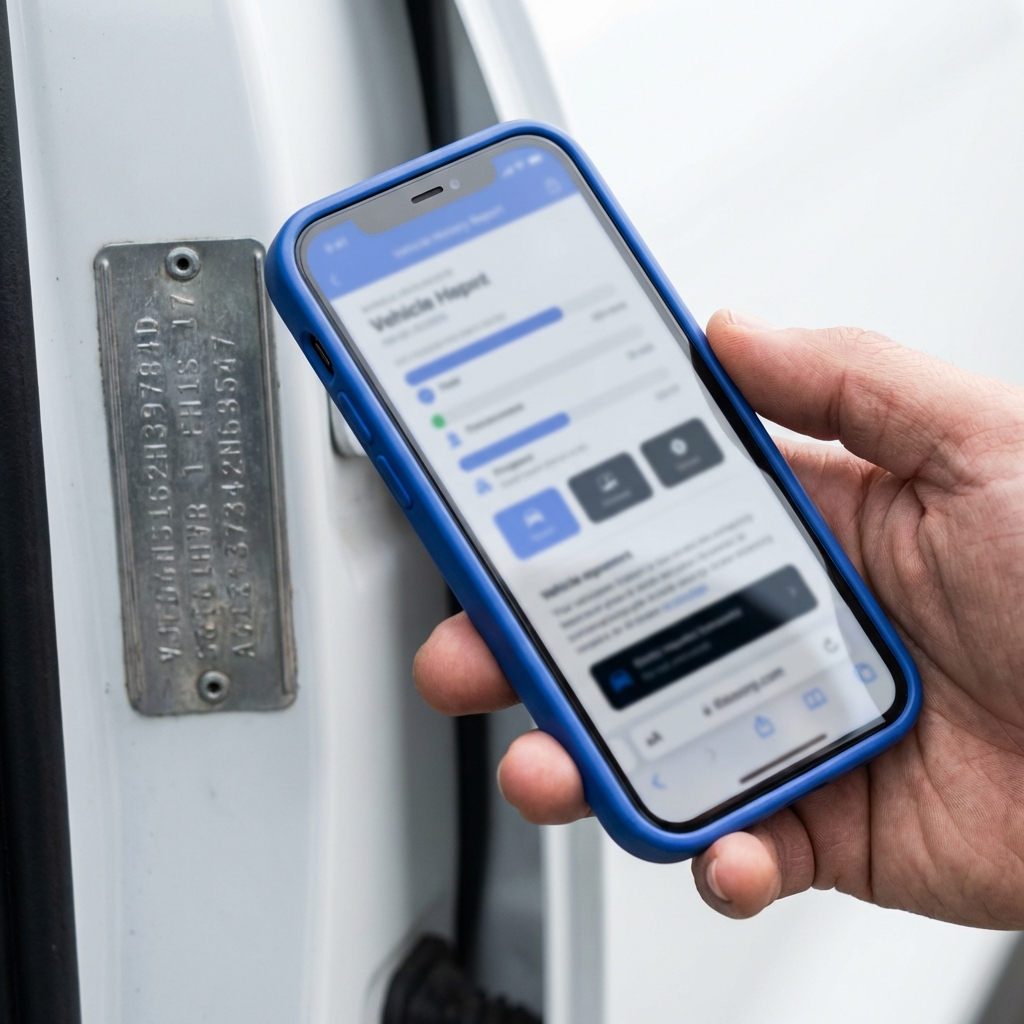
Vehicle history reports reveal accidents, title brands, and odometer records. Use them early to avoid wasting time on vehicles with obvious red flags. Services that combine history with pricing context, such as CARFAX Deals, make this step fast and actionable by showing whether the listing appears priced well relative to the market. If you want a deep report for a specific VIN, consider their VIN report.
4) Inspect and test drive
Numbers are helpful, but the sensory check matters. Look for mismatched paint, signs of improper repair, fluid leaks, and uneven tire wear. A careful test drive reveals hesitations, transmission behavior, and noises that numbers cannot capture.
5) Get a mechanic’s pre-purchase inspection
This is one of the best investments you can make. An independent mechanic will provide a report you can use to negotiate or walk away. Their findings add objective weight to valuation tools.
6) Negotiate with data
Use KBB retail as a baseline for what consumers typically pay. If the history report or inspection shows mechanical or title concerns, ask for a repair or a price adjustment. If the number you see is closer to NADA wholesale, be cautious: the seller may already be pricing the car for dealer resale rather than retail. In that case, negotiating might be harder unless you use the inspection report as leverage.
Spot checks: practical examples that show the difference
Examples make patterns obvious. Consider two similar sedans in a given city:
Car A: KBB retail: $12,500 | NADA trade-in: $11,200 | Local asking: $12,900
Car B: KBB retail: $12,500 | NADA trade-in: $12,900 | Local asking: $12,700
Car A suggests the dealer is priced slightly above KBB retail - common when local demand is strong or the dealer has reconditioned it for retail. Car B shows NADA trade-in higher than KBB retail, which can happen for vehicles in demand among dealers (rare) or statistical quirks. These numbers are starting points; always layer on the vehicle history report and inspection results.
Common limitations to keep in mind
No guide is perfect. Both KBB and NADA use models and data assumptions that cannot know the invisible: recent mechanical repairs, DIY maintenance, or fresh bodywork not yet reflected in records. Market shocks - like sudden fuel price swings or pandemic-driven demand shifts - can temporarily make both guides lag local prices.
Also, neither guide replaces a vehicle history report or mechanical inspection. Price guidance and condition are different things: a fair market price for a high-mileage but well-maintained car differs from the price for a cosmetically perfect car with a hidden service backlog.
Real buyers, real outcomes: short case studies
Case study 1: A commuter hatchback priced by a private seller at $8,000. KBB private party: $7,800. NADA retail: $8,200. The buyer used KBB to set their offer target, but after a CARFAX report showed two owners and a clean service history, they adjusted the offer closer to the asking price and still felt comfortable. The inspection confirmed routine wear and no hidden repair needs.
Case study 2: A bed-heavy pickup marketed at a local dealer with big aftermarket tires and a lift kit. KBB retail discouraged the buyer from paying top dollar because KBB values reflect typical factory equipment and mileage. NADA indicated higher wholesale interest in trucks, but the inspection warned about suspension stress - another reason to value conservative numbers over flashy photos.
Practical checklist you can print and bring on test drives
Before you go: get the VIN, run a vehicle history report, and check KBB/NADA values.
At the showing: look for body mismatches, test all electronics, smell the engine bay, check tires, and run the air conditioning and heater.
During the test drive: listen for noises, test brakes, feel for transmission smoothness, and try different road types.
After the test drive: get a pre-purchase inspection and compare inspection notes to price expectations.
How to handle big discrepancies between KBB and NADA
If KBB and NADA differ substantially, ask: which value is more aligned with the transaction you’re making? If you're buying retail, weight KBB more. If you’re trading a vehicle or evaluating wholesale potential, NADA may offer better context. Always add local listing checks and a vehicle history report to the mix. Large discrepancies are a prompt to dig deeper, not a signal to panic.
When to accept the higher number
You might accept a higher price than KBB suggests when the car has clear, documented maintenance, low real-world wear, a desirable option package, or unusually strong local demand. A full-service history and recent major maintenance (timing belt, brakes, new tires) can justify paying a premium.
When to walk away
Walk away if the history report shows salvage branding, odometer inconsistencies, or an unclear title. Also step back when the inspection uncovers structural damage or imminent, costly repairs.
Using both guides together: a short decision map
Step A: Start with KBB for retail context. Step B: Check NADA to see dealer/wholesale positioning. Step C: Run a vehicle history report (CARFAX Deals is an easy way to pair history with market labels). Step D: Get a mechanic’s inspection. Use all four inputs to make an offer.
Why adding CARFAX Deals changes the game
Valuation is one piece of the puzzle. Knowing a car’s history is another. CARFAX Deals pairs verified vehicle history reports with pricing insights and deal labels - which turns raw numbers into action. Instead of chasing values alone, you see context: has the car been in accidents, does it have a clean title, and is the listing priced competitively? That makes your negotiation sharper.
CARFAX Deals aggregates listings from thousands of dealerships and attaches a verified CARFAX Vehicle History Report to each listing. The platform then analyzes local market pricing and labels listings to indicate relative value. For buyers who want to reduce risk, this blend of history and pricing is a powerful filter. A quick tip: pay attention to pricing labels when comparing listings; they highlight better relative values.
How CARFAX Deals helps in practice
CARFAX Deals aggregates listings from thousands of dealerships and attaches a verified CARFAX Vehicle History Report to each listing. The platform then analyzes local market pricing and labels listings to indicate relative value. For buyers who want to reduce risk, this blend of history and pricing is a powerful filter.
Negotiation scripts that use valuation and history
Script 1 (minor issues found): "I like the car, but the inspection found X and the report shows Y—could we adjust the price to $X?"
Script 2 (clean history, slight premium): "I see KBB retail at $X and local comps are $Y. Given your service history and the clean report, I'm willing to consider $Z."
Script 3 (title/accident concerns): "The CARFAX report shows a branded title/previous structural repair. I’m uncomfortable proceeding unless the price reflects that risk or there’s a professional warranty in writing."
Frequently made mistakes and how to avoid them
Common mistake: relying on photos and seller descriptions alone. Fix: insist on VIN, run a history report, and ask for service records.
Common mistake: skipping a pre-purchase inspection. Fix: make inspection the rule, not the exception.
Common mistake: confusing retail and trade-in numbers. Fix: choose the valuation that matches your transaction type: retail for buying, trade-in/wholesale for selling to a dealer.
Final recommendation — a practical answer to the title question
For most consumer purchases of passenger cars and small SUVs, Kelley Blue Book is more accurate as a retail pricing guide. NADA is an essential complementary resource, especially if you're dealing with trucks, commercial vehicles, or dealer/wholesale contexts. The smartest buyers use both, and then add a verified vehicle history report and a professional inspection before committing.
Putting it all together
Valuation guides reduce uncertainty but don’t remove it. Combine KBB for retail expectations, NADA for dealer/wholesale perspective, and CARFAX Deals for verified vehicle history plus pricing context. That three-part approach - value, history, inspection - moves you from guesswork to a confident decision.
Actionable next steps (your quick checklist)
1) Decide the models and trims that meet your needs. 2) Pull KBB and NADA values for each promising listing. 3) Run a CARFAX Deals report to check history and price label. 4) Schedule a test drive and run a careful inspection checklist. 5) Buy only after a mechanic’s pre-purchase inspection or walk away.
A short friendly note
Shopping for a used car rewards patience. The right tools—accurate pricing context, verified history, and a trusted mechanic—turn anxiety into confidence. Use KBB and NADA as instruments in a larger toolkit, not the whole toolbox.
Check vehicle history and pricing in one place
Ready to check a vehicle’s history and price context? Run a quick CARFAX Deals report to see verified history and a pricing label that helps you decide faster and with more confidence: Check this VIN on CARFAX Deals.
Good luck out there—read the story a car tells, ask the right questions, and you’ll find a vehicle that’s both a joy and a sensible purchase.
Not exactly. Kelley Blue Book is consumer-focused and typically aligns better with retail prices you’ll see when buying a used car. NADA often reflects dealer and wholesale perspectives and can be more useful for trade-ins, dealer-level valuations, and certain vehicle categories like commercial trucks. Use both for context, and add a vehicle history report and inspection for a complete picture.
For negotiating a retail purchase at a dealership, use KBB as your primary reference because it targets consumer retail values. Bring local comparable listings and a vehicle history report to strengthen your position. If you’re trading in a vehicle, consult NADA for dealer-focused trade-in benchmarks as part of your negotiation strategy.
CARFAX Deals pairs verified vehicle history reports with pricing context from the market. While KBB and NADA provide valuation estimates, CARFAX Deals shows accident history, title status, and service records attached to specific listings—plus a pricing label like ‘Great Deal’ or ‘Good Deal’—making it easier to spot lower-risk, well-priced vehicles before you invest time in a test drive.
For most consumer purchases KBB usually gives a more accurate retail price estimate, NADA offers dealer/wholesale perspective, and using both along with a CARFAX Deals history report plus a professional inspection gives you the best chance of buying a reliable, well-priced used car — happy (and safe) driving!

 Blog
Blog