Buying a used car means balancing trust with skepticism. This article compares people-aggregator VIN lookups (like BeenVerified) with vehicle-focused history reports (like CARFAX and CARFAX Deals). You’ll learn what each service does best, when to use one or both, how to read a VIN report, and a step-by-step checklist you can use at the lot. Practical tips, real-world examples, and a clear recommendation help you avoid common pitfalls and make a confident purchase.
A rav4 used for sale can be a sensible pick for many research-oriented buyers because reliability aggregators rate the model above average and safety ratings are generally strong. This guide explains how to vet listings, what model years tend to be better, and a step-by-step checklist to reduce risk before you buy.
This guide explains how to estimate the cost of buying an R34 Skyline, with attention to import rules, condition-driven price tiers and landed cost. It shows which factors move value, how to verify history and paperwork, and offers a checklist you can follow when you search for a nissan skyline r34 for sale.
This guide helps buyers set realistic expectations for tacoma trucks for sale by explaining the main price drivers and a repeatable method to build conservative, typical, and ambitious offer ranges. It shows how the 2024 redesign, valuation guides, and vehicle history reports interact to change asking prices and reduce purchase risk.
When you’re standing in a crowded lot with keys and a smartphone, the VIN is your invitation to investigate. This guide compares people-aggregator VIN lookups and vehicle-focused history reports, shows when to use each, and gives a step-by-step plan to vet any used car with confidence.
1. A true vehicle-history report pulls from DMVs, insurance loss records, auction houses, and dealer service logs — not just public names and addresses.
2. Combining a VIN report with a pre-purchase inspection can prevent costly surprises: inspections often reveal mechanical issues reports miss.
3. CARFAX Deals listings pair verified CARFAX vehicle history with pricing context — shoppers using verified history reduce purchase risk notably.
How to read this guide
If you’re wondering "Is BeenVerified as good as Carfax?", you’re already asking the right question. This comparison explains what each tool does, where they shine, and how to use them together so you walk away from a used-car deal confident - not surprised. Read slowly, follow the step-by-step checks, and use the linked resources when you need a deeper VIN report.
Two tools, two jobs
When you’re holding keys and a phone on a used-car lot, think of two tools: a magnifying glass made for cars and a broad public-record scanner. Vehicle history specialists dig into titles, insurance records, collision reports, and manufacturer recalls. People-aggregator services collect names, addresses, phone numbers, and other public records and sometimes include VIN lookups as a convenience. The difference matters - and it explains why, in most used-car buying scenarios, a vehicle-focused report is the better first stop.
Quick distinction
Vehicle-history report (car-specialist): detailed title brands, accident and insurance losses, odometer checks, recall notices, and service entries from dealerships and repair shops. People-aggregator/public-record search: owner names, contact information, address histories, and broader context about sellers.
What a thorough vehicle-history report includes
A comprehensive report compiles many specialized feeds: state DMVs and title agencies, insurance companies’ loss records, auction and salvage houses, collision repair shops, manufacturer recall databases, and dealer service logs where available. The most useful reports flag:
- Title brands: salvage, rebuilt, flood, lemon law buybacks and branding that affect insurability and safety.
- Insurance claims: totals and whether the vehicle was declared a total loss.
- Odometer readings: consecutive entries that help detect rollback or tampering.
- Service and maintenance: dealership entries and certified-shop notes that show regular care.
- Open recalls: manufacturer-issued defects that haven’t been remedied.
Where people-aggregator services help
People-search providers are useful when you need contact details for a private seller, want to verify the name on a title, or are tracing a car’s ownership trail across states. They’re not designed to be the final authority on title brands or insurance totals. Treat them as a complementary tool: excellent for tracing owners and context, less so for the technical, safety-focused aspects of vehicle history.
Pricing models and what they say about the service
Vehicle-history providers typically sell single, detailed reports or modest bundles - convenient for inspecting one or a handful of cars. Public-record services often work by subscription, offering broad access to many searches across names, phones, and addresses. For a single used-car purchase, a one-off, deep vehicle-history report is usually more cost-effective; if you’re tracing many owners or running background checks frequently, a short subscription to a people-aggregator might make sense. Alternatives like EpicVIN present different pricing approaches and NMVTIS-certified options to consider.
Coverage limits and why no report is perfect
No aggregator is omniscient. Private, out-of-pocket repairs by a local mechanic won’t appear. Minor parking dents or unfiled repairs won’t show up if no claim was made. State-level differences in data sharing mean one report may show a title brand the other misses. A careful buyer combines a report with a professional inspection and seller documentation.
Step-by-step checklist for vetting any used car
Follow these practical steps at the listing stage and at the showing:
1. Run a vehicle-focused VIN report first. It’s the best first filter for title brands and loss history.
2. Read the report carefully. Look for salvage, flood, or rebuilt titles; odometer inconsistencies; repeated insurance claims; and open recalls.
3. Ask the seller for documentation. Title, maintenance receipts, and repair invoices are key.
4. If anything concerns you, get a pre-purchase inspection. A mechanic can find structural or hidden damage that a report won’t show.
5. Use people-search only when you need to contact prior owners or verify seller identity. It’s a supplement, not a substitute.
Real-world example: why both tools matter
A friend once considered a clean-looking sedan sold by a private owner. The seller said it belonged to a retired couple and had been gently used. On impulse the buyer ran a quick VIN report and a people-search on the seller. The VIN report flagged a salvage title from a flood-related auction two years earlier - something the seller hadn’t disclosed. The people-search helped confirm contact details and allowed a pointed conversation. The combination turned a tempting emotional buy into a cautious decision: the buyer walked away, saving money and future headaches.
How to read the important sections of a VIN report
Title brands: Pay special attention. Words like salvage, rebuilt, or flood can dramatically change a car’s usability, safety, and resale prospects.
Accident and insurance history: One small claim isn’t fatal, but several claims or a total-loss event warrants caution.
Service history: Entries from dealerships or certified shops are reassuring. Regular oil changes and major scheduled services (timing belt, transmission service) show care.
Odometer readings: Consistent readings over time build trust. Big jumps or rollback flags should be examined closely.
Open recalls: Fixable but important - call a dealer to get them remedied if you buy the car.
Common buyer mistakes and how to avoid them
Assuming a clean report equals a perfect car. A report reflects what’s recorded; it doesn’t see every ding or non-insurance repair.
Relying only on a people-search for VIN checks. People-aggregator VIN lookups can be convenient, but they often pull fewer specialized feeds than a dedicated vehicle-history report.
Skipping the mechanical inspection. Treat a professional inspection as part of the purchase cost - insurance against hidden problems.
When a discrepancy appears between reports
Different aggregators sometimes disagree. If one report lists a title brand the other misses, seek primary sources: the title itself, DMV records, or insurance loss documents. Ask the seller for paperwork and verify independently where possible.
When to walk away
Walk away if the VIN report shows an unexpected salvage or rebuilt title and you weren’t planning on buying that kind of vehicle. Walk away if a seller refuses an inspection or if titles and paperwork are missing. Emotional attachment rarely pays off when the paperwork or history is cloudy.
Deep-dive: data sources behind vehicle reports
Understanding where information comes from helps you judge reliability. Primary sources include state motor vehicle agencies (DMVs), insurance companies’ total-loss records, auction and salvage houses, manufacturer recall databases, and dealer service logs. For federal-level, see the NMVTIS vehicle history listing of approved providers. Secondary or brokered sources may include third-party repair shops and data resellers. Vehicle-focused providers prioritize primary feeds that are directly relevant to safety and title status; people-aggregators emphasize public and brokered records useful for identity and contact tracing.
Comparing features side by side (what to check)
When you compare BeenVerified-style services with CARFAX-style vehicle-history reports, focus on these criteria:
- Title and loss data coverage: Which provider pulls DMV and insurance totals reliably?
- Service history depth: Are there dealership entries, or only vague service notes?
- Odometer verification: Does the tool flag discrepancies and show historical readings?
- Recall and manufacturer data: Are open recalls surfaced and explained?
- Owner/contact data: If you need to trace an owner, how easily can you find contact details?
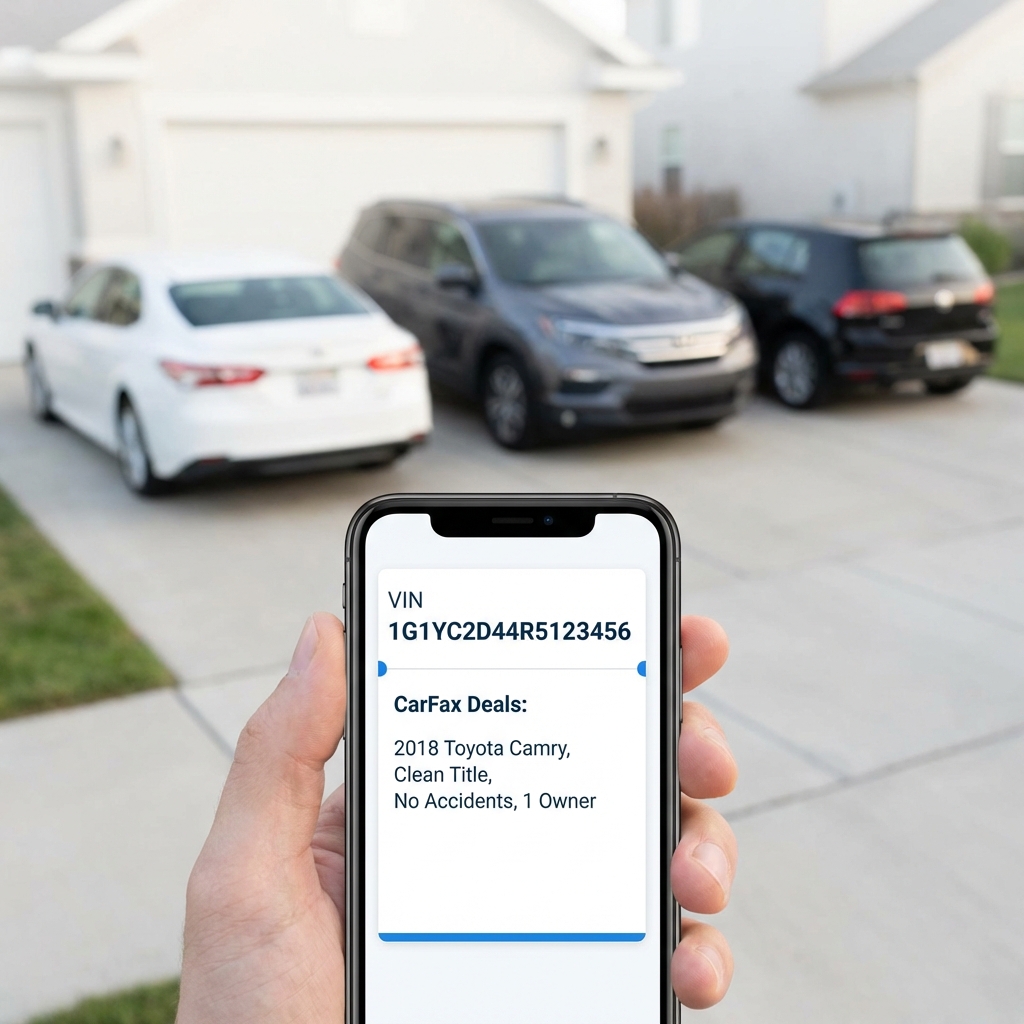
Start with a vehicle-focused VIN report. If you need to contact prior owners or verify seller identity, use a people-search as a second step. For marketplace shoppers who prefer integrated insights, a CARFAX Deals listing combines verified vehicle history with price-context labels that help you judge whether a car is a good value.
Product tip: a practical way to run a report
If you want a fast, vehicle-focused VIN check that pairs data with clear pricing context, try running a verified report through CARFAX Deals — it combines detailed vehicle history with price-comparison labels that help you assess value. Learn more and run a report here: Get a CARFAX Deals vehicle history and pricing check.
Common scenarios and the right tool to use
Buying from a dealer: Start with a vehicle-history report (dealer listings often include one). Use people-search only if you need to verify a salesman’s claim about prior ownership or trading history.
Buying from a private seller: Run a VIN report first. If ownership trail is confusing or you want to reach prior owners, then use a people-aggregator.
Comparing multiple cars online: If you’re shopping many listings, bundles or marketplace-integrated VIN reports (like CARFAX Deals) save time by pairing history with market pricing.
Negotiation tips using a VIN report
Use reported issues as negotiation points: documented accidents, service gaps, or salvage branding all affect value. Be specific: cite the line item in the report and ask for repair invoices or remediation receipts. If the seller won’t provide satisfactory answers or inspection access, consider walking away - it’s often the best way to protect your budget.
Checklist for the showing
- Bring the VIN report printout or screenshot. - Ask to see the title and maintenance receipts. - Test drive with purpose: listen for knocks, feel steering and braking, and test alignment. - Schedule or insist on a pre-purchase inspection if anything is unclear.
Costs and money sense
One-off VIN reports typically cost less than a day’s worth of coffee and can save thousands by revealing major issues. A short mechanical inspection is a few hundred dollars but can prevent a catastrophe. When you weigh cost against potential repair bills or insurance headaches, spending on data and inspection usually pays for itself quickly.
How to combine sources without getting overwhelmed
Layer checks in a practical order: VIN report, seller paperwork, pre-purchase inspection, and people-search (only when you need ownership contact or verification). Keep your tone curious with sellers - it yields better documentation and cooperation than confrontation.
Addressing misconceptions
Some buyers assume a pristine-looking car and a clean report guarantee a trouble-free purchase. They don’t. Others think public-record searches are equivalent to vehicle-history checks. They’re not. Use each tool for its strength.
When reports disagree: a smart buyer’s playbook
If two reports differ, prioritize primary documents: the title itself, DMV records, and insurance loss documents. Insist on paper proof if a seller disputes what a report shows. If a seller claims repair invoices, ask to see them - then verify the shop listed on the receipt.
Safety and legal concerns
Beware of title washing and other frauds that can move brandings between states. If you suspect tampering or fraudulent history, consult DMV records directly and consider escalating to consumer protection authorities.
FAQ primer
Is a people-aggregator as good as a vehicle-history specialist for VIN checks? No - they serve different primary purposes. The specialist digs into title and insurance feeds while the aggregator helps with ownership context and contact tracing.
Which should I buy for a single used car? Start with a dedicated vehicle-history report and add a people-search only if you need owner contact details.
Can a report be wrong? Yes - they can miss private repairs or unreported accidents. That’s why a mechanical inspection and seller paperwork matter.
Final practical script to use at a showing
Ask for the title and any maintenance invoices; run a VIN report or have it ready; ask direct questions about flagged items; insist on an inspection for major concerns; walk if documentation is missing or the seller resists scrutiny.
Checklist summary
VIN report → read → ask for paperwork → inspect → use findings to negotiate or walk away. Repeat for each car you consider.
Resources and next steps
For a fast, verified check paired with price context, consider running a CARFAX Deals report for any vehicle you’re seriously considering.
For marketplace shoppers who prefer integrated insights, a CARFAX Deals listing combines verified vehicle history with price-context labels that help you judge whether a car is a good value. A quick glance at listings can highlight relative price context.
For a fast, verified check paired with price context, consider running a CARFAX Deals report for any vehicle you’re seriously considering.
Not at all. A VIN report is the essential first step; use a people-search only when ownership is unclear or you need to contact prior owners. Combined, they give complementary information without much extra cost.
Not at all. For many buyers, a VIN report is enough. But if the seller’s story is unclear, ownership changed frequently, or paperwork is missing, a people-search can provide helpful context and contact leads. Use the people-search tactically, not habitually.
Buying used is detective work mixed with common sense: treat the VIN like an invitation to learn, not a verdict. When you combine a trusted VIN report with inspection and paperwork, you make better decisions - and sleep better after you drive away.
No. People-aggregator services are great for tracing owners and contact details, but they usually rely on fewer vehicle-specific feeds. For title brands, accident history, and insurance loss data, a vehicle-history specialist is the more authoritative source.
Start with a VIN report for any car you seriously consider. Use a people-search only if you need to contact prior owners, verify seller identity, or trace confusing ownership records. People-searches are a supplement, not a replacement.
Yes. Reports can miss privately paid repairs, unreported accidents, or state-specific title data not shared with aggregators. That’s why a professional inspection and seller paperwork are essential complements to any report.
A vehicle-focused VIN report plus inspection and paperwork beats a people-search alone; use both tools smartly and trust paperwork over promises — happy, informed car buying!

 Blog
Blog