What is the difference between Kelley Blue Book and Black Book? A user guide
This article explains how Kelley Blue Book and Black Book differ in purpose, data inputs, and update cadence so you can use both to form a defensible price range. It shows how to pair a KBB retail estimate with a Black Book wholesale figure and a market indicator when researching a listing or preparing a trade-in. The guide includes a step-by-step checklist and practical scenarios for research-oriented used car buyers.
A step-by-step workflow for estimating a truck's market value that centers on comparing consumer valuation tools, adjusting for mileage and condition, and checking wholesale market signals. The guide explains private-party, trade-in and dealer retail values and shows how a vehicle history report and pricing insights can change an asking price.
This guide helps research oriented buyers evaluate suv used cars for sale under $25,000 by combining safety ratings, reliability data, local pricing context, and vehicle history checks. It outlines a simple framework, a pre visit checklist, and a decision scoring worksheet so you can compare finalists before contacting a dealer. Use the steps here to narrow candidates and confirm risk signals with a vehicle history report and a pre purchase inspection.
When searching suv used cars for sale, prioritize model year, trim and powertrain before choosing a make or model. This guide explains how safety ratings, dependability studies and local pricing insights combine to produce a short list you can verify with a vehicle history report. It also provides a stepwise checklist you can use before contacting a dealer.
When you research a used car, valuation guides can feel like a tiebreaker. Kelley Blue Book and Black Book offer different views of value. Knowing which to consult and how to combine them helps you make informed offers.
This guide explains the purpose and data behind each provider, how update cadence affects accuracy in fast markets, and a practical checklist you can use when looking at listings or preparing a trade-in. The approach is neutral and evidence-based, so you can verify assumptions before you negotiate.
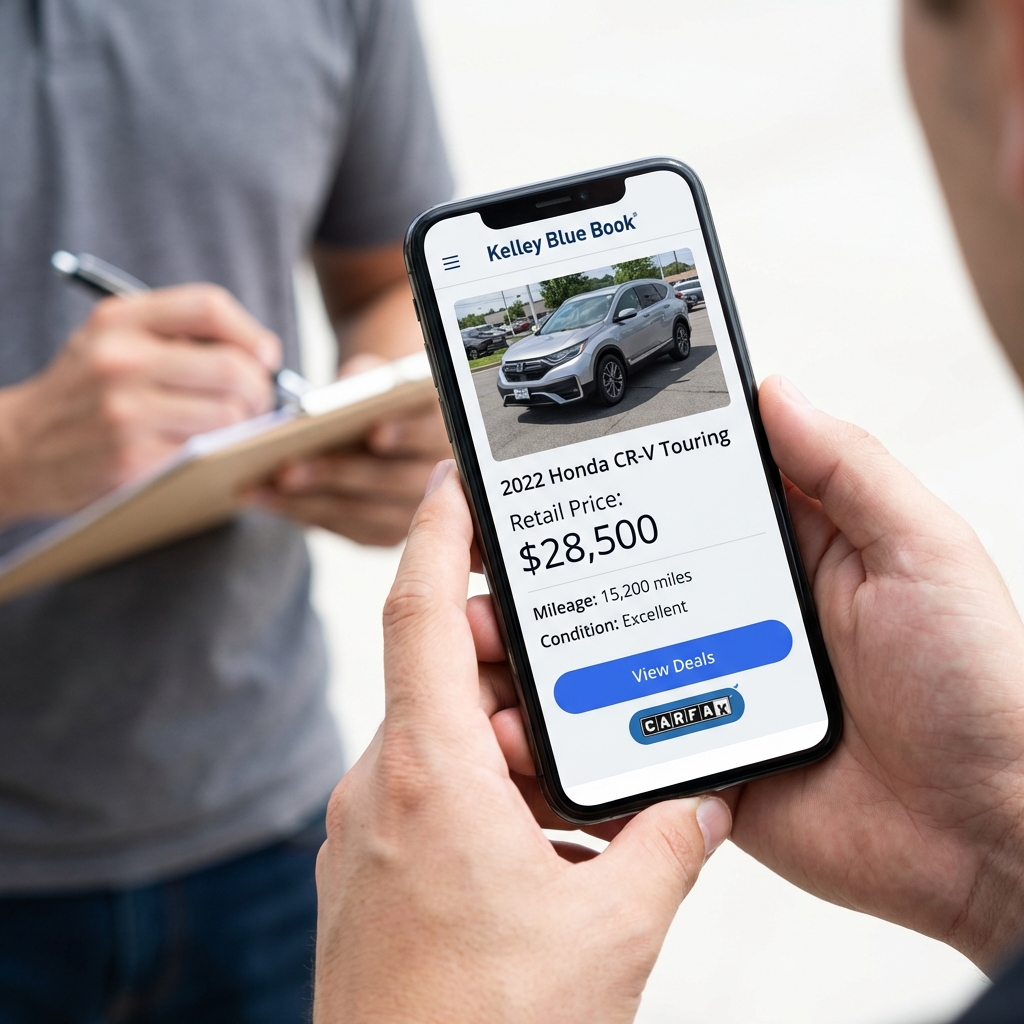
Kelley Blue Book emphasizes retail and listing prices for consumer-facing comparisons.
Black Book reflects wholesale and auction-derived values commonly used by dealers.
Combine retail, wholesale and a market indicator to form a defensible price range.
Quick overview: what Kelley Blue Book and Black Book are
At-a-glance differences
Kelley Blue Book is a consumer-facing valuation guide that emphasizes retail and listing prices and local market context, often used by buyers to estimate asking prices, while Black Book focuses on wholesale and auction-derived valuations used by dealers and remarketers to set trade-in and acquisition prices. For a concise description of how KBB approaches consumer values, see the Kelley Blue Book methodology page Kelley Blue Book methodology page.
Both guides aim to summarize market movement, but they do so from different vantage points. KBB aggregates retail listings and adjusted transaction data to produce consumer-facing estimates, and Black Book tracks wholesale auction sales and dealer submissions to reflect dealer acquisition costs. Black Book describes its approach and wholesale focus on its methodology page Black Book vehicle values and methodology (see dealer comparisons dealer comparison).
Who uses each guide
Shoppers, private sellers and research-focused buyers often consult KBB when they want a sense of asking prices and local listing context. KBB's consumer labels and retail estimates help set realistic listing expectations for buyers and sellers, according to the provider's valuation notes Kelley Blue Book methodology page.
Dealers, remarketers and auction participants rely more on Black Book for trade-in and acquisition signals. Black Book's data focus is tuned to wholesale movement and auction results, making it a common reference for industry pricing decisions Black Book vehicle values and methodology.
How each guide calculates values: methodology and inputs
KBB methodology: retail listings, transaction data, trim and condition adjustments
KBB combines aggregated retail listings, transaction records and adjustments for trim, mileage and condition to create consumer-facing retail estimates. The method description explains how listings and sales feed into retail values, and why adjustments matter for specific trims and mileage levels Kelley Blue Book methodology page.
When you check a KBB estimate, expect the result to reflect a retail price view that factors in common consumer options and local listing patterns. That helps when you are comparing asking prices rather than estimating what a dealer paid.
diagnostic checklist to compare retail and wholesale signals
use to identify gaps between listing and acquisition signals
Black Book methodology: auction sales, dealer submissions and wholesale moves
Black Book relies heavily on auction transactions and dealer-reported data to reflect wholesale market movement. This orientation makes its values more responsive to auction trends and dealer acquisition behavior, as described by Black Book's methodology overview Black Book vehicle values and methodology.
Because the underlying transactions are often wholesale and auction-derived, Black Book values tend to indicate what dealers may pay or accept at trade-in, rather than the final retail asking price a consumer sees on a dealer lot.
Update cadence and real-time accuracy: what changes faster
Why update frequency matters in volatile markets
Update cadence differs between providers. Black Book often refreshes wholesale values more frequently to track auction moves, while KBB updates many consumer pages on a weekly basis, a difference that can matter when prices shift quickly. The provider notes indicate different refresh approaches for wholesale and consumer products Black Book vehicle values and methodology.
When markets move fast, wholesale indices can lead retail listing prices by days or weeks. That means a recent auction surge might show in a wholesale index before retail listings reflect the new level.
Kelley Blue Book provides consumer-facing retail estimates derived from aggregated listings and transaction data, while Black Book produces wholesale values based on auction sales and dealer submissions; use KBB for asking-price context and Black Book for trade-in or dealer acquisition estimates.
To check short-term movement, market indicators and update notes from providers help you judge which signal to trust for your timeline. Manheim's market index is a common source for wholesale trend context and can show directionality that helps adjust a range Manheim Used Vehicle Value Index.
Where to check update notes and indices
Look for each provider's methodology or update notes to learn how often a given value is refreshed and what data sources were used. Provider pages and market indices often list cadence and sample sizes.
For a wholesale movement view, Manheim's Used Vehicle Value Index is a frequent cross-check, while provider update notes show which consumer pages update weekly and which wholesale feeds update more often Manheim Used Vehicle Value Index.
How to use both guides together: a practical pricing and negotiation framework
Step-by-step: build a defensible price range
Start by gathering three signals: a KBB retail estimate for listing expectations, a Black Book wholesale figure for dealer acquisition context, and a market trend indicator such as Manheim to capture recent auction movement. Use KBB as the retail anchor and Black Book as the wholesale floor Kelley Blue Book methodology page.
Use a dual-signal pricing framework
Use this framework to combine retail and wholesale signals into a single price range you can use when researching listings or preparing offers.
Step 1, confirm the exact model year, trim, powertrain and options before comparing values. Small differences in trim or powertrain can change which value is most relevant, so match the vehicle specification across sources.
Step 2, note the KBB retail estimate and any price analysis labels it provides for comparable local listings. These labels and the retail number help you set an asking expectation when a vehicle appears on a dealer lot.
Step 3, check Black Book for a wholesale value that approximates dealer acquisition cost or trade-in baseline. This helps you estimate where a dealer might be able to acquire the vehicle and how much margin they might need to add Black Book vehicle values and methodology.
When to lean on retail versus wholesale
Lean on KBB retail values when setting a listing price or if you plan to buy from a dealer and want to compare asking prices. The consumer-focused estimate tends to align with what other dealers and private sellers list.
Lean on Black Book wholesale values when you are trading a vehicle in or estimating a dealer's acquisition cost. Wholesale signals better reflect auction and dealer behavior, which is useful for trade-in scenarios and dealer-to-dealer transactions Black Book vehicle values and methodology.
For private sales, use KBB combined with local listing searches to confirm where private offers sit relative to dealer asking prices. That helps you set an offer that reflects local demand rather than an industry acquisition value.
Decision criteria: when one guide is more relevant than the other
Buying from a dealer or private seller
If you are estimating an asking price for a dealer listing, KBB retail values and price analysis labels tend to be most applicable and give a clearer picture of typical listing expectations Kelley Blue Book methodology page.
For private sales, use KBB combined with local listing searches to confirm where private offers sit relative to dealer asking prices. That helps you set an offer that reflects local demand rather than an industry acquisition value.
Trading in or selling to a dealer
When trading in, start from a Black Book wholesale value to estimate the dealer baseline for acquisition. Dealers frequently consult wholesale guides when making trade-in offers, because those values reflect what they can expect at auction or in trade channels Black Book vehicle values and methodology.
Also consider NADA Guides and wholesale indices as complementary baselines for trade-in checks. NADA is often used for dealer and trade-in baselines while market indices capture short-term movement NADA Guides about page (see trade-in values comparison trade-in values comparison).
Common pitfalls and mistakes buyers make when using valuation guides
Relying on a single number
A common mistake is treating any single guide value as the only correct price. Use a range that pairs KBB retail with Black Book wholesale and a market trend indicator to avoid over-reliance on one signal How to use KBB, NADA and Black Book compared (and see additional dealer resources dealer guides).
If you only look at one value, you may miss dealer margins, recent auction movement or local demand that shifts asking prices. Cross-checks reduce the risk of surprise at purchase or trade-in.
Ignoring trim, options and local demand
Always verify model year, exact trim, powertrain and installed options before comparing values. These details materially affect retail and wholesale values and should be matched across sources for accurate comparison Kelley Blue Book methodology page.
Also check vehicle history reports and local listing context. A vehicle history report and inspection can reveal condition or title notes that influence which guide number is realistic for that specific car.
Practical scenarios: examples of using KBB, Black Book and market indicators
Scenario A: buying a dealer-listed SUV
Step 1, confirm the SUV's exact model year, trim and powertrain. Use KBB to get a retail estimate matching the trim and mileage so you can set a reasonable asking expectation Kelley Blue Book methodology page.
Step 2, check Black Book for the wholesale range to estimate what a dealer might have paid or expect to pay at trade-in. Then consult a market indicator for recent auction movement to see if wholesale values have shifted Black Book vehicle values and methodology.
Scenario B: estimating trade-in value for a sedan
Step 1, pull a Black Book wholesale figure as a starting point for dealer offers. Dealers use wholesale guides when calculating trade-in offers because these figures reflect dealer acquisition channels and auction results Black Book vehicle values and methodology.
Step 2, check KBB to understand the retail upside the dealer might expect to capture. That helps you set a target trade-in number and know whether to ask for more or pursue a private sale instead Kelley Blue Book methodology page.
Remember to pair valuation checks with a vehicle history report and inspection before committing to a deal. A report can reveal ownership history, accident history or title status that affects value and negotiation levers How to use KBB, NADA and Black Book compared.
Conclusion: a short checklist to take into the dealership or listing
Checklist, start with KBB retail for listing expectations, add Black Book wholesale for dealer acquisition context, and consult a market trend indicator such as Manheim to adjust for recent auction movement Manheim Used Vehicle Value Index.
Confirm exact model year, trim, powertrain and options, run a vehicle history report, and note provider update cadence before relying on any single number. Use these steps together to form a defensible price range rather than a single target How to use KBB, NADA and Black Book compared.
Use Black Book to estimate the dealer's acquisition baseline and KBB to understand the retail upside the dealer may seek. Combine both with a market indicator to form a defensible trade-in target.
Wholesale-focused guides like Black Book typically refresh more frequently to track auctions, while consumer-facing pages often update on a weekly schedule, so check provider update notes for specifics.
No, rely on a range that pairs a retail estimate with a wholesale figure and a market trend check, and confirm trim, options and the vehicle history report before finalizing an offer.
Use these checks to reduce uncertainty before you contact a dealer. Pair valuation signals with a vehicle history report and an inspection, and treat guide values as inputs to a range rather than a final answer. That prepares you to ask targeted questions and make decisions with clearer context.

 Blog
Blog