This guide covers those four routes, what Carfax genuinely offers free, the free disclosure a dealer is legally required to hand you, and how to recognise the "free Carfax" sites built to take your card details.
Four legitimate ways to read a Carfax without paying
Each of these depends on a dealer or marketplace holding a Carfax subscription. Under a subscription, pulling one more report costs the dealer nothing extra, which is why asking works more often than buyers expect.
| Route | How it works | What you get | The catch |
|---|
| Dealer listing page | Subscribed dealers attach the full report to the vehicle detail page | The complete report for that VIN | Only for that VIN, and only while the listing is live |
| Ask the dealer directly | A subscribed dealer can email you the report on request | The complete report, usually as a PDF or a link | A refusal is itself information worth acting on |
| Marketplace listings | Large listing sites badge inventory with a Carfax or AutoCheck report | The report attached to that specific listing | Depends on the dealer's subscription, so coverage is patchy |
| A car you already own | The free Carfax Car Care app tracks service history and recall alerts on your own vehicle | Service reminders and open recall notices | Your vehicle only, not a car you are shopping |
One rule governs all four: always check the report date and confirm the VIN on the report matches the VIN on the car. A report pulled eight months ago will not show an accident from last spring, and a report for a different VIN is worth nothing at all.
How to ask so you actually get it
Ask for the report by VIN, in writing, before you drive out to see the car. Phrase it as a condition of the visit rather than a favour: confirm the VIN, ask for the current Carfax or AutoCheck on that VIN, and say you will come look once you have read it. A dealer running a subscription sends it in minutes. A dealer who stalls, sends a screenshot instead of the report, or sends one dated months ago has told you something useful for free.
What Carfax gives away at no cost
Carfax runs a free open-recall check at carfax.com/recall where you enter a VIN or a license plate and see whether the vehicle has an unfixed safety recall. It also publishes the free Carfax Car Care app, which handles maintenance reminders and recall alerts for a vehicle you own. Neither product is the history report, and neither shows accidents, title brands, or ownership records.
That is the whole of it. Carfax's data is the product it sells, so a genuinely free full report from Carfax itself does not exist outside promotional exceptions tied to a specific listing.
The Buyers Guide: free information the dealer must give you
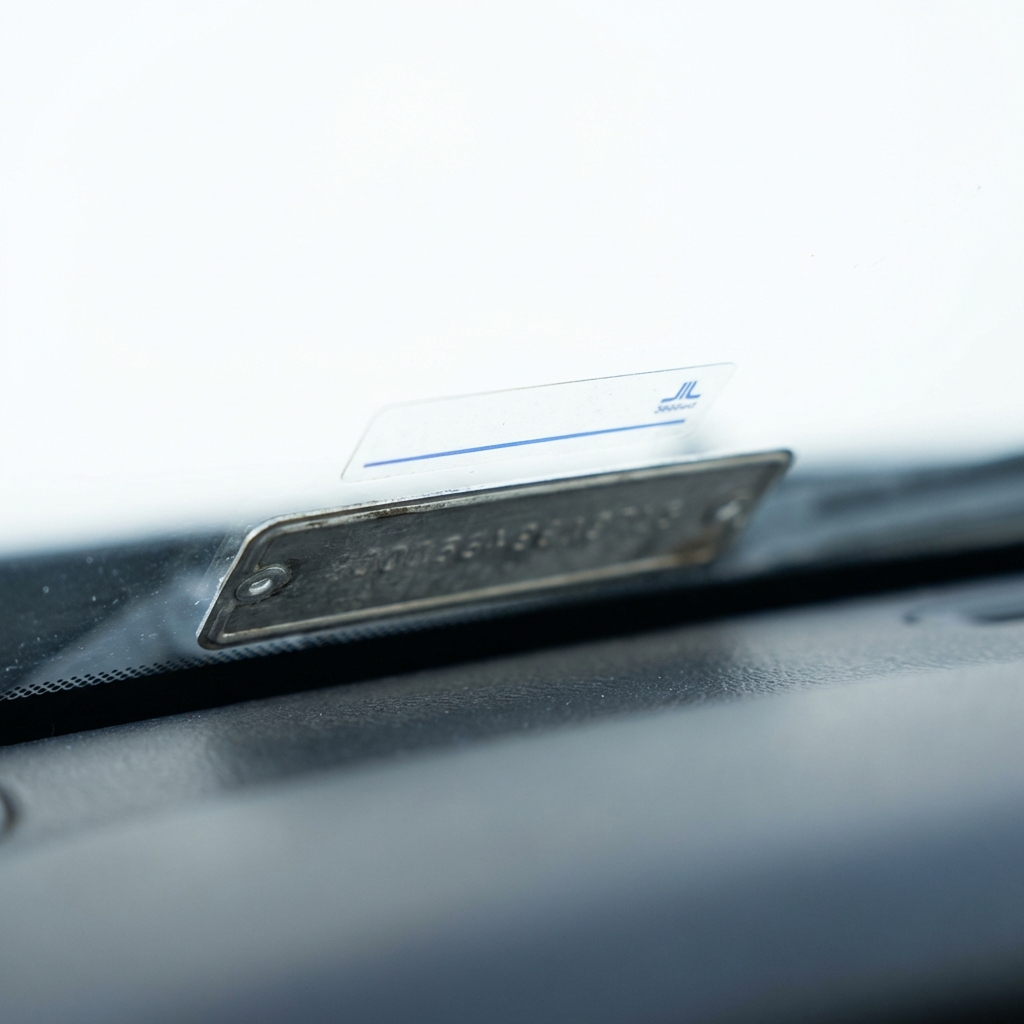
Before a used car is displayed or offered for sale, most US dealers are legally required to post a Buyers Guide on or in the vehicle. It is a federal disclosure under the FTC's Used Car Rule, it is free, and most buyers walk straight past it.
What the Buyers Guide tells you
- The VIN, printed on the front, so you can run your own free checks without asking the seller for anything
- Whether the car is sold "As Is" or with a warranty, and if there is a warranty, which systems it covers and what percentage of repair costs the dealer pays
- Whether a third-party warranty, a service contract, or an unexpired manufacturer warranty applies
- A list of major defects that occur in used vehicles, including air bags and catalytic converters
- A statement directing you to get a vehicle history report and to check for open safety recalls
Who has to post one
The rule covers dealers who sell or offer more than five used vehicles in any 12-month period. It applies in every state except Maine and Wisconsin, which enforce their own equivalent disclosure rules. Banks and financial institutions are exempt, as are businesses selling to their own employees and lessors selling a leased car to the lessee.
Private sellers are not covered at all. That single fact changes how you buy: on a private sale there is no mandated disclosure, no warranty framework, and no window sticker, so the free checks you run yourself carry all the weight.
The dealer is also forbidden from making spoken or written claims that contradict the Buyers Guide. If the sticker says "As Is" and the salesperson promises to cover the transmission, get that promise in writing or treat it as worthless.

What you can verify for free without a Carfax
Three federal and nonprofit tools cover identity, open recalls, and theft or insurer total loss at no cost. The NHTSA vPIC decoder confirms the car is the year, engine, and trim the listing claims. The NHTSA recall lookup returns unrepaired safety campaigns. NICB VINCheck flags vehicles reported stolen and not recovered or written off by a participating insurer, with a cap of five searches per IP address per 24 hours.
Run all three before you spend anything. For what each one returns, the exact limits on coverage, and how to read the 17 characters of a VIN yourself, see our guide to the free VIN lookup options.
Membership organisations are the other route buyers ask about, and the answer is narrower than the marketing suggests. We covered whether AAA membership includes a free Carfax report separately.
How to spot a fake "free Carfax" site
Search "free Carfax" and a large share of what ranks is built to monetise the person searching it. No third-party website is licensed to reproduce Carfax's proprietary database, so any site promising a full Carfax for free is doing something else. Five patterns cover most of them:
- The fabricated PDF. A template document with invented records, formatted to resemble a real report.
- The $1 trial. A token charge that captures your card and enrols you in a recurring subscription buried in the terms.
- The rebranded thin report. Basic NMVTIS title data presented as a Carfax equivalent, with no accident or service layer.
- The data harvester. A form that collects your name, email, and phone before returning nothing useful.
- The insistent seller. A buyer or seller who pushes you toward one specific unknown report site. The car conversation exists to get your card number.
The test is simple. If the offer is a complete Carfax report at no cost and it is not attached to a specific listing by a subscribed dealer, it is not a Carfax report.
What no free route will cover
Free checks answer narrow questions well. Six categories sit outside every one of them:
- Reported accidents and damage severity
- Dealer and independent service records
- Number of previous owners and how long each held the car
- Odometer readings captured at each title transfer
- Title brands recorded across all 50 state DMVs
- Use history such as rental, fleet, taxi, or lease
Title brands are the category buyers most expect to find free. They live in NMVTIS, the federal title database run by the US Department of Justice, and NMVTIS is not a free consumer lookup. You buy access through an approved provider listed at vehiclehistory.gov, and every provider on that list receives the same federal title and odometer data.
When paying is the cheaper decision
A report costs less than one wrong assumption about a branded title. These conditions each justify buying one outright:
- If the seller will not produce the report and the car is worth more than a few thousand dollars, buy your own.
- If the listing-provided report is more than a few months old, buy a current one.
- If the decoded trim or engine does not match the listing, buy the report before you travel.
- If you are buying out of state and cannot inspect the car in person, buy the report.
- If the car has changed hands several times in a short window, buy the report.
- If every free check is clean, the price is modest, and you can inspect the car yourself, spend the money on a mechanic's pre-purchase inspection instead.
What the paid tier costs in 2026
| Report | Single report price | Strongest data |
|---|
| CarfaxDeals | $7.99, down to $3.00 per report on the 100-pack | Full Carfax vehicle history at a discount |
| Carfax direct | $44.99 | Franchise dealer service records |
| AutoCheck (Experian) | About $25 to $30 | Auction history and the AutoCheck Score |
| NMVTIS-approved provider | About $5 to $15 | Federal title brands and odometer records only |
Provider pricing changes, so confirm the current figure before you buy. The gap between the cheapest and the most expensive report is mostly packaging and service-record depth, since the core title data comes from the same federal source in every case.
If the free routes have run out and you need the accident, title, and ownership timeline, compare CarfaxDeals report pricing or see how to run a report on any VIN.
Frequently asked questions
Can I get a Carfax without paying?
Not from Carfax directly. You can read one at no cost when a subscribed dealer attaches it to a listing, emails it to you on request, or when a marketplace badges the listing with a report. Carfax itself only gives away a free open-recall check and the Carfax Car Care app for a vehicle you own.
Do dealers have to give you a Carfax report?
No. No federal rule requires a dealer to supply a vehicle history report. The FTC's Used Car Rule requires the Buyers Guide window sticker and requires it to recommend that you get a report, but the dealer is not obliged to buy one for you.
Is there a free Carfax alternative that shows accidents?
No free tool returns reported accidents. NICB VINCheck shows insurer-declared total losses, which is narrower: a car can be badly damaged, repaired, and never appear as a total loss anywhere. Accident records come only from a paid report.
Are free Carfax websites safe?
Most are not. No third party is licensed to reproduce Carfax's database, so a site advertising a complete free Carfax is selling something else, usually a fabricated PDF, a recurring subscription behind a $1 charge, or your own contact and card details.
Does a private seller have to post a Buyers Guide?
No. The Used Car Rule applies to dealers selling or offering more than five used vehicles in a 12-month period. Private sellers are exempt entirely, which is why free VIN checks matter more on a private sale than on a dealer lot.
How much does a Carfax report cost if I buy one?
Carfax lists a single report at $44.99. AutoCheck runs roughly $25 to $30, and NMVTIS-approved providers sell title and odometer reports for about $5 to $15. CarfaxDeals sells a full Carfax report for $7.99, dropping to $3.00 per report on the 100-report pack.
References

 Blog
Blog