Which is the best car in low price? A research-first guide
This guide helps research-first buyers find cheap cars for sale by focusing on safety, fuel economy, ownership cost, and VIN-level checks. It explains what to expect in the sub-$10,000 market and gives stepwise checks to compare listings before contacting a dealer.
A rav4 used for sale can be a sensible pick for many research-oriented buyers because reliability aggregators rate the model above average and safety ratings are generally strong. This guide explains how to vet listings, what model years tend to be better, and a step-by-step checklist to reduce risk before you buy.
This guide explains how to estimate the cost of buying an R34 Skyline, with attention to import rules, condition-driven price tiers and landed cost. It shows which factors move value, how to verify history and paperwork, and offers a checklist you can follow when you search for a nissan skyline r34 for sale.
This guide helps buyers set realistic expectations for tacoma trucks for sale by explaining the main price drivers and a repeatable method to build conservative, typical, and ambitious offer ranges. It shows how the 2024 redesign, valuation guides, and vehicle history reports interact to change asking prices and reduce purchase risk.
Finding cheap cars for sale can feel overwhelming. This guide focuses on how to compare and verify low-price listings using safety ratings, fuel-economy data, pricing context, and VIN-level checks.
The goal is to help research-first buyers shortlist sensible options and reduce uncertainty before contacting a dealer. Keep decisions conditional and base comparisons on documented history and local pricing.
Most sub-$10,000 listings reflect older model years and higher mileage, so check history before you call the dealer.
Compact sedans and small SUVs tend to offer lower maintenance frequency, making them common budget choices.
Use EPA combined mpg and VIN-level reports to compare expected running costs and title status between candidates.
What low-price used car listings actually look like
Typical vehicle age, mileage, and condition in the sub-$10k market
When you search for cheap cars for sale, expect older model years and higher mileage to be common. Valuation services and editorial lists document that many listings under $10,000 represent earlier model years and above-average mileage, which affects both price and repair likelihood, so plan accordingly Edmunds guide to used cars under $10,000.
That pattern matters because condition varies. Two cars with the same sticker price can differ widely by maintenance history, remaining useful life, and recent repairs. Look beyond the photograph and summary to odometer, service entries, and any reported incidents before you shortlist.
Which body styles and model groups appear most often
These body styles can offer sensible tradeoffs: they often have simpler powertrains and parts availability that helps keep repair costs lower than some older luxury or high-performance cars. Still, availability and price change with local supply and mileage, so compare nearby listings for the same model year and trim before you decide.
Why compact sedans and small SUVs often make the safest budget picks
Reliability and maintenance patterns for mainstream models
Mainstream compact sedans and small SUVs tend to show lower maintenance frequency in aggregated consumer testing, which is one reason editorial guides recommend them for budget buyers. Choosing these segments often reduces the chance of frequent, costly repairs compared with older premium cars that can have higher upkeep needs Consumer Reports used car buying guide.
That tendency does not eliminate risk. Reliability varies by make, model year, and how the prior owner maintained the vehicle. Use maintenance records and ownership history to confirm whether a specific listing matches the general pattern.
Tradeoffs versus older luxury or performance cars
Luxury and performance cars may look attractive for features or prestige, but they often carry higher parts and labor costs. For a tight budget, that can make a low sticker price more expensive over time. Consider total cost to own rather than just the purchase price when comparing options.
Score compact candidates by fuel economy, mileage, and model year
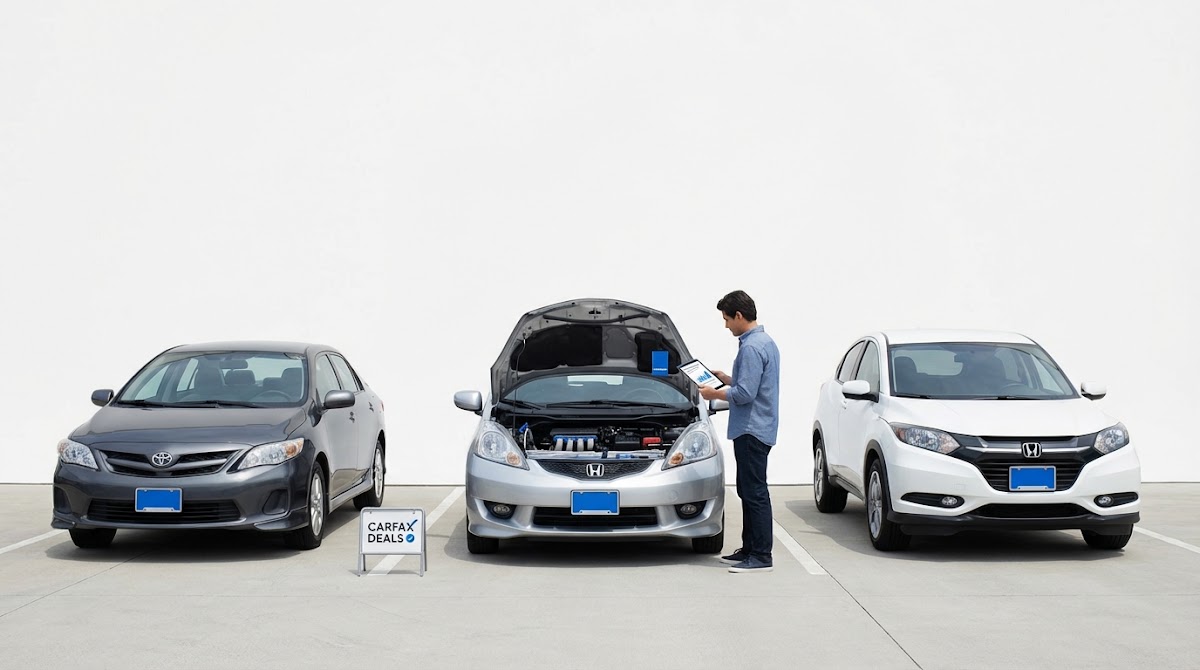
Use to shortlist similar-priced models
Compact sedans and small SUVs usually provide acceptable fuel economy and lower routine repair costs. That combination helps control ongoing expense, which is an important tradeoff to weigh against features that older premium cars might offer.
What drives long-term ownership cost in the budget segment
Major ownership-cost components to watch
In the budget segment, long-term ownership costs are shaped more by reliability and maintenance frequency than by the purchase price alone. Consumer testing and ownership-cost studies indicate that repair frequency and unexpected maintenance often become the largest expense drivers over several years AAA Your Driving Costs 2024.
That means low initial price can be offset by repeated repairs or a short remaining useful life. Factor in likely repair schedules, availability of parts, and an estimate for routine service when you compare listings.
How repair frequency and depreciation shift total cost
Depreciation and repairs move in opposite directions depending on age and mileage. A very low-priced older car may have already absorbed most depreciation but can still cost more in repairs. Use ownership cost estimates and regional parts pricing to refine your bidding limit.
Fuel economy also shifts operating costs. Compare EPA combined mpg figures across candidate models to estimate fuel expense differences; this gives a consistent baseline for comparing running costs between similar vehicles FuelEconomy.gov find and compare cars.
How to check safety ratings and fuel economy for exact model years
Using IIHS and NHTSA for crashworthiness and active-safety features
Crashworthiness and the availability of active-safety features can change with model year and trim, so verify ratings for the exact year before you buy. The IIHS and NHTSA pages give model-year specific ratings and notes on equipment changes that affect safety performance IIHS Top Safety Picks 2024.
When you see a favorable rating for a model name, confirm the listing's year and trim because some safety options are only available on certain trims or were added in later years.
Using EPA combined mpg to compare running costs among candidates
EPA combined mpg is a reliable starting point for estimating fuel cost differences between potential buys. Use the EPA combined mpg figure for each candidate to project annual fuel spending and include that estimate in your total cost to own calculation FuelEconomy.gov find and compare cars.
If a model switched powertrains between years, treat fuel-economy numbers as a decisive factor. A modest improvement in mpg can offset short-term repair needs over several years, depending on how much you drive.
How to read vehicle history reports and why VIN-level checks matter
Look specifically for salvage branding, inconsistent mileage entries, and gaps in service history. Those entries change how you approach inspection and bargaining.
What title status and ownership history tell you
Title status and ownership history show whether a car has changed hands frequently or had a branded title. Multiple transfers in a short period or a salvage/rebuilt title often mean additional scrutiny is needed, and in many cases a pre-purchase inspection becomes essential Edmunds guidance on used listings.
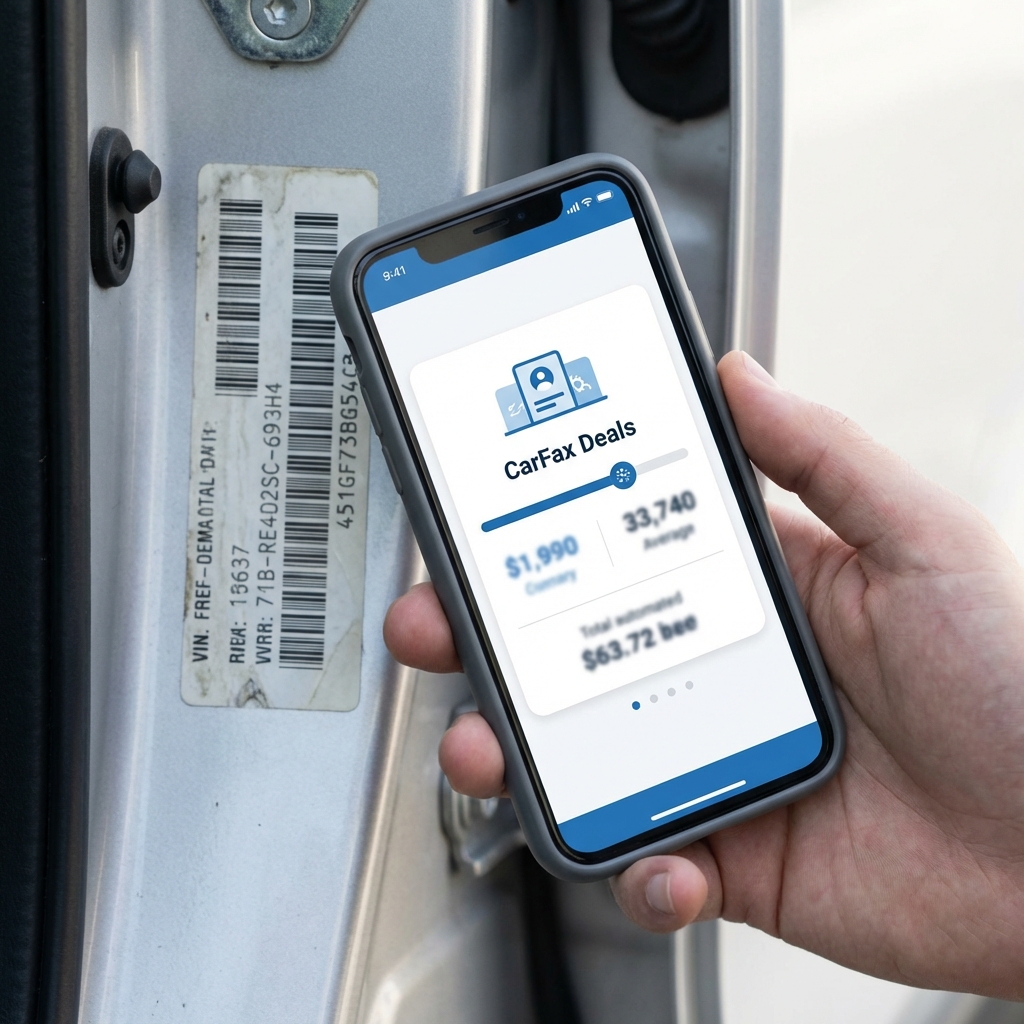
Run CarFax Report - Use CarFax Deals as a verification layer to check title status and ownership history before you visit a dealer
Even when a history report looks reasonable, a recent service record or a professional inspection can confirm whether the reported maintenance aligns with the odometer and condition.
How to compare price analysis labels and local market context
Interpreting labels such as Great Deal, Good Deal, Fair Deal
Price analysis labels are a quick way to compare a listing against local market norms and similar vehicles. These labels use recent local sales and valuations to indicate whether a listed price sits above or below typical market levels, which helps you spot outliers.
Use labels as a starting point, not the final answer. Confirm the label with direct comparisons of local comps, then adjust for condition, maintenance history, and known model-year issues Kelley Blue Book valuation context.
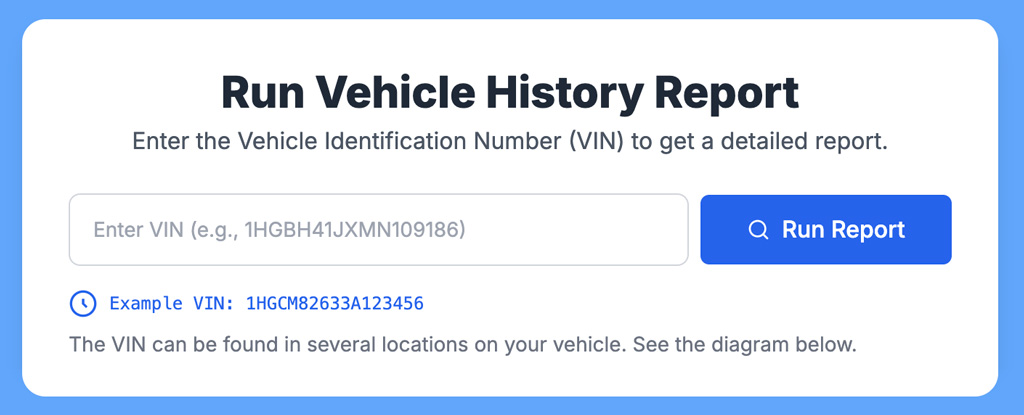
Run Vehicle History Report using the Run Vehicle History Report flow
Use pricing insights to compare similar listings in your area and to surface listings that merit a VIN-level history check before you call the dealer; keep the comparison focused on model year, mileage, and title status.
Valuation services document that sub-$10k listings commonly reflect older model years and higher mileage, so a low price can still be reasonable when the car is older and well maintained. Cross-check local comps for the same model year and trim to see whether a listing is priced unusually low or high Edmunds used car listings guidance.
When a listing is an outlier, ask the dealer for detailed records or decline to pursue it until you can confirm title and maintenance history.
A simple decision framework: checklist to pick the best budget car for you
Step 1: define must-have features and acceptable tradeoffs
Start by listing non-negotiables such as space for passengers, a minimum safety rating, and a mileage ceiling. Decide which tradeoffs you can accept, for example higher mileage in exchange for documented maintenance records.
Rank candidates by how well they meet must-haves and how many tradeoffs they require. This simple score helps narrow a long search quickly.
Step 2: run safety, history, and price checks
For each shortlisted car, check model-year safety ratings, run a VIN-level vehicle history report, and compare the price against local comps. If a safety rating or title status is a concern, remove the car from your shortlist or ask the dealer for clarification and records IIHS safety ratings reference.
Keep a short checklist you can reuse for every listing. That consistency reduces bias and helps you make a rational selection under time pressure.
Step 3: schedule a test drive and inspection
Always arrange a test drive and a pre-purchase inspection for your final one or two candidates. The inspection can catch issues not visible on a history report, and a test drive reveals drivability and mechanical cues that matter for daily use.
If an inspection or report raises red flags you cannot resolve, be prepared to walk away rather than assume problems can be fixed cheaply.
Common mistakes buyers make with cheap car listings
Overvaluing low sticker price without checking history
One frequent mistake is choosing a car only by sticker price. Without a VIN history and an inspection, a low price can hide title issues or repeated problems that increase ownership cost later Consumer Reports buying advice.
Another common error is assuming cosmetic condition equals mechanical soundness. Photographs can be misleading about underlying issues.
Prioritize compact sedans or small SUVs with documented maintenance, verified title status, acceptable EPA combined mpg, and good model-year safety ratings; use a VIN-level vehicle history report and a pre-purchase inspection before buying.
Failing to verify safety features or model-year changes
Buyers sometimes assume a model name implies the same safety features across years. Active-safety availability can vary by trim and generation, so verify the exact model year and trim before you rely on a rating.
Neglecting to compare local market pricing also leads to overpaying. Use local comps and valuation labels to check whether the listed price fits your market.
Example scenarios: matching three buyer profiles to realistic picks
Profile A: first-time commuter on a tight budget
A first-time commuter often prioritizes low monthly costs and reliability over extras. For this profile, focus on compact sedans with moderate mileage, clear maintenance records, and acceptable EPA combined mpg to keep fuel costs down Fuel economy reference.
Run a VIN check, confirm the title status, and ask for a recent oil or service record. If those checks pass, schedule a test drive and inspection before you commit.
Profile B: family needing safety and space
A family buyer should weigh model-year safety ratings and available safety options more heavily. Prioritize small SUVs or larger compacts with good crashworthiness for the exact model year, and insist on a pre-purchase inspection to verify condition IIHS safety guidance.
Accept slightly higher mileage if service history documents regular maintenance and no title brands.
Buyers who plan to keep a car long term should prefer lower mileage even if the model year is older, provided maintenance history supports longevity. Use valuation context to ensure you are not overpaying for a car with unverified service gaps Kelley Blue Book market trends.
For this profile, a clean ownership history and evidence of regular servicing are often more important than a few cosmetic issues.
Wrap-up: next steps and where to look for reliable listings
Keep expectations realistic for sub-$10k listings. Factor maintenance and fuel economy into your bid rather than relying on the sticker price alone. For reliable listings, also check broader marketplaces such as CARFAX used cars under $10,000 as part of your search.
How to keep a short shortlist and make the call
Limit your shortlist to two or three cars that meet your must-haves. Use the checklist, make the calls, and ask for records in advance. If records are delayed or incomplete, schedule a viewing only after you have a VIN report and a clear list of questions for the dealer.
Following these steps helps you compare cheap cars for sale more reliably and reduces the chance of expensive surprises after purchase.
Run a VIN-level vehicle history report to confirm title status and look for branding like salvage or rebuilt. If the report is unclear, ask the dealer for documented title records before viewing.
Weigh lower mileage against documented maintenance. A slightly older car with a reliable service history can be preferable to a newer car with inconsistent records.
Use price labels as a starting point, then cross-check local comps, condition, and the vehicle history report before making an offer.
A careful, checklist-driven approach helps you compare cheap cars for sale with less risk. Use model-year safety checks, EPA combined mpg, valuation labels, and VIN-level vehicle history reports to prioritize candidates and schedule inspections.
If a listing raises doubts you cannot resolve with records and a professional inspection, be prepared to move to the next option rather than assuming problems can be fixed cheaply.

 Blog
Blog